Weekly Cleaning Routine for Grease
You should start your weekly grease-cleaning by targeting hotspots like stovetops, oven doors, and range hoods, where oil gathers. Use eco-friendly degreasers and microfiber cloths to wipe surfaces thoroughly. Don’t forget to scrub appliance knobs and handles to prevent sticky buildup. Consistently clean exhaust fans and mop floors to maintain hygiene. If grease hardens, apply a degreaser, let it sit, then scrub. Follow these basics, and you’ll keep your kitchen spotless—there’s more you can do to perfect the routine.
Assessing Grease-Prone Areas
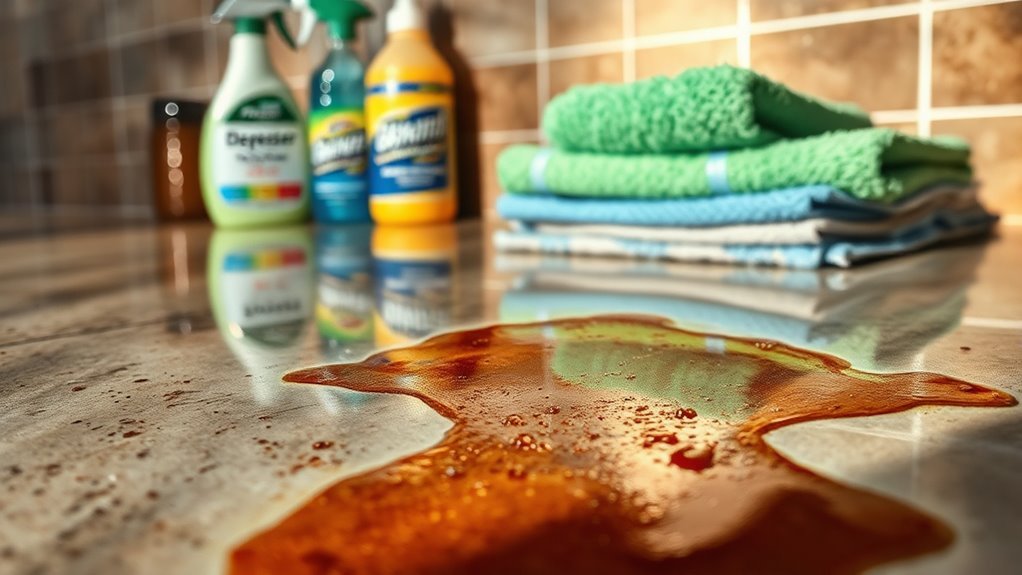
When you’re tackling your weekly cleaning routine, it’s crucial to start by evaluating grease-prone areas, as these spots tend to accumulate buildup quickly and can affect both hygiene and appliance performance. Focus on grease hotspots around kitchen appliances like stovetops, range hoods, and oven doors, where oil splatters and cooking residues collect. Don’t overlook appliance handles, knobs, and control panels, which often harbor sticky grease unnoticed. Identifying these trouble zones allows you to target your efforts efficiently, preventing grease from hardening and becoming tougher to remove. By routinely evaluating these areas, you maintain a cleaner, more hygienic kitchen environment and extend the lifespan of your appliances, giving you the freedom to enjoy a kitchen that’s both functional and fresh.
Gathering Effective Cleaning Supplies
Although cleaning grease-prone areas is essential, your efforts won’t be effective without the right supplies. Start by choosing green cleaning agents that tackle grease powerfully yet gently. Opt for eco friendly products like biodegradable degreasers and natural citrus-based cleaners—they break down stubborn grease without harsh chemicals. Equip yourself with microfiber cloths and scrub brushes designed to reach tight spots without scratching surfaces. Don’t forget reusable gloves to protect your skin while staying eco-conscious. A spray bottle filled with diluted vinegar or baking soda solution can enhance your routine, providing an affordable, non-toxic boost. By gathering these targeted, sustainable tools, you’ll maintain a clean environment that aligns with your values and gives you the freedom to keep grease under control efficiently and responsibly week after week.
Step-by-Step Weekly Cleaning Process
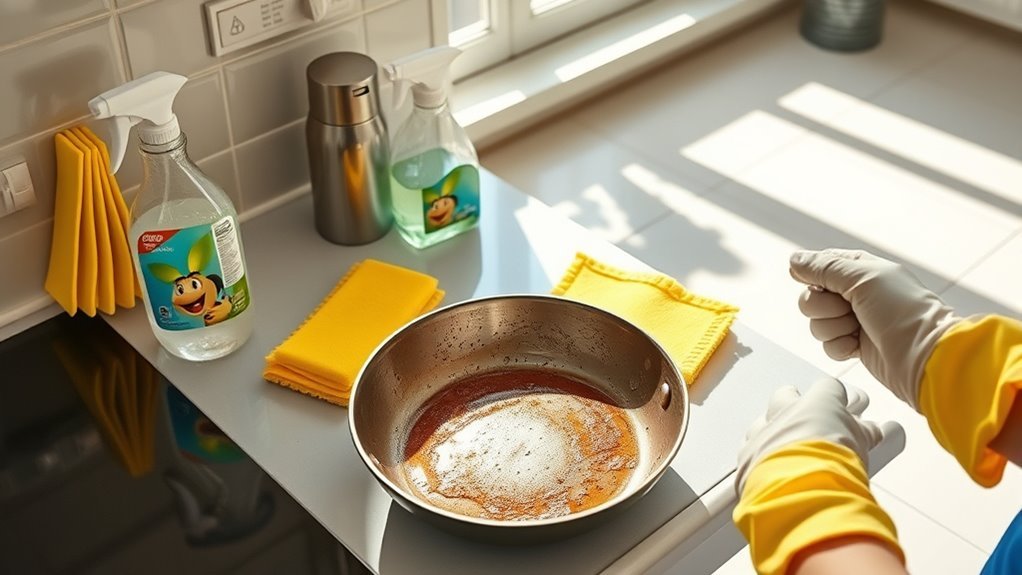
Since a consistent routine is key to managing household cleanliness, you’ll want to follow a systematic step-by-step process each week. Start by creating a weekly checklist aligned with your cleaning schedule to guarantee no task is overlooked. Focus on grease-prone areas with precision and efficiency. Your step-by-step process should include:
- Wiping down kitchen surfaces with a degreaser
- Cleaning stovetops and oven interiors thoroughly
- Scrubbing exhaust fans and range hoods
- Mopping floors to remove residual grease and dirt
- Disinfecting sinks and countertops
Adhering to this weekly checklist empowers you to maintain a grease-free environment effortlessly. By sticking to this cleaning schedule, you reclaim control over your space and enjoy the freedom that comes with a consistently clean kitchen.
Tips for Maintaining a Grease-Free Kitchen
To keep your kitchen consistently grease-free, you’ll need to adopt practical habits that prevent buildup before it starts. Focus on grease prevention by wiping down surfaces immediately after cooking to stop residue from settling. Maintain proper kitchen organization by storing oils and greasy items in designated areas, reducing accidental spills. Use splatter guards when frying and clean exhaust fans regularly to minimize airborne grease. Incorporate easy-to-clean materials and tools that resist grease accumulation. Don’t let clutter gather—organized spaces are easier to clean and less likely to trap grease. By establishing these routines, you create a kitchen environment that stays fresh and functional, granting you the freedom to cook without the constant hassle of stubborn grease. Consistency and proactive care are your best allies in maintaining a grease-free kitchen.
Addressing Stubborn Grease Buildup

When grease buildup becomes stubborn, simple wiping won’t do the trick, and you’ll need targeted strategies to break it down effectively. To tackle tough grease, focus on advanced grease removal and cleaning techniques that free your space from grime without extra effort.
Try these methods for efficient grease removal:
- Apply a degreaser and let it sit for 10 minutes to loosen buildup.
- Use a scrub brush or a non-abrasive sponge for deeper cleaning.
- Mix baking soda and water into a paste for natural grease-fighting power.
- Utilize steam cleaning to soften hardened grease without chemicals.
- Rinse with hot water to dissolve remaining residue and dry thoroughly.
These cleaning techniques guarantee stubborn grease won’t restrict your freedom to enjoy a spotless kitchen.
Frequently Asked Questions
Can Natural Cleaners Replace Chemical Degreasers Effectively?
You can definitely use natural alternatives to replace chemical degreasers, but their cleaning effectiveness depends on the grease type and surface. Ingredients like vinegar, baking soda, and citrus oils work well for light to moderate grease, offering a safer, eco-friendly option. However, for heavy buildup, you might need stronger chemical degreasers. Balancing natural alternatives with your cleaning needs lets you maintain freedom while achieving effective results.
How Often Should Cleaning Tools Be Replaced to Avoid Grease Spread?
You might think your cleaning tools last forever, but ironically, the longer you keep them, the more grease they spread. To maintain tool effectiveness, replace sponges and brushes every two to four weeks, depending on cleaning frequency. If you clean daily, switch tools biweekly to avoid grime buildup. This way, you stay in control, preventing grease from sneaking back, and ensuring your freedom from stubborn, lingering dirt remains intact.
Are There Health Risks Associated With Prolonged Grease Exposure?
Yes, prolonged grease exposure can have serious health implications. You might experience exposure symptoms like skin irritation, rashes, or even respiratory issues if grease particles are inhaled over time. It’s important you minimize contact and clean surfaces regularly to protect yourself. Using proper protective gear and ensuring good ventilation reduces risks. Ignoring these precautions could lead to chronic problems, so take exposure seriously to maintain your health and freedom.
What Are the Best Practices for Disposing of Grease Waste?
Grease isn’t just waste; it’s a resource waiting to be reclaimed. When disposing of grease waste, you should never pour it down drains. Instead, collect it in sealed containers and explore grease recycling programs in your area. Proper waste management not only prevents clogs and pollution but also supports sustainability. By responsibly handling grease, you protect your freedom from costly repairs and environmental harm—turning waste into opportunity.
Can Grease Buildup Affect Kitchen Appliance Performance?
Yes, grease accumulation can seriously impact your kitchen appliance efficiency. When grease builds up, it creates a barrier that traps heat and reduces airflow, forcing your appliances to work harder and consume more energy. This not only shortens their lifespan but also increases your utility bills. Keeping grease in check guarantees your appliances run smoothly and efficiently, giving you the freedom to cook without worrying about costly repairs or breakdowns.