Preventing Dirt Buildup on Bike
To prevent dirt buildup on your bike, store it indoors or in a clean, ventilated area to avoid dust and moisture exposure. Clean your bike regularly, focusing on the drivetrain and brakes, and apply appropriate lubricants for friction and corrosion protection. Use protective covers and fenders for added defense against mud and debris, and inspect components frequently to replace any worn parts promptly. Following these steps enhances performance and longevity—there’s more to discover about keeping your bike in top shape.
Choose the Right Bike Storage Location
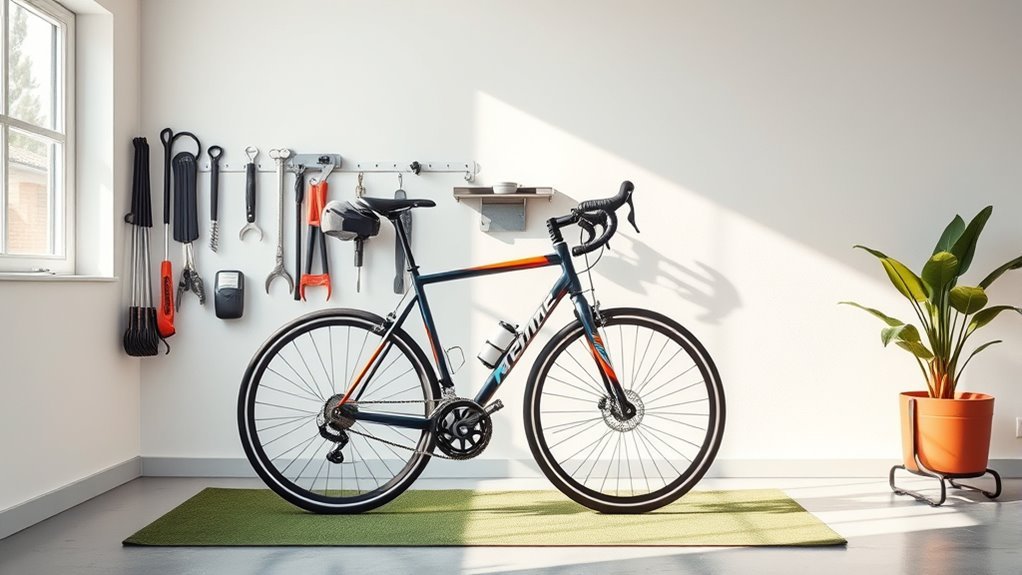
Although it may seem straightforward, choosing the right bike storage location is crucial to minimizing dirt buildup. You’ll want to evaluate your options between indoor storage and outdoor storage carefully. Indoor storage offers a controlled environment, shielding your bike from dust, moisture, and debris, which greatly reduces dirt accumulation. If indoor space is limited, select a well-ventilated, clean area that’s free from dust sources. Outdoor storage, while convenient, exposes your bike to environmental elements like rain, mud, and dust, accelerating dirt buildup. If outdoor storage is your only option, invest in a weatherproof cover and place the bike on a raised platform to avoid ground contact. Making an informed choice here guarantees your bike stays cleaner, requiring less frequent maintenance and giving you more freedom to ride. Using non-abrasive cleaners when you do clean your bike will help preserve its finish and prevent damage.
Regular Cleaning and Maintenance Routine
A consistent cleaning and maintenance routine is essential to prevent dirt buildup and guarantee your bike performs at its best. Establish a cleaning schedule based on usage frequency and riding conditions; for example, after muddy rides or every two weeks under normal conditions. Focus on key components prone to grime accumulation, such as the drivetrain, brakes, and suspension. Use appropriate brushes and biodegradable degreasers to remove dirt without damaging parts. Maintenance tips include lubricating the chain post-cleaning and inspecting brake pads and tire pressure regularly. Consistent upkeep not only preserves your bike’s functionality but also extends its lifespan, giving you the freedom to ride confidently. By adhering to a systematic routine, you’ll minimize dirt-related wear and enjoy smoother, more reliable performance every time you hit the road or trail. For general cleaning, consider using a DIY bike cleaner made from mild soap and natural ingredients to protect your bike’s surfaces while effectively removing grime.
Use Protective Covers and Fenders
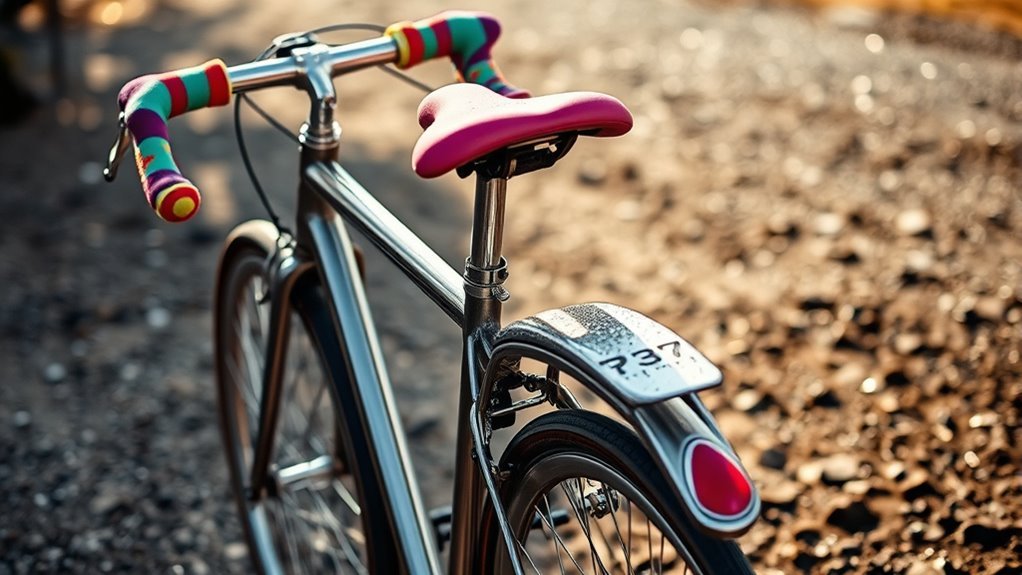
Maintaining your bike through regular cleaning is key, but preventing dirt from reaching critical components can save you time and effort. Using protective covers made from durable protective materials shields your bike when parked or stored, reducing exposure to dust, mud, and moisture. For riding, selecting the appropriate fender types tailored to your terrain and bike style is crucial. Full-coverage fenders offer maximum dirt and water deflection in wet or muddy conditions, while minimalistic or clip-on fenders provide lightweight protection for dry trails. Installation should guarantee secure attachment without interfering with wheel rotation or brake function. By integrating these protective solutions, you preserve your bike’s mechanical integrity and maintain smooth operation, allowing you to enjoy unrestricted freedom on every ride without frequent dirt-related maintenance interruptions. Additionally, regularly checking tire pressure and tread condition can further prevent dirt buildup and ensure a safe ride.
Apply Lubricants and Protective Coatings
Protect your bike’s moving parts by applying lubricants and protective coatings designed to reduce friction and prevent corrosion. Use targeted lubrication techniques, focusing on the chain, derailleurs, cables, and pivot points. Choose lubricants appropriate for your riding conditions—wet lube for damp environments or dry lube for dusty trails—to minimize dirt attraction. After lubrication, apply coating materials like anti-corrosion sprays or clear protective films on exposed metal surfaces to shield against moisture and grime buildup. Verify you clean components thoroughly before application to maximize adhesion and effectiveness. Regularly reapply these coatings as part of your maintenance routine to preserve peak performance and extend your bike’s lifespan. These precise steps help maintain smooth operation and protect your freedom on every ride by preventing dirt-induced wear and damage.
Inspect and Replace Worn Components
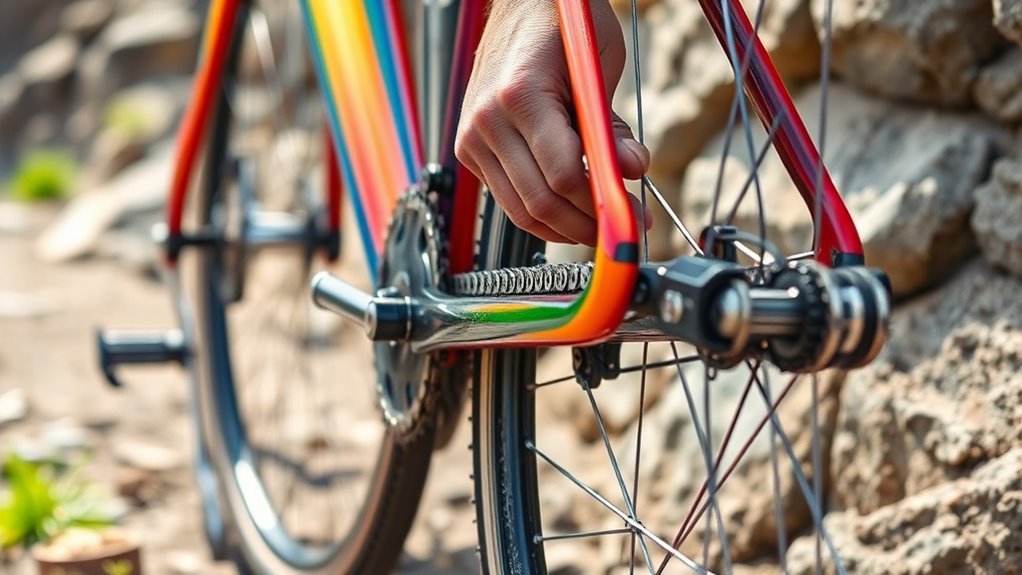
Regularly inspect your bike’s components for signs of wear, such as chain stretch, frayed cables, worn brake pads, and damaged tires. Establish an inspection frequency based on your riding style and conditions—typically every 100-200 miles or monthly for frequent riders. Component wear directly affects performance and safety, so timely identification is vital. Use precise measuring tools like chain wear indicators and calipers to assess degradation accurately. Replace worn parts promptly to prevent dirt accumulation in damaged areas, which can accelerate wear and impair function. Maintaining your bike with disciplined inspection routines guarantees smooth operation and preserves your freedom to ride confidently, minimizing unexpected breakdowns caused by neglected component wear.
Frequently Asked Questions
Can Certain Bike Materials Attract Less Dirt?
It’s funny how you might not realize, but certain bike materials do attract less dirt due to their material properties. For instance, smoother surface finishes like anodized aluminum or powder-coated steel repel grime better than rougher textures. This means your bike stays cleaner longer, giving you more freedom to ride without constant maintenance. Choosing the right materials and finishes can make a practical difference in dirt buildup and overall bike performance.
Does Weather Affect How Quickly Dirt Builds Up?
Yes, weather greatly influences dirt accumulation on your bike. Rain impact causes mud and grime to stick more readily to surfaces, accelerating buildup. High humidity effects promote moisture retention, making dirt cling longer and potentially leading to corrosion if not cleaned promptly. Understanding these factors helps you maintain your bike’s performance and freedom to ride, ensuring dirt doesn’t hinder your experience regardless of weather conditions.
Are Electric Bikes More Prone to Dirt Buildup?
Think of your electric bike as a ship traversing muddy waters—it’s more exposed to grime due to extra components like batteries and motors. You’ll find electric bike maintenance demands extra care to keep dirt from clogging sensitive parts. Using dirt resistant coatings can help shield these areas, reducing buildup and prolonging performance. By staying proactive, you maintain your freedom to ride smoothly without frequent, tedious cleanings slowing you down.
How Does Tire Tread Design Influence Dirt Accumulation?
Tire tread design directly impacts dirt accumulation by influencing how dirt gets trapped or shed. Tread patterns with deeper grooves and aggressive knobs improve traction performance on loose surfaces but can also collect more dirt. Conversely, smoother patterns shed mud and dirt more easily, maintaining cleaner tires and consistent traction. You’ll want a tread that balances grip with self-cleaning ability, ensuring freedom to ride smoothly without frequent cleaning interruptions.
Can Diet or Rider Habits Affect Bike Cleanliness?
Your rider nutrition indirectly impacts bike cleanliness by influencing sweat composition and skin oils, which can attract dirt during rides. Staying hydrated and maintaining balanced nutrition reduces excessive sweat and grime transfer to your bike. Additionally, establishing a consistent cleaning routine immediately after rides helps prevent dirt accumulation. Together, these habits guarantee your bike stays cleaner longer, allowing you more freedom to enjoy your rides without constant maintenance interruptions.