Disinfecting High-Touch Areas in Toilet
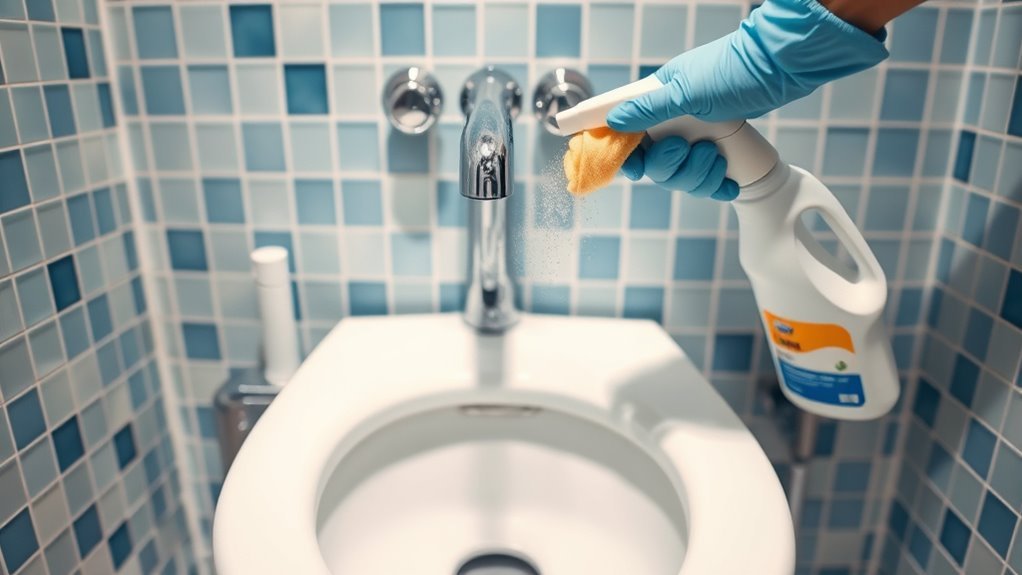
You should disinfect all high-touch toilet surfaces, like flush handles, faucet taps, door knobs, and toilet seats, daily to prevent germ spread. Use EPA-registered disinfectants appropriate for each material, applying them evenly and allowing the recommended contact time. Wearing gloves and masks protects you from bacteria and chemicals. Focus on peak usage times for more frequent cleaning. Following proper techniques keeps your restroom safer—keep going to understand precise methods and best practices for thorough disinfection.
Importance of Disinfecting Toilet Surfaces
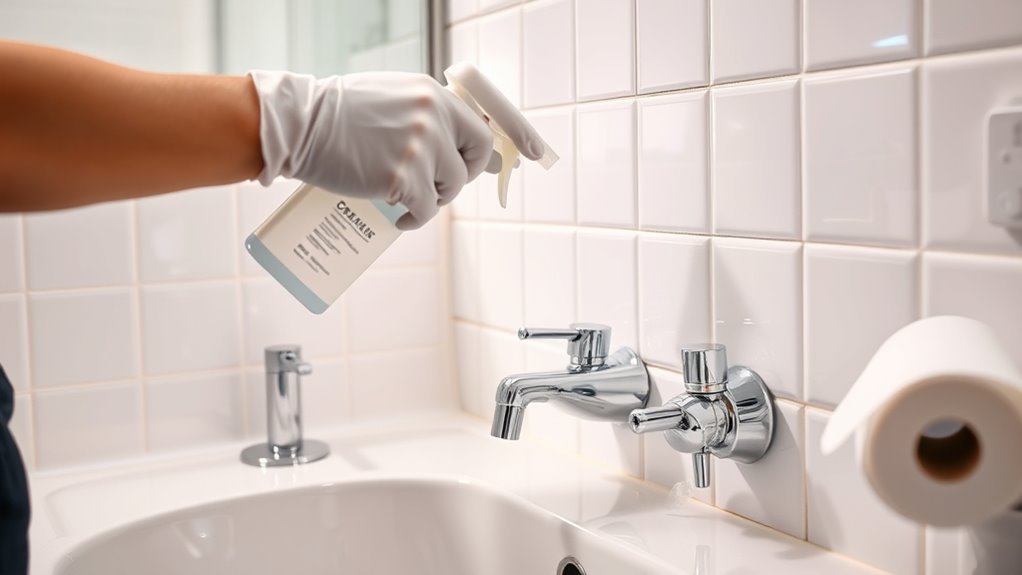
Although it might seem like a routine chore, disinfecting toilet surfaces is essential to prevent the spread of harmful pathogens. Maintaining strict toilet hygiene reduces germ transmission, protecting your health and those around you. You need to follow a methodical approach—use EPA-approved disinfectants, apply them correctly, and allow adequate contact time to guarantee effectiveness. Skipping this step increases the risk of bacteria and viruses lingering on surfaces, undermining your efforts to stay healthy and free. By consistently disinfecting, you’re not just cleaning; you’re actively breaking the chain of infection. This compliance-focused practice grants you confidence and control over your environment, supporting your freedom to live and work without unnecessary health risks. Prioritize disinfecting toilet surfaces—it’s a simple, non-negotiable step in maintaining peak hygiene. Regularly targeting high-touch surfaces in the toilet area maximizes the effectiveness of your cleaning routine and reduces health risks.
Identifying High-Touch Areas in Toilets
When you’re aiming to disinfect effectively, you first need to pinpoint the high-touch areas in toilets that harbor the most germs. Focus on surfaces frequently touched by hands: flush handles, faucet taps, door handles, and toilet seats. These are key germ hotspots requiring thorough toilet cleaning. Don’t overlook light switches and soap dispensers, as they also contribute to cross-contamination. By identifying these critical points, you guarantee your disinfecting efforts target areas with the highest contamination risk. This methodical approach not only enhances hygiene but also complies with health standards, giving you the freedom to maintain a safe environment confidently. Prioritize these surfaces consistently to break the chain of infection and uphold effective sanitation in your restroom space. Remember to apply disinfectants according to the recommended contact time to ensure maximum germ elimination.
Choosing the Right Disinfectants for Bathroom Use
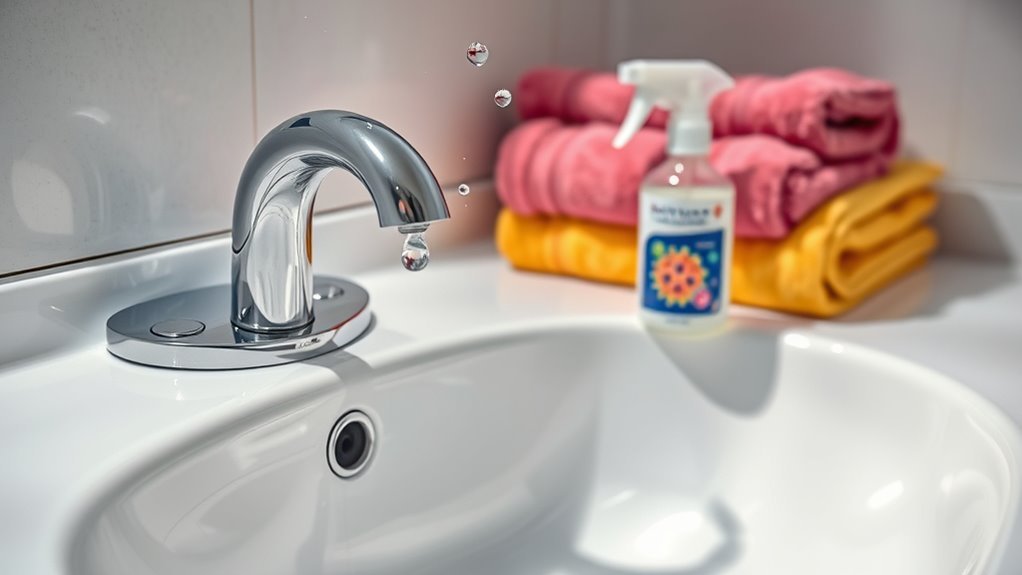
You need to select disinfectants that are proven effective against common bathroom pathogens, such as EPA-registered products containing bleach or quaternary ammonium compounds. Always consider safety factors, including proper ventilation and avoiding mixing chemicals to prevent hazardous reactions. Following manufacturer guidelines guarantees both maximum efficacy and user protection during application. Incorporating eco-friendly cleaning methods can also reduce harmful chemical exposure while maintaining a hygienic bathroom environment.
Effective Disinfectant Types
Since bathrooms contain a high concentration of germs, choosing the right disinfectant is essential for effective cleaning. You’ll want to balance effectiveness with safety and personal preference, especially when selecting between natural disinfectants and chemical disinfectants. Here are three effective disinfectant types to evaluate:
- Bleach-based disinfectants: Highly effective against a broad spectrum of pathogens; ideal for heavy contamination.
- Quaternary ammonium compounds: Common in commercial cleaners, offering strong antimicrobial action with moderate odor.
- Natural disinfectants: Options like vinegar or tea tree oil provide antimicrobial benefits with fewer chemicals, suitable for those seeking a toxin-free environment.
Safety Considerations
Although selecting an effective disinfectant is crucial, prioritizing safety guarantees both your health and proper bathroom hygiene. When choosing disinfectants for high-touch toilet areas, verify they’re EPA-approved and suitable for bathroom surfaces. Avoid harsh chemicals that can cause respiratory irritation or skin reactions. Follow label instructions precisely to prevent misuse and reduce germ transmission risks. Incorporate disinfectants compatible with your cleaning protocols to maintain balance between efficacy and safety. Use gloves and ventilate the area well during application to protect yourself from harmful fumes. Finally, store disinfectants securely, out of reach of children or pets. By adhering to these safety considerations, you maintain a sanitized environment while safeguarding your freedom to clean confidently and responsibly.
Proper Cleaning Techniques for Flush Handles
You’ll want to select an effective disinfectant approved for bathroom surfaces to guarantee proper sanitation. Begin by applying the disinfectant directly to the flush handle, allowing the recommended contact time for maximum effectiveness. Then, use a clean cloth to thoroughly wipe the handle, paying close attention to all sides and crevices. Proper preparation, such as removing visible dirt beforehand, is essential to maximize the disinfectant’s effectiveness on high-touch surfaces.
Effective Disinfectant Choices
When disinfecting flush handles, choosing the right disinfectant is essential to confirm both effectiveness and surface safety. You want a solution that kills germs without damaging the handle or harming the environment. Consider these options:
- Use EPA-approved disinfectants specifically labeled for bathroom surfaces to confirm compliance and maximum pathogen elimination.
- Opt for natural disinfectant alternatives like vinegar or hydrogen peroxide when possible. These eco friendly cleaning solutions reduce chemical exposure and support sustainability.
- Avoid abrasive chemicals or bleach that can corrode metal or plastic handles, compromising long-term hygiene.
Step-by-Step Cleaning Process
Start by gathering all necessary supplies, including your chosen disinfectant, clean cloths or disposable wipes, and gloves. First, put on gloves to protect your skin. Next, apply the disinfectant directly to the flush handle, ensuring full coverage. Use a clean cloth or disposable wipe to scrub the handle thoroughly, targeting all surfaces. Allow the disinfectant to sit for the recommended contact time specified by the product to maximize effectiveness. Afterward, wipe away any residue with a fresh cloth or wipe. Dispose of used wipes properly and remove gloves safely. Finally, wash your hands thoroughly. By following these precise disinfection techniques and using appropriate cleaning supplies, you maintain a hygienic environment while respecting your freedom to control cleanliness efficiently and responsibly.
Effective Methods to Sanitize Door Knobs
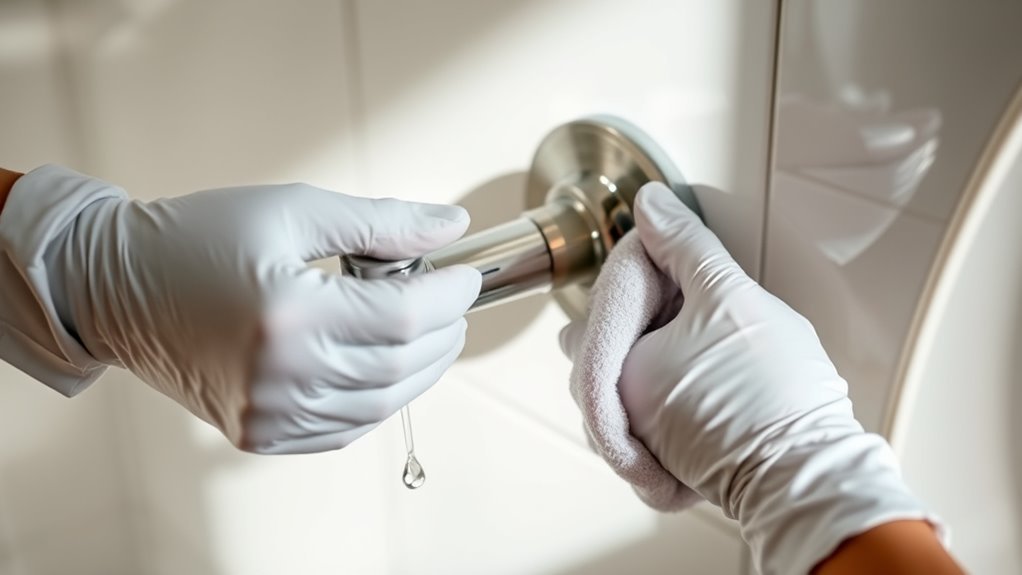
How often do you think about the germs lurking on door knobs? Proper door knob sanitization is essential to maintain a hygienic space. You want to guarantee effective disinfectant application without damaging surfaces or compromising safety. Follow these steps:
- Choose the right disinfectant: Use an EPA-approved product suitable for metal or plastic, depending on your door knob material.
- Apply thoroughly: Spray or wipe the disinfectant evenly, covering all crevices to maximize microbial kill.
- Allow proper contact time: Let the disinfectant sit for the recommended duration to guarantee complete sanitization before wiping or drying.
- Remember to wear appropriate personal protective equipment to protect yourself during the cleaning process.
Disinfecting Faucet Handles Safely
Although faucet handles are frequently touched, they’re often overlooked during cleaning routines. To disinfect faucet handles safely, you need to take into account faucet handle materials and proper disinfectant application. Different materials—metal, plastic, or ceramic—require specific disinfectants to avoid damage while guaranteeing effective germ elimination.
| Faucet Handle Material | Recommended Disinfectant | Application Tip |
|---|---|---|
| Metal | Alcohol-based (70% isopropanol) | Apply with a soft cloth, avoid soaking |
| Plastic | Diluted bleach solution (0.1%) | Use spray and wipe immediately |
| Ceramic | Hydrogen peroxide (3%) | Gently wipe, avoid abrasive pads |
Always follow product instructions and make sure surfaces remain wet for the required contact time. This disciplined approach guarantees safe, effective disinfection without compromising faucet integrity. Incorporating a consistent cleaning routine can help ensure that faucet handles are disinfected regularly and thoroughly.
Best Practices for Cleaning Toilet Seats
When you clean toilet seats, it’s essential to use disinfectants compatible with the seat material and to guarantee thorough coverage to eliminate pathogens effectively. Proper toilet seat sanitization demands attention to detail and adherence to best practices.
Effective toilet seat cleaning requires compatible disinfectants and thorough coverage to ensure complete pathogen removal.
- Choose EPA-registered disinfectants suitable for plastic or wood seats, avoiding harsh chemicals that cause damage.
- Apply the disinfectant evenly, ensuring all contact surfaces, including hinges and undersides, are treated to maximize pathogen removal.
- Use disposable cloths or wipes to prevent cross-contamination, and follow the manufacturer’s recommended dwell time before wiping dry.
To protect the toilet’s finish and ensure longevity, avoid abrasive cleaners and opt for eco-friendly cleaning products when possible.
Frequency of Disinfection for High-Touch Surfaces
You should disinfect high-touch surfaces in toilets at least once daily to maintain hygiene standards. Focus on peak usage times to reduce contamination risks effectively. Additionally, follow material-specific guidelines to prevent damage while ensuring thorough disinfection. Using natural disinfectants can help maintain cleanliness without damaging surfaces.
Daily Cleaning Importance
Because high-touch surfaces in toilets are frequent contact points, you need to disinfect them daily to prevent the spread of germs and maintain hygiene standards. Establishing strict cleaning schedules guarantees you don’t miss critical areas, optimizing disinfectant effectiveness. Here’s how to stay on track:
- Prioritize surfaces like door handles, flush levers, and faucets in your daily routine to curb contamination.
- Use EPA-approved disinfectants, applying them as per manufacturer instructions to maximize germ elimination.
- Document each cleaning session to maintain accountability and verify compliance with health protocols.
Peak Usage Timing
Maintaining a consistent disinfecting schedule is only part of effective hygiene management. You need to adjust your cleaning frequency based on peak usage times to guarantee high-touch areas stay sanitary. During periods of high traffic, such as mornings or lunch breaks, germs accumulate faster, requiring more frequent disinfection. By monitoring peak usage, you can optimize cleaning intervals, targeting surfaces like door handles, flush levers, and faucet controls precisely when they’re most vulnerable. This approach not only maintains a safer environment but also provides you the freedom to allocate resources efficiently, avoiding unnecessary over-cleaning. Aligning your disinfection routine with peak usage patterns guarantees compliance with hygiene standards while maximizing the impact of every cleaning effort. Stay proactive, and you’ll safeguard health without sacrificing operational flexibility.
Material-Specific Guidelines
Although all high-touch surfaces require regular disinfection, the frequency should be adjusted according to the material composition to confirm both efficacy and surface integrity. You’ll want to tailor your approach based on different material types and the cleaning tools that suit them best.
- Metal surfaces—like door handles—need disinfection multiple times daily due to frequent contact, using non-abrasive disinfectants to avoid corrosion.
- Plastic and laminate surfaces require daily cleaning with mild disinfectants to prevent degradation; avoid harsh chemicals that may cause discoloration.
- Wooden surfaces should be disinfected less frequently, about twice a week, using gentle, wood-safe cleaning tools to maintain finish and prevent damage.
Adjusting frequency and tools for each material confirms effective disinfection while preserving surface longevity, giving you the freedom to maintain a hygienic, durable restroom environment.
Using Protective Gear While Cleaning Toilets
Protective gear is essential when cleaning toilets to minimize exposure to harmful bacteria and chemicals. Always wear protective gloves to create a barrier between your skin and contaminants. Choose gloves that are durable and resistant to the cleaning agents you use. Cleaning masks are equally important; they protect your respiratory system from inhaling chemical fumes and airborne pathogens. Make sure your mask fits securely and is rated for the type of disinfectants applied. Before you start, inspect your gear for any damage and replace it if necessary. After finishing, remove gloves carefully to avoid contact with contaminants, then wash your hands thoroughly. By consistently using protective gloves and cleaning masks, you maintain your health while gaining the freedom to clean confidently and effectively. Additionally, it is critical to conduct staff training on the proper use and handling of protective gear to enhance safety and cleaning effectiveness.
Tips for Maintaining a Germ-Free Bathroom Environment
To keep your bathroom consistently germ-free, you need to adopt a routine that targets common hotspots and limits bacterial growth. Effective bathroom hygiene is essential for your health and freedom from illness. Focus on germ prevention with these three tips:
- Regular Disinfection: Clean high-touch surfaces like faucets, flush handles, and door knobs daily using EPA-approved disinfectants to eliminate harmful microbes.
- Proper Ventilation: Facilitate adequate airflow to reduce moisture, which fosters bacterial proliferation. Use exhaust fans or open windows regularly.
- Personal Hygiene Practices: Always wash your hands thoroughly after using the toilet, and encourage others to do the same to minimize germ transmission.
Additionally, wearing reusable gloves during cleaning protects your hands from bacteria and harsh cleaning agents, ensuring safety throughout the process.
Frequently Asked Questions
Can Disinfectants Damage Bathroom Fixtures Over Time?
You might wonder if disinfectants could harm your bathroom fixtures over time. The key is understanding disinfectant longevity and how often you use them. Some disinfectants can degrade certain fixture materials, like metals or plastics, if applied too frequently or left on too long. To protect your fixtures while maintaining cleanliness, choose products compatible with your materials, follow instructions carefully, and avoid overuse. This way, you keep your freedom to clean without damage.
How Long Should Disinfectants Remain on Surfaces Before Wiping?
Think of disinfectant dwell time as the silent handshake that seals the deal between you and cleanliness. You should let the disinfectant sit on the surface for the time specified on its label—usually between 1 to 10 minutes—before wiping. This guarantees maximum efficacy without compromising surface compatibility. Following these guidelines grants you freedom from germs while protecting your fixtures, striking a balance between safety and care.
Are Natural Disinfectants as Effective as Chemical Ones?
You might wonder if natural ingredients match chemical disinfectants in effectiveness. While natural options like vinegar or tea tree oil offer some antimicrobial benefits, their effectiveness comparison shows they often fall short against tough pathogens. If you want freedom from harsh chemicals, natural disinfectants can be a choice, but for thorough sanitation, especially in high-risk areas, chemical disinfectants usually provide more reliable results. Always follow product guidelines to guarantee compliance and safety.
Can Ultraviolet (UV) Light Be Used for Toilet Disinfection?
Did you know UV light can reduce up to 99.9% of bacteria on surfaces? When considering UV effectiveness for toilet disinfection, you’ll find it’s a precise method that targets pathogens without chemicals. However, UV safety is essential; direct exposure can harm skin and eyes. If you want an efficient, chemical-free solution, using UV devices correctly gives you control and freedom from harsh cleaners while ensuring thorough disinfection.
What Should I Do if Someone Is Allergic to Disinfectants?
If someone’s allergic to disinfectants, you should explore allergy alternatives like vinegar or hydrogen peroxide, which are gentler but still maintain surface safety. Always test these on a small area first to avoid damage. You can also increase ventilation and wear gloves to minimize exposure. Following these steps guarantees compliance with safety standards while giving you the freedom to keep surfaces clean without triggering allergies.