How Many Dermestid Beetles to Clean a Deer Skull
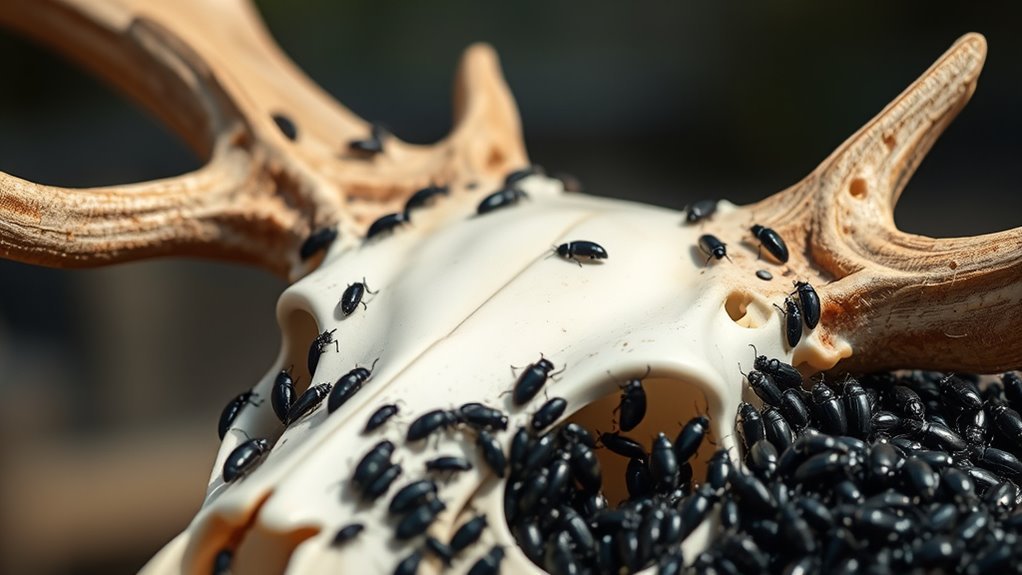
To clean a deer skull effectively, you need at least 100 dermestid beetles. This quantity guarantees thorough removal of flesh and tissue, promoting efficient cleaning. You’ll want to maintain a suitable environment with temperatures between 70-80°F and humidity of 50-70% for ideal beetle activity. Regularly monitor their progress and provide additional food sources if necessary. This technique assures a clean result, and further details on preparation and maintenance can enhance your understanding.
Preparation For Cleaning
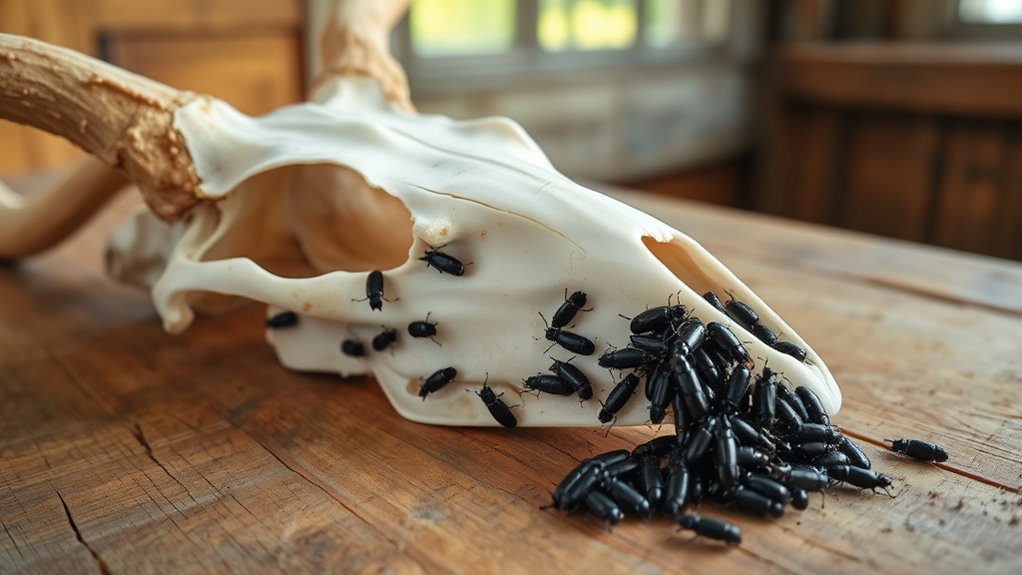
Before you begin the cleaning process, it’s essential to prepare the deer skull properly to guarantee the effectiveness of the dermestid beetles. Start by removing any remaining flesh, muscle, and tissue, as this will enhance the beetles’ access to the bone. Thorough skull preparation guarantees that the beetles can thrive in their habitat, allowing them to work efficiently. Rinse the skull to eliminate residual blood and organic material, which could deter the beetles. Additionally, inspect for any cracks or damage that might impede the cleaning process. A well-prepared skull not only maximizes the beetles’ cleaning potential but also minimizes the risk of contamination in their habitat. By following these steps, you can create ideal conditions for your dermestid beetles.
Tools and Chemical Required

To effectively clean a deer skull using dermestid beetles, you’ll need a few essential tools and chemicals. Prioritizing chemical safety is vital, especially when using cleaning supplies that may be hazardous. Here’s a quick overview of what you’ll need:
| Tool/Chemical | Purpose | Notes |
|---|---|---|
| Dermestid Beetles | Main cleaning agent | Guarantee a healthy colony |
| Plastic Container | Housing for beetles | Must have ventilation |
| Hydrogen Peroxide | Degreasing and whitening | Use with caution |
How to Clean:
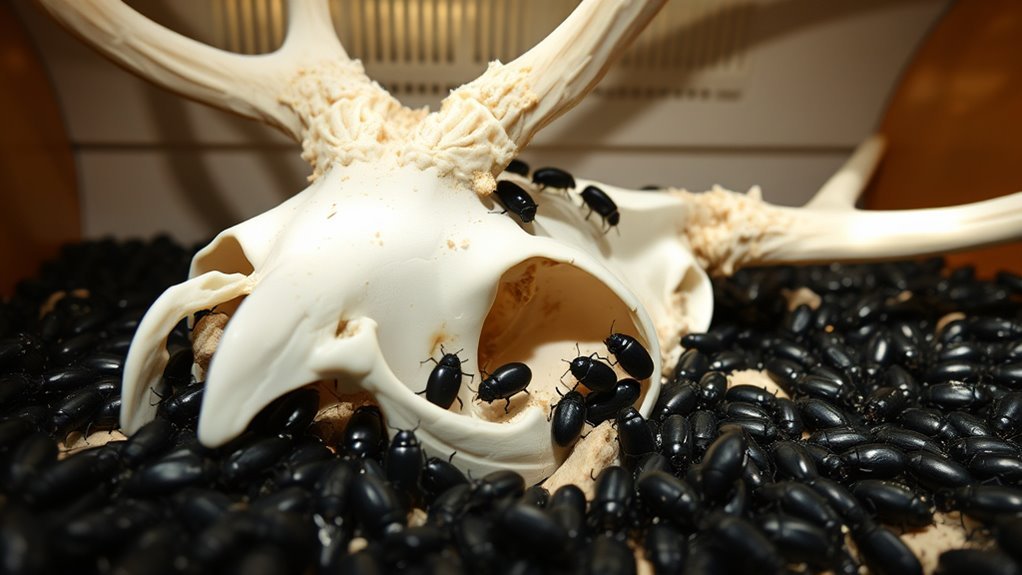
Step-by-Step Guide on Cleaning a Deer Skull with Dermestid Beetles
Cleaning a deer skull using dermestid beetles is an effective method for ensuring thorough removal of flesh and fat. Follow this detailed guide step by step to achieve optimal results.
Step 1: Prepare the Skull
- Remove Excess Tissue: Before introducing the skull to the beetles, manually remove as much flesh and tissue as possible. Use a knife or scalpel to carefully cut away large chunks of meat.
- Rinse the Skull: After removing excess tissue, rinse the skull thoroughly with water. This step is crucial as it prevents contamination and allows the beetles to access all areas of the skull effectively.
Step 2: Set Up the Beetle Enclosure
- Choose a Designated Enclosure: Find or create an enclosure that is suitable for housing dermestid beetles. This can be a plastic container or a glass aquarium with proper ventilation.
- Maintain Ideal Conditions: Ensure the enclosure maintains ideal temperature (around 70-80°F) and humidity levels (approximately 50-70%) to promote effective cleaning by the beetles.
Step 3: Introduce the Beetles
- Select the Right Number of Beetles: For a standard deer skull, it is recommended to use at least 100 dermestid beetles. This ensures that there are enough beetles to efficiently clean the skull.
- Place the Skull Inside the Enclosure: Once the beetles are ready, carefully place the prepared skull into the enclosure with the beetles.
Step 4: Monitor Progress
- Check on the Beetles Regularly: Keep an eye on the beetles’ progress. Make sure they are actively consuming the remaining flesh and that the skull is being cleaned efficiently.
- Ensure Adequate Food Supply: If necessary, provide additional food sources for the beetles, such as dried meat, to support their cleaning process.
- Prevent Overcrowding: Monitor the population of beetles to avoid overcrowding in the enclosure, which can hinder their cleaning capabilities.
Step 5: Complete the Cleaning Process
- Remove the Skull: After the beetles have completed their work, carefully remove the skull from the enclosure.
- Rinse Again: Rinse the skull once more with water to eliminate any remaining debris or beetle exoskeletons. This final rinse ensures the skull is clean and ready for further treatment or display.
Safety Consideration
While using dermestid beetles for skull cleaning can be highly effective, it’s crucial to take into account safety precautions to protect yourself and guarantee a successful cleaning process. Start by wearing protective gear, including gloves and a face mask, as beetles can carry pathogens. Verify your workspace is well-ventilated to minimize exposure to any unpleasant odors or potential allergens. When handling the skull and beetles, observe handling precautions; avoid direct contact with your skin and never ingest any materials. Establish a secure environment to prevent the beetles from escaping, as they can become a nuisance. By adhering to these safety measures, you’ll create a more efficient and hygienic skull cleaning experience while safeguarding your health.
Frequently Asked Questions
How Long Does It Take for Dermestid Beetles to Clean a Skull?
Dermestid beetles can clean a skull in approximately one to two weeks, depending on factors like the skull’s size and the beetles’ efficiency. If you provide ideal conditions, such as temperature and humidity, their cleaning duration can be minimized. The more beetles you have, the quicker they’ll work, as their collective efforts greatly reduce the time needed. Ultimately, understanding these variables can enhance your skull-cleaning process and achieve the desired results efficiently.
Can I Reuse Dermestid Beetles for Multiple Skulls?
Yes, you can reuse dermestid beetles for multiple skulls. Their lifespan typically ranges from a few months to a year, depending on conditions. However, their cleaning efficiency may diminish if they’re overworked or lack proper care. To maintain peak performance, make sure they have a suitable environment and food source. Regularly assess their health to maximize effectiveness, allowing you to efficiently clean multiple specimens without significant loss in speed or quality.
What Do I Do With Leftover Beetles After Cleaning?
Once you’re done cleaning, you can either keep the leftover dermestid beetles for future projects or release them outdoors if you don’t plan on using them again. For beetle care, guarantee they’re housed in a controlled environment with proper humidity and temperature. You might want to stock up on cleaning supplies to maintain their habitat. Remember, maintaining a clean space guarantees their health and efficiency for any future skull cleaning endeavors.
How Do I Breed Dermestid Beetles for Future Cleaning?
To breed dermestid beetles, start by setting up a suitable beetle habitat—think temperature control and moisture management. Provide plenty of food sources, like dry animal matter, and maintain a clean environment. Some breeding tips include separating adults from larvae to prevent predation. Monitor conditions regularly to guarantee ideal growth. With the right setup, you’ll cultivate a thriving colony, giving you a steady supply for your future cleaning projects.
Are There Alternative Methods to Using Dermestid Beetles?
Yes, there are alternative methods to using dermestid beetles. You can consider chemical methods, which involve using specific solvents to dissolve flesh. However, this can pose environmental risks. Another option is boiling water; submerging the skull can effectively remove soft tissue, but it may also damage the bone if not done carefully. Weighing the pros and cons of each method is essential for achieving the desired results without compromising the integrity of the skull.