How to Clean Pavers Before Sealing: A Step-by-Step Guide
Cleaning pavers before sealing is crucial to ensure proper adhesion and longevity of the sealant. A thorough cleaning process removes debris, weeds, and dirt, creating a pristine surface for sealing. This guide will walk you through the essential steps to effectively clean your pavers, ensuring they are ready for sealing, ultimately enhancing their appearance and durability.
Remove Loose Debris
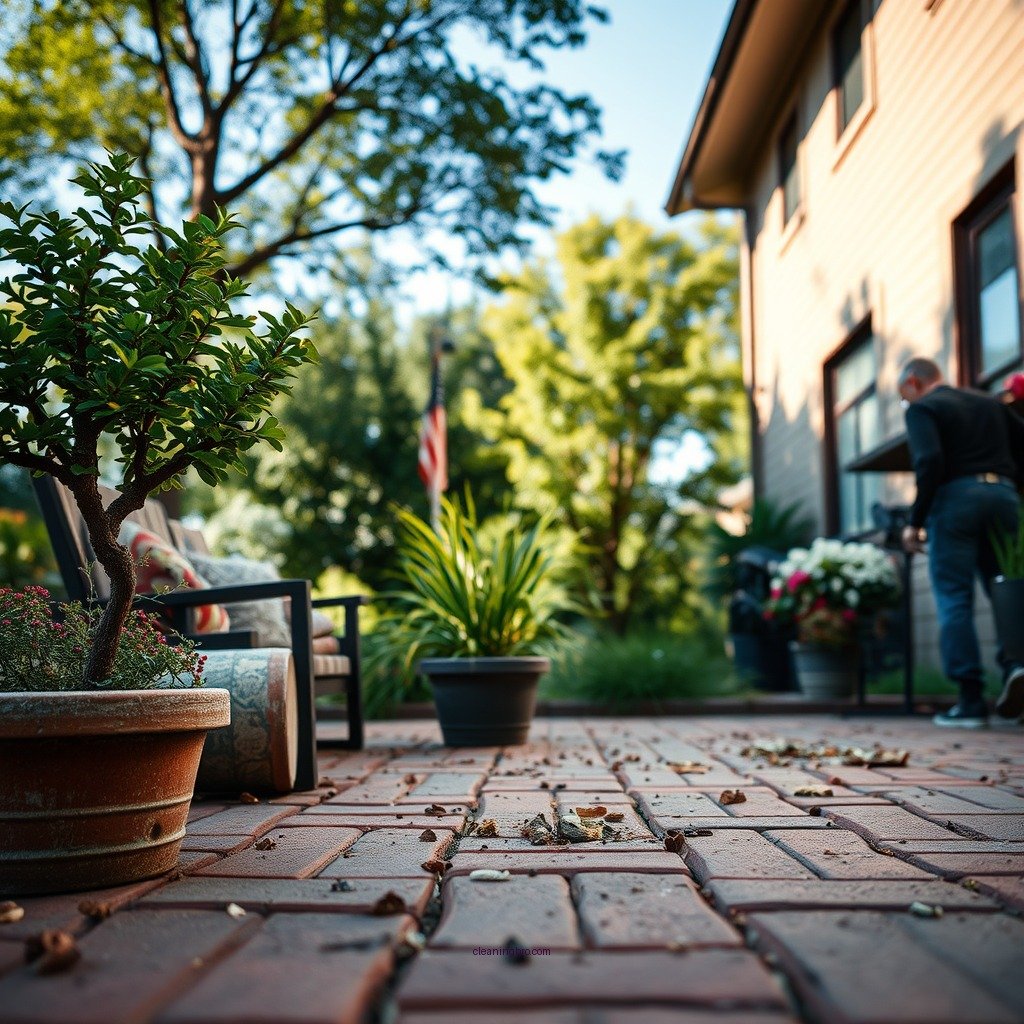
Begin the cleaning process by removing all loose debris from the surface of the pavers. Using a broom or leaf blower, clear away dirt, leaves, and other loose materials that have accumulated over time. Pay special attention to the joints between pavers, as these areas often harbor dirt and debris that can lead to ineffective sealing. A clean surface is essential not only for aesthetic reasons but also for the overall effectiveness of the sealant.
Tools and Tips:
– A stiff-bristled broom is effective for sweeping larger debris.
– A leaf blower can save time and efficiently remove leaves and lighter debris.
– Always wear gloves and a mask to protect yourself from dust and allergens.
Address Weeds and Moss
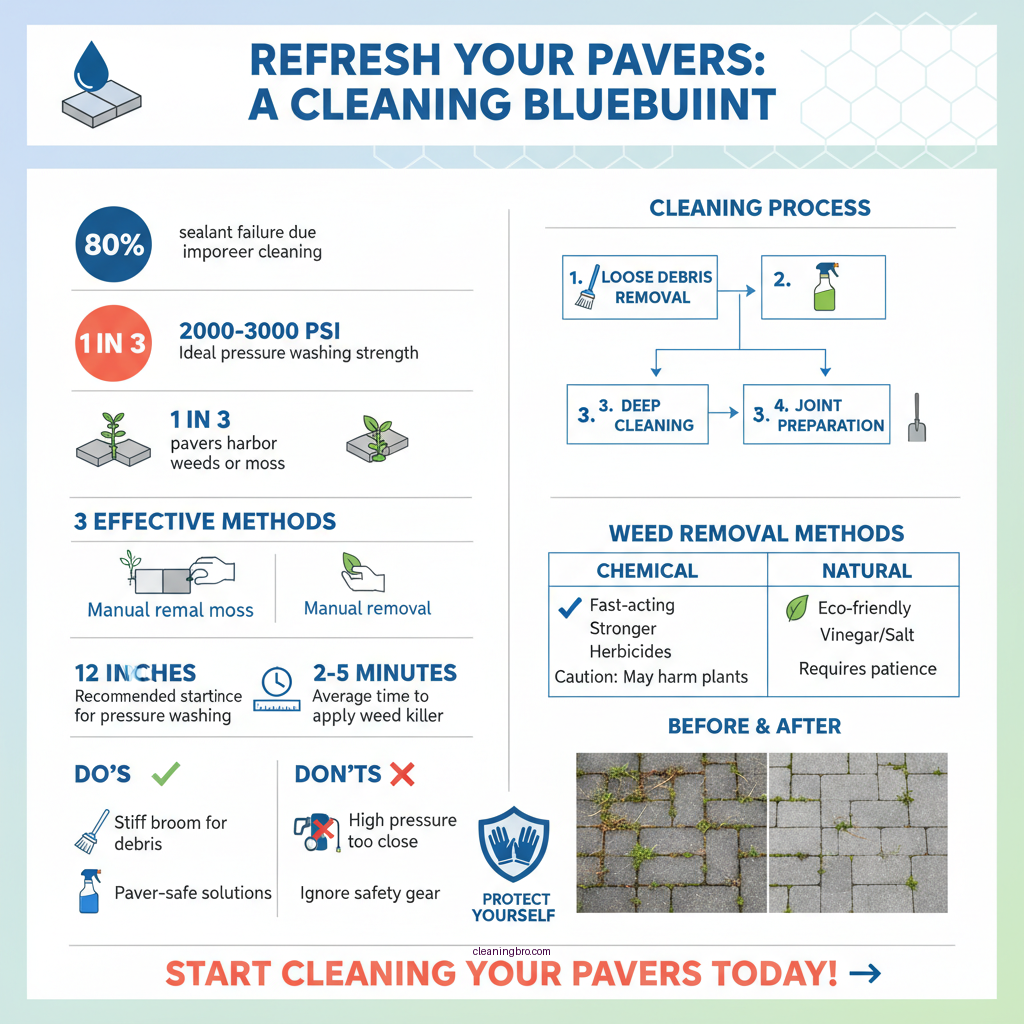

Weeds and moss can significantly undermine the integrity of your paver surface, leading to unevenness and potential damage. Before cleaning, it’s essential to address these issues. Apply a weed killer to eliminate any existing weeds or moss, following the manufacturer’s instructions for optimal results. For larger weeds, manual removal might be necessary to prevent them from interfering with the cleaning process.
Recommended Products:
– Glyphosate-based herbicides are effective for killing weeds and moss.
– Natural alternatives, such as vinegar or boiling water, can also be used for eco-friendly weed control.
Pressure Wash the Pavers

Using a pressure washer is one of the most effective methods to remove stubborn dirt, stains, and any remaining debris on the pavers. It provides a deep clean that a broom cannot achieve. However, it is crucial to maintain a safe distance while pressure washing to avoid damaging the pavers. A pressure setting of around 2000-3000 PSI is generally recommended for cleaning pavers.
Tips for Pressure Washing:
– Always start at a distance of at least 12 inches from the surface and gradually decrease as needed.
– Use a wide spray nozzle to cover more area while minimizing the risk of damaging the paver surface.
– Work in sections to ensure thorough cleaning.
Use Appropriate Cleaning Solutions
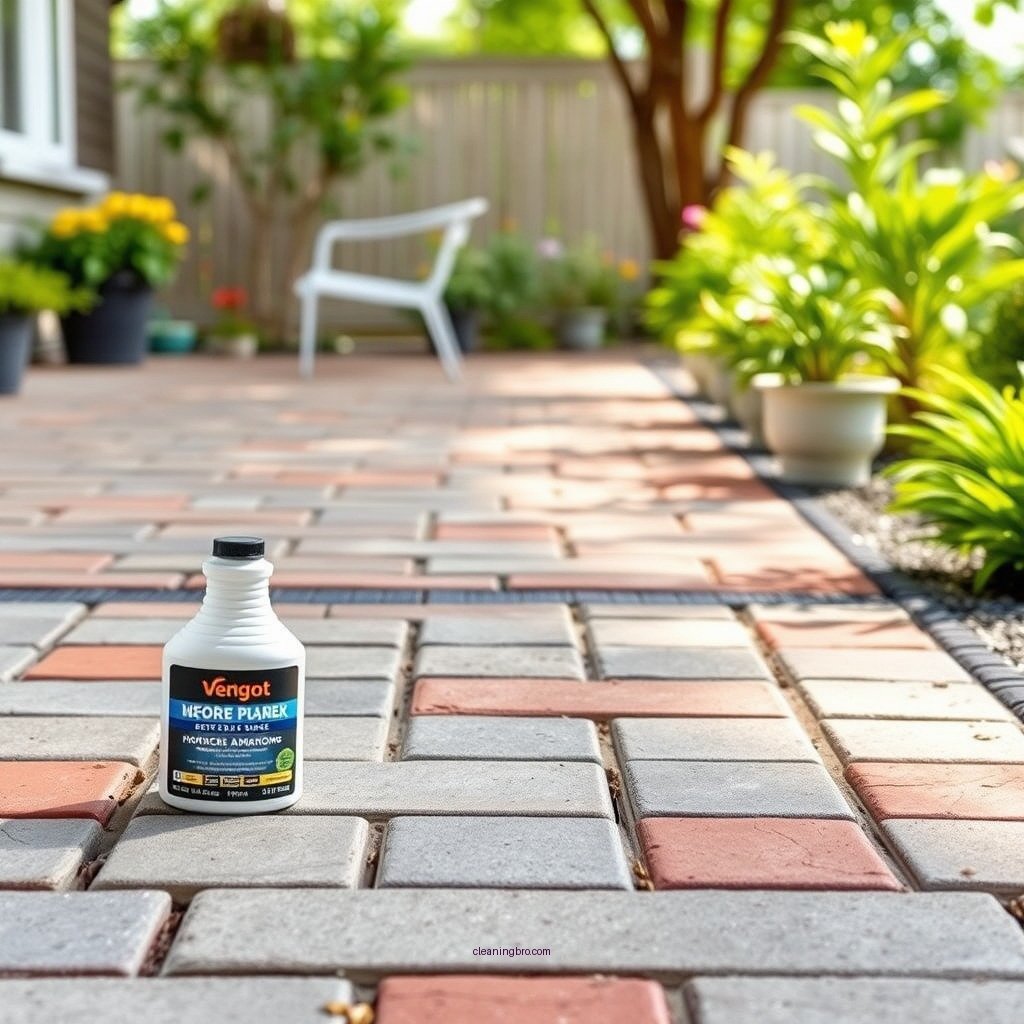
For optimal cleaning, select a paver-safe cleaning solution that specifically targets oil stains and discoloration. Many commercial cleaners are available that are designed for use on pavers and will not cause damage. Always follow the manufacturer’s instructions for dilution and application for the best results. This step can significantly enhance the overall appearance of the pavers.
Suggested Cleaning Products:
– A mild detergent mixed with water can be effective for regular cleaning.
– Specialized paver cleaning products that target specific stains, such as oil or rust, can be beneficial.
Rinse Thoroughly
After the cleaning process, it is essential to rinse the pavers thoroughly with clean water. This step removes any remaining cleaning solution, dirt, and debris that could interfere with the sealant’s adhesion. Ensure that all soap and residues are washed away, as these can affect the performance of the sealant over time.
Rinsing Tips:
– Use a garden hose with a spray nozzle for controlled rinsing.
– Ensure that water flows freely through the joints to remove any trapped debris.
Allow Proper Drying Time
Once the pavers have been cleaned and rinsed, it’s crucial to allow them to dry completely before applying the sealant. Ideally, this drying period should last between 24 to 48 hours. Checking for moisture in the joints is essential to ensure the surface is adequately dry. Applying sealant on damp pavers can lead to issues such as bubbling or poor adhesion.
Drying Considerations:
– Avoid sealing on rainy days or when there is high humidity.
– Test a small area for moisture before proceeding with sealing.
Inspect and Repair
After cleaning, take the time to inspect the pavers for any visible damage or unevenness. Look for cracks, chips, or other signs of wear that may need repair. If any pavers are broken, replace them, and refill any joints with sand as necessary. This inspection is vital to ensure that the pavers are in excellent condition before sealing, which will enhance the overall effectiveness and longevity of the sealant.
Repair Tips:
– Use polymeric sand for joint filling, as it provides better stability and durability.
– Consider patching any damaged areas with a suitable repair compound for pavers.
Maintaining clean pavers is a vital step that ensures a successful sealing process. By following these steps, you’ll create a clean, stable surface that enhances the appearance and durability of your pavers. Implementing this cleaning routine regularly will help to maintain their condition and extend the life of your sealant.
Top 7 Paver Cleaning Products (2024)
| # | Product | Type | Effectiveness | Price ($) |
|---|---|---|---|---|
| 1 | Simple Green Concrete Cleaner | Liquid | High | $12.99 |
| 2 | Wet & Forget Moss Gel | Gel | High | $19.99 |
| 3 | Zep Driveway and Concrete Cleaner | Liquid | Medium | $15.50 |
| 4 | Rust-Oleum Concrete Cleaner | Liquid | High | $14.99 |
| 5 | EcoSMART Organic Cleaner | Liquid | Medium | $10.99 |
| 6 | Wet & Forget Outdoor Cleaner | Liquid | High | $24.99 |
| 7 | Dirt Buster Paver Cleaner | Powder | Medium | $8.99 |
Effectiveness of Paver Cleaning Methods
Best Paver Cleaning Options: A Comparison
| Feature | ⭐ Simple Green | Wet & Forget | Zep Driveway Cleaner |
|---|---|---|---|
| Type | Liquid | Gel | Liquid |
| Eco-Friendly | ✅ | ✅ | ❌ |
| Stain Removal | High | High | Medium |
| Ease of Use | Easy | Very Easy | Moderate |
| Drying Time | 1-2 hours | Overnight | 2-3 hours |
| Application Method | Spray | Apply with sponge | Spray |
| Oil Stain Removal | High | Medium | High |
| Price | $12.99 | $19.99 | $15.50 |
| Customer Rating | ★★★★☆ | ★★★★★ | ★★★★☆ |
| 🏆 Best For | Eco-conscious users | Heavy-duty cleaning | General use |
In conclusion, cleaning pavers effectively before sealing is a multi-step process that requires attention to detail and thoroughness. By removing debris, addressing weeds, using appropriate cleaning solutions, and allowing proper drying time, you ensure the longevity of your paver surface and the sealant applied. Regular maintenance and adherence to these steps will keep your pavers looking great while extending their lifespan. Always remember, the effort put into cleaning and preparing your pavers will pay off in the long run with a beautiful and durable surface.
Frequently Asked Questions
What is the best way to clean pavers before sealing?
The best way to clean pavers before sealing is to use a pressure washer with a fan tip attachment to remove dirt, algae, and debris. Start at one end and work your way through, ensuring the entire surface is evenly cleaned. After pressure washing, allow the pavers to dry completely for optimal sealing results.
How do I remove stains from pavers before sealing?
To remove stains from pavers before sealing, use a specialized paver cleaner or a mixture of water and vinegar for organic stains. Apply the cleaner to the stained area, let it sit for a few minutes, then scrub with a stiff brush. Rinse thoroughly with water to ensure all cleaning products are removed before the sealing process.
Why is it important to clean pavers before sealing?
Cleaning pavers before sealing is crucial because any dirt, grime, or debris can prevent the sealer from properly adhering to the surface. This can lead to uneven sealing, reduced durability, and potential damage over time. A clean surface ensures that the sealer penetrates effectively, providing long-lasting protection.
Which tools do I need to clean pavers effectively?
To clean pavers effectively, you will need a pressure washer, a stiff-bristled brush, a paver cleaner solution, and a broom for sweeping. Additionally, a hose for rinsing and possibly a weed killer for removing any vegetation between pavers can also be useful. Having the right tools makes the cleaning process more efficient and thorough.
How long should I wait after cleaning pavers before sealing?
After cleaning pavers, you should wait at least 24 to 48 hours before sealing, allowing ample time for the pavers to dry completely. Moisture trapped beneath the sealer can cause issues such as bubbling or peeling. Always ensure the surface is dry to the touch to achieve the best sealing results.
References
- How to Clean Pavers (with Pictures) – wikiHow
https://www.wikihow.com/Clean-Pavers - https://www.extension.purdue.edu/extmedia/ho/ho-245-w.pdf
https://www.extension.purdue.edu/extmedia/ho/ho-245-w.pdf - https://www.extension.umn.edu/garden/yard-garden/landscaping/cleaning-pavers/
https://www.extension.umn.edu/garden/yard-garden/landscaping/cleaning-pavers/ - https://www.hse.gov.uk/toolbox/managing/cleaning.htm
https://www.hse.gov.uk/toolbox/managing/cleaning.htm - https://www.sciencedirect.com/topics/earth-and-planetary-sciences/paver-sealing
https://www.sciencedirect.com/topics/earth-and-planetary-sciences/paver-sealing - https://www.ncbi.nlm.nih.gov/pmc/articles/PMC5303971/
https://www.ncbi.nlm.nih.gov/pmc/articles/PMC5303971/ - https://www.cdc.gov/healthywater/drinking/campylobacter.html
https://www.cdc.gov/healthywater/drinking/campylobacter.html - Google Scholar Google Scholar
https://scholar.google.com/scholar?q=how+to+clean+pavers+before+sealing - Google Scholar Google Scholar
https://scholar.google.com/scholar?q=paver+cleaning+techniques - how to clean pavers before sealing – Search results
https://en.wikipedia.org/wiki/Special:Search?search=how+to+clean+pavers+before+sealing