How to Clean Mold Off Leather Furniture: A Step-by-Step Guide
To effectively clean mold off leather furniture, you need to act quickly and use the right materials. Start by removing any visible mold with a gentle brush, and then clean the affected area with a solution specifically safe for leather. In this article, you will learn the best methods and products to safely restore your leather furniture without causing damage.
Understanding Mold on Leather Furniture
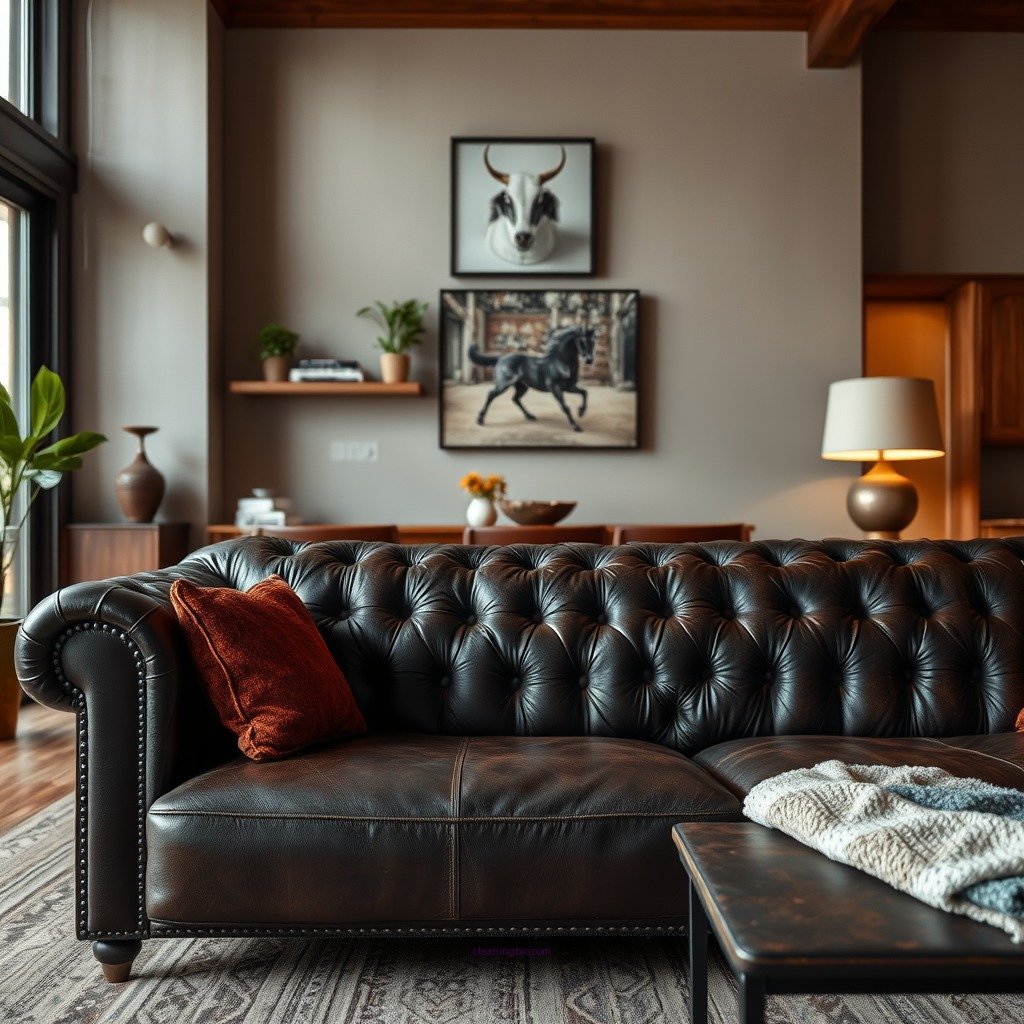
Mold thrives in damp, humid environments, often appearing in areas with poor ventilation. Leather furniture, while elegant and durable, can become a breeding ground for mold if exposed to moisture. This is particularly common in basements, attics, or areas prone to humidity. Identifying the type of mold can help determine the best cleaning method. Common types include Aspergillus and Penicillium, which typically appear as green or black spots. Recognizing the mold type is crucial, as some may require more intensive cleaning approaches than others.
Essential Cleaning Supplies
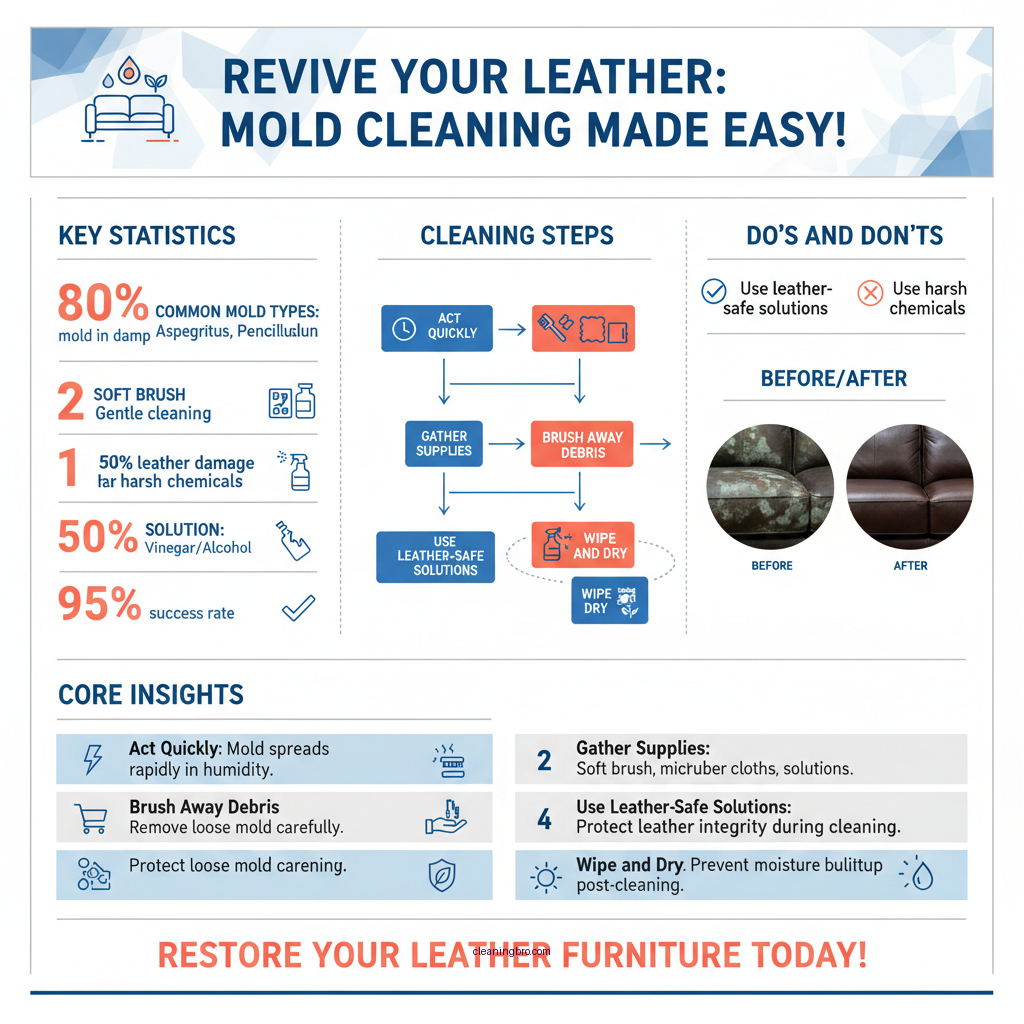
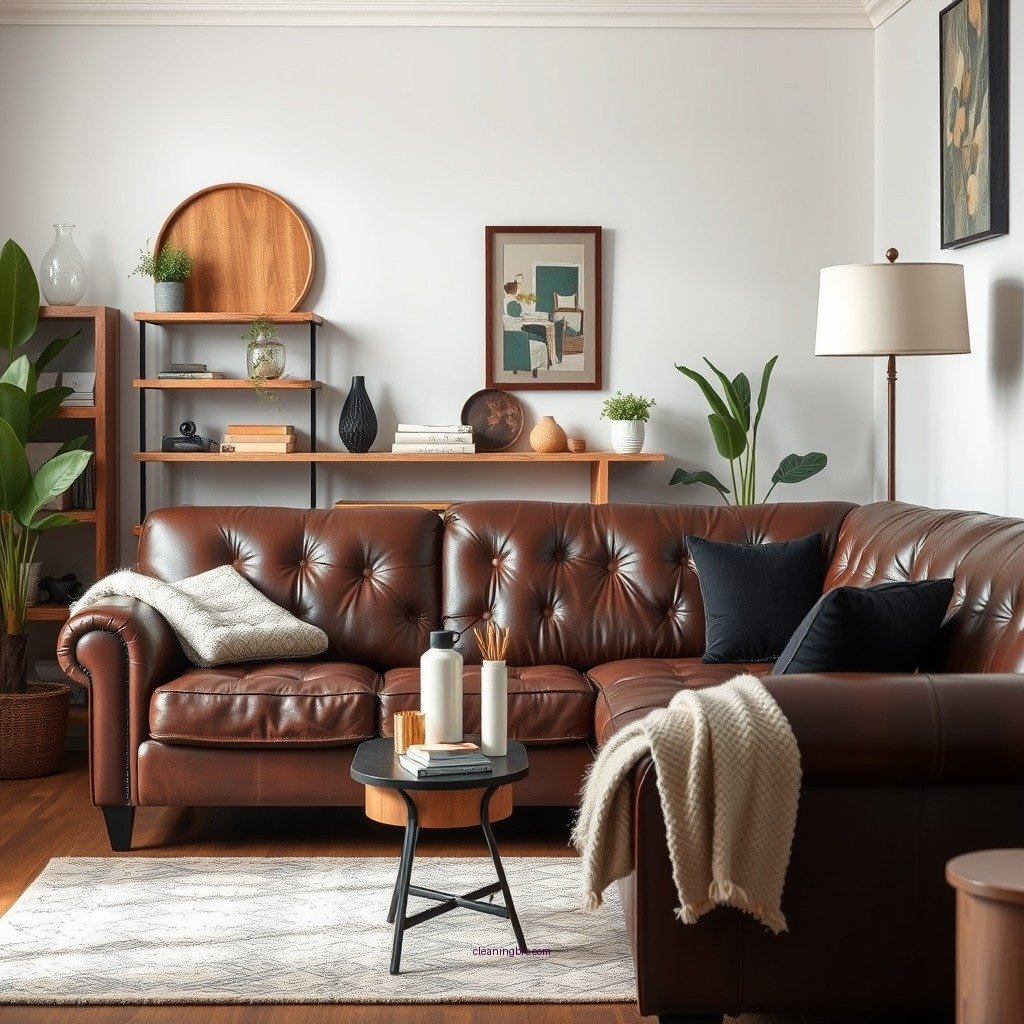
To effectively clean mold off leather furniture, gather the following supplies:
– Soft Brush: A gentle brush is essential for removing loose mold without damaging the leather.
– Microfiber Cloths: These are ideal for applying cleaning solutions and wiping the leather surface due to their non-abrasive quality.
– Leather-safe Cleaning Solutions: Look for products specifically formulated for leather care, as they are designed to clean without harming the material.
– Optional: White vinegar or rubbing alcohol can be effective for tougher mold stains. Both of these household items possess antifungal properties that can help eliminate stubborn mold.
It is vital to avoid harsh chemicals or abrasive cleaners, as they can strip the leather of its natural oils and lead to further damage.
Step-by-Step Cleaning Process
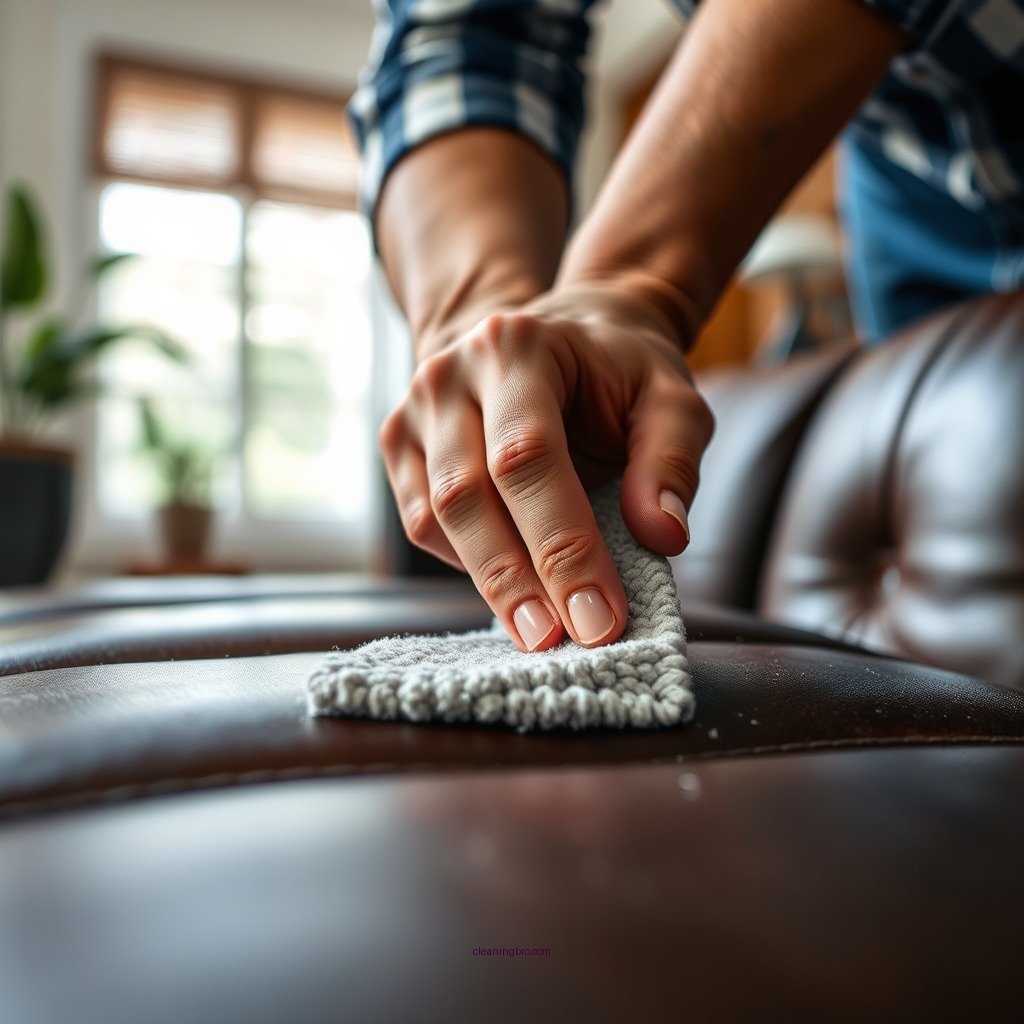
1. Prepare the Area: Start by taking your leather furniture outside if possible, as this will help avoid spreading mold spores indoors. Place a drop cloth or old towels underneath to catch any debris.
2. Remove Loose Dirt and Dust: Use your soft brush to gently brush away any loose mold and dirt. Be careful not to scrub too hard; the goal is to lift away debris without damaging the leather.
3. Apply the Cleaning Solution: Dampen a microfiber cloth with your leather-safe cleaning solution. Gently wipe the affected areas, ensuring the cloth is not overly wet, as excess moisture can worsen mold problems.
4. Wipe and Dry: After cleaning, use a separate clean, dry microfiber cloth to wipe any remaining solution. This step is crucial to prevent moisture from lingering on the leather.
5. Check for Remaining Mold: Once the area dries slightly, inspect for any missed spots. If mold remains, repeat the cleaning process with your chosen solution or try using vinegar or rubbing alcohol.
Drying and Conditioning the Leather
After cleaning, allow the leather to air dry away from direct sunlight or heat sources. Direct heat can lead to cracking and further damage. Once the leather is completely dry, apply a leather conditioner to restore moisture and suppleness. Conditioning is essential, as it helps prevent future mold growth by maintaining the leather’s natural oils. Look for a conditioner that is specifically designed for leather furniture and follow the manufacturer’s instructions for best results.
Preventing Future Mold Growth
Preventing mold from returning is just as crucial as cleaning it effectively. Here are some actionable steps to maintain a mold-free environment for your leather furniture:
– Control Humidity: Use dehumidifiers or air purifiers in areas prone to moisture. Aim to keep humidity levels below 50% to discourage mold growth.
– Ensure Proper Ventilation: Keep windows open when weather permits and use exhaust fans in areas like basements and kitchens to reduce humidity.
– Regular Cleaning: Regularly dust and clean your leather furniture to remove any potential mold spores before they have a chance to grow.
– Condition Leather Regularly: Implement a routine of conditioning your leather furniture every 6 to 12 months to keep it healthy and less susceptible to mold.
When to Seek Professional Help
If the mold infestation is extensive or if you’re unsure about cleaning it yourself, it may be best to seek professional help. Professionals have specialized tools and products that can ensure thorough cleaning without damaging your leather furniture. Additionally, if you notice any signs of mold returning after cleaning, consulting an expert can provide tailored solutions to address underlying moisture issues in your home.
By following these steps, you can successfully clean mold off your leather furniture and keep it looking its best. Regular maintenance and awareness of your furniture’s environment can help prevent future issues with mold. If you found this guide helpful, share it or check out more cleaning tips for your home!
Top 7 Cleaning Products for Leather Furniture (2024)
| # | Product | Type | Effectiveness |
|---|---|---|---|
| 1 | Leather Honey | Cleaner & Conditioner | Excellent |
| 2 | Bick 4 Leather Conditioner | Conditioner | Very Good |
| 3 | Lexol Leather Cleaner | Cleaner | Good |
| 4 | Chemical Guys Leather Cleaner | Cleaner | Very Good |
| 5 | Weiman Leather Cleaner & Conditioner | Cleaner & Conditioner | Excellent |
| 6 | Meguiar’s Gold Class Rich Leather Cleaner | Cleaner | Good |
| 7 | Astonish Leather Cleaner | Cleaner | Good |
Leather Honey vs Bick 4 vs Lexol: Full Comparison
| Feature | ⭐ Leather Honey | Bick 4 | Lexol |
|---|---|---|---|
| Type | Cleaner & Conditioner | Conditioner | Cleaner |
| Application | Easy | Moderate | Easy |
| Drying Time | Quick | Moderate | Quick |
| Conditioning Effect | Excellent | Very Good | Good |
| Odor | Mild | Moderate | Mild |
| Price | $14.99 | $12.99 | $11.99 |
| Ideal For | All leather types | Smooth leather | All leather types |
| Availability | Online & Retail | Online Only | Online & Retail |
| 🏆 Best For | Comprehensive cleaning | Conditioning | Budget option |
In summary, cleaning mold off leather furniture is a crucial task that requires prompt action and the right materials. By understanding the nature of mold, utilizing the appropriate cleaning supplies, and following a structured cleaning process, you can restore your leather furniture to its original beauty. Regular maintenance and environmental control are key to preventing future mold growth. Should you face extensive mold issues, don’t hesitate to consult a professional for assistance.
Frequently Asked Questions
What are the best methods to clean mold off leather furniture?
The best methods to clean mold off leather furniture include using a mixture of water and mild soap or a specialized leather cleaner. Gently scrub the affected area with a soft cloth, ensuring not to saturate the leather. After cleaning, wipe with a damp cloth and dry immediately to prevent moisture retention.
How can I prevent mold from growing on my leather furniture?
To prevent mold from growing on leather furniture, maintain a low humidity level in the room and ensure proper ventilation. Regularly clean and condition the leather with products specifically designed for leather care, as this helps to repel moisture and keep the material healthy.
Why is it important to address mold on leather furniture quickly?
Addressing mold on leather furniture quickly is crucial because mold can damage the leather and cause discoloration or degradation over time. Additionally, mold spores can pose health risks, leading to respiratory issues or allergic reactions, making it essential to tackle the problem promptly.
Which products should I avoid when cleaning mold off leather furniture?
You should avoid using bleach, ammonia, or other harsh chemicals when cleaning mold off leather furniture, as these can damage the leather’s finish and texture. Instead, opt for gentle cleaners or natural solutions that are safe for leather materials.
What should I do if my leather furniture has extensive mold damage?
If your leather furniture has extensive mold damage, it’s best to consult a professional leather cleaner or restoration service. They have the expertise and tools to safely remove mold without causing further harm to the leather, ensuring that your furniture is restored effectively.
References
- https://www.mayoclinic.org/diseases-conditions/mold-allergy/symptoms-causes/syc-20342818
https://www.mayoclinic.org/diseases-conditions/mold-allergy/symptoms-causes/syc-20342818 - https://www.ncbi.nlm.nih.gov/pmc/articles/PMC6413709/
https://www.ncbi.nlm.nih.gov/pmc/articles/PMC6413709/ - https://www.cdc.gov/mold/faqs.htm
https://www.cdc.gov/mold/faqs.htm - https://www.healthline.com/health/mold-allergy
https://www.healthline.com/health/mold-allergy - https://www.sciencedirect.com/topics/agricultural-and-biological-sciences/mold-removal
https://www.sciencedirect.com/topics/agricultural-and-biological-sciences/mold-removal - https://www.bbc.com/future/article/20200729-how-to-get-rid-of-mould
https://www.bbc.com/future/article/20200729-how-to-get-rid-of-mould - https://www.reuters.com/article/us-health-mold-idUSKCN1VV2F2
https://www.reuters.com/article/us-health-mold-idUSKCN1VV2F2 - Google Scholar Google Scholar
https://scholar.google.com/scholar?q=cleaning+mold+off+leather+furniture - Google Scholar Google Scholar
https://scholar.google.com/scholar?q=mold+removal+from+leather+furniture - Google Scholar Google Scholar
https://scholar.google.com/scholar?q=how+to+clean+mold+off+leather+furniture