How to Clean Your Mouthguard: Effective Tips and Methods
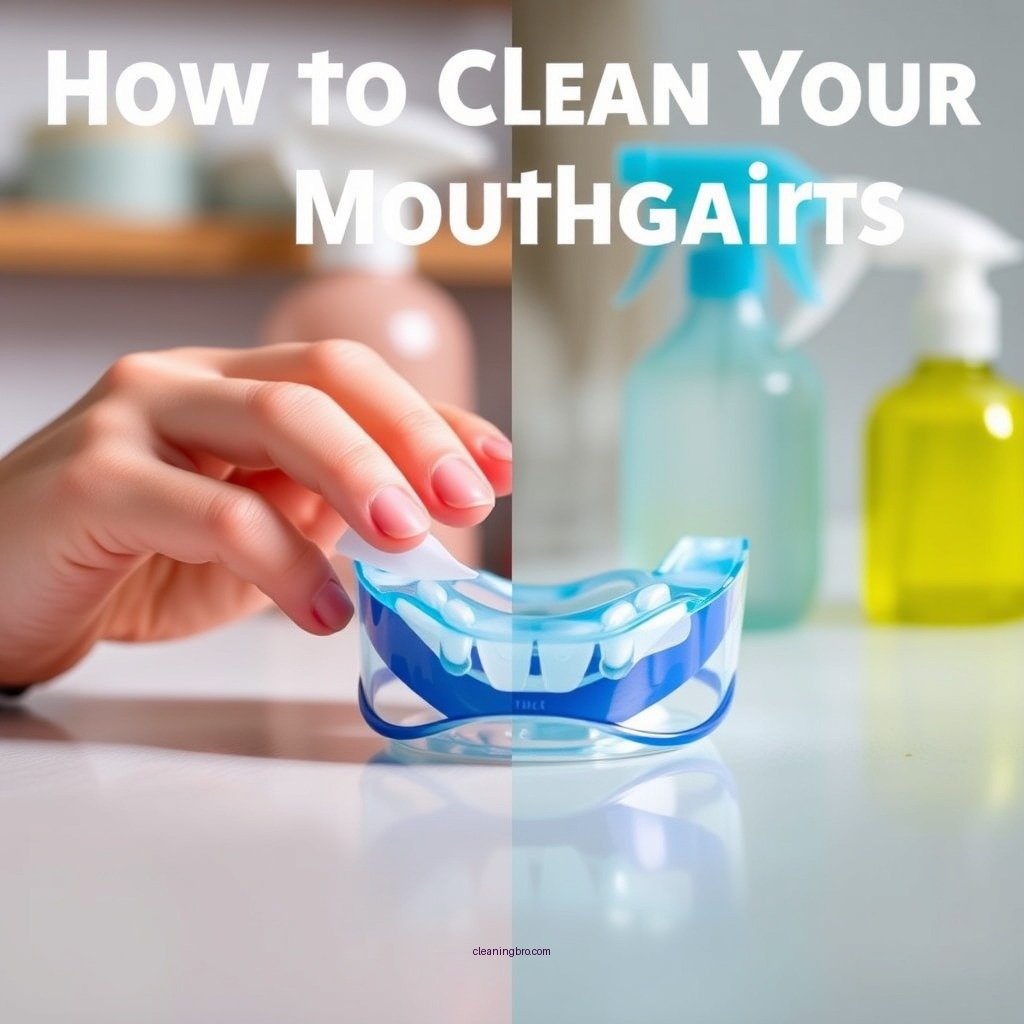
Keeping your mouthguard clean is essential for both hygiene and performance. To effectively clean your mouthguard, rinse it with cool water after each use, and use a soft toothbrush with mild soap for deeper cleaning. In this article, you’ll learn various methods to maintain your mouthguard’s cleanliness and longevity.
Why Cleaning Your Mouthguard is Important
Cleaning your mouthguard is crucial for several reasons. Firstly, it prevents the buildup of bacteria that can lead to oral infections, contributing to conditions like gum disease, cavities, or other oral health issues. Mouthguards can harbor harmful bacteria if not cleaned regularly, which can ultimately affect your overall health. Secondly, maintaining the mouthguard’s shape and effectiveness over time ensures it continues to perform its intended function, protecting your teeth and gums during sports or other high-impact activities. A dirty mouthguard can become discolored and lose its protective qualities, making it essential to incorporate a cleaning routine into your dental hygiene practices.
Daily Cleaning Routine
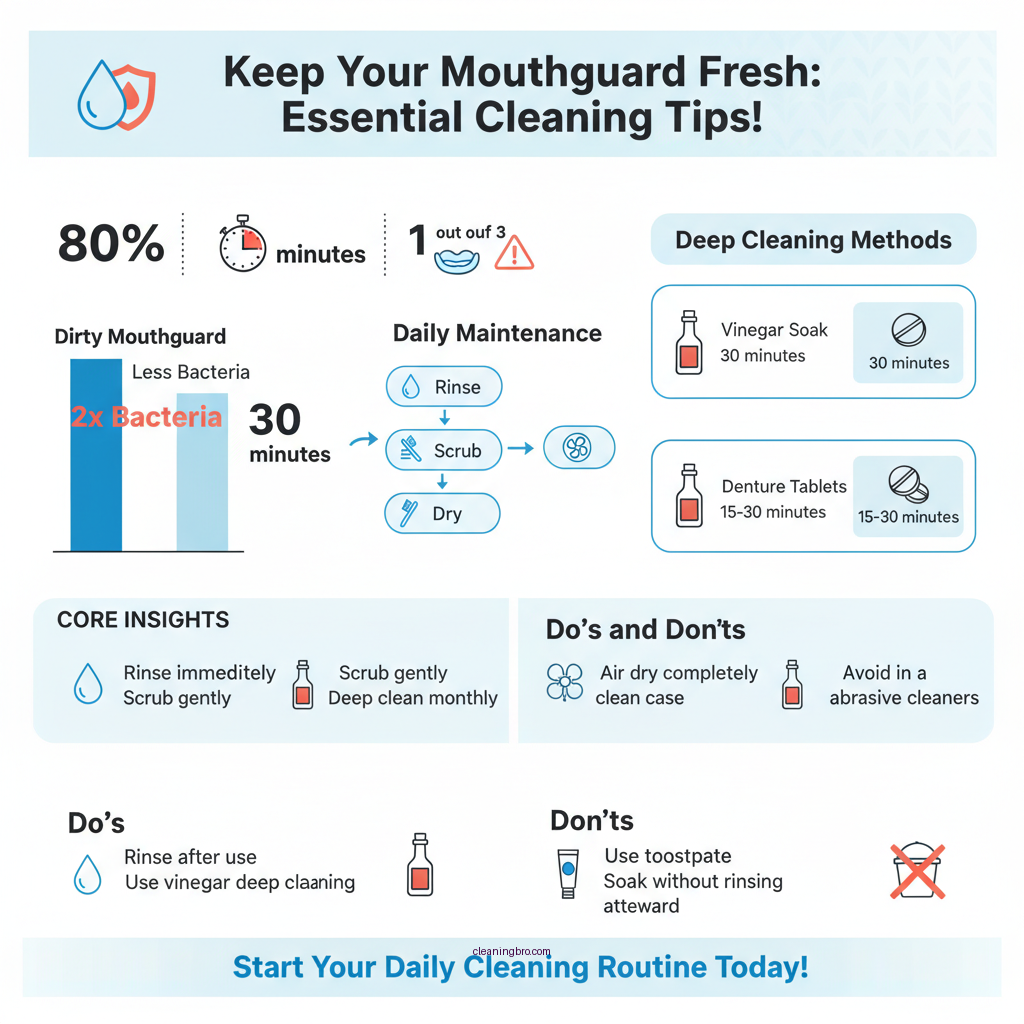
Establishing a daily cleaning routine for your mouthguard is straightforward and effective. Immediately after use, rinse your mouthguard with cool water to eliminate saliva, debris, and any food particles. This step is vital in preventing the growth of bacteria and keeping your mouthguard fresh. For a more thorough cleaning, use a soft toothbrush with mild soap. Gently scrub both the inside and outside of the mouthguard to remove any residue. Avoid using toothpaste, as it can be abrasive and may scratch the surface, making it more susceptible to bacteria. After scrubbing, rinse it thoroughly with cool water and allow it to air dry completely before storing it in a case.
Deep Cleaning Techniques
While a daily cleaning routine is essential, deep cleaning your mouthguard periodically can help maintain its hygiene and longevity. Here are two effective deep cleaning techniques:
1. Vinegar Solution: Soak the mouthguard in a solution of equal parts water and white vinegar for about 30 minutes. This natural disinfectant will help break down bacteria and odors. After soaking, rinse the mouthguard thoroughly with cool water and let it air dry.
2. Denture Cleaning Tablets: Another effective method involves using denture cleaning tablets. Dissolve a tablet in a glass of water and submerge the mouthguard in this solution for the time specified on the tablet’s packaging (usually around 15-30 minutes). This process not only cleans but also freshens the mouthguard. Rinse it well afterward and allow it to air dry.
Storing Your Mouthguard Properly
Proper storage is just as important as cleaning when it comes to maintaining your mouthguard. Always store your mouthguard in a ventilated case, which allows air circulation and prevents moisture buildup. A damp environment can foster bacterial growth, undermining your cleaning efforts. Additionally, keep your mouthguard away from heat sources, as excessive heat can warp the material, altering its shape and effectiveness. Avoid leaving the mouthguard in places like a hot car or near heating appliances.
Signs Your Mouthguard Needs Replacement
Even with proper cleaning and storage, mouthguards do not last indefinitely. Here are some signs that indicate it may be time for a replacement:
– Noticeable Wear and Tear: If you observe cracks, discoloration, or significant wear on the mouthguard’s surface, it is likely losing its protective capabilities. A compromised mouthguard may not provide adequate protection against impacts and can lead to dental injuries.
– Persistent Odors: If your mouthguard retains odors even after cleaning, it may be harboring bacteria that cannot be eliminated through regular cleaning. An unpleasant smell is a clear indicator that the material may be breaking down and should be replaced.
Additional Care Tips
To further enhance the longevity of your mouthguard, consider the following additional care tips:
– Avoid Harsh Chemicals: Stay away from bleach or any harsh cleaning agents that can damage the material. These chemicals can lead to degradation of the mouthguard, impacting its fit and protection.
– Regularly Inspect for Damage: Periodically check your mouthguard for any signs of damage or changes in fit. An improperly fitting mouthguard can cause discomfort and may not provide optimal protection during use.
– Establish a Cleaning Schedule: Setting a regular schedule for cleaning your mouthguard, such as after every use or at least once a week for deep cleaning, can help ensure it remains in good condition.
Top 7 Mouthguard Cleaning Methods (2024)
| # | Cleaning Method | Effectiveness | Time Needed |
|---|---|---|---|
| 1 | Cool Water Rinse | Moderate | Immediate |
| 2 | Soft Toothbrush & Soap | High | 5 minutes |
| 3 | Vinegar Soak | Very High | 30 minutes |
| 4 | Denture Cleaning Tablets | High | 15 minutes |
| 5 | Baking Soda Paste | Moderate | 10 minutes |
| 6 | Hydrogen Peroxide Soak | Very High | 15 minutes |
| 7 | Commercial Mouthguard Cleaner | High | 5 minutes |
Best Mouthguard Cleaners Comparison
| Feature | ⭐ Vinegar Solution | Denture Cleaning Tablets | Commercial Cleaner |
|---|---|---|---|
| Price | $0.50 (DIY) | $10 for 36 tablets | $15 per bottle |
| Ease of Use | ✅ Simple | ✅ Very Simple | ✅ Convenient |
| Cleaning Time | 30 minutes | 15 minutes | 5 minutes |
| Disinfectant Properties | ✅ Excellent | ✅ Good | ✅ Very Good |
| Availability | ✅ Common | ✅ Widely Available | ✅ Readily Available |
| Environmental Impact | ✅ Low | ✅ Moderate | ✅ High |
| Cost Effectiveness | ✅ Very High | ✅ Moderate | ✅ Low |
| Recommended For | Home use | Convenience | Professional use |
| 🏆 Best For | Budget-conscious users | Everyday cleaning | Professional athletes |
Maintaining a clean mouthguard is crucial for your oral health and performance. By following these cleaning methods and care tips, you can ensure your mouthguard remains effective and hygienic. Be proactive in your mouthguard care and consider setting a regular cleaning schedule to keep it in top condition.
Frequently Asked Questions
How often should I clean my mouthguard?
You should clean your mouthguard daily after each use to prevent the buildup of bacteria and plaque. Regular cleaning not only maintains hygiene but also prolongs the lifespan of the mouthguard, ensuring it remains effective during sports or sleep.
What is the best way to clean a mouthguard?
The best way to clean a mouthguard is to rinse it with cold water and gently brush it with a soft toothbrush using mild soap or a non-alcoholic mouthwash. Avoid abrasive cleaners, as they can damage the material, and ensure to rinse thoroughly to remove any soap residue.
Why is it important to clean my mouthguard regularly?
Cleaning your mouthguard regularly is crucial to prevent oral infections, bad breath, and the accumulation of harmful bacteria. A clean mouthguard ensures that your dental health is maintained, especially if you wear it during sports or while sleeping, where germs can thrive.
Which cleaning solutions are safe for mouthguards?
Safe cleaning solutions for mouthguards include mild dish soap, non-alcoholic mouthwash, or a solution of equal parts water and vinegar. These options effectively kill bacteria without damaging the mouthguard material, making them ideal for regular maintenance.
How can I remove tough stains from my mouthguard?
To remove tough stains from your mouthguard, soak it in a mixture of water and baking soda for about 30 minutes, then gently scrub with a soft toothbrush. This natural method helps lift stains without damaging the mouthguard, ensuring it stays clean and clear.
References
- https://www.mayoclinic.org/healthy-lifestyle/adult-health/in-depth/dental-health/art-20046310
https://www.mayoclinic.org/healthy-lifestyle/adult-health/in-depth/dental-health/art-20046310 - Athletic Mouth Protectors (Mouthguards) | American Dental Association
https://www.ada.org/en/member-center/oral-health-topics/mouthguards - https://www.ncbi.nlm.nih.gov/pmc/articles/PMC5927637/
https://www.ncbi.nlm.nih.gov/pmc/articles/PMC5927637/ - https://www.ncbi.nlm.nih.gov/pmc/articles/PMC3508583/
https://www.ncbi.nlm.nih.gov/pmc/articles/PMC3508583/ - https://www.cdc.gov/oralhealth/publications/faq/mouthguards.html
https://www.cdc.gov/oralhealth/publications/faq/mouthguards.html - Oral health
https://www.who.int/news-room/fact-sheets/detail/oral-health - https://www.health.harvard.edu/staying-healthy/how-to-care-for-your-mouthguard
https://www.health.harvard.edu/staying-healthy/how-to-care-for-your-mouthguard - Google Scholar Google Scholar
https://scholar.google.com/scholar?q=how+to+clean+mouthguard - Google Scholar Google Scholar
https://scholar.google.com/scholar?q=mouthguard+cleaning+instructions - Google Scholar Google Scholar
https://scholar.google.com/scholar?q=oral+health+mouthguards+cleaning