How to Clear Brown Pool Water: Simple Steps for a Sparkling Pool
To clear brown pool water, start by testing the water chemistry and adjusting the pH and chlorine levels. These steps will help eliminate algae and debris that contribute to the discoloration. In this article, we’ll explore effective methods to restore your pool’s clarity and keep it looking pristine.
Understanding the Causes of Brown Pool Water
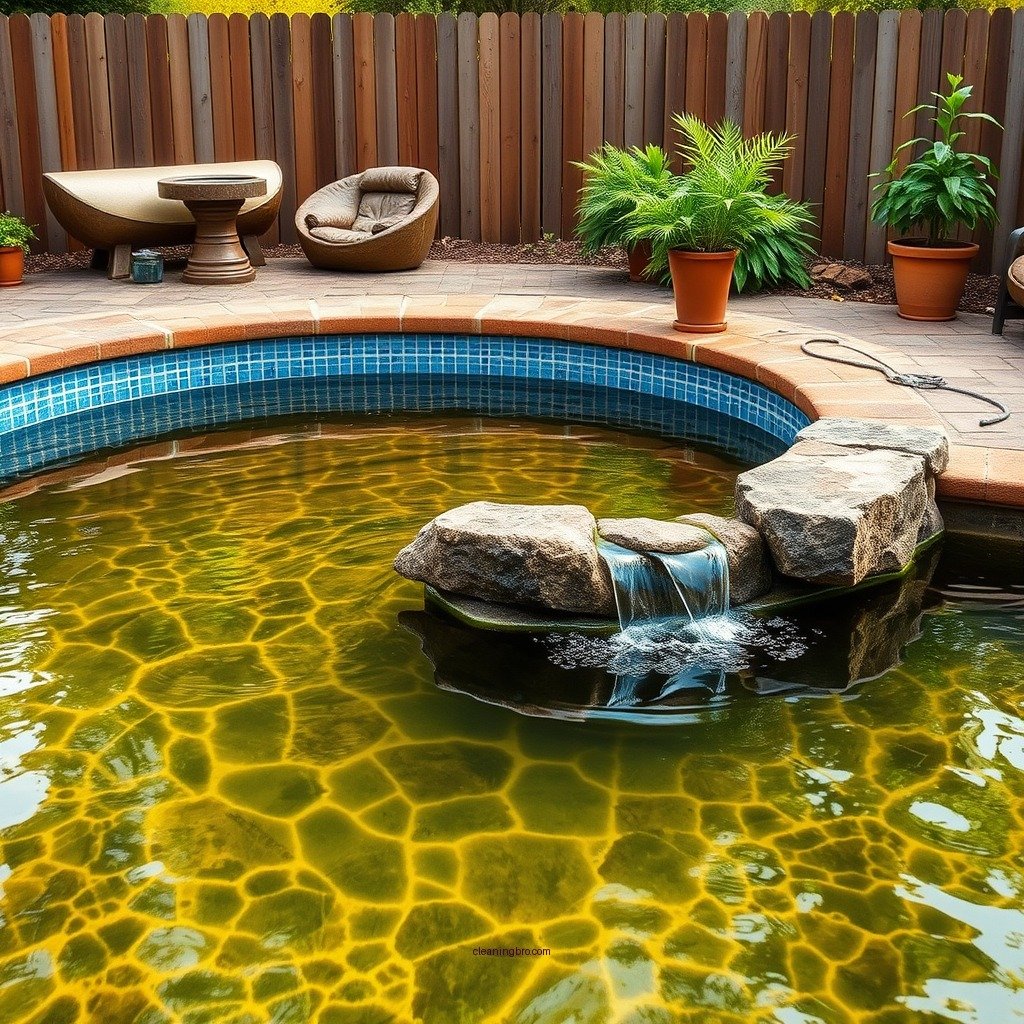
Brown pool water can be particularly unappealing, but understanding its causes is the first step in addressing the issue. The most common culprit is algae growth, which can flourish in warm temperatures and inadequate chlorine levels. Algae can turn your pool water a murky brown, green, or even black, depending on the type.
Another common cause is the presence of metals in the water, particularly iron or manganese. These metals often come from corroded pipes or well water and can oxidize, resulting in brown discoloration.
Lastly, poor filtration and circulation can exacerbate the problem, allowing debris and contaminants to settle in the pool. A malfunctioning filter or insufficient pump run time can lead to stagnation, creating an environment where algae and other pollutants thrive.
Testing Your Pool Water
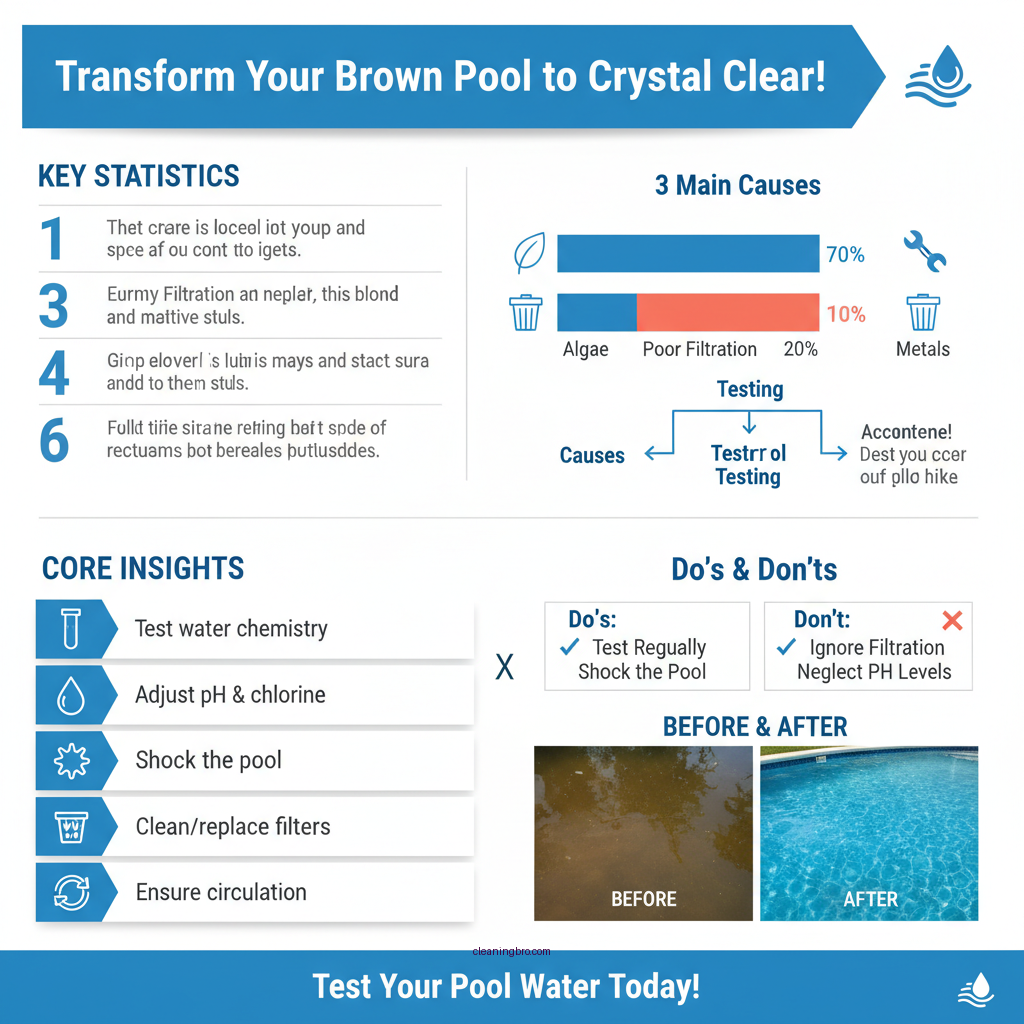
To effectively clear brown pool water, the first step is to test your pool water. Using a reliable test kit, check the levels of pH, chlorine, and alkalinity. Ideally, the pH should be between 7.2 and 7.6, while chlorine levels should be maintained at 1-3 ppm (parts per million).
It’s also crucial to check for high levels of metals. If your test reveals elevated levels of iron or manganese, you may need to use specific metal removers designed for pool water. Regular testing, ideally once a week, allows you to maintain balanced water chemistry and address any issues before they escalate.
Adjusting pH and Chlorine Levels
Once you’ve tested your pool water, adjusting the pH and chlorine levels is essential to restore clarity. Aim for a pH of 7.2 to 7.6 to optimize chlorine effectiveness, as imbalanced pH can render chlorine ineffective against algae and bacteria.
To shock the pool, add a chlorine shock treatment—typically a higher concentration of chlorine—to eliminate contaminants. This process will help to oxidize organic matter and kill off any algae present.
After applying the shock treatment, allow the pool to circulate for several hours. This circulation ensures that the chemicals disperse evenly throughout the water, facilitating maximum effectiveness.
Cleaning and Filtering
Physical cleaning of the pool is just as important as chemical treatment. Start by vacuuming the pool thoroughly to remove any debris that has settled at the bottom. A manual or automatic pool vacuum can be used for this process, depending on your preference.
Next, check the pool filter. If it’s clogged or dirty, clean or replace it to ensure proper water circulation. A clean filter is crucial for effectively removing particles from the water.
Consider employing a clarifier, which works by binding tiny particles together, making them easier for the filter to capture. This can significantly enhance the clarity of your pool water.
Algae Removal Techniques
If you suspect algae growth is the primary cause of your brown pool water, specific removal techniques are necessary. Start by applying an algaecide formulated for your pool type—whether it’s chlorine, saltwater, or another system.
After treating the water, use a pool brush to scrub the walls and floor of the pool. This action dislodges any algae that may be clinging to surfaces, allowing it to be captured by your filter system.
Allow the pool to circulate for 24 to 48 hours after treatment. During this time, check your filter frequently and clean it as needed to ensure it operates efficiently.
Preventive Measures for Future Clarity
Maintaining clear pool water requires ongoing diligence. Regularly test and balance your pool water chemistry to prevent imbalances that can lead to brown water.
Proper filtration and circulation are key; ensure your pool pump runs for an adequate amount of time each day—typically 8 to 12 hours, depending on the size of your pool.
Finally, keeping debris out of your pool is essential. Use a pool cover when the pool is not in use and skim the surface daily to remove leaves and other contaminants. These simple steps will help maintain your pool’s clarity and prevent future discoloration.
Top Causes of Brown Pool Water
| # | Cause | Description | Solution |
|---|---|---|---|
| 1 | Algae Growth | Rapid growth due to warm water and low chlorine | Use algaecide and shock the pool |
| 2 | Metal Contamination | Iron and manganese from corroded pipes | Use metal removers |
| 3 | Poor Filtration | Ineffective circulation leading to stagnation | Clean or replace the filter |
| 4 | Debris Accumulation | Leaves and dirt settling in the pool | Regular skimming and use of a cover |
| 5 | High Bather Load | Excessive organic material from swimmers | Increase chlorine levels temporarily |
| 6 | Chemical Imbalance | Incorrect pH or alkalinity | Regular testing and balancing |
| 7 | Sun Exposure | UV rays can decrease chlorine efficacy | Use stabilizers |
Top Pool Maintenance Products: A Comparison
| Product | ⭐ Algaecide | Metal Remover | Pool Shock |
|---|---|---|---|
| Price | $15-$25 | $20-$30 | $10-$20 |
| Effective Against | Algae | Iron, Manganese | Chlorine Demand |
| Application Method | Directly to water | Dilute in water | Broadcast |
| Time to See Results | 1-2 days | 24 hours | Immediate |
| Safety Precautions | Wear gloves | Protective gear | Chlorine resistant gloves |
| Frequency of Use | Weekly | Monthly | As needed |
| Compatible Pool Types | All | Chlorine | All |
| User Reviews | ★★★★☆ | ★★★☆☆ | ★★★★★ |
| Availability | Widely available | Specialty stores | Widely available |
| 🏆 Best For | Algae prevention | Metal issues | Rapid shock treatment |
The key to clearing brown pool water lies in understanding its causes, maintaining proper water chemistry, and employing effective cleaning methods. By following these steps, you can enjoy a clean, inviting pool again. If problems persist, consider consulting a pool professional for further assistance. Remember, regular maintenance is essential to prevent brown water and keep your pool sparkling clear.
Frequently Asked Questions
What causes brown pool water and how can I prevent it?
Brown pool water is often caused by a combination of algae growth, rust from metal fixtures, or organic debris like leaves and dirt. To prevent this issue, ensure proper pool maintenance, regularly test and balance your water chemistry, and clean the pool filter frequently to keep contaminants at bay.
How do I effectively clear brown pool water?
To clear brown pool water, start by shocking the pool with a high dose of chlorine to kill algae and bacteria. Next, run the pool filter continuously, and use a flocculant to bind particles together for easier removal. Regular vacuuming and brushing the pool walls will also help restore clarity.
Why is my pool water brown after heavy rain?
Heavy rain can introduce sediment, leaves, and other organic materials into your pool, leading to brown water. Additionally, rain can dilute pool chemicals, upsetting the water balance and encouraging algae growth. After a rainstorm, it’s essential to test the water, shock it if necessary, and clean any debris from the surface.
What is the best chemical to use for clearing brown pool water?
The best chemical for clearing brown pool water is a high-quality pool shock, typically containing calcium hypochlorite or lithium hypochlorite, which effectively kills algae and bacteria. Additionally, using a flocculant can help to clump together small particles, making them easier to filter out and restore the pool’s clarity.
Which pool filter is most effective for removing brown water?
Sand filters are often considered the most effective for removing brown pool water due to their ability to trap larger particles and debris. However, cartridge filters can also be effective if maintained properly, and D.E. (diatomaceous earth) filters provide superior filtration for even finer particles. Regular maintenance and cleaning of any filter type are crucial for optimal performance.
References
- https://www.extension.purdue.edu/extmedia/BP/BP-163-W.pdf
https://www.extension.purdue.edu/extmedia/BP/BP-163-W.pdf - https://www.cdc.gov/healthywater/swimming/pools/cleaning-pools.html
https://www.cdc.gov/healthywater/swimming/pools/cleaning-pools.html - https://www.aaas.org/resources/how-clear-brown-pool-water
https://www.aaas.org/resources/how-clear-brown-pool-water - https://www.britannica.com/science/water-treatment
https://www.britannica.com/science/water-treatment - https://www.sciencedirect.com/topics/agricultural-and-biological-sciences/pool-water
https://www.sciencedirect.com/topics/agricultural-and-biological-sciences/pool-water - https://pubmed.ncbi.nlm.nih.gov/25860400/
https://pubmed.ncbi.nlm.nih.gov/25860400/ - https://www.poolandspa.com/pool-care/how-to-clear-brown-pool-water
https://www.poolandspa.com/pool-care/how-to-clear-brown-pool-water - Google Scholar Google Scholar
https://scholar.google.com/scholar?q=how+to+clear+brown+pool+water - Google Scholar Google Scholar
https://scholar.google.com/scholar?q=brown+pool+water+cleaning+methods - how to clear brown pool water – Search results
https://en.wikipedia.org/wiki/Special:Search?search=how+to+clear+brown+pool+water