How Often to Clean a Salt Cell: Essential Guidelines
Cleaning your salt cell is essential for optimal pool performance, and it should be done every 3 to 6 months, depending on usage and water conditions. Regular maintenance ensures that your pool remains sanitized and safe for swimming. This article will guide you through the factors that affect cleaning frequency, signs that your salt cell needs attention, and tips for proper maintenance.
Understanding Salt Cells
Salt cells, also known as salt chlorine generators, play a crucial role in maintaining pool hygiene by converting salt into chlorine, which acts as a sanitizer. This process effectively keeps your pool water clean and free from harmful bacteria and algae. The technology behind salt cells not only provides a steady supply of chlorine but also reduces the need for traditional chlorine products, making pool maintenance more convenient and cost-effective.
However, for a salt cell to function efficiently, it requires regular maintenance. Over time, mineral deposits and scaling can accumulate on the cell plates, hampering its performance and reducing its lifespan. Thus, understanding how to maintain and clean your salt cell is essential for ensuring that your pool remains in peak condition.
Factors Affecting Cleaning Frequency
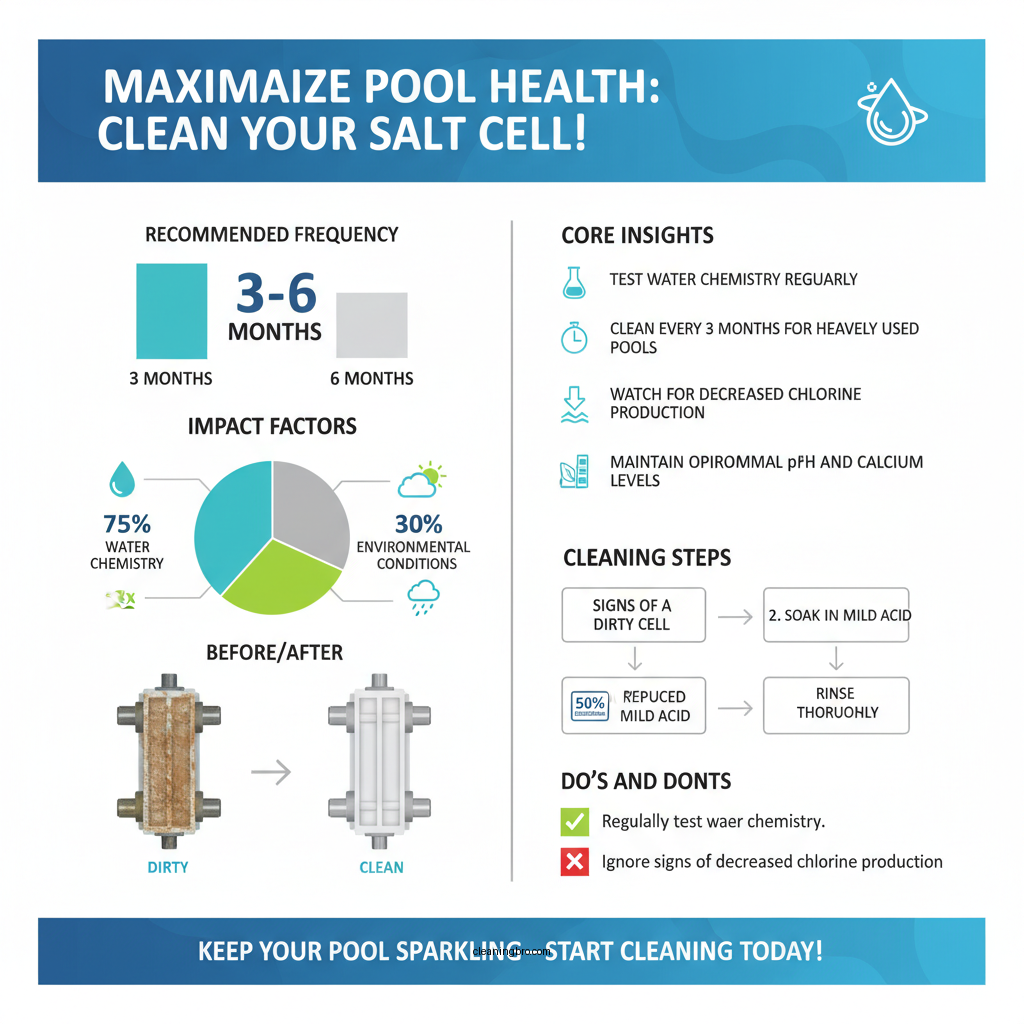
Several factors can influence how often you need to clean your salt cell:
– Water Chemistry: The chemical balance of your pool water significantly affects how quickly scaling occurs. High levels of calcium hardness, total dissolved solids (TDS), and pH can lead to increased scaling on the salt cell plates. Regular testing and balancing of your pool’s water chemistry can help mitigate these issues.
– Pool Usage: The frequency of pool use also impacts how often you should clean your salt cell. Heavily used pools, especially those that see significant swimmer activity or are exposed to outdoor debris, may require more frequent cleaning. If your pool is a popular spot for gatherings or recreational activities, consider cleaning your salt cell every 3 months.
– Environmental Conditions: Factors such as local water quality, temperature, and humidity can affect how quickly deposits form on your salt cell. Pools located in hard water areas may require more frequent cleaning than those in regions with softer water.
Signs Your Salt Cell Needs Cleaning
Recognizing the signs that your salt cell requires cleaning is vital for maintaining your pool’s health. Here are some indicators to watch for:
– Decreased Chlorine Production: If you notice that the chlorine levels in your pool are lower than usual despite the salt cell being operational, it may indicate that the cell is dirty or clogged. Check the salt cell’s output and clean it if necessary.
– Visible Buildup: Inspect the salt cell for any visible scaling or mineral deposits on the plates. These deposits typically appear as white or cloudy residue. If you see such buildup, it’s time for a cleaning.
– Unusual Pump Operation: If your pool’s pump seems to be running longer than normal or if you hear unusual sounds, it may be a sign that the salt cell is not functioning properly. This could be due to scaling, which restricts water flow.
Cleaning Process Overview
Cleaning a salt cell is a straightforward process. Here’s a step-by-step guide:
1. Safety First: Always disconnect the power supply to the salt cell before attempting any maintenance.
2. Remove the Salt Cell: Carefully detach the salt cell from the plumbing system. Follow the manufacturer’s guidelines to avoid damaging any components.
3. Prepare Cleaning Solution: Use a mixture of water and muriatic acid for effective cleaning. A common ratio is 1 part acid to 4 parts water. Always add acid to water and not the other way around to prevent a dangerous reaction.
4. Soak the Salt Cell: Immerse the cell plates in the cleaning solution for 10-15 minutes. You may notice bubbling, which indicates that the scaling is being removed.
5. Rinse Thoroughly: After soaking, rinse the cell thoroughly with fresh water to remove any remaining acid and debris. Ensure there are no residues left behind.
6. Reinstall the Salt Cell: Once dry, reattach the salt cell to the plumbing system and reconnect the power supply. Check for proper operation before swimming.
7. Regular Inspections: Make it a habit to inspect your salt cell during routine maintenance to catch any issues early.
Salt Cell Cleaning Frequency Based on Usage and Water Conditions
| # | Condition | Usage Type | Recommended Cleaning Frequency |
|---|---|---|---|
| 1 | Low Calcium, Low Usage | Residential | Every 6 months |
| 2 | High Calcium, Low Usage | Residential | Every 4-5 months |
| 3 | Low Calcium, High Usage | Commercial | Every 3 months |
| 4 | High Calcium, High Usage | Commercial | Every 2-3 months |
| 5 | Moderate Calcium, Low Usage | Residential | Every 5 months |
| 6 | Moderate Calcium, High Usage | Commercial | Every 2-3 months |
| 7 | Very High Calcium | Residential/Commercial | Every month |
Preventive Maintenance Tips
To ensure your salt cell operates efficiently and to extend its lifespan, consider the following preventive maintenance tips:
– Regularly Check Water Chemistry: Keeping your pool water balanced is paramount. Regularly test for pH, alkalinity, and calcium hardness to prevent scaling. Ideally, maintain pH levels between 7.4 and 7.6 and calcium hardness between 200-400 ppm.
– Inspect the Salt Cell: During routine maintenance, visually inspect your salt cell for any signs of buildup or wear. Catching issues early can save you from more extensive repairs or replacements.
– Use a Quality Salt: Ensure that you are using high-purity salt specifically designed for saltwater pools. Impurities in low-quality salt can contribute to scaling and reduce the efficiency of your salt cell.
– Keep the Pool Clean: Regularly skim and vacuum your pool to minimize debris that can enter the salt cell system. This will help maintain water clarity and reduce the workload on your filtration system.
Common Mistakes to Avoid
When maintaining your salt cell, it is crucial to avoid common pitfalls:
– Over-Cleaning: While maintaining cleanliness is essential, over-cleaning can wear out the cell prematurely. Stick to the recommended cleaning schedule based on your pool’s usage and conditions.
– Ignoring Manufacturer Guidelines: Each salt cell model has specific maintenance requirements. Always consult the manufacturer’s instructions for cleaning frequency and procedures to avoid voiding warranties or damaging the unit.
– Neglecting Water Chemistry: Failing to monitor and balance your pool’s chemistry can lead to scaling and other issues that affect the salt cell’s efficiency. Regular testing is critical for optimal performance.
By adhering to these guidelines, you can ensure that your salt cell operates effectively and contributes to a clean, safe swimming environment.
Regular cleaning of your salt cell ensures your pool remains clean and safe. Make it a part of your regular pool maintenance routine, and consult a professional if you notice persistent issues. By taking proactive steps now, you can save time and money in the long run while enjoying a sparkling clean pool.
Frequently Asked Questions
How often should I clean my salt cell for my pool?
It is generally recommended to clean your salt cell every 3 to 6 months, depending on factors such as pool usage and water chemistry. Regular cleaning helps maintain optimal chlorine production and prevents scale buildup, ensuring your saltwater system operates efficiently.
What are the signs that my salt cell needs cleaning?
Common signs that your salt cell needs cleaning include a decrease in chlorine production, an increase in the “check salt” indicator, or visible calcium buildup on the cell plates. If you notice any of these issues, it’s time to inspect and clean your salt cell to maintain its performance.
Why is regular cleaning of a salt cell important?
Regular cleaning of a salt cell is essential to prevent scale accumulation and ensure efficient chlorine generation. Neglecting to clean the cell can lead to reduced effectiveness, higher energy costs, and potential damage to the saltwater system, ultimately impacting your pool’s water quality.
What is the best method to clean a salt cell?
The best method to clean a salt cell involves using a diluted muriatic acid solution, typically mixed with water in a 1:10 ratio. Soak the salt cell in this solution for about 10-15 minutes, then rinse thoroughly with fresh water to remove any remaining acid before reinstalling it.
Which factors influence how often I should clean my salt cell?
Factors that influence how often you should clean your salt cell include the pool’s water chemistry, frequency of pool use, and the local water hardness. Pools with high levels of calcium or those used frequently may require more frequent cleaning to maintain optimal performance and prevent scaling.
References
- https://www.poolandspa.com/how-to/how-to-clean-a-salt-chlorinator-cell
https://www.poolandspa.com/how-to/how-to-clean-a-salt-chlorinator-cell - https://www.abc.net.au/education/life-in-the-pool-why-salt-water-pools-need-regular-maintenance/100509634
https://www.abc.net.au/education/life-in-the-pool-why-salt-water-pools-need-regular-maintenance/100509634 - https://www.ncbi.nlm.nih.gov/pmc/articles/PMC9517420/
https://www.ncbi.nlm.nih.gov/pmc/articles/PMC9517420/ - https://www.cdc.gov/healthywater/swimming/pools/saltwater.html
https://www.cdc.gov/healthywater/swimming/pools/saltwater.html - https://www.sciencedirect.com/science/article/pii/S0304377022001563
https://www.sciencedirect.com/science/article/pii/S0304377022001563 - https://pubmed.ncbi.nlm.nih.gov/34867352/
https://pubmed.ncbi.nlm.nih.gov/34867352/ - Google Scholar Google Scholar
https://scholar.google.com/scholar?q=how+often+to+clean+salt+cell - Google Scholar Google Scholar
https://scholar.google.com/scholar?q=saltwater+pool+maintenance - Google Scholar Google Scholar
https://scholar.google.com/scholar?q=salt+cell+cleaning+frequency - how often to clean salt cell – Search results
https://en.wikipedia.org/wiki/Special:Search?search=how+often+to+clean+salt+cell