How to Clean a Saxophone Mouthpiece: Step-by-Step Guide
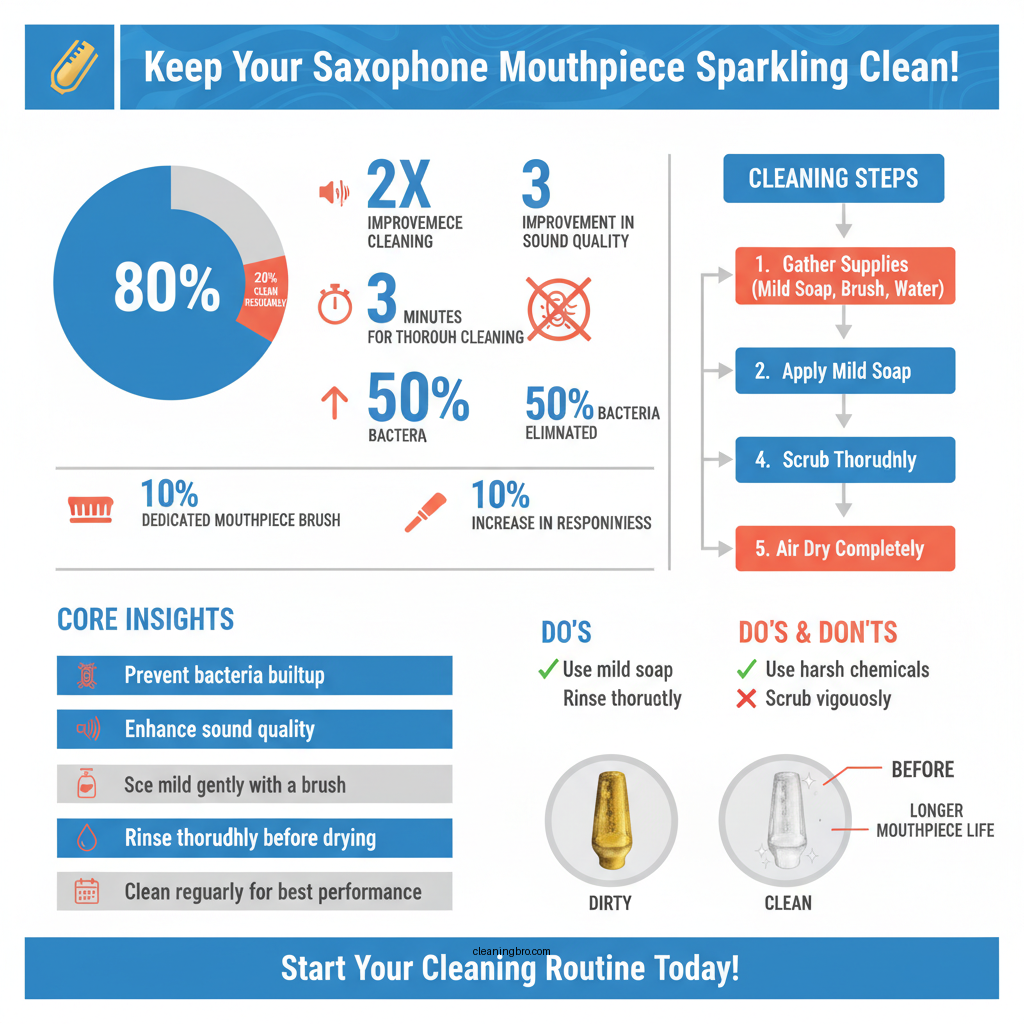
Cleaning your saxophone mouthpiece is essential for maintaining good hygiene and optimal sound quality. To effectively clean your mouthpiece, you should use warm, soapy water and a mouthpiece brush. This guide will walk you through the steps to ensure your mouthpiece stays in top condition, which is crucial for both your health and your musical performance.
A saxophone mouthpiece can accumulate saliva, bacteria, and other residues over time, which can negatively affect not only hygiene but also the sound quality and responsiveness of your instrument. By following a structured cleaning process, you can ensure that your mouthpiece remains a clean, functional part of your saxophone setup.
Understanding the Importance of Cleaning

Regular cleaning of your saxophone mouthpiece cannot be overstated. Here are two primary reasons why it is essential:
– Prevention of Bacteria and Germs: The mouthpiece is in direct contact with your mouth, making it a prime location for the buildup of saliva, food particles, and bacteria. Neglecting to clean it regularly can lead to health issues, including infections or illnesses. A thorough cleaning helps eliminate any harmful bacteria and contributes to a healthier playing experience.
– Enhanced Sound Quality and Performance: A dirty mouthpiece can affect the airflow and tonal quality of your saxophone. Buildup can lead to blocked passages, muffled sounds, or even intonation issues. Regular cleaning ensures that your mouthpiece maintains its optimal shape and function, allowing for clear, vibrant sound production.
Gather Your Cleaning Supplies
Before you begin the cleaning process, it is important to gather the necessary supplies. Here’s what you will need:
– Mild Dish Soap or Mouthpiece Cleaner: Choose a gentle soap that won’t damage the material of your mouthpiece. Avoid harsh chemicals or abrasive cleaners.
– Soft Brush Designed for Mouthpieces: A mouthpiece brush is specifically designed to clean the interior without scratching or damaging it.
– Warm Water and a Soft Cloth for Drying: Warm water helps to dissolve residues, while a soft cloth prevents scratches during the drying process.
Step-by-Step Cleaning Process

Now that you have your supplies, follow these steps to clean your saxophone mouthpiece effectively:
1. Rinse the Mouthpiece: Begin by rinsing the mouthpiece under warm water to remove any loose debris or saliva. This initial rinse helps to prepare the surface for deeper cleaning.
2. Apply Soap and Scrub: Take a small amount of mild dish soap and apply it to your mouthpiece brush. Gently scrub both the inside and outside of the mouthpiece. Be sure to reach all nooks and crannies, as residues can hide in hard-to-reach areas.
3. Rinse Again: After scrubbing, rinse the mouthpiece thoroughly under warm water to remove all soap residue. Soap left on the mouthpiece can affect the taste and sound quality.
4. Inspect: After rinsing, visually inspect the mouthpiece for any remaining debris or spots that might need additional scrubbing.
Thorough Rinsing and Drying
Once you have scrubbed the mouthpiece, it’s crucial to ensure that it is thoroughly rinsed and dried:
– Thorough Rinsing: Rinse the mouthpiece again under warm water to ensure that all soap has been completely washed away. This step is essential to prevent any residue from affecting your playing.
– Dry Carefully: Use a soft, lint-free cloth to dry the mouthpiece completely. Ensure that no water remains inside, as moisture can lead to mold growth and other issues. Avoid using paper towels or rough fabrics, as these can scratch the surface.
Top Recommended Mouthpiece Cleaning Tools (2024)
| # | Product Name | Type | Price | User Rating |
|---|---|---|---|---|
| 1 | D’Addario Mouthpiece Brush | Brush | $7.99 | ★★★★☆ |
| 2 | Hodge Silk Swab | Swab | $14.99 | ★★★★★ |
| 3 | The Woodwind Company Cleaner | Cleaner | $9.99 | ★★★★☆ |
| 4 | Bach Mouthpiece Brush | Brush | $6.49 | ★★★★☆ |
| 5 | Saxophone Cleaning Kit | Kit | $24.99 | ★★★★★ |
| 6 | Buffet Crampon Cleaner | Cleaner | $19.99 | ★★★★☆ |
| 7 | Rico Mouthpiece Brush | Brush | $5.99 | ★★★★☆ |
Regular Maintenance Tips
Once your mouthpiece is clean, implementing a regular maintenance routine is key to ensuring its longevity and hygiene:
– Clean After Every Use: Make it a habit to clean your mouthpiece after each practice session or performance. This habit can prevent the buildup of harmful bacteria and residues.
– Inspect for Damage: Regularly check your mouthpiece for scratches, cracks, or any other signs of damage. A damaged mouthpiece can affect your playing and may need replacement.
– Store Properly: When not in use, store your mouthpiece in a case or pouch to protect it from dust and accidental damage. This practice ensures that your mouthpiece remains in optimal condition.
Mouthpiece Cleaning Brushes: A Comparison
| Feature | ⭐ D’Addario Mouthpiece Brush | Bach Mouthpiece Brush | Rico Mouthpiece Brush |
|---|---|---|---|
| Material | Nylon | Polyester | Nylon |
| Length | 11 inches | 10 inches | 12 inches |
| Flexibility | ✅ High | ✅ Medium | ❌ Low |
| Price | $7.99 | $6.49 | $5.99 |
| Brush Type | Standard | Standard | Standard |
| Cleaning Capability | High | Medium | Low |
| Durability | High | Medium | Medium |
| User Rating | ★★★★☆ | ★★★★☆ | ★★★☆☆ |
| 🏆 Best For | Versatile cleaning | Budget-friendly | Frequent players |
When to Seek Professional Help
While regular cleaning can take care of most maintenance needs, there are situations where professional help may be necessary:
– Persistent Buildup: If you notice that despite regular cleaning, there is still a stubborn buildup that you cannot remove, it may be time to consult a professional. They can provide a deeper clean that you might not be able to achieve at home.
– Damage or Malfunction: If your mouthpiece is cracked, chipped, or not functioning as it should, seeking professional assistance is crucial. Ignoring these issues can lead to further damage and impact your playing.
Maintaining your saxophone mouthpiece is vital for both hygiene and sound quality. By following these simple steps, you can ensure that your mouthpiece remains in excellent condition. For best results, make cleaning a regular part of your saxophone maintenance routine. This proactive approach not only preserves your instrument but also enhances your overall playing experience, allowing you to focus more on your music and less on potential issues arising from neglect.
Frequently Asked Questions
What is the best way to clean a sax mouthpiece?
The best way to clean a sax mouthpiece is to soak it in warm, soapy water for about 10-15 minutes. Use a soft brush or cloth to gently scrub the interior and exterior, paying special attention to any residue or buildup. Rinse thoroughly with warm water, then dry it completely with a lint-free cloth to prevent moisture from affecting the saxophone’s sound.
How often should I clean my saxophone mouthpiece?
It is recommended to clean your saxophone mouthpiece at least once a week, especially if you play regularly. Regular cleaning helps prevent the buildup of bacteria, mold, and grime, which can negatively impact your instrument’s performance and your health. For players who use their mouthpiece daily, consider a quick rinse after each session.
Why is it important to clean a sax mouthpiece regularly?
Cleaning a sax mouthpiece regularly is crucial for maintaining both hygiene and sound quality. Bacteria and saliva can accumulate on the mouthpiece, leading to unpleasant odors and potential health risks. Additionally, a clean mouthpiece ensures optimal airflow and prevents any blockage that could affect your tone and intonation.
Which products are safe to use for cleaning a saxophone mouthpiece?
Safe products for cleaning a saxophone mouthpiece include mild dish soap, specialized brass instrument cleaners, and warm water. Avoid using harsh chemicals or abrasive materials, as they can damage the mouthpiece’s finish and affect its performance. Always rinse thoroughly to ensure no soap residue remains.
What tools do I need to effectively clean my sax mouthpiece?
To effectively clean your sax mouthpiece, you will need a soft-bristled brush, a lint-free cloth, and warm, soapy water. Optional tools include a mouthpiece brush for deeper cleaning and a pipe cleaner for hard-to-reach areas. These tools will help ensure that your mouthpiece remains in excellent condition and plays at its best.
References
- Saxophone
https://en.wikipedia.org/wiki/Saxophone - Shop Band & Orchestra Instruments from Woodwind & Brasswind | Music & Arts
https://www.wwbw.com/resources/learning/how-to-clean-a-saxophone-mouthpiece - https://www.johns
https://www.johns - https://www.sciencedirect.com/topics/engineering/saxophone
https://www.sciencedirect.com/topics/engineering/saxophone - Google Scholar Google Scholar
https://scholar.google.com/scholar?q=cleaning+saxophone+mouthpiece - Google Scholar Google Scholar
https://scholar.google.com/scholar?q=saxophone+maintenance - Google Scholar Google Scholar
https://scholar.google.com/scholar?q=brass+instrument+cleaning - https://www.nicholas.edu/cleaning-procedures-for-musical-instruments
https://www.nicholas.edu/cleaning-procedures-for-musical-instruments - Google Scholar Google Scholar
https://scholar.google.com/scholar?q=how+to+clean+a+sax+mouthpiece - how to clean a sax mouthpiece – Search results
https://en.wikipedia.org/wiki/Special:Search?search=how+to+clean+a+sax+mouthpiece