How to Clean Dirt Off the Bottom of Your Pool
Cleaning the dirt off the bottom of your pool can be easily accomplished with the right tools and techniques. By using a combination of a pool vacuum, skimmer, and proper maintenance practices, you can keep your pool sparkling clean. In this article, we’ll guide you through the steps to effectively remove dirt and debris, ensuring a refreshing swimming environment.
Essential Tools for Pool Cleaning

To initiate the cleaning process, it’s crucial to have the right tools at your disposal. A pool vacuum (either manual or automatic) is essential for effectively removing dirt from the bottom of the pool. Manual vacuums allow for more control, while automatic vacuums can save time and effort by doing the job for you.
A skimmer net is another indispensable tool, useful for collecting larger debris that may be floating on the surface of the water. This prevents debris from sinking to the bottom and complicating the cleaning process.
Finally, a pool brush is beneficial for scrubbing stubborn dirt and algae off the surfaces, especially in corners and areas where debris tends to accumulate. Each of these tools plays a vital role in maintaining a clean and safe swimming environment.
Preparing Your Pool for Cleaning
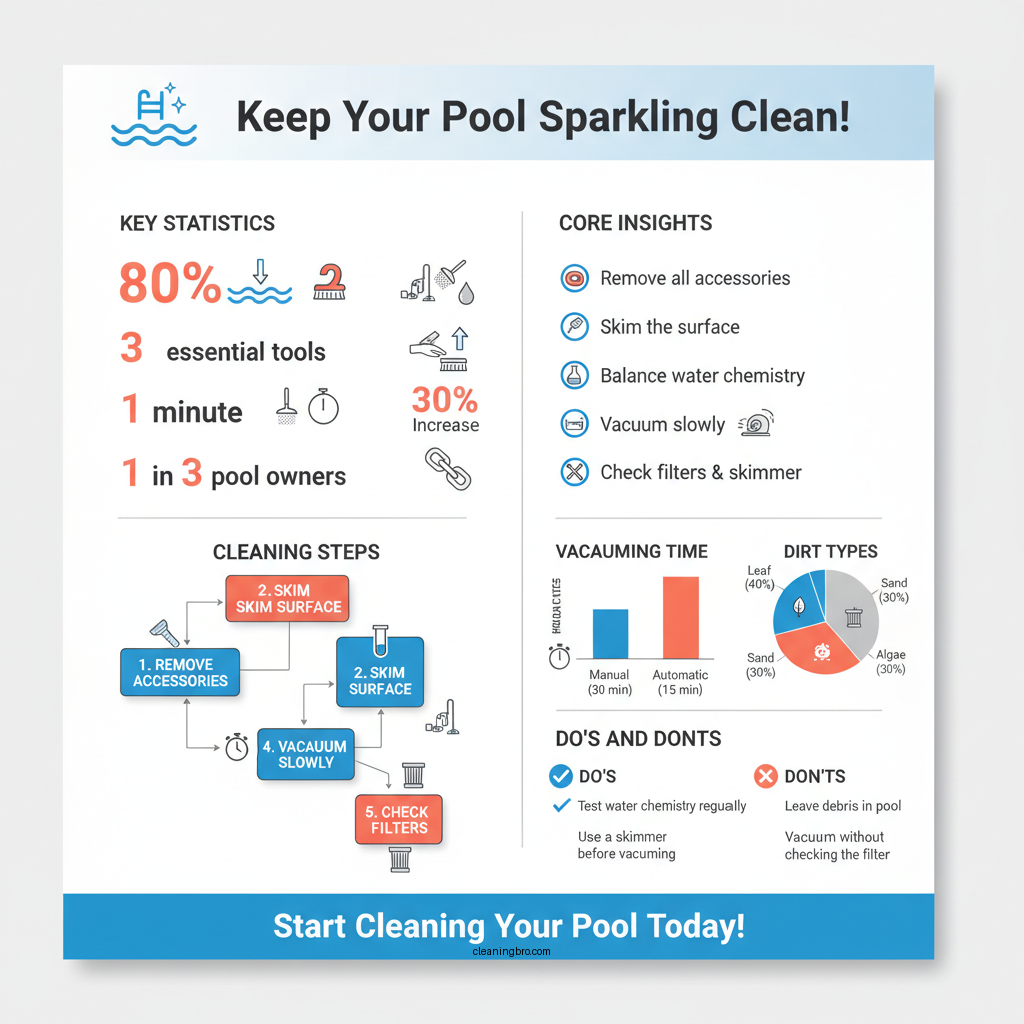
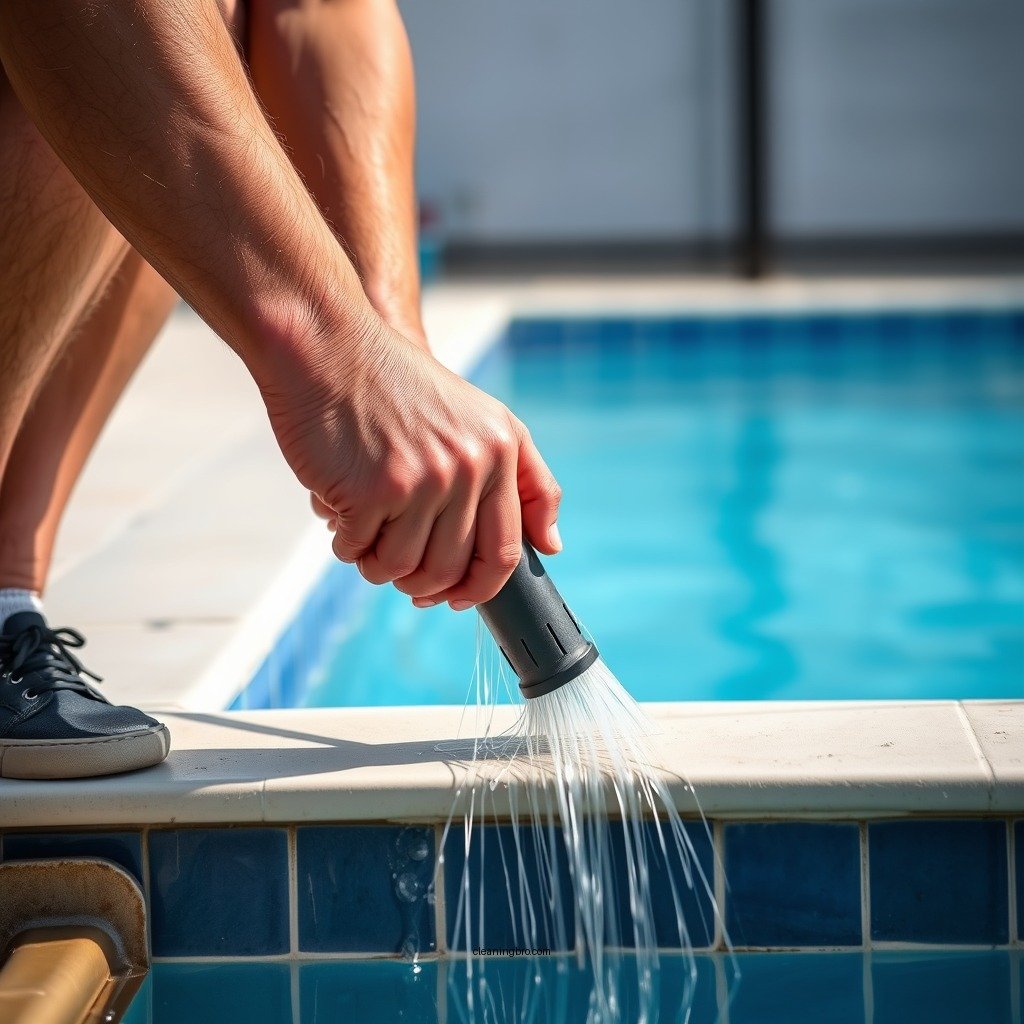
Before diving into the cleaning process, you should prepare your pool to ensure maximum efficiency. Start by removing all pool accessories, such as floats and toys, to gain full access to the pool’s surface. This will also help prevent any obstructions during the cleaning process.
Next, utilize the skimmer to clear out leaves and larger debris from the water’s surface. This step is crucial as it not only makes vacuuming easier but also helps maintain water circulation, which is vital for a clean pool.
Once the surface is clear, check and balance your water chemistry. This includes testing for pH, chlorine levels, and alkalinity. Properly balanced water enhances the efficiency of cleaning and helps prevent algae growth, ensuring that your pool remains a safe and enjoyable environment.
Vacuuming the Pool Floor
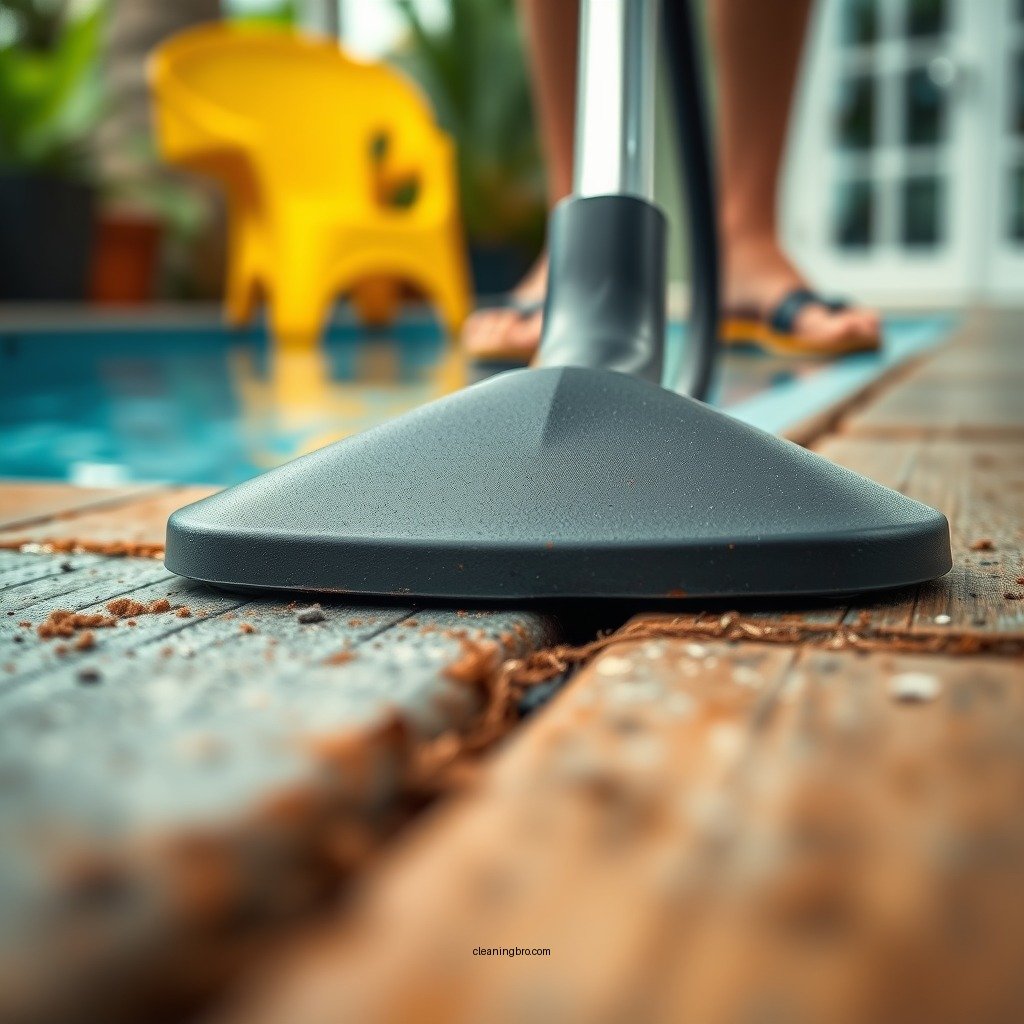
With your pool prepared, it’s time to vacuum the floor. Begin by attaching the vacuum head to the pole and hose, ensuring that the connection is secure. Follow the manufacturer’s instructions to connect the vacuum to your filtration system—this step is critical to ensure that the vacuum operates efficiently.
As you begin vacuuming, slowly move the vacuum across the pool floor, overlapping strokes to cover all areas thoroughly. It’s important to vacuum at a steady pace to allow the vacuum to pick up debris effectively. Pay special attention to corners and edges where dirt tends to accumulate.
After vacuuming, be sure to check the filter and skimmer baskets for debris. Cleaning these components regularly will enhance your pool’s filtration and extend the life of your equipment.
Top 7 Pool Cleaning Tools (2024)
| # | Tool | Type | Price | Effectiveness |
|---|---|---|---|---|
| 1 | Manual Pool Vacuum | Manual | $150 | High |
| 2 | Automatic Pool Vacuum | Automatic | $300 | Very High |
| 3 | Skimmer Net | Manual | $25 | Medium |
| 4 | Pool Brush | Manual | $30 | High |
| 5 | Robotic Pool Cleaner | Automatic | $600 | Very High |
| 6 | Leaf Rake | Manual | $40 | Medium |
| 7 | Handheld Vacuum | Manual | $100 | High |
Scrubbing Stubborn Dirt
In addition to vacuuming, you may encounter areas with stubborn dirt or algae buildup that require more effort. For these situations, a pool brush is essential. Use the brush to scrub the areas with visible dirt, focusing particularly on corners, steps, and edges where debris tends to accumulate more readily.
When scrubbing, rinse the brush frequently to avoid redistributing dirt back into the water. It’s a good practice to use a brush with nylon bristles for vinyl pools, while a stiff-bristle brush is more effective for concrete and plaster pools. This targeted approach helps to lift algae and dirt, making it easier for your vacuum to pick up the loosened debris.
Maintaining Your Pool After Cleaning
Once your pool is clean, maintaining it is crucial for long-term clarity and cleanliness. Regularly check and clean the skimmer and pump baskets to prevent clogs that can hinder filtration. This simple maintenance step can greatly improve the efficiency of your pool system.
It’s advisable to set a cleaning schedule that includes vacuuming and brushing at least once a week. This will help keep dirt and debris at bay, making each cleaning session easier and quicker.
Additionally, consider using a pool cover during off-seasons. A cover minimizes dirt buildup and prevents debris from entering the pool while it is not in use. This proactive approach saves time and effort in the long run.
Troubleshooting Common Issues
Despite regular cleaning, you may encounter issues such as dirt returning quickly. If this occurs, check for leaks in your pool’s plumbing or filtration system, as these can lead to poor water circulation and accumulation of dirt.
Ensure your pool filter is functioning properly and clean or replace it as necessary. A malfunctioning filter can significantly hinder your pool’s ability to stay clean. If you frequently struggle with algae, consider using algaecides or clarifiers to maintain water clarity and prevent future growth.
When to Call a Professional
If the dirt buildup in your pool becomes excessive or persistent, it may be time to call in a professional. This is especially true for complex pool systems or extensive algae problems that require expert intervention.
Regular maintenance services can help keep your pool in optimal condition, providing peace of mind and ensuring that you can enjoy a clean swimming environment without constant worry.Keeping your pool clean is essential for both aesthetic and health reasons. By following these steps, you can effectively clean the dirt off the bottom of your pool and maintain it effortlessly. Start by gathering your cleaning tools and setting a regular maintenance schedule to enjoy a crystal-clear swimming experience.
Frequently Asked Questions
What are the best tools to clean dirt from the bottom of a pool?
The best tools for cleaning dirt from the bottom of a pool include a pool vacuum, a skimmer net, and a brush. A manual or automatic pool vacuum can effectively remove debris and dirt, while a skimmer net is perfect for capturing floating particles. Additionally, using a brush helps to loosen stubborn dirt from the pool surface before vacuuming.
How often should I clean the bottom of my pool to prevent dirt buildup?
It is recommended to clean the bottom of your pool at least once a week to prevent dirt buildup and maintain water clarity. Regular cleaning helps to prevent algae growth and keeps your pool inviting. Depending on your pool’s location and usage, you may need to clean more frequently, especially after heavy storms or pool parties.
Why is there dirt at the bottom of my pool, and how can I prevent it?
Dirt often accumulates at the bottom of your pool due to debris, leaves, and dust being blown in or falling from trees. To prevent dirt from settling at the bottom, consider using a pool cover during off-seasons, regularly skimming the surface, and maintaining proper water circulation with your filter system. Additionally, keeping your pool area clean will minimize dirt entry.
Which cleaning method is most effective for removing stubborn dirt from a pool bottom?
The most effective cleaning method for removing stubborn dirt from the bottom of a pool is to use a combination of brushing and vacuuming. Start by brushing the affected areas to dislodge dirt particles, then follow up with a vacuum to suction away the debris. For heavily soiled areas, consider using a specialized pool cleaner or a robotic vacuum for optimal results.
How can I clean the bottom of my pool without draining it?
You can clean the bottom of your pool without draining it by using a pool vacuum or a manual vacuum with a hose attached to your skimmer. First, brush the bottom to loosen dirt, then vacuum it up, ensuring your filter is set to “waste” if needed. This method maintains the water level while effectively removing dirt and debris from the pool floor.
References
- https://www.poolandspa.com/how-to-clean-a-swimming-pool
https://www.poolandspa.com/how-to-clean-a-swimming-pool - Swimming and Your Health | Healthy Swimming | CDC
https://www.cdc.gov/healthywater/swimming/index.html - https://www.epa.gov/pools
https://www.epa.gov/pools - https://www.mayoclinic.org/healthy-lifestyle/fitness/in-depth/swimming/art-20045592
https://www.mayoclinic.org/healthy-lifestyle/fitness/in-depth/swimming/art-20045592 - https://www.sciencedirect.com/science/article/pii/S0167732215301668
https://www.sciencedirect.com/science/article/pii/S0167732215301668 - Google Scholar Google Scholar
https://scholar.google.com/scholar?q=how+to+clean+dirt+on+bottom+of+pool - Google Scholar Google Scholar
https://scholar.google.com/scholar?q=pool+maintenance+techniques - Google Scholar Google Scholar
https://scholar.google.com/scholar?q=cleaning+swimming+pool+floor - Swimming pool | sports | Britannica
https://www.britannica.com/science/swimming-pool - how to clean dirt on bottom of pool – Search results
https://en.wikipedia.org/wiki/Special:Search?search=how+to+clean+dirt+on+bottom+of+pool