Cleaning Tips Before and After Baseboards
Before cleaning your baseboards, gather microfiber cloths, a soft brush, mild detergent, and warm water to make the process easy and effective. Start by dusting off loose debris using the cloth or brush, then pick a gentle cleaning solution—avoiding harsh chemicals. When washing, work gently with a damp cloth or sponge, rinsing often, and handle tough stains with mild remedies like baking soda paste. Finish by drying to protect the paint. Keep going to uncover more helpful tips to keep your baseboards spotless.
Preparing Your Cleaning Supplies
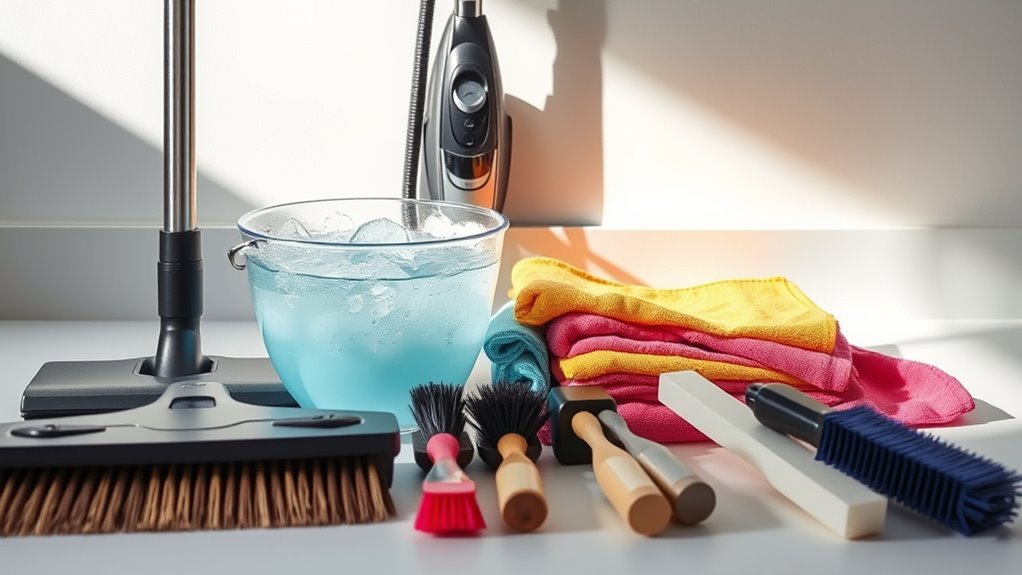
Before you begin cleaning your baseboards, gather the right supplies to make the job easier and more effective. You’ll want to choose cleaning methods that suit your lifestyle—whether that’s a quick wipe-down or a deep clean. Start by organizing supplies like microfiber cloths, a soft-bristled brush, mild detergent, and a bucket of warm water. Keeping everything within reach saves you time and frustration, giving you the freedom to focus on the task. Avoid harsh chemicals that limit your options; instead, opt for gentle solutions that protect your baseboards. By preparing thoughtfully and organizing supplies efficiently, you set yourself up for success and maintain control over your cleaning routine without unnecessary hassle or complexity.
Removing Dust and Loose Debris
With your cleaning supplies ready, the next step is to tackle the dust and loose debris on your baseboards. Start with effective dusting techniques—using a microfiber cloth or a soft brush helps you capture dust without scattering it. Don’t forget to reach those tight corners where dust loves to hide. For bigger debris, grab debris tools like a handheld vacuum or a dustpan and brush to swiftly remove particles without much effort. Working systematically from one end to the other guarantees you don’t miss spots, giving you the freedom to enjoy a cleaner space with less hassle. This step makes the actual cleaning smoother, so take your time here. Once the dust and debris are gone, you’re set for the next phase of deep cleaning.
Choosing the Right Cleaning Solution
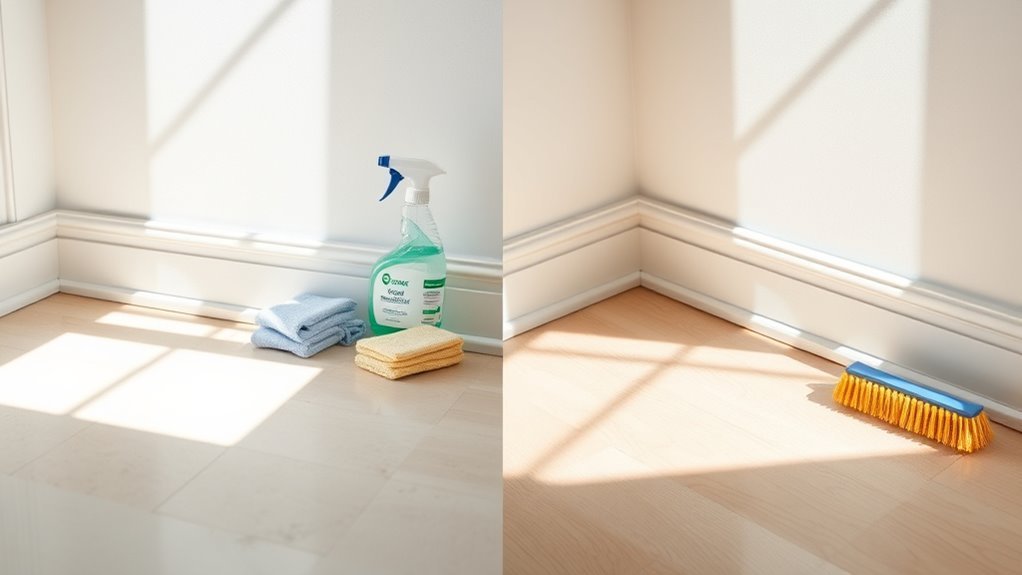
Since baseboards can be made from different materials, choosing the right cleaning solution is key to avoiding damage while ensuring effective dirt removal. You want something gentle yet powerful, so consider eco friendly options that won’t harm your surfaces or the environment. Homemade cleaners are a fantastic choice—they’re simple to make with ingredients like vinegar, baking soda, and mild soap. These options give you control over what touches your home, keeping toxins out while still tackling grime. Avoid harsh chemicals that might strip paint or discolor wood. Before you start, test your cleaner on a small, hidden spot to make sure it’s safe. By selecting the right solution, you maintain your baseboards’ beauty and protect your freedom to live in a healthy, clean space.
Techniques for Washing Baseboards
Start by gathering your tools: a soft cloth or sponge, a bucket of warm water mixed with your chosen cleaning solution, and a gentle brush for stubborn spots. Washing baseboards effectively depends on the type of baseboard materials you have, so always consider that before you start. To keep your freedom from constant re-cleaning, maintain a good cleaning frequency based on how quickly dirt builds up in your space.
Gather soft cloth, warm water with cleaner, and a gentle brush; tailor cleaning to your baseboard type for lasting freshness.
- Dip your cloth in the solution, wring it out well, and gently wipe along the baseboard’s surface.
- Use the brush to tackle any grooves or textured areas where grime hides.
- Rinse your cloth frequently and change water when it gets dirty to avoid spreading dust.
This method keeps your baseboards fresh without damage, letting you enjoy a cleaner home effortlessly.
Drying and Protecting the Baseboards
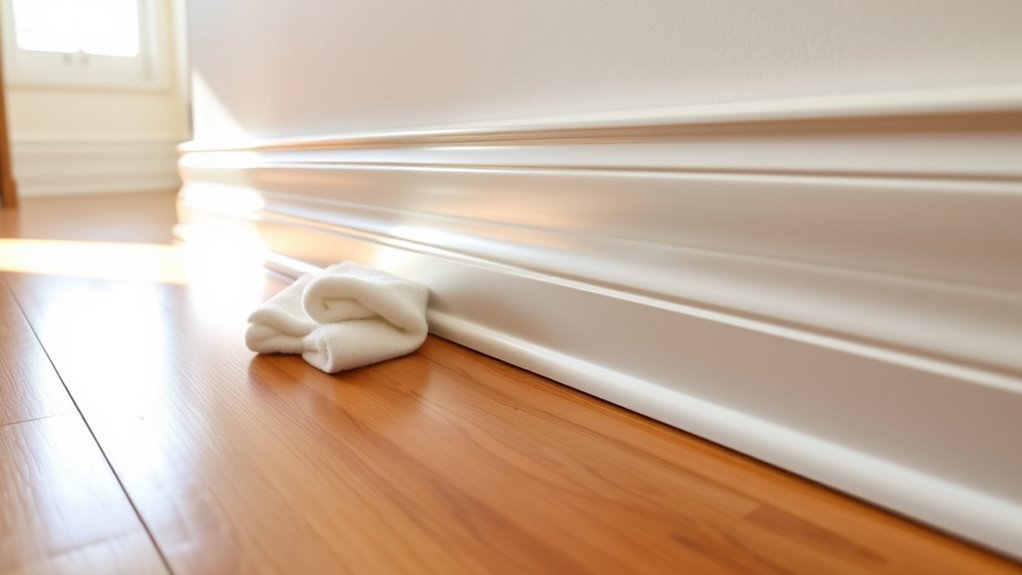
After cleaning your baseboards, you’ll want to dry them thoroughly to prevent moisture damage and mold growth. Quick and effective drying methods include using a clean, dry microfiber cloth or a soft towel to absorb any residual moisture. You can also open windows or turn on a fan to speed up air circulation around the baseboards. Avoid letting water sit on the surface, as that invites damage. For baseboard protection, consider applying a thin layer of furniture polish or a wood conditioner if your baseboards are wooden. This adds a protective barrier against dirt and moisture, keeping them looking fresh longer. Taking these simple steps guarantees your baseboards stay in great shape, giving you the freedom to enjoy a clean, well-maintained space without worry.
Handling Tough Stains and Scuff Marks
When you’re dealing with tough stains and scuff marks on your baseboards, choosing the right removal method is key to avoiding damage. You’ll want to explore solutions that effectively lift marks without harsh scrubbing. Plus, a few simple preventative steps can keep your baseboards looking fresh longer.
Effective Stain Removal
Although regular cleaning keeps baseboards looking fresh, tough stains and scuff marks can be stubborn and require special attention. To confidently tackle various stain types without fuss, consider these effective stain removal tips:
- Identify the stain type first—grease, dirt, or ink—so you can pick the right cleaner and avoid damage.
- Adjust your cleaning frequency based on traffic and exposure; more frequent attention prevents buildup, making stains easier to remove.
- Use gentle scrubbing tools like a soft brush or microfiber cloth paired with mild detergent or a vinegar solution to lift stains without harming your baseboards.
Scuff Mark Solutions
Scuff marks can be one of the most frustrating blemishes on your baseboards, but you don’t have to worry—there are several simple solutions to remove them effectively. First, identify scuff mark types: some are light and can be wiped away easily, while tougher ones may require more effort. For lighter marks, try a damp cloth or a magic eraser, which works wonders without damaging paint. For stubborn marks, apply a small amount of baking soda paste or a gentle household cleaner. Always test your chosen scuff removal techniques on a hidden spot first to avoid damage. With these straightforward methods, you can quickly restore your baseboards’ clean look and keep your space feeling fresh and open.
Preventative Maintenance Tips
To keep your baseboards looking their best, focus on a few key preventative maintenance tips that handle tough stains and scuff marks before they set in. Staying ahead means incorporating preventative cleaning into your routine, so stains don’t get a chance to stubbornly stick around. Here’s how you can maintain freedom from constant scrubbing:
- Schedule routine inspections weekly to catch dirt or marks early.
- Use a soft cloth with mild soap for quick spot cleaning as soon as you notice smudges.
- Apply a protective finish or sealant to your baseboards to repel stains and scuffs.
Maintaining Clean Baseboards Between Deep Cleans
Keeping your baseboards looking fresh between deep cleans doesn’t have to be a chore. By incorporating simple habits like regular baseboard dusting, you can prevent dirt buildup without much effort. Grab a microfiber cloth or a vacuum with a brush attachment and quickly swipe along the edges once a week. Coupling this with routine inspections will help you spot spots or scuffs early, so you can address them before they become stubborn stains. These quick check-ins and light cleanings free you from the stress of intensive scrubbing sessions. Staying consistent lets you enjoy a clean, inviting space with minimal hassle, giving you more time to focus on what truly matters to you.
Frequently Asked Questions
How Often Should Baseboards Be Replaced Instead of Cleaned?
Think of your baseboards as the unsung heroes of your home’s style—when they start showing their age, it’s time to act. You should consider replacement when the baseboard lifespan, typically 20-30 years, is exceeded or if you notice replacement signs like cracks, warping, or persistent stains. Don’t let worn baseboards hold you back; swapping them out can refresh your space and give you the freedom to enjoy a cleaner, more vibrant home.
Can Baseboard Cleaning Prevent Allergies?
Yes, keeping your baseboards clean can help with allergy reduction. Dust accumulation on baseboards often traps allergens like dust mites and pet dander, which can worsen your symptoms. By regularly cleaning them, you’re cutting down on these irritants in your home, giving you more freedom to breathe easy and enjoy your space without constant sneezing or discomfort. It’s a simple step that can make a noticeable difference in your indoor air quality.
Are There Eco-Friendly Cleaning Products for Baseboards?
Absolutely, you can find eco-friendly cleaning products for baseboards that use natural cleaners and sustainable materials. These options let you keep your space fresh without compromising the planet’s health. By choosing products made from biodegradable ingredients, you’re embracing freedom from harsh chemicals and reducing waste. It’s a simple way to maintain your home clean while supporting a greener lifestyle that aligns with your values and desire for a healthier environment.
Should Baseboards Be Cleaned Before or After Vacuuming Floors?
Think of your cleaning routine like a dance—timing is everything. When it comes to baseboard cleaning, you should vacuum floors first. Using proper vacuuming techniques helps whisk away loose dust and debris, making baseboard cleaning more effective and less messy. By tackling floors before baseboards, you liberate yourself from double work, letting you enjoy a cleaner space with less effort and more freedom to focus on what really matters.
Can Pets Damage Baseboards During Cleaning?
Yes, pets can unintentionally damage baseboards during cleaning if their behavior isn’t managed properly. They might scratch or chew on wet or freshly cleaned surfaces, which can ruin your work. To protect your baseboards, use gentle cleaning techniques and keep your pets occupied or away until everything dries. This way, you maintain freedom in your space without worrying about pet-related damage while keeping your baseboards looking fresh.