How to Clean a Stained Pool Liner: Effective Methods
To clean a stained pool liner, start by identifying the type of stains—whether they are organic, mineral, or chemical. Each type requires a different approach for effective cleaning. In this article, you will learn various methods and tips to restore your pool liner to its original condition, ensuring a clean and inviting swimming environment.
Identify the Type of Stains
The first step to effectively cleaning a stained pool liner is to identify the type of stains present. Common stains include organic stains caused by algae and leaves, mineral stains resulting from calcium buildup or metal deposits, and chemical stains linked to imbalances in pool chemicals. Each stain type requires a tailored cleaning technique to achieve optimal results.
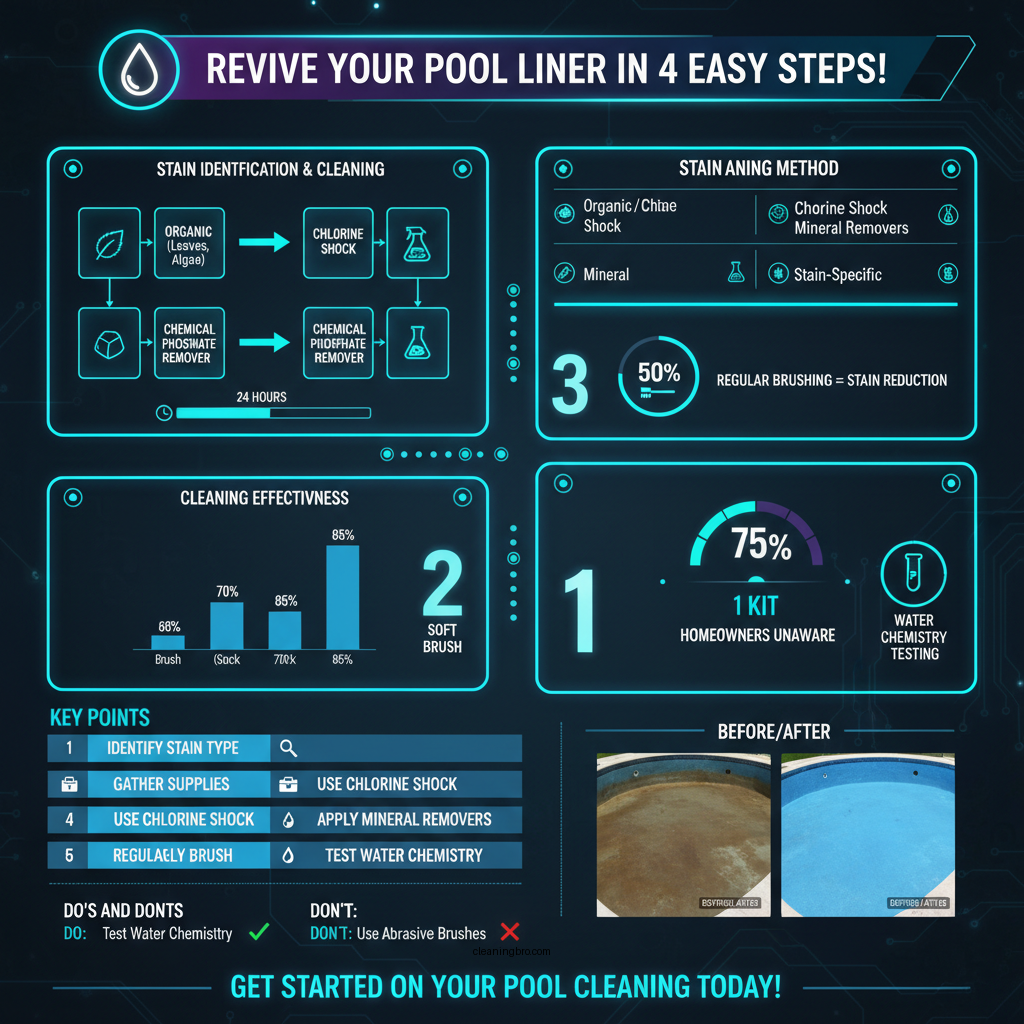
To determine the stain type, visually inspect the affected areas. Organic stains often appear as green or brown smudges, while mineral stains may manifest as white or green scales. Rust stains typically have a reddish-brown hue. Using a test kit to analyze your pool water chemistry can help identify underlying issues that lead to staining—such as high pH levels or inadequate sanitization. This step is essential for choosing the right cleaning method and preventing future stains.
Gather Necessary Cleaning Supplies
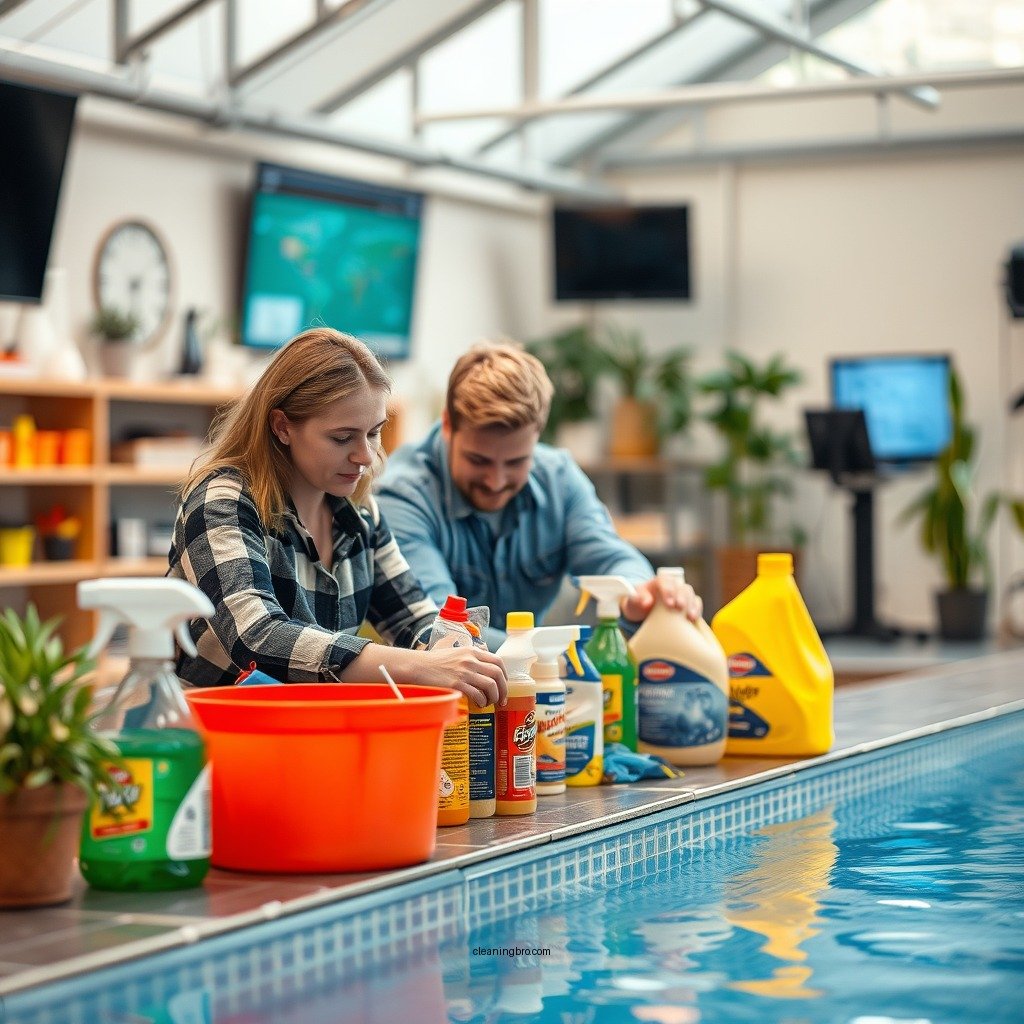
Before diving into the cleaning process, it’s essential to gather all necessary supplies. The right tools and chemicals can make a significant difference in effectively addressing stains. You will need:
– Soft Brush: Ideal for scrubbing the liner without causing damage.
– Pool Cleaner: A specialized cleaner that can help break down tough stains.
– Chemicals: Depending on the stain type, consider chlorine-based shock treatments for organic stains, mineral stain removers for calcium buildup, or baking soda for chemical stains.
– Vacuum or Pressure Washer: For more persistent stains or to clean larger areas effectively.
Having these supplies ready will streamline the cleaning process, ensuring that you can address stains efficiently and effectively.
Cleaning Organic Stains

Organic stains, often caused by algae or organic debris, are typically the easiest to remove. Start by applying a chlorine-based shock treatment, which can effectively kill algae and break down organic matter. Follow the manufacturer’s instructions for dosage based on your pool size.
After allowing the shock treatment to circulate in the water for at least 24 hours, use a soft scrub brush to gently scrub the stained areas. This will help remove any remaining residue. Be cautious not to use abrasive brushes, as they can damage the liner. In addition to chemical treatments, regular brushing of the pool surface can help prevent organic stains from forming in the first place.
Tackling Mineral Stains
Mineral stains are often more challenging to remove than organic stains, as they are typically caused by high calcium or metal content in the water. The most effective way to tackle mineral stains is by using a stain remover specifically designed for this purpose. Follow the package instructions closely for the best results.
For stubborn stains, a mixture of vinegar and water can serve as a natural alternative. Apply the solution to the stained areas and allow it to sit for about 30 minutes before scrubbing gently with a soft brush. This method can help dissolve the mineral deposits without damaging the liner. Regularly checking your pool’s water chemistry can also help prevent mineral buildups, ensuring a cleaner pool environment.
Top 5 Stains on Pool Liners and Their Causes
| # | Stain Type | Cause | Possible Solutions |
|---|---|---|---|
| 1 | Algae | Poor sanitization | Chlorine shock treatment |
| 2 | Calcium | Hard water | Mineral stain remover |
| 3 | Iron | Rusty metal items | Specialized stain remover |
| 4 | Copper | Copper-based algaecides | Chemical stain remover |
| 5 | Organic debris | Leaves, pollen | Regular cleaning |
Addressing Chemical Stains
Chemical stains can arise from various sources, including imbalanced pool chemistry, excessive chlorine usage, or improper use of pool chemicals. To effectively address these stains, it’s crucial first to identify the source of the chemical imbalance. Use a water test kit to analyze pH, alkalinity, and chlorine levels, ensuring they fall within the recommended ranges.
Once the source is identified, rectify any imbalances to prevent further staining. For cleaning the affected areas, utilize a specialized chemical stain remover or create a baking soda paste. To make the paste, mix baking soda with a small amount of water until it reaches a thick consistency. Apply the paste directly to the stain, allow it to sit for 15-20 minutes, and then scrub gently with a soft brush.
Regular monitoring of pool chemistry and consistent sanitization can significantly reduce the occurrence of chemical stains, keeping your pool liner looking pristine.
Top 3 Pool Cleaning Methods: Effectiveness and Ease of Use
| Feature | ⭐ Chlorine Shock Treatment | Mineral Stain Remover | Baking Soda Paste |
|---|---|---|---|
| Effectiveness | ✅ High | ✅ Moderate | ✅ Low |
| Ease of Use | ✅ Easy | ✅ Moderate | ✅ Easy |
| Time Required | 24 hours | 1-2 hours | 1 hour |
| Cost | $$ | $$$ | $ |
| Chemical Balance Required | ✅ Yes | ✅ Yes | ✅ No |
| Odor | ✅ Strong | ✅ Low | ✅ None |
| Stain Removal Capability | ✅ High | ✅ Moderate | ✅ Low |
| Environmental Impact | ✅ Moderate | ✅ Low | ✅ Low |
| Best For | All pool types | Mineral stains | Budget-friendly |
Prevent Future Stains
To maintain a clean and inviting swimming environment, it is essential to implement preventive measures that reduce the likelihood of stains reappearing. Regularly testing and balancing your pool water chemistry is crucial—keeping pH, alkalinity, and chlorine levels within recommended ranges can prevent both organic and chemical stains.
Additionally, establishing a routine cleaning schedule is beneficial. Brushing the liner at least once a week helps remove debris and algae before they can stain. Vacuuming the pool regularly will also help keep it clean and free from organic matter. Installing a pool cover during the offseason can minimize debris accumulation, further helping to prevent stains from forming.
When to Seek Professional Help
Despite your best efforts, some stains may persist or worsen over time, indicating potential underlying issues that require professional attention. If you find that stains are not responding to your cleaning efforts or if there is noticeable damage to the pool liner, it may be time to consult a pool maintenance professional. They can provide expert advice and solutions tailored to your specific situation, ensuring that your pool remains a safe and enjoyable space.
Cleaning your stained pool liner is essential for maintaining a beautiful and safe swimming environment. By following these methods and tips, you can effectively remove stains and keep your pool looking pristine. Don’t hesitate to take action today—start by assessing your pool liner and gathering the necessary supplies for a thorough clean.
Frequently Asked Questions
What are the best methods for cleaning a stained pool liner?
The best methods for cleaning a stained pool liner include using a mixture of baking soda and water, a specialized pool liner cleaner, or a diluted bleach solution for tougher stains. Always start with the least aggressive method to avoid damage, and regularly scrub with a soft-bristle brush to maintain the liner’s integrity.
How can I remove black algae stains from my pool liner?
To remove black algae stains from your pool liner, first, shock the pool with chlorine to kill the algae, then scrub the affected areas with a nylon brush and a mixture of water and baking soda. If the stains persist, consider using a commercial pool algae remover specifically designed for vinyl liners, ensuring to follow the manufacturer’s instructions.
Why do stains develop on my pool liner, and how can I prevent them?
Stains develop on pool liners due to a combination of factors such as high mineral content in the water, improper pH balance, and organic debris like leaves or algae. To prevent stains, regularly maintain your pool’s chemical balance, clean debris promptly, and consider using a stain prevention product to keep your liner looking fresh.
Which tools are essential for cleaning a stained pool liner effectively?
Essential tools for cleaning a stained pool liner include a soft-bristle brush, a vacuum designed for vinyl pools, and a cleaning solution like baking soda or a vinyl-safe cleaner. Additionally, having a pool skimmer and a water testing kit will help maintain overall pool hygiene and prevent future stains.
What should I avoid when cleaning my vinyl pool liner to prevent damage?
When cleaning your vinyl pool liner, avoid using abrasive scrubbers, harsh chemicals like undiluted bleach, or any cleaning products not specifically designed for vinyl. Additionally, do not let cleaning solutions sit on the liner for too long, as this can lead to discoloration or deterioration of the material.
References
- https://www.poolandspa.com.au/blog/how-to-clean-stained-pool-liners
https://www.poolandspa.com.au/blog/how-to-clean-stained-pool-liners - https://www.poolsupplies.com.au/blog/how-to-clean-your-pool-liner
https://www.poolsupplies.com.au/blog/how-to-clean-your-pool-liner - https://www.ncbi.nlm.nih.gov/pmc/articles/PMC7136893/
https://www.ncbi.nlm.nih.gov/pmc/articles/PMC7136893/ - https://www.sciencedirect.com/topics/agricultural-and-biological-sciences/pool-liner
https://www.sciencedirect.com/topics/agricultural-and-biological-sciences/pool-liner - The Parts Of A Microwave Oven
https://www.hunker.com/13407974/how-to-remove-stains-from-a-vinyl-pool-liner - https://www.britannica.com/topic/pool
https://www.britannica.com/topic/pool - Google Scholar Google Scholar
https://scholar.google.com/scholar?q=cleaning+stained+pool+liner - Google Scholar Google Scholar
https://scholar.google.com/scholar?q=removing+stains+from+pool+liner - Google Scholar Google Scholar
https://scholar.google.com/scholar?q=pool+maintenance+stains+cleaning - Google Scholar Google Scholar
https://scholar.google.com/scholar?q=how+to+clean+stained+pool+liner