
How to Clean a Gas Tank with Old Gas
Cleaning a gas tank with old gas is crucial for ensuring optimal performance and preventing damage to your engine. The process involves draining the old fuel, thoroughly cleaning the tank’s interior, and possibly treating any remaining fuel. This guide will walk you through each step efficiently, helping you restore your gas tank to its best condition.
Understanding the Importance of Cleaning
Cleaning your gas tank is not merely a maintenance task; it is a critical operation that can significantly impact your vehicle’s performance. Old gasoline can lead to a myriad of problems, including engine damage and decreased efficiency.
– Prevents Engine Damage: Old gas can deteriorate over time, forming varnish and sludge that can clog fuel lines and filters. This debris can lead to a lack of fuel flow, causing your engine to sputter or stall.
– Improves Performance: A clean gas tank ensures a steady and uninterrupted flow of fuel, which translates to better combustion and overall engine performance. It can also enhance fuel efficiency, saving you money at the pump.
Safety Precautions
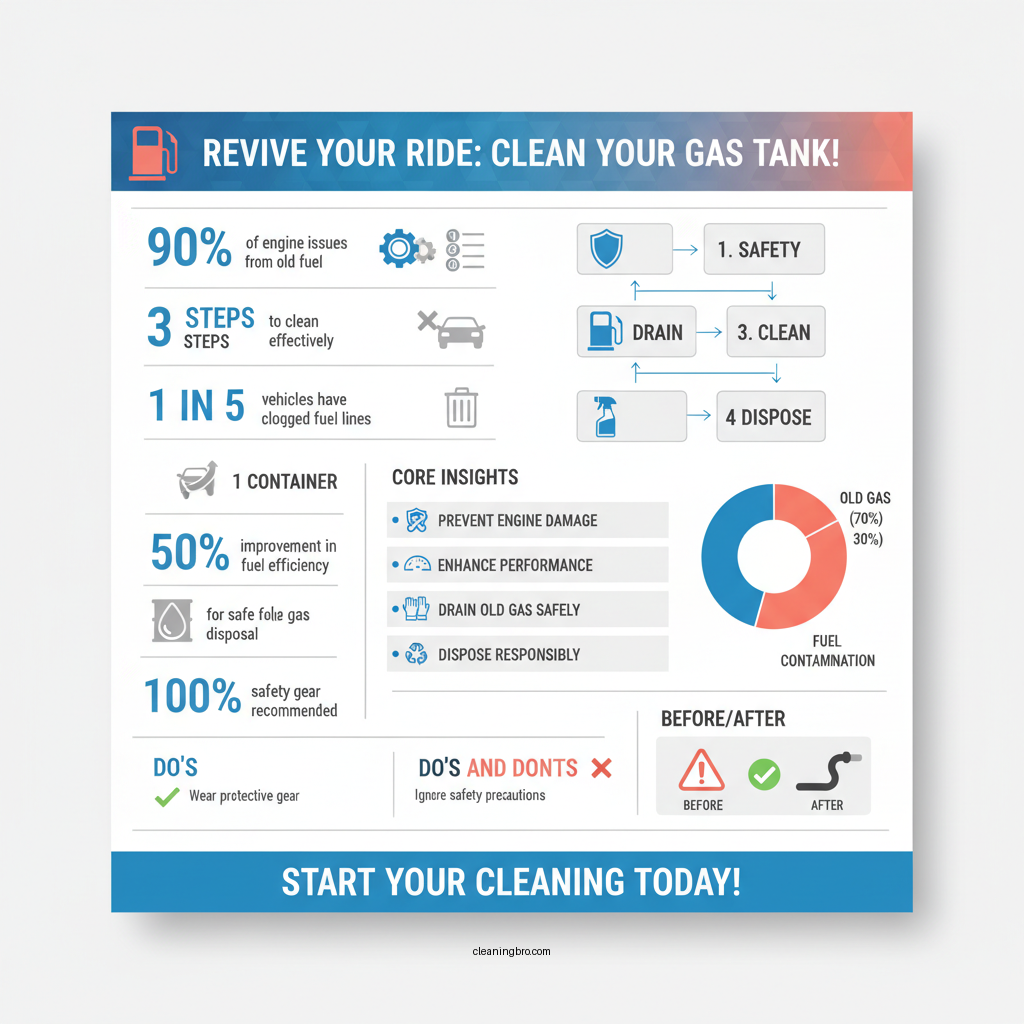
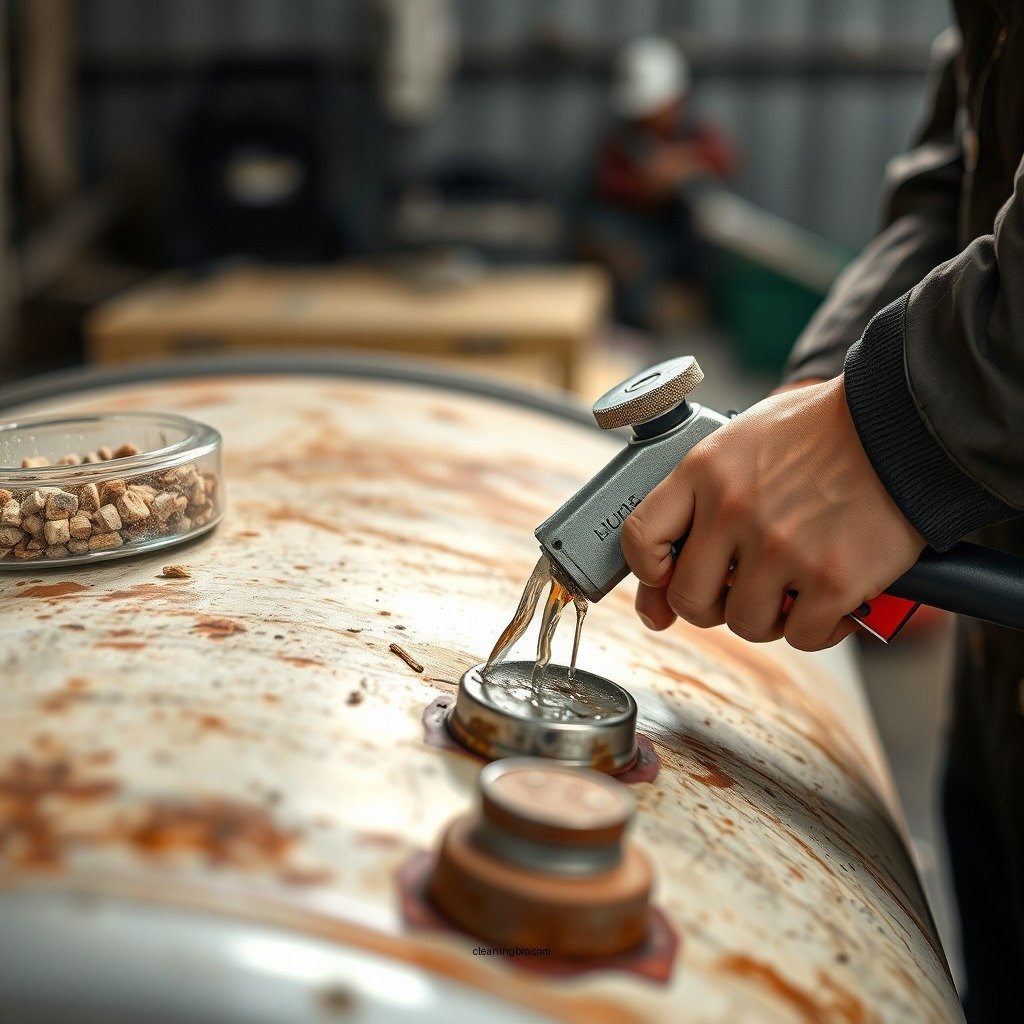
Before you begin cleaning the gas tank, it’s imperative to take necessary safety measures to protect yourself and your surroundings:
– Work in a Well-Ventilated Area: Gasoline vapors are not only harmful but can also be flammable. Ensure you are in an open area to avoid inhaling toxic fumes.
– Wear Protective Gear: Equip yourself with gloves and goggles to safeguard against spills and splashes. Additionally, consider wearing a mask if you’re particularly sensitive to fumes.
Draining the Old Gas
The first step in cleaning your gas tank is to drain the old gas properly. Follow these steps to do it safely:
– Locate the Fuel Drain Plug: Many vehicles come equipped with a fuel drain plug, typically found at the bottom of the gas tank. If your vehicle does not have a drain plug, you can use a siphon pump to extract the fuel.
– Collect the Old Gas: Use a suitable container, such as a gas can, to collect the old gas. Ensure that the container is clean and specifically designed for fuel to avoid contamination.
– Dispose Properly: Old gasoline should never be poured down the drain. Instead, take it to a local hazardous waste disposal site or a recycling center that accepts used fuel.
Cleaning the Tank Interior
Once the old fuel has been drained, it’s time to clean the interior of the gas tank thoroughly:
– Choose a Cleaning Solution: You can use a commercial tank cleaning solution or make your own using a mixture of water and vinegar. The acidity in vinegar can help break down deposits and sludge.
– Scrub the Interior: Use a long-handled brush to scrub the tank’s interior. Agitate the cleaning solution to ensure it reaches all areas, removing sludge and any other debris.
– Rinse Thoroughly: After scrubbing, rinse the tank with clean water to ensure all cleaning agents and residues are removed. Allow the tank to dry completely before proceeding.
Gasoline Quality Degradation Over Time
| # | Age of Gasoline | Degradation Level (%) | Recommended Action |
|---|---|---|---|
| 1 | 1 Month | 0% | Use as normal |
| 2 | 3 Months | 5% | Use with caution |
| 3 | 6 Months | 15% | Consider draining |
| 4 | 1 Year | 25% | Drain and clean |
| 5 | 2 Years | 50% | Do not use |
| 6 | 3 Years | 75% | Drain and dispose |
| 7 | 5 Years | 90% | Do not use |
Inspecting for Damage
After cleaning, it’s vital to inspect the tank for any potential damage that could compromise fuel integrity:
– Check for Rust or Corrosion: Look for any signs of rust, especially in older tanks, as this can create particles that contaminate the fuel.
– Look for Leaks or Holes: Examine the tank’s seams and fittings for any leaks. If you find any, they may require welding or patching to prevent fuel loss and ensure safety.
Refilling with Fresh Gas
Once the tank is clean and dry, you can refill it with fresh gasoline:
– Ensure the Tank is Dry: Before adding new fuel, confirm that the tank is completely dry, as introducing moisture can cause further degradation.
– Consider Adding a Fuel Stabilizer: To prevent future issues with gas quality, consider adding a fuel stabilizer. This can help maintain the fuel’s integrity over time and reduce the chances of buildup.
Final Checks and Maintenance Tips
To maintain your gas tank in optimal condition, follow these additional tips:
– Regularly Inspect Your Gas Tank: Make it a habit to check your gas tank regularly for signs of wear or contamination. This proactive approach can save you from larger issues down the road.
– Use Fuel Additives Periodically: Fuel additives can help keep your fuel system clean. Using them every few months can prevent gunk buildup and improve overall performance.
With these steps, you can effectively clean a gas tank filled with old gas and keep your vehicle running smoothly. Remember that regular maintenance is key to preventing future problems. Should you have any questions or require further assistance, don’t hesitate to reach out for professional help or consult additional resources.
Frequently Asked Questions
How can I safely clean a gas tank that has old gas in it?
To safely clean a gas tank with old gas, start by draining the old fuel using a siphon pump, ensuring you dispose of it properly according to local regulations. After draining, use a mixture of clean fuel and a fuel system cleaner to flush the tank, and then rinse with fresh gasoline to remove any remaining residue.
What are the signs that my gas tank needs cleaning due to old gas?
Signs that your gas tank may need cleaning include difficulty starting your vehicle, engine stalling, or reduced fuel efficiency. Additionally, if you notice a foul odor or sediment in the fuel, it’s crucial to clean the tank to prevent further damage to the engine.
Why is it important to remove old gas from my gas tank?
Removing old gas from your gas tank is important because stale fuel can lead to engine problems, such as clogged fuel filters and injectors, which can result in costly repairs. Old gas can also cause corrosion and rust inside the tank, affecting the overall performance of your vehicle.
What is the best method for cleaning a gas tank with old gas?
The best method for cleaning a gas tank with old gas involves first draining the old fuel and then using a fuel tank cleaner or a mixture of vinegar and water to scrub the interior surfaces. After thorough cleaning, rinse the tank with fresh gasoline to eliminate any remaining contaminants before refilling it.
Which tools and materials do I need to clean my gas tank effectively?
To effectively clean your gas tank, you will need a siphon pump for draining the old gas, a fuel tank cleaner or a vinegar solution, a soft brush or cloth for scrubbing, and fresh gasoline for rinsing. Additionally, ensure you have safety gear, such as gloves and goggles, to protect yourself during the cleaning process.
References
- https://en.wikipedia.org/wiki/Automobile_fuel_tank
https://en.wikipedia.org/wiki/Automobile_fuel_tank - https://www.sciencedirect.com/topics/engineering/gasoline-tank
https://www.sciencedirect.com/topics/engineering/gasoline-tank - https://www.ncbi.nlm.nih.gov/pmc/articles/PMC3263070/
https://www.ncbi.nlm.nih.gov/pmc/articles/PMC3263070/ - https://www.britannica.com/science/gasoline
https://www.britannica.com/science/gasoline - The page you were looking for has moved.
https://www.cdc.gov/niosh/topics/chemical.html - https://pubmed.ncbi.nlm.nih.gov/20351124/
https://pubmed.ncbi.nlm.nih.gov/20351124/ - https://www.nytimes.com/2020/06/12/automobiles/how-to-clean-a-gas-tank.html
https://www.nytimes.com/2020/06/12/automobiles/how-to-clean-a-gas-tank.html - https://www.hse.gov.uk/chemical-hazards/index.htm
https://www.hse.gov.uk/chemical-hazards/index.htm - Google Scholar Google Scholar
https://scholar.google.com/scholar?q=how+to+clean+a+gas+tank+with+old+gas - Google Scholar Google Scholar
https://scholar.google.com/scholar?q=gas+tank+cleaning+methods