Removing Washer From Garage Effectively
To remove your washer from the garage effectively, start by clearing and measuring your path to avoid obstacles. Turn off water valves and unplug the washer before disconnecting hoses carefully. Use proper lifting techniques—bend your knees, keep your back straight, and lift with help or equipment like a dolly. Finally, plan for eco-friendly disposal or donation. If you want tips on making each step smoother and safer, there’s more to explore.
Preparing the Garage and Washer for Removal
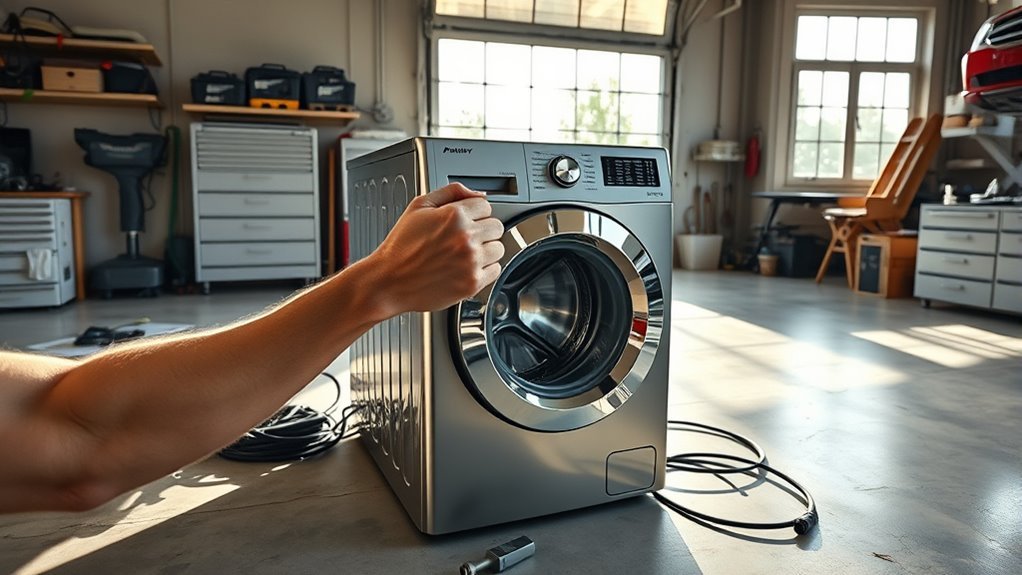
Before you start removing the washer from your garage, make certain the area is clear and accessible. Freedom comes from having an organized space, so begin by organizing tools and clearing any obstacles around the washer. This not only gives you room to maneuver but also prevents accidents. Next, focus on evaluating space — measure the path the washer will take to guarantee it fits through doorways and tight corners. Knowing your surroundings helps you avoid surprises and delays. Take a moment to visualize the removal route, adjusting any stored items as needed. By preparing the garage and washer thoughtfully, you set yourself up for a smooth, stress-free removal process that lets you reclaim your space with ease and confidence.
Disconnecting Water and Power Supplies Safely
Once you’re ready to disconnect the washer, make sure you turn off the water supply valves completely to prevent leaks. Taking these safety precautions seriously gives you control and freedom from unexpected messes. Next, unplug the washer from the electrical outlet to eliminate any risk of electric shock. When selecting tools, choose adjustable wrenches or pliers designed for plumbing work to loosen the water hoses without damaging fittings. Avoid makeshift tools—they can compromise your safety and the job’s success. Handle the hoses carefully, allowing any residual water to drain into a bucket or towel. Staying focused on tool selection and safety precautions lets you disconnect water and power supplies efficiently, ensuring a smooth removal process without setbacks or hazards.
Clearing a Path and Using Proper Lifting Techniques
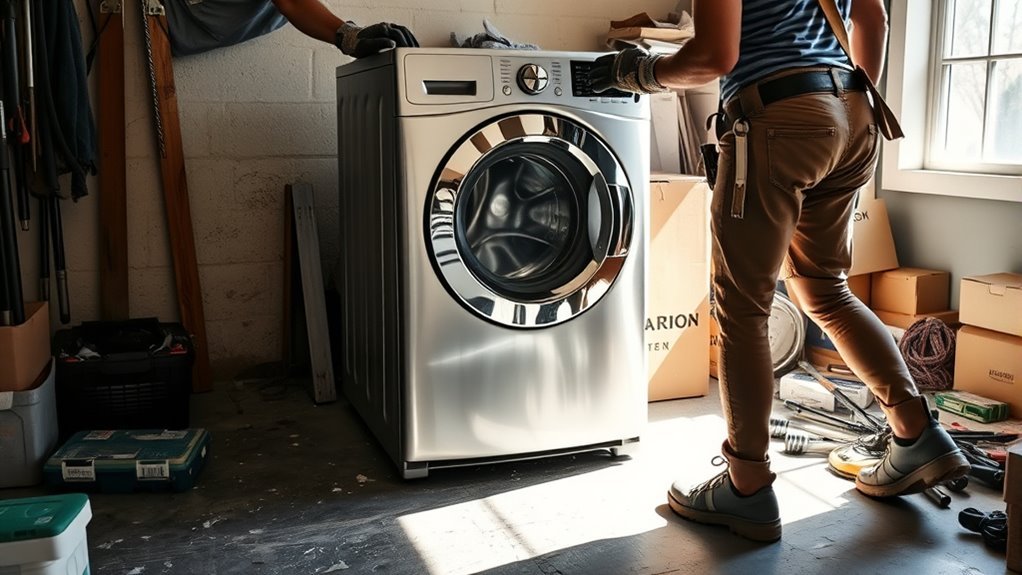
Although it might seem straightforward, clearing a path is essential to safely move your washer without injury or damage. Before lifting, remove obstacles and verify the route from your garage to the exit is free of clutter. This path clearance prevents trips and allows smooth, confident movement. When it comes to lifting safety, always bend your knees, keep your back straight, and hold the washer close to your body. Avoid twisting as you lift—pivot your entire body instead. If possible, use handles or grips designed for moving heavy appliances. Taking these precautions gives you the freedom to move your washer efficiently while protecting yourself from strain or injury. Prioritizing path clearance and lifting safety makes the entire removal process safer and more manageable.
Handling Heavy Lifting and Transportation Options
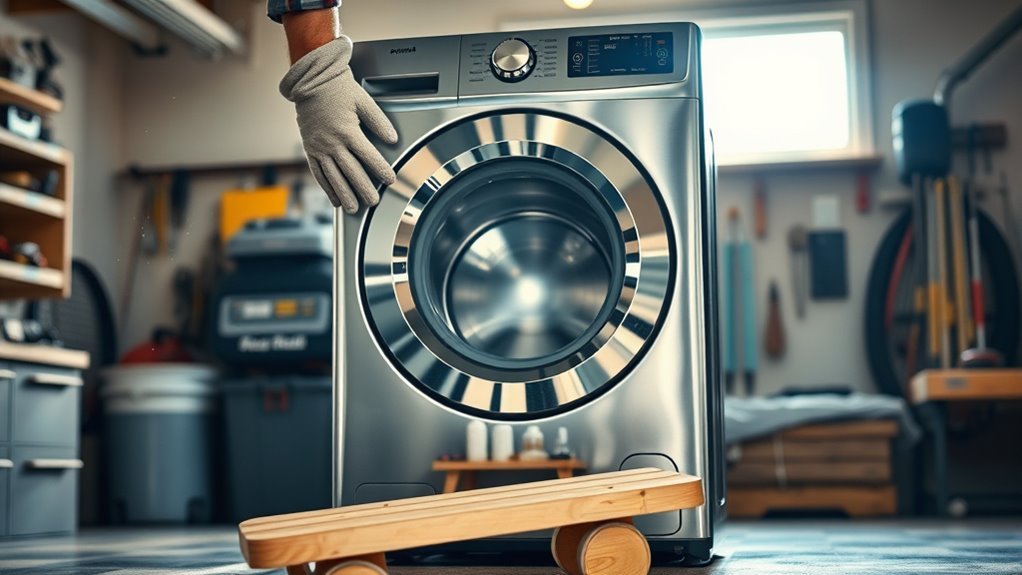
After clearing your path and mastering safe lifting techniques, you’ll need to contemplate how to handle the weight of your washer and the best way to transport it. Embracing your freedom means making smart choices about lifting equipment and transportation services to avoid injury and hassle. Consider these options:
- Rent or borrow lifting equipment like dollies or straps to ease the burden.
- Enlist professional transportation services if you want the job done quickly and safely.
- Recruit friends or family for extra muscle and support during the move.
Choosing the right approach guarantees you maintain control and avoid setbacks. You deserve a smooth, stress-free removal experience that lets you reclaim your space without worry.
Cleaning Up and Disposing of the Old Washer Properly
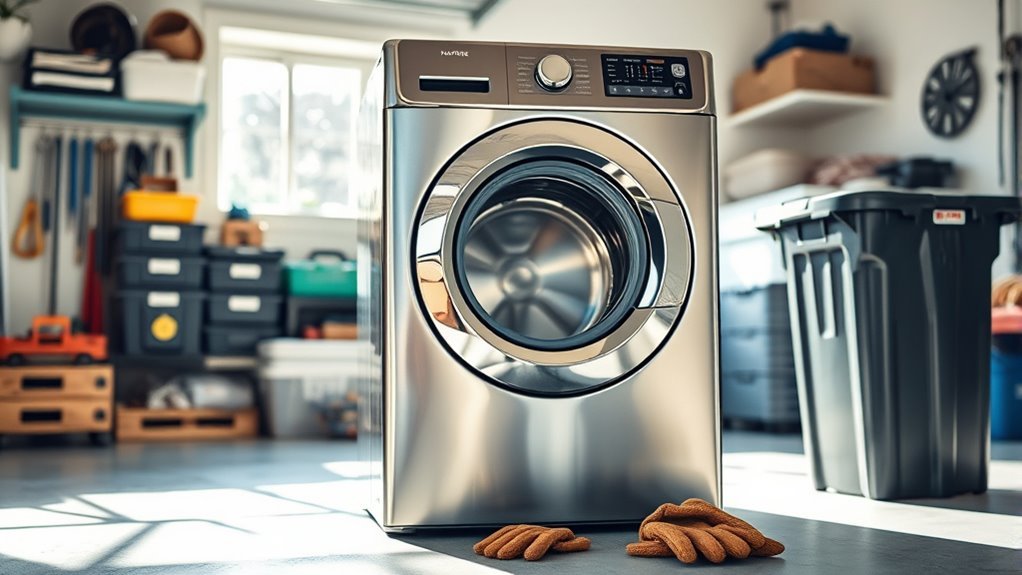
Properly cleaning up and disposing of your old washer is essential to prevent clutter and environmental harm. You want to explore recycling options or donation centers to guarantee your appliance leaves your garage responsibly. First, drain and disconnect all hoses to avoid water mess. Then, decide if you want to donate, recycle, or dispose of it.
| Disposal Method | Where to Go |
|---|---|
| Recycling Options | Local recycling centers |
| Donation Centers | Charities or thrift stores |
| Manufacturer Take-Back | Contact washer brand |
| Bulk Waste Pickup | Municipal waste services |
Choosing the right method frees your space while protecting the planet—embrace that freedom!
Frequently Asked Questions
Can I Remove the Washer Alone Without Professional Help?
Imagine lifting Thor’s hammer—it’s heavy, but not impossible if you know how. You can remove the washer alone without professional help, but you’ve got to respect safety precautions. Think about unplugging the machine, turning off water valves, and wearing gloves to protect yourself. Regular washer maintenance teaches you to handle it carefully. If you’re confident and prepared, it’s a freeing task that empowers you to manage your home independently.
What Tools Are Essential for Removing a Washer From the Garage?
When tackling washer removal techniques, you’ll want a few essential tools: a sturdy dolly to move the washer easily, adjustable wrenches to disconnect hoses, and some heavy-duty gloves as essential safety gear. Don’t forget a screwdriver for any panels or screws. These tools give you the freedom to handle the job yourself safely and efficiently, avoiding costly help while keeping control over every step of the removal process.
How Do I Prevent Water Damage During Washer Removal?
To prevent water damage during washer removal, you’ll want to focus on water containment and leak prevention. Start by turning off the water supply and disconnecting hoses carefully to avoid spills. Place a waterproof tarp or bucket under the connections to catch any drips. Using towels around the area can help soak up leaks, giving you freedom from stress and mess while moving the washer safely out.
Are There Any Local Regulations for Disposing of Old Washers?
You’ll want to check your area’s local disposal rules before getting rid of your old washer. Washer regulations vary by location, so some places might require you to take it to a specific recycling center or arrange a special pickup. Don’t just toss it out—following these local disposal guidelines helps protect the environment and keeps you free from fines. Look online or contact your local waste management to stay informed and hassle-free.
Can I Recycle Parts of the Old Washer After Removal?
You can definitely recycle washer parts after removal. Many components like metal, plastic, and electronic parts have recycling options available. By sorting these parts properly, you free yourself from waste and contribute to sustainability. Check with local recycling centers or scrap yards to see what they accept. Embracing these recycling options gives you the freedom to responsibly dispose of your old washer while helping the environment thrive.