How Much to Clean a Wedding Gown: Essential Costs Explained
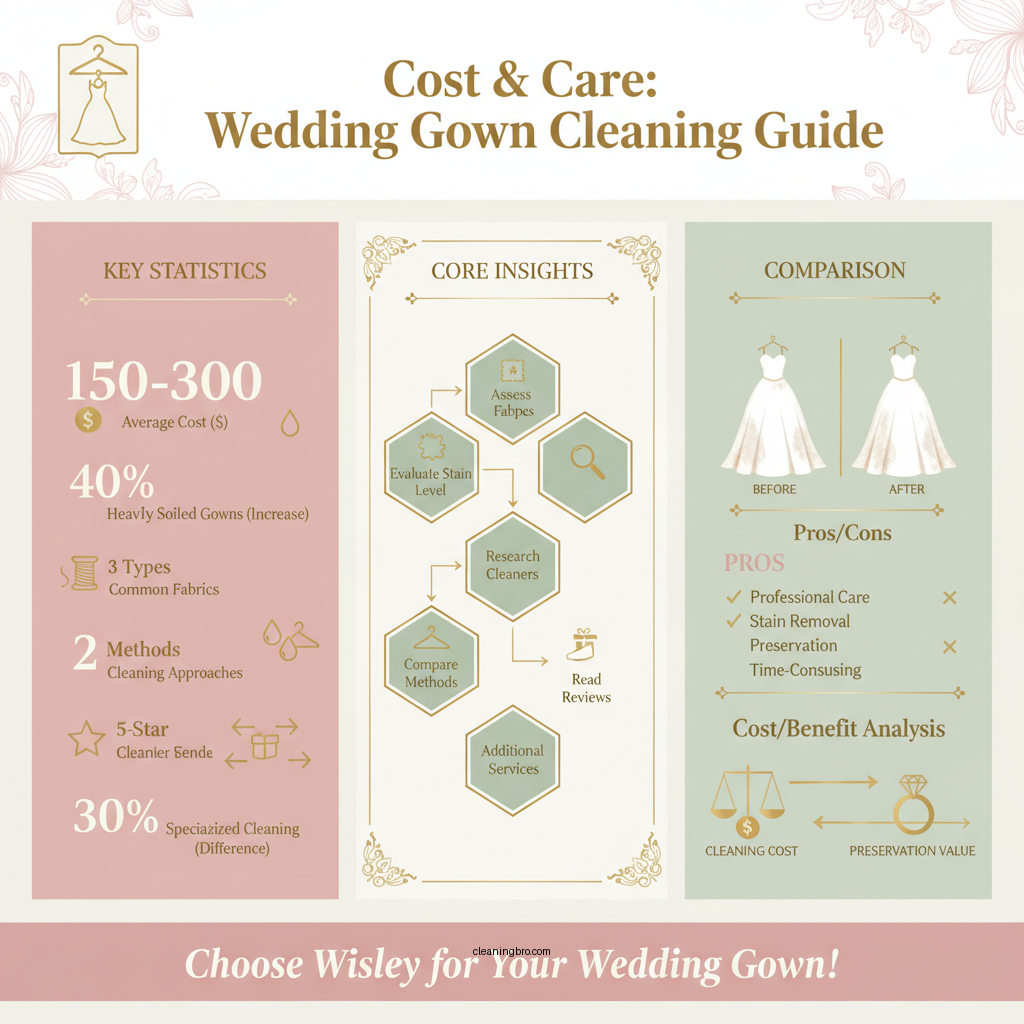
Cleaning a wedding gown typically costs between $150 to $300, depending on the fabric and intricacy of the dress. These costs can vary significantly based on several factors, including the type of fabric, the level of soiling, and the chosen cleaning service. This article aims to break down these costs, guide you on how to select the right cleaner, and provide tips for preserving your treasured gown after the big day.
Factors Influencing Cleaning Costs
When it comes to wedding gown cleaning, understanding the factors that influence pricing can help you make a more informed decision. Here are the primary considerations:
– Fabric Type: The type of fabric plays a crucial role in determining the cleaning cost. Delicate materials such as silk, lace, or chiffon often require specialized cleaning techniques to avoid damage. For instance, silk is sensitive to water and may need a dry cleaning process that is more expensive than standard cleaning methods. Heavier fabrics like satin or taffeta may be more resilient but can still incur higher costs if they have intricate embellishments.
– Stains and Soil Level: The condition of the gown greatly affects the price. If your wedding gown has visible stains from makeup, food, or dirt, the cleaner may need to use specific treatments that can increase the overall cost. Heavily soiled gowns might need pre-treatment to lift stubborn stains, which adds to the expense. Additionally, if your dress has been exposed to a lot of outdoor elements, such as grass or mud, expect to pay more for the extra labor and product usage required to restore it.
Choosing the Right Cleaner

Selecting the right cleaner is essential for ensuring the longevity and beauty of your wedding gown. Here are some tips to guide you:
– Experience and Reputation: Look for cleaners who have specific experience with bridal wear. Research local options and read reviews to find those with positive feedback. A reputable cleaner will have a track record of successfully restoring wedding gowns, which is crucial for preserving your garment’s condition.
– Cleaning Methods: Inquire about the cleaning processes used by prospective cleaners. Some might employ wet cleaning methods, while others may use traditional dry cleaning. Wet cleaning is often gentler and considered safer for delicate fabrics. Ensure that the cleaner is knowledgeable about the best techniques for your gown’s fabric type.
Additional Services Offered
When seeking a cleaner, it’s wise to consider additional services they may provide that can enhance the care of your gown:
– Preservation: Many cleaners offer preservation services that go beyond cleaning. This often includes boxing the gown in a specialized, acid-free container that protects it from light and air, which can lead to discoloration over time. This service might be an additional cost but is invaluable for long-term preservation.
– Repairs and Alterations: If your gown sustained any damage during the wedding, such as loose beads or torn fabric, consider a cleaner that offers repair services. Factor in these potential costs when budgeting for cleaning, as repairs can add significantly to the total expenditure.
Timing for Cleaning
The timing of your gown cleaning can significantly impact both the cost and the effectiveness of the process:
– Immediate vs. Delayed Cleaning: It is highly recommended to clean your gown as soon as possible after the wedding. The longer stains sit, the harder they become to remove. Immediate cleaning reduces the risk of setting stains, preserving the gown’s integrity.
– Seasonal Discounts: Many cleaners offer discounts during off-peak seasons, which can help you save money. Keep an eye out for promotions or inquire about any seasonal offers that may apply, especially if you are planning to clean during a less busy time.
DIY Cleaning Tips
While professional cleaning is often the best route, there are some DIY methods you can utilize for minor issues:
– Spot Cleaning: For small stains, learn how to effectively spot clean at home. Use a mild detergent mixed with water, and apply it gently with a soft cloth. Always test on a hidden area first to ensure there is no discoloration.
– Storage Recommendations: Proper storage of your gown is crucial before professional cleaning. Keep it in a breathable garment bag and store it in a cool, dry place away from direct sunlight. Avoid plastic bags, as they can trap moisture and lead to mildew.
Budgeting for Wedding Gown Cleaning
Understanding how to budget for wedding gown cleaning can help you avoid surprises:
– Setting a Budget: Determine how much you are willing to spend on cleaning and preservation. This should include potential repair costs if your gown sustained damage.
– Comparing Quotes: Collect estimates from multiple cleaners to find the best value for your needs. Don’t forget to ask about what’s included in the price, as some may offer more comprehensive services than others.
Average Wedding Gown Cleaning Costs by Fabric Type (2024)
| # | Fabric Type | Average Cost | Comments |
|---|---|---|---|
| 1 | Silk | $250 | Requires special care |
| 2 | Lace | $275 | Very delicate fabric |
| 3 | Satin | $200 | More resilient |
| 4 | Taffeta | $180 | Durable and easy to clean |
| 5 | Organza | $220 | Requires careful handling |
| 6 | Chiffon | $240 | Lightweight and delicate |
| 7 | Cotton | $150 | Easier to clean |
Top 3 Wedding Gown Cleaners: Full Comparison
| Feature | ⭐ Bridal Cleaners | Elegant Gown Care | Gown Preservation Co. |
|---|---|---|---|
| Price Range | $150-$300 | $175-$350 | $200-$400 |
| Specialization | Bridal wear | General garments | Gown preservation |
| Turnaround Time | 2 weeks | 1 week | 4 weeks |
| Preservation Services | ✅ | ❌ | ✅ |
| Stain Removal Expertise | ✅ | ✅ | ✅ |
| Repair Services | ✅ | ❌ | ✅ |
| Eco-Friendly Options | ❌ | ✅ | ✅ |
| Insurance Options | ✅ | ❌ | ✅ |
| Customer Satisfaction Guarantee | ✅ | ✅ | ✅ |
| 🏆 Best For | Bridal gown cleaning | Eco-conscious clients | Long-term preservation |
In conclusion, cleaning your wedding gown is an investment in preserving a cherished memory. Understanding the factors that influence cleaning costs, choosing the right cleaner, and budgeting appropriately are essential steps in the process. Be proactive about how you care for your gown, and don’t hesitate to reach out to local cleaners for quotes. The right choice can help maintain the beauty and integrity of your gown for years to come.
Frequently Asked Questions
How much does it typically cost to clean a wedding gown?
The cost to clean a wedding gown can range from $150 to $500, depending on factors such as the gown’s fabric, embellishments, and any stains present. High-end or delicate materials may require specialized cleaning methods, which can increase the overall price. It’s advisable to obtain quotes from multiple cleaners to find the best service for your budget.
What is the best way to preserve a wedding gown after cleaning?
The best way to preserve a wedding gown after cleaning is to have it professionally boxed in acid-free materials. This method protects the fabric from yellowing and damage, ensuring that your gown remains in pristine condition for years to come. Additionally, storing it in a cool, dry place away from direct sunlight will further enhance its longevity.
Why is it important to clean a wedding gown soon after the wedding?
Cleaning a wedding gown soon after the wedding is crucial because it prevents stains from setting in, especially if there are food, drink, or bodily fluid marks. Over time, these stains can become more difficult to remove and may lead to permanent damage. Prompt cleaning also helps maintain the gown’s original condition for potential future use or resale.
Which factors affect the cost of wedding gown cleaning?
Factors that affect the cost of wedding gown cleaning include the type of fabric, the complexity of the gown’s design, the presence of embellishments like beading or lace, and the cleaning method required. Additionally, geographical location and the experience of the cleaner can also impact the price. Understanding these factors can help you budget effectively.
How can I choose the right cleaner for my wedding gown?
To choose the right cleaner for your wedding gown, look for specialists who have experience with bridal wear and positive customer reviews. It’s beneficial to ask about their cleaning processes, particularly if they use eco-friendly products or specialized techniques for delicate fabrics. Don’t hesitate to request quotes and compare services to ensure you make an informed decision.
References
- https://www.weddingwire.com/wedding-ideas/how-much-does-it-cost-to-clean-a-wedding-dress
https://www.weddingwire.com/wedding-ideas/how-much-does-it-cost-to-clean-a-wedding-dress - Wedding, Engagement & Relationship Ideas & Articles | The Knot
https://www.theknot.com/content/how-much-does-it-cost-to-clean-a-wedding-dress - https://www.brides.com/story/how-much-does-it-cost-to-clean-a-wedding-dress
https://www.brides.com/story/how-much-does-it-cost-to-clean-a-wedding-dress - Google Scholar Google Scholar
https://scholar.google.com/scholar?q=cleaning+wedding+gown+cost - Google Scholar Google Scholar
https://scholar.google.com/scholar?q=wedding+dress+cleaning+process - Google Scholar Google Scholar
https://scholar.google.com/scholar?q=wedding+dress+preservation+and+cleaning - https://www.nytimes.com/2020/05/13/style/wedding-dress-cleaning.html
https://www.nytimes.com/2020/05/13/style/wedding-dress-cleaning.html - https://www.bbc.com/news/magazine-38636744
https://www.bbc.com/news/magazine-38636744 - https://www.theguardian.com/fashion/2017/jun/02/how-to-clean-and-preserve-your-wedding-dress
https://www.theguardian.com/fashion/2017/jun/02/how-to-clean-and-preserve-your-wedding-dress - Google Scholar Google Scholar
https://scholar.google.com/scholar?q=how+much+to+clean+a+wedding+gown