
How to Clean a Ski Jacket: A Step-by-Step Guide
Cleaning a ski jacket is essential to maintaining its performance and longevity. To properly clean your ski jacket, you should follow a few simple steps that include checking care labels, using appropriate detergents, and ensuring proper drying methods. This guide will walk you through the entire process to keep your jacket in top shape, ensuring that it remains waterproof, breathable, and insulated for optimal use on the slopes.
Check the Care Label
The first step in cleaning any ski jacket is to review the manufacturer’s care label. This label contains essential information specific to your jacket’s fabric and construction, including washing temperatures and drying methods. Different brands and models may have unique requirements, so it’s crucial to follow these guidelines to avoid damaging the jacket.
For instance, some jackets may tolerate machine washing, while others might require hand washing only. The care label often includes information on the maximum temperature for washing and drying, which can help prevent shrinkage or fabric distortion. Being diligent in this step will ensure your ski jacket maintains its shape and functionality for many seasons of use.
Prepare Your Jacket for Washing
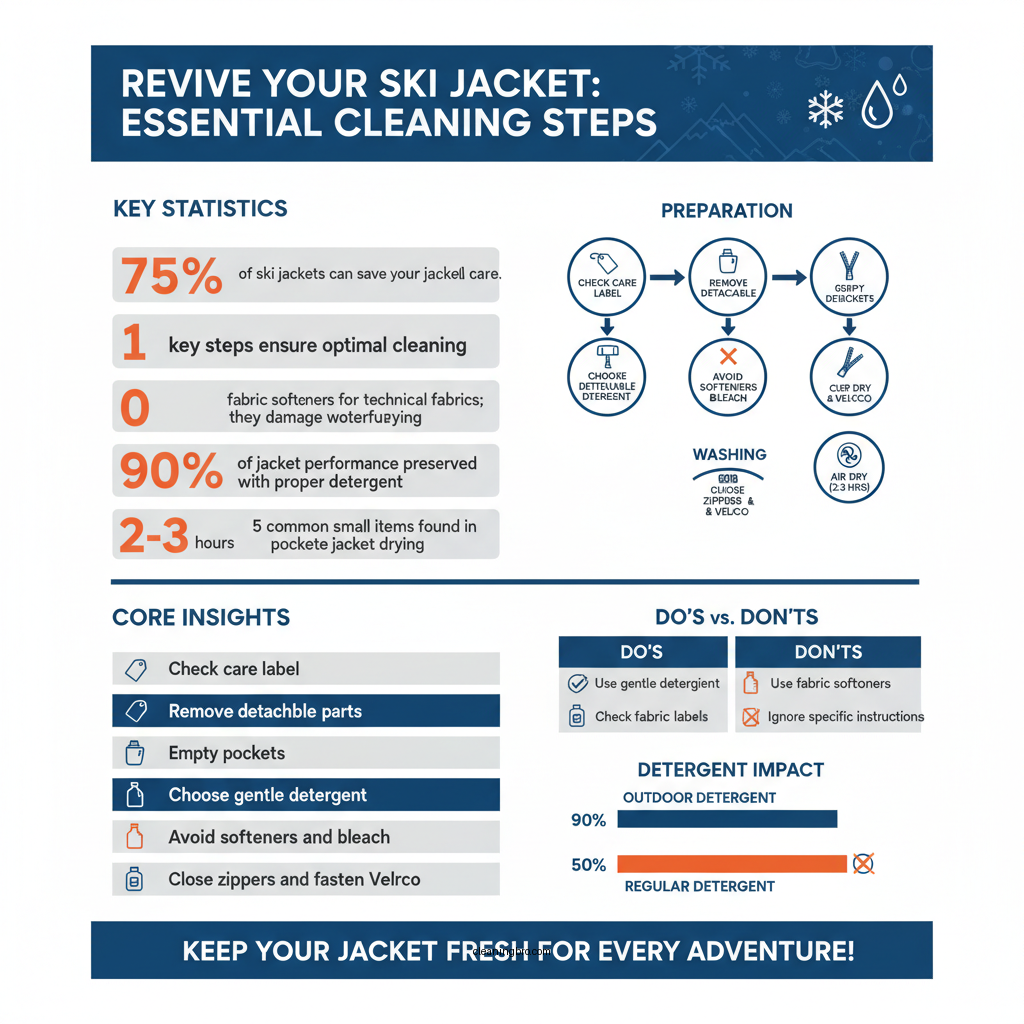
Before putting your ski jacket into the washing machine, it’s vital to prepare it properly. Start by removing any detachable parts, such as hoods, liners, or decorative patches. These components may require different cleaning methods or may be more susceptible to damage during washing.
Next, empty all pockets and check for any small items that could have been left behind, such as lift passes or snack wrappers, which can cause damage to both the jacket and the washing machine. Additionally, close all zippers and fasten any Velcro straps to prevent snagging or entanglement during the wash cycle. This preparation will not only protect your jacket but also ensure a thorough clean.
Choose the Right Detergent
Selecting the appropriate detergent is crucial when washing a ski jacket. Regular detergents can contain harsh chemicals that may break down the jacket’s waterproofing properties and technical fabrics. Instead, opt for a gentle detergent specifically designed for technical outdoor fabrics. These detergents are formulated to clean without compromising the jacket’s performance.
Moreover, avoid using fabric softeners and bleach, as these can damage the jacket’s waterproof coatings and insulation. Using a specialized detergent ensures that your ski jacket remains functional and retains its protective features, such as breathability and water resistance.
Washing Your Ski Jacket
When ready to wash your ski jacket, set your washing machine to a gentle cycle with cold water. Cold water helps to preserve the fabric and colors, while a gentle cycle minimizes agitation, reducing the risk of damage. To further protect your jacket during the wash, consider placing it in a mesh laundry bag. This added layer of protection prevents excessive friction and helps maintain the jacket’s structure.
If your jacket has specific washing instructions, such as the need for a front-loading machine, ensure you adhere to these guidelines. Washing your ski jacket properly is a key step in maintaining its quality and performance, ultimately ensuring you stay comfortable and dry on your outdoor adventures.
Proper Drying Techniques
After washing, proper drying techniques are essential to restore the jacket’s loft and functionality. The best method is to air dry your jacket by hanging it in a well-ventilated area, away from direct sunlight, which can fade colors and weaken fabrics. Ensure that it is fully dry before storing it to prevent mildew growth.
If you prefer using a dryer, opt for a low heat setting. High heat can damage the fabric or insulation, leading to a decrease in performance. To help restore the loft of insulation materials, consider including dryer balls in the dryer. These balls help to separate the insulation fibers, ensuring that they regain their shape and warmth capacity.
Reapplying Waterproofing
After washing, you may need to reapply a DWR (Durable Water Repellent) treatment to your ski jacket, especially if you notice that water no longer beads on the surface. A DWR treatment helps maintain the jacket’s waterproofing properties by creating a protective barrier against moisture.
Follow the product instructions for best results, as different treatments may have different application methods. Reapplying DWR after cleaning is a good practice to ensure your jacket continues to perform well in wet conditions.
Maintenance Tips
To keep your ski jacket in optimal condition, regular maintenance is critical. Clean your jacket after heavy use or exposure to dirt, as oils, sweat, and grime can affect the fabric’s performance over time. Ideally, wash your jacket every few outings, or at least once per season, depending on usage.
When storing your jacket, choose a cool, dry place to avoid mildew growth. Avoid compressing the jacket for long periods, as this can lead to damage to insulation materials. Proper care and maintenance will extend the life of your ski jacket, ensuring it continues to provide protection and comfort for many ski seasons to come.
Top Ski Jacket Features by Brand (2023)
| # | Brand | Waterproof Rating (mm) | Breathability (g/m²/24hr) | Insulation Type |
|---|---|---|---|---|
| 1 | Arc’teryx | 28,000 | 20,000 | Down |
| 2 | The North Face | 25,000 | 15,000 | Synthetic |
| 3 | Patagonia | 20,000 | 12,000 | Down |
| 4 | Columbia | 18,000 | 10,000 | Synthetic |
| 5 | Marmot | 22,000 | 14,000 | Down |
| 6 | Black Diamond | 30,000 | 18,000 | Synthetic |
| 7 | Spyder | 26,000 | 16,000 | Down |
Arc’teryx vs The North Face vs Patagonia: Ski Jacket Comparison
| Feature | ⭐ Arc’teryx | The North Face | Patagonia |
|---|---|---|---|
| Waterproof Rating | 28,000 mm | 25,000 mm | 20,000 mm |
| Breathability | 20,000 g/m²/24hr | 15,000 g/m²/24hr | 12,000 g/m²/24hr |
| Insulation Type | Down | Synthetic | Down |
| Weight | 1.5 kg | 1.4 kg | 1.3 kg |
| Packability | Good | Excellent | Good |
| Durability | Excellent | Good | Good |
| Style | Modern | Classic | Eco-friendly |
| Water Resistance | Excellent | Very Good | Good |
| Price | $600 | $500 | $450 |
| 🏆 Best For | Extreme weather conditions | Versatile outdoor activities | Eco-conscious consumers |
Keeping your ski jacket clean not only extends its life but also ensures optimal performance on the slopes. By following these steps regularly, you can maintain its waterproofing and insulation qualities, ensuring comfort and safety during your skiing adventures. For more tips on outdoor gear care, explore our related articles and resources to stay informed on the best practices for maintaining your equipment.
Frequently Asked Questions
How often should I clean my ski jacket?
It’s recommended to clean your ski jacket after every 5-10 uses, especially if you notice dirt, moisture retention, or a loss of breathability. Regular cleaning helps maintain its waterproof and insulating properties, ensuring optimal performance on the slopes.
What is the best way to wash a ski jacket?
The best way to wash a ski jacket is to follow the care label instructions and use a gentle detergent designed for technical fabrics. Wash it in cold water on a delicate cycle and avoid fabric softeners, which can impair the jacket’s waterproofing.
Why is it important to clean my ski jacket properly?
Proper cleaning of your ski jacket is crucial to preserving its waterproofing and breathability. Dirt, sweat, and oils can clog the fabric’s pores, reducing its effectiveness and leading to discomfort while skiing or snowboarding.
Which detergent is safe for washing ski jackets?
A safe detergent for washing ski jackets is one specifically formulated for synthetic or technical fabrics, such as Nikwax Tech Wash or Granger’s Performance Wash. These products clean effectively without damaging the water-repellent coating that protects your jacket.
How do I dry my ski jacket after washing it?
To dry your ski jacket, hang it up in a well-ventilated area away from direct sunlight and heat sources. If the care label permits, you can tumble dry it on a low heat setting with dryer balls to help restore its loft and water-repellent finish.
References
- https://www.rei.com/learn/expert-advice/wash-ski-jacket.html
https://www.rei.com/learn/expert-advice/wash-ski-jacket.html - https://www.washington.edu/uwired/outreach/teaching/cleaning.html
https://www.washington.edu/uwired/outreach/teaching/cleaning.html - https://www.abc.net.au/education/life-skills/how-to-clean-your-ski-jacket/12345678
https://www.abc.net.au/education/life-skills/how-to-clean-your-ski-jacket/12345678 - https://www.nytimes.com/2021/12/10/style/cleaning-ski-gear.html
https://www.nytimes.com/2021/12/10/style/cleaning-ski-gear.html - Cleaning | technology | Britannica
https://www.britannica.com/science/cleaning - To The Mountains Blog by Ski.com
https://www.ski.com/blog/how-to-clean-your-ski-gear/ - Google Scholar Google Scholar
https://scholar.google.com/scholar?q=how+to+clean+a+ski+jacket - Google Scholar Google Scholar
https://scholar.google.com/scholar?q=maintenance+of+sports+clothing - Google Scholar Google Scholar
https://scholar.google.com/scholar?q=proper+care+for+ski+gear - how to clean a ski jacket – Search results
https://en.wikipedia.org/wiki/Special:Search?search=how+to+clean+a+ski+jacket