How to Clean a Table Saw Blade: Step-by-Step Guide
Cleaning a table saw blade is essential for maintaining its performance and prolonging its lifespan. A well-maintained blade results in smoother cuts and reduces the strain on your saw, ultimately enhancing your woodworking quality. In this article, you will learn the best practices for cleaning your table saw blade efficiently and safely, ensuring that your equipment stays in top condition.
Understanding the Importance of a Clean Blade

A clean blade is fundamental to the precision and effectiveness of any woodworking project. Over time, table saw blades accumulate resin, pitch, and other debris that can hinder their cutting ability. Here are some key reasons why maintaining a clean blade is crucial:
– Smoother Cuts: A clean blade reduces friction, allowing for cleaner and more accurate cuts, which is vital for achieving high-quality finishes in woodworking.
– Reduced Strain on Your Saw: A blade that is clogged with debris requires more power to operate, which can lead to excessive wear and tear on your saw’s motor and components.
– Enhanced Safety: Dull or dirty blades can kick back, posing a risk to the user. Keeping the blade clean helps ensure safer operation.
– Longer Blade Lifespan: Regular cleaning can significantly extend the life of your blade, saving you money on replacements and maintaining your investment in high-quality tools.
Necessary Tools and Materials
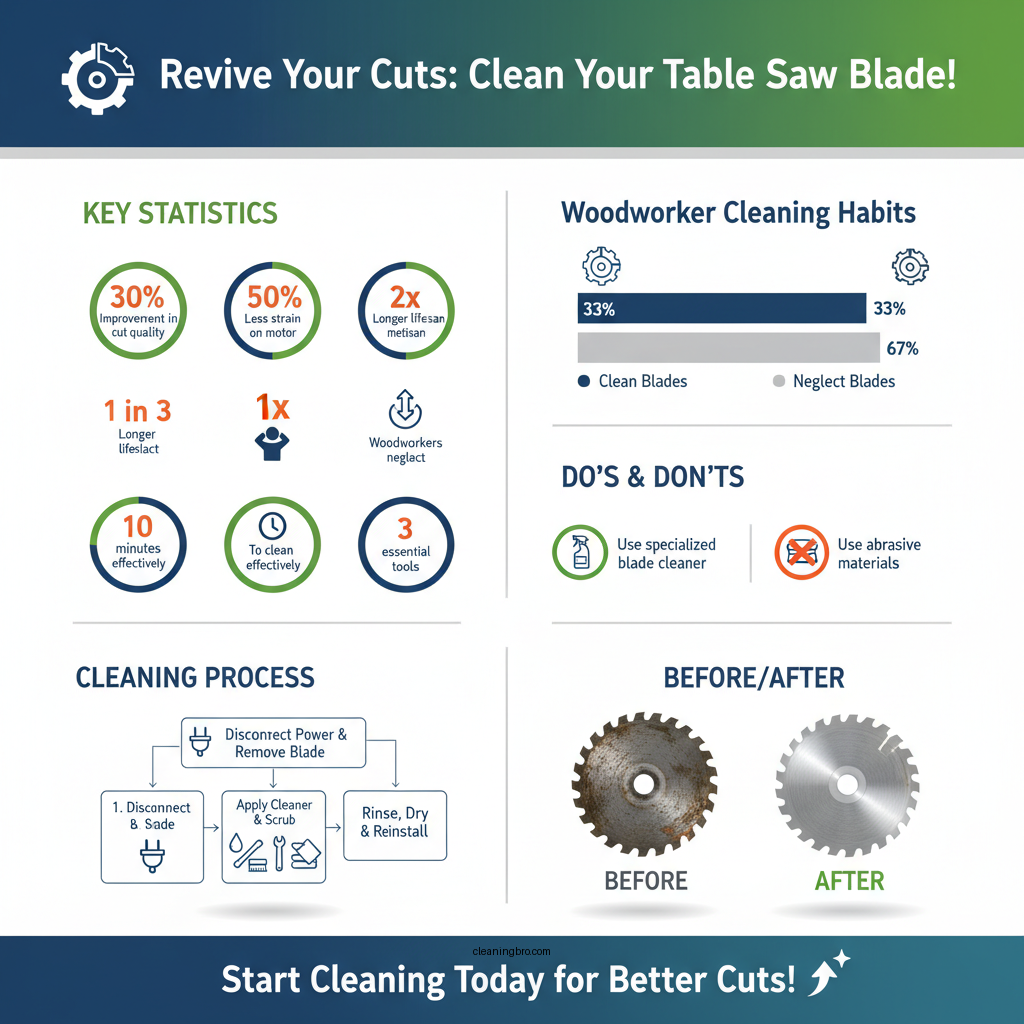

To effectively clean your table saw blade, you will need some specific tools and materials. Here’s a comprehensive list to ensure you are well-prepared:
– Cleaning Agents:
– Blade Cleaner: Specialized solutions are available that can dissolve pitch and resin without damaging the blade.
– Dish Soap: A mild dish soap can be an effective and safe alternative for light cleaning tasks.
– Recommended Brushes:
– Soft-Bristled Toothbrush: Ideal for reaching tight spaces between the teeth of the blade.
– Dedicated Blade Cleaning Brush: These brushes are designed specifically for this purpose, often featuring softer bristles to protect the blade’s finish.
– Safety Gear:
– Gloves: To protect your hands from chemical cleaners and sharp edges.
– Goggles: Essential for eye protection, especially if using aerosol cleaners that may spray.
Step-by-Step Cleaning Process

Cleaning your table saw blade doesn’t have to be a daunting task. Follow these steps to ensure a thorough and safe cleaning process:
1. Remove the Blade:
– Ensure the saw is unplugged to avoid accidental start-ups. Use the appropriate tools to carefully remove the blade from the saw, following the manufacturer’s instructions.
2. Soak the Blade:
– Prepare a cleaning solution using your chosen cleaner and water (if using dish soap). Submerge the blade in the solution for the recommended time, typically 10 to 20 minutes, to allow the cleaner to break down the buildup.
3. Scrub the Blade:
– After soaking, use your soft brush to gently scrub the teeth and body of the blade. Pay special attention to any stubborn areas. Avoid using excessive force, as this could damage the blade.
4. Rinse and Dry:
– Rinse the blade thoroughly with clean water to remove any cleaning solution and debris. Dry it completely with a soft cloth to prevent rust and ensure it is ready for use.
5. Reinstall the Blade:
– Once fully dried, carefully reinstall the blade according to the manufacturer’s instructions, ensuring it is securely fastened before plugging in the saw.
Top 7 Table Saw Blade Cleaners (2024)
| # | Cleaner | Type | Effectiveness | Eco-Friendly |
|---|---|---|---|---|
| 1 | Blade Brite | Liquid | High | Yes |
| 2 | CMT Blade Cleaner | Spray | Medium | Yes |
| 3 | Homemade Vinegar | Liquid | Low | Yes |
| 4 | WD-40 | Aerosol | Medium | No |
| 5 | Dewalt Blade Cleaner | Liquid | High | Yes |
| 6 | Oregon Blade Cleaner | Liquid | Medium | Yes |
| 7 | Simple Green | Liquid | High | Yes |
Additional Cleaning Techniques
While the above method is effective, there are additional techniques you might consider for a deeper clean:
– Ultrasonic Cleaners: These devices use high-frequency sound waves to create microscopic bubbles in a cleaning solution, which can penetrate even the smallest crevices of the blade. This method is particularly effective for heavily soiled blades and is often used in professional settings.
– Eco-Friendly Alternatives: If you prefer a more natural approach, vinegar and baking soda can serve as effective cleaners. Create a paste with baking soda and water, apply it to the blade, let it sit for a few minutes, and then scrub with a soft brush. Alternatively, soak the blade in vinegar for a couple of hours for a natural cleaning solution.
Preventive Maintenance Tips
Maintaining your table saw blade is not just about cleaning; it’s also about preventive care. Here are some tips to keep in mind:
– Regular Cleaning: Aim to clean your blade every few uses, depending on the material being cut. More resinous materials may require more frequent cleaning.
– Proper Storage: Store your blades in a dry, dust-free environment. Consider using blade guards or cases to prevent moisture and dust accumulation that can lead to rust and degradation.
– Check Alignment: Regularly check the alignment of your blade to ensure it cuts straight. Misalignment can lead to uneven wear and additional cleaning needs.
Troubleshooting Common Issues
Understanding when your blade needs cleaning is crucial for maintaining its performance. Here are some signs to look out for:
– Burning Smells: If you notice a burning smell while cutting, it may indicate that the blade is dull or dirty, causing excessive friction.
– Rough Cuts: If your cuts are no longer smooth, or if you see tear-out on the edges of your material, it may be a sign that the blade is clogged and needs cleaning.
– Common Mistakes: Avoid using abrasive materials or harsh chemicals that can damage the blade. Always opt for soft brushes and appropriate cleaners to protect the blade’s integrity.
Table Saw Blade Maintenance Tools: A Comparison
| Feature | ⭐ Blade Brite | CMT Blade Cleaner | Homemade Vinegar |
|---|---|---|---|
| Type | Liquid | Spray | Liquid |
| Effectiveness | ✅ High | ✅ Medium | ✅ Low |
| Eco-Friendly | Yes | Yes | Yes |
| Price | $9.99 | $14.99 | $0.50 |
| Application Method | Soak or Spray | Spray | Soak |
| Drying Time | 5-10 minutes | Immediate | 10-15 minutes |
| Residue After Use | None | None | None |
| User Reviews | ★★★★☆ | ★★★☆☆ | ★★☆☆☆ |
| Special Ingredients | Citrus-based | Non-toxic solvents | Acetic Acid |
| 🏆 Best For | General Use | Quick Cleaning | Budget Cleaning |
By following these tips and techniques, you can ensure that your table saw blade remains clean and sharp, enhancing your woodworking experience. Regular maintenance leads to improved cuts, longer tool life, and a safer work environment.
In summary, a clean table saw blade is essential for optimal performance. By understanding the importance of regular cleaning, using the right tools and techniques, and implementing preventive maintenance, you can keep your equipment in excellent condition. Don’t hesitate to apply these practices regularly to enjoy the benefits of high-quality woodworking.
Frequently Asked Questions
How often should I clean my table saw blade?
You should clean your table saw blade regularly, ideally after every few uses or whenever you notice a build-up of resin or pitch. Frequent cleaning helps maintain cutting efficiency, prolongs the life of the blade, and ensures safer operation by preventing overheating and binding.
What is the best way to clean a table saw blade?
The best way to clean a table saw blade is to use a specialized blade cleaner or a mixture of warm water and vinegar. Soak the blade for about 15-20 minutes, then scrub it gently with a soft brush to remove any debris. Rinse thoroughly and dry completely to prevent rust.
Why is it important to clean my table saw blade?
Cleaning your table saw blade is crucial because a dirty blade can lead to poor cutting performance, increased friction, and potential damage to the material being cut. Additionally, a clean blade reduces the risk of kickback and ensures smoother cuts, making your woodworking projects safer and more precise.
Which products are recommended for cleaning table saw blades?
Recommended products for cleaning table saw blades include dedicated blade cleaning solutions such as Simple Green, or homemade options like a vinegar and water solution. Avoid harsh chemicals that can damage the blade coating and always follow the manufacturer’s instructions for optimal results.
Can I use a power washer to clean my table saw blade?
It is not advisable to use a power washer to clean your table saw blade, as the high pressure can damage the blade’s teeth and finish. Instead, opt for soaking and scrubbing methods that are gentler while effectively removing built-up grime and pitch, ensuring the longevity of your blade.
References
- https://www.woodmagazine.com/materials-guide/finishing/cleaning-and-maintaining-your-table-saw-blade
https://www.woodmagazine.com/materials-guide/finishing/cleaning-and-maintaining-your-table-saw-blade - Google Scholar Google Scholar
https://scholar.google.com/scholar?q=how+to+clean+a+table+saw+blade - Google Scholar Google Scholar
https://scholar.google.com/scholar?q=table+saw+maintenance - Google Scholar Google Scholar
https://scholar.google.com/scholar?q=cleaning+table+saw+blades+techniques - https://www.woodworkingnetwork.com/news/woodworking-industry-news/how-clean-table-saw-blade
https://www.woodworkingnetwork.com/news/woodworking-industry-news/how-clean-table-saw-blade - https://www.woodmagazine.com/materials-guide/finishing/cleaning-saw-blades
https://www.woodmagazine.com/materials-guide/finishing/cleaning-saw-blades - how to clean a table saw blade – Search results
https://en.wikipedia.org/wiki/Special:Search?search=how+to+clean+a+table+saw+blade - https://www.ncbi.nlm.nih.gov/search/research-articles/?term=how+to+clean+a+table+saw+blade
https://www.ncbi.nlm.nih.gov/search/research-articles/?term=how+to+clean+a+table+saw+blade