How to Clean Invisalign Retainers Daily: Essential Steps
Keeping your Invisalign retainers clean is essential for maintaining oral hygiene and ensuring the effectiveness of your treatment. Daily cleaning involves rinsing them with lukewarm water, using a gentle toothbrush, and considering specialized cleaning solutions. In the following sections, we will explore the best practices for cleaning your retainers effectively, ensuring they remain in optimal condition throughout your orthodontic journey.
Understanding the Importance of Cleaning Retainers

Cleaning your Invisalign retainers is vital for several reasons. Firstly, regular cleaning prevents the buildup of bacteria and plaque, which can lead to oral health issues such as cavities, gum disease, and bad breath. When food particles and bacteria accumulate on the retainers, they can create an environment conducive to harmful bacteria growth, undermining the benefits of the aligners themselves.
Secondly, maintaining clean retainers ensures they remain clear and odor-free. Stains and odors can develop over time, especially if the retainers are not cleaned properly. This can negatively impact your confidence and willingness to wear them as prescribed. A clear, fresh retainer not only looks better but also promotes better oral hygiene and a more pleasant wearing experience.
Daily Cleaning Routine
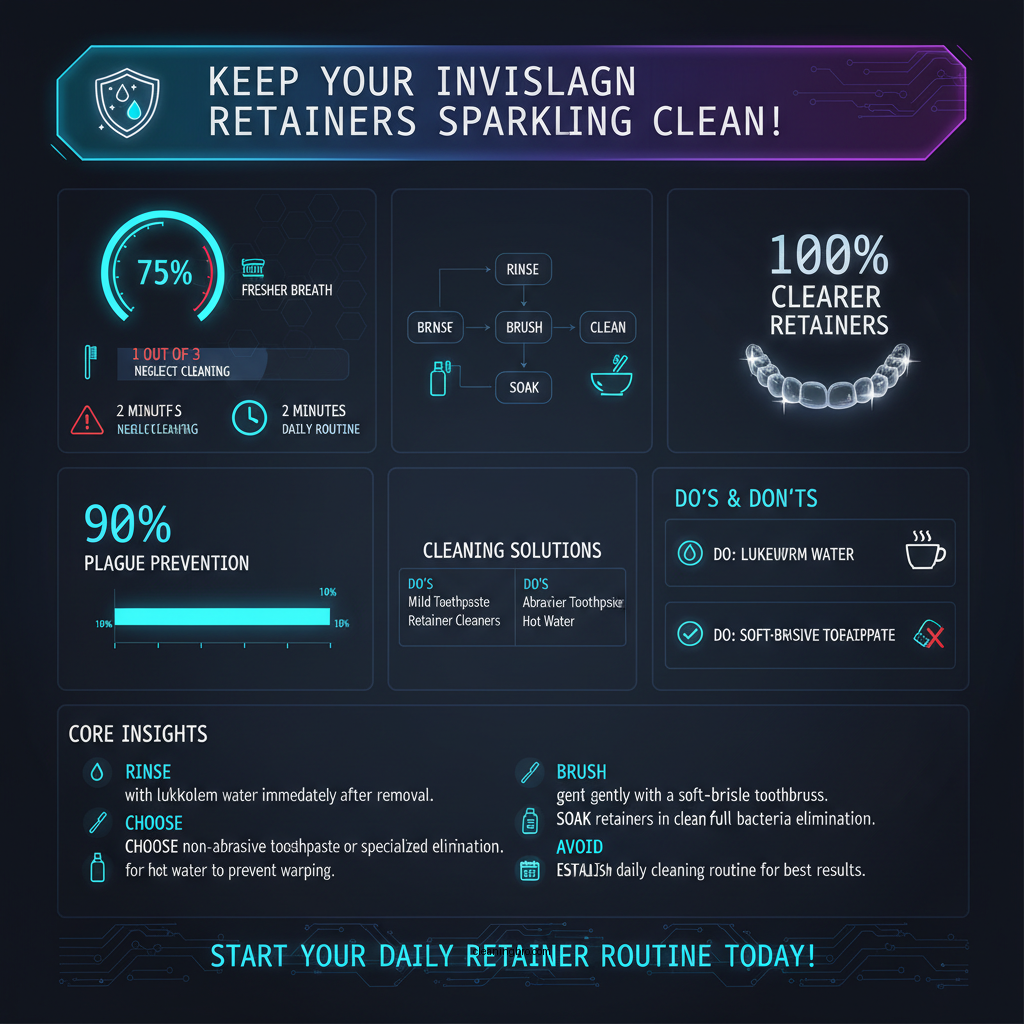

Establishing a daily cleaning routine is crucial for long-term retainer maintenance. Here’s how to do it effectively:
– Rinse Retainers with Lukewarm Water After Removal: As soon as you take your retainers out, rinse them under lukewarm water. This step helps to eliminate any saliva or food particles that may have accumulated while wearing them. Avoid using hot water, as it can warp the plastic material of the retainers.
– Use a Soft-Bristle Toothbrush: After rinsing, use a soft-bristle toothbrush dedicated solely to cleaning your retainers. Gently scrub all surfaces of the retainers to remove any plaque or buildup. It’s important to be gentle to avoid scratching the surface, which can lead to further staining and bacteria accumulation.
Recommended Cleaning Solutions
For optimal cleaning results, consider the following products:
– Mild, Non-Abrasive Toothpaste: If you prefer to use toothpaste, choose a mild, non-abrasive formula. Avoid toothpaste with whitening agents, as these can scratch the retainer’s surface and lead to discoloration.
– Retainer Cleaners: Specialized retainer cleaning solutions are available and highly effective. Look for products designed specifically for clear aligners or retainers, as they are formulated to remove bacteria without damaging the material. Soaking retainers in these solutions for the recommended time can help eliminate stubborn stains and odors.
– Avoid Harsh Chemicals: Stay away from bleach or any harsh chemicals during cleaning, as they can damage the retainer material and compromise its integrity.
Best Practices for Storing Retainers
Proper storage of your retainers is just as important as cleaning them. Follow these best practices to ensure their longevity:
– Store in a Protective Case: When not in use, always place your retainers in a protective case. This prevents them from being damaged or contaminated while not being worn.
– Keep in a Cool, Dry Place: Ensure that the case containing your retainers is stored in a cool, dry environment, away from direct sunlight. Excess heat can warp the retainer shape, affecting its fit and effectiveness.
Frequency of Deep Cleaning
While daily cleaning is essential, incorporating a deep cleaning session into your routine is also beneficial. Here’s how often and how to perform it:
– Perform Deep Cleaning Once a Week: At least once a week, conduct a deep cleaning using a vinegar solution or a specialized cleaner. Mix equal parts of white vinegar and water, and soak your retainers for about 15-30 minutes to help remove any stubborn stains and buildup.
– Soak Retainers: After soaking, gently scrub the retainers with your soft-bristle toothbrush and rinse thoroughly with lukewarm water. This method not only cleans but also disinfects your retainers, ensuring optimal oral hygiene.
Top 7 Retainer Cleaning Products (2024)
| # | Product Name | Type | Usage Frequency | Rating |
|---|---|---|---|---|
| 1 | Retainer Brite | Cleaner | Weekly | ★★★★☆ |
| 2 | SoClean | Ultrasonic | Daily | ★★★★★ |
| 3 | FreshGuard | Spray | Daily | ★★★★☆ |
| 4 | Denture Cleanse | Tablet | Weekly | ★★★★☆ |
| 5 | OAP Dental Cleaner | Liquid | Weekly | ★★★★☆ |
| 6 | Polident Cleanser | Tablet | Weekly | ★★★☆☆ |
| 7 | SmileDirectClub Cleaner | Gel | Daily | ★★★★☆ |
Common Mistakes to Avoid
When cleaning your retainers, be cautious of common mistakes that can undermine their effectiveness:
– Avoid Using Hot Water: As mentioned earlier, hot water can warp the retainer material. Always use lukewarm or cool water for rinsing and soaking.
– Don’t Use Toothpaste with Whitening Agents: These types of toothpaste may contain abrasive ingredients that scratch the surface of the retainers, leading to discoloration and a rough texture that can trap bacteria.
– Neglecting Regular Cleaning: Skipping daily or weekly cleaning routines can lead to significant plaque buildup and potential oral health issues. Make cleaning a non-negotiable part of your dental hygiene regimen.
Tips for Maintaining Freshness
To ensure your retainers remain fresh and hygienic, incorporate the following tips into your routine:
– Soak Retainers in Mouthwash: Occasionally, consider soaking your retainers in an alcohol-free mouthwash for a few minutes. This can help eliminate odors and provide an extra layer of freshness.
– Regularly Check for Signs of Wear or Damage: Inspect your retainers regularly for any signs of wear, cracks, or discoloration. If you notice any damage, consult your orthodontist for guidance on replacement.
– Stay Hydrated: Maintaining good hydration levels can help reduce dry mouth, which can lead to bacterial growth on retainers. Drink plenty of water throughout the day.
Effectiveness of Cleaning Methods for Retainers
By adhering to these cleaning practices, you can maintain your Invisalign retainers in excellent condition, ensuring they remain effective and hygienic throughout your treatment. Consistent care not only promotes better oral health but also enhances your overall experience with orthodontic treatment.
In conclusion, keeping your Invisalign retainers clean is vital for your dental health and the success of your treatment. By following the outlined daily cleaning routine, utilizing recommended cleaning solutions, and storing your retainers properly, you can enjoy a fresh and effective orthodontic experience. Make these practices part of your daily regimen to ensure a beautiful smile for years to come.
Frequently Asked Questions
What is the best way to clean Invisalign retainers daily?
The best way to clean Invisalign retainers daily is to use a gentle cleanser specifically designed for dental appliances. Rinse the retainers with lukewarm water and then brush them lightly with a soft toothbrush to remove plaque and debris, avoiding toothpaste which can be abrasive. This daily routine helps maintain the clarity and hygiene of your retainers.
How often should I clean my Invisalign retainers?
You should clean your Invisalign retainers at least once a day, ideally every morning and evening after brushing your teeth. Consistent cleaning prevents the buildup of bacteria and keeps your retainers fresh, ensuring optimal oral hygiene and comfort while wearing them.
Why is it important to clean Invisalign retainers regularly?
Regular cleaning of Invisalign retainers is crucial to prevent the accumulation of bacteria, plaque, and odors. Neglecting to clean your retainers can lead to oral health issues such as gum disease or cavities, as well as a less pleasant wearing experience. Proper cleaning ensures that your retainers remain effective and hygienic.
Which products are safe to use for cleaning my Invisalign retainers?
Safe products for cleaning Invisalign retainers include mild dish soap, unscented antibacterial soap, or specialized retainer cleaning tablets. Avoid using products containing alcohol or strong abrasives, as these can damage the material of the retainers. Always rinse thoroughly after cleaning to ensure no residue remains.
Can I use vinegar or baking soda to clean my Invisalign retainers?
While vinegar and baking soda can be effective for cleaning certain dental appliances, they are not recommended for Invisalign retainers due to potential damage to the plastic. Instead, opt for a gentle cleaner specifically formulated for retainers to ensure they remain in good condition and retain their clarity.
References
- https://www.mayoclinic.org/healthy-lifestyle/adult-health/in-depth/cleaning-your-retainers/art-20451696
https://www.mayoclinic.org/healthy-lifestyle/adult-health/in-depth/cleaning-your-retainers/art-20451696 - https://www.ncbi.nlm.nih.gov/pmc/articles/PMC6836615/
https://www.ncbi.nlm.nih.gov/pmc/articles/PMC6836615/ - https://www.nature.com/articles/s41598-021-85520-2
https://www.nature.com/articles/s41598-021-85520-2 - Oral health
https://www.who.int/news-room/fact-sheets/detail/oral-health - https://www.cdc.gov/oralhealth/conditions/index.html
https://www.cdc.gov/oralhealth/conditions/index.html - https://www.britannica.com/science/dental-care
https://www.britannica.com/science/dental-care - https://www.scholar.google.com/scholar?q=cleaning+invisalign+retainers Google Scholar
https://www.scholar.google.com/scholar?q=cleaning+invisalign+retainers - https://www.scholar.google.com/scholar?q=retainer+cleaning+methods Google Scholar
https://www.scholar.google.com/scholar?q=retainer+cleaning+methods - https://www.scholar.google.com/scholar?q=oral+health+and+cleaning+retainers Google Scholar
https://www.scholar.google.com/scholar?q=oral+health+and+cleaning+retainers - Google Scholar Google Scholar
https://scholar.google.com/scholar?q=how+to+clean+invisalign+retainers+daily