How to Reduce Cleaning Costs in Microwave
You can cut microwave cleaning costs by using natural ingredients like baking soda and vinegar instead of pricey cleaners. Clean spills right away and wipe the interior regularly to prevent buildup. Cover your food to avoid splatters and try steam cleaning with lemon juice or vinegar for easy grime removal. Use reusable cloths and maintain the door seals to keep efficiency high. With these simple steps, you’ll save money while keeping your microwave fresh and lasting longer. There’s more to discover for easy upkeep tips.
Use Natural Cleaning Ingredients
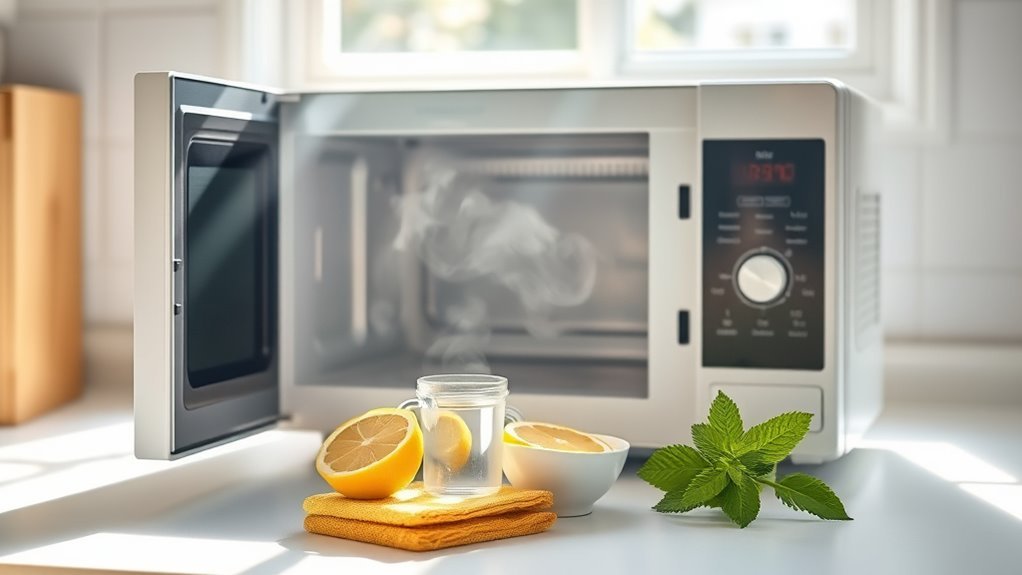
One of the easiest ways to cut down on microwave cleaning costs is by using natural ingredients you probably already have at home. You don’t need expensive chemicals when simple items like baking soda and white vinegar can do the job just as well. Baking soda acts as a gentle abrasive, helping you scrub away stubborn stains without damaging your microwave’s interior. Meanwhile, white vinegar’s natural acidity breaks down grease and neutralizes odors, leaving your microwave fresh. Mix a couple of tablespoons of baking soda with water to form a paste for scrubbing, or heat a bowl of vinegar and water inside the microwave to loosen grime. Using these natural cleaners gives you freedom from harsh chemicals and costly products, making your cleaning routine both effective and budget-friendly.
Clean Your Microwave Regularly
Regularly cleaning your microwave prevents food buildup from becoming tough stains that require extra effort and costly products to remove. Maintaining good microwave hygiene not only keeps your appliance looking fresh but also extends its lifespan. To keep things simple and budget-friendly, stick to a consistent cleaning schedule. Here’s how you can do it:
- Wipe down the interior after every use to avoid residue buildup.
- Schedule a thorough clean weekly using mild, natural cleaners.
- Remove and clean the turntable regularly to prevent grime accumulation.
- Air out the microwave occasionally by leaving the door open after cleaning.
Cover Food to Prevent Splatter
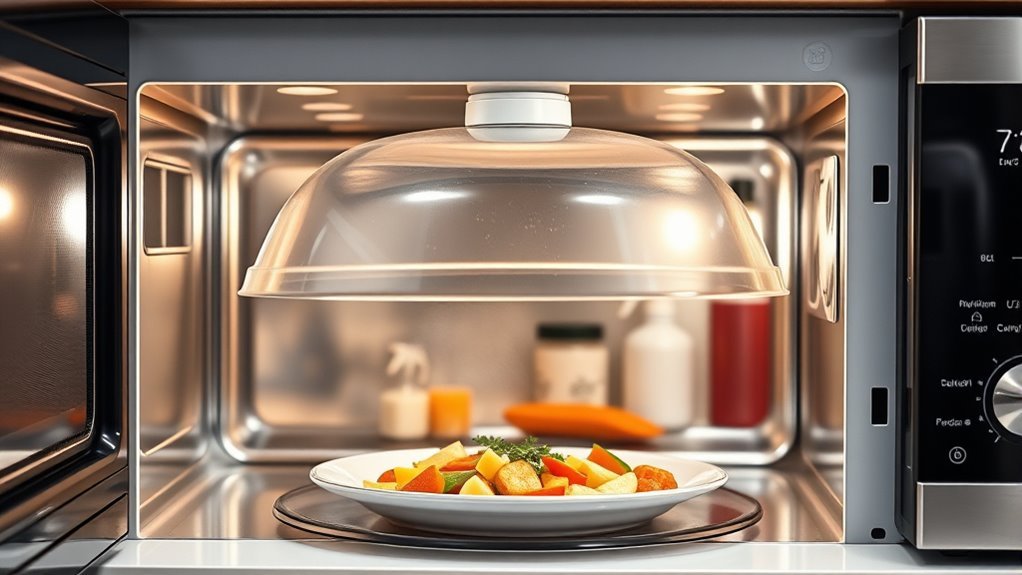
You’ll want to cover your food to stop splatters and keep your microwave cleaner for longer. There are different types of microwave covers, like vented lids and microwave-safe wraps, each with their own benefits. Using the right cover properly can save you time and reduce cleaning costs.
Benefits of Using Covers
While it might seem like a small step, covering your food in the microwave can save you a lot of time and effort when it comes to cleaning. By using the right cover materials compatible with your microwave types, you minimize mess and keep your appliance in top shape. Covers act as a barrier, stopping splatters that would otherwise cling to the interior. This simple habit lets you enjoy cooking freedom without the hassle of scrubbing afterward.
Here are key benefits of using covers:
- Keeps microwave interior clean, reducing cleaning frequency
- Protects food from airborne contaminants
- Helps food cook evenly by retaining moisture
- Saves money on cleaning supplies and potential repairs
Embrace covers to maintain your microwave effortlessly!
Types of Microwave Covers
Using covers to prevent splatter is a smart habit, but choosing the right type can make a big difference in effectiveness and convenience. Silicone covers offer a flexible, reusable option that seals tightly over bowls and plates, trapping steam and preventing messes. They’re easy to clean and store, giving you freedom from disposable wraps. Fabric covers, often treated with a waterproof lining, are lightweight and breathable, ideal for covering food that needs to cool slightly without trapping too much moisture. They’re washable and eco-friendly, perfect if you want to avoid plastic. Both types help you avoid constant scrubbing, saving time and money. By picking the cover that best fits your cooking style and lifestyle, you maintain your microwave’s cleanliness effortlessly, keeping your kitchen routine hassle-free.
Tips for Effective Covering
Although it might seem simple, properly covering your food in the microwave can make all the difference in preventing splatter. Choosing the right cover materials and sizes helps keep your microwave cleaner and saves you time. Here are some tips to get it right:
- Use microwave-safe cover materials like vented plastic lids or microwave-safe wraps to allow steam to escape.
- Select cover sizes that fully cover the dish but don’t seal it tight; this prevents pressure buildup.
- Avoid using aluminum foil or covers not designed for microwaves as they can cause sparks or uneven heating.
- Clean your covers regularly to avoid leftover grime transferring back to your food or microwave.
Utilize Steam Cleaning Method
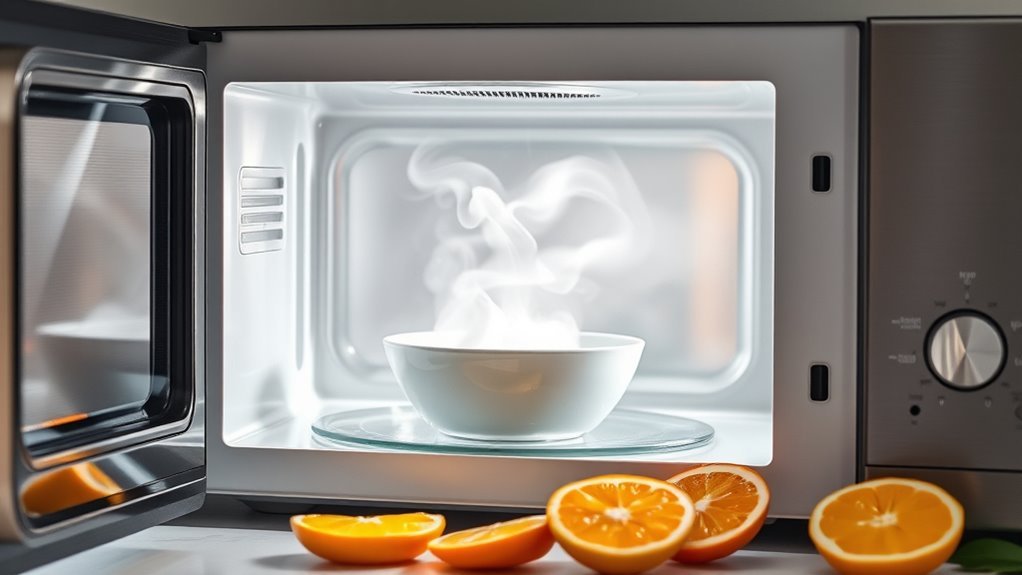
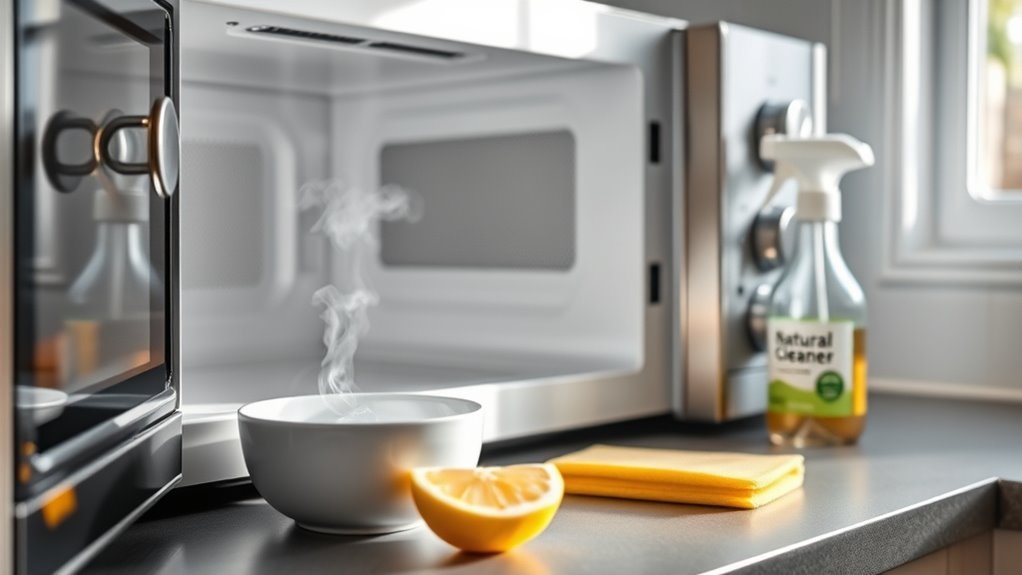
Since steam naturally loosens grime and food particles, you can clean your microwave effectively without harsh chemicals. To use steam cleaning, simply fill a microwave-safe bowl with water and add a splash of vinegar or lemon juice if you like. Heat it on high for about five minutes. The steam will soften stuck-on food, making it easy to wipe away with a cloth. This method saves you money by cutting down on expensive cleaning products and lets you enjoy the freedom of a quick, eco-friendly cleanup. Plus, steam cleaning is gentle on your microwave’s interior, extending its lifespan. By embracing steam cleaning, you’ll boost cost efficiency and simplify maintenance, freeing up your time and budget for more enjoyable things.
Avoid Expensive Cleaning Products
One simple way to cut down on microwave cleaning expenses is to skip pricey commercial products altogether. You don’t need to rely on expensive cleaners when homemade solutions work just as well and are much gentler on the environment. Embracing eco friendly alternatives lets you save money and stay true to your values of freedom and simplicity.
Try these easy homemade cleaning ideas:
- Mix equal parts water and white vinegar in a microwave-safe bowl for a natural steam clean
- Use baking soda paste to tackle stubborn stains without harsh chemicals
- Lemon juice diluted in water freshens and disinfects naturally
- A damp cloth with a few drops of mild dish soap offers a simple, effective wipe-down
These options keep your microwave clean, your costs low, and your routine eco conscious.
Wipe Spills Immediately
You’ll want to wipe spills immediately to stop stubborn stains from setting in. This quick habit keeps your microwave looking clean and prevents buildup that can affect its performance. By acting fast, you’ll maintain your microwave’s efficiency and save time on tougher cleanups later.
Prevent Stubborn Stains
A quick wipe of spills right after they happen can save you from scrubbing stubborn stains later. Taking this simple step helps you avoid tough stain removal and keeps your microwave looking fresh without extra effort. To prevent stains from setting in, try these effective cleaning techniques:
- Keep a damp cloth or sponge handy near your microwave.
- Wipe down the interior after each use, especially after heating saucy or greasy foods.
- Use mild soap and warm water for quick spot cleaning.
- Avoid harsh chemicals that can damage surfaces or leave residues.
Maintain Microwave Efficiency
Keeping spills under control not only prevents stains but also helps your microwave run more efficiently. When you wipe spills immediately, you avoid buildup that can interfere with microwave usage and reduce energy efficiency. This simple habit saves you money by minimizing deep cleans and extends your microwave’s lifespan.
| Benefit | Impact |
|---|---|
| Prevents odor buildup | Keeps microwave fresh |
| Avoids appliance damage | Maintains peak function |
| Saves cleaning time | Less scrubbing needed |
| Improves energy use | Reduces electricity consumption |
Use Reusable Cleaning Cloths
Choosing reusable cleaning cloths can greatly cut down on your microwave cleaning expenses. Instead of constantly buying disposable wipes, you can rely on durable, washable cloths made from reusable materials. This not only saves you money but also supports eco friendly options that reduce waste. Here’s why you should switch:
Switch to reusable cloths for microwave cleaning to save money and reduce waste with durable, washable, eco-friendly options.
- Durable and long-lasting, so you buy less often
- Machine washable, making cleaning effortless
- Gentle on your microwave’s surfaces, preventing scratches
- Versatile for other cleaning tasks around the house
Prevent Odors With Lemon or Vinegar
Even if you clean your microwave regularly, lingering odors can still be a problem. To keep your microwave smelling fresh without spending on expensive deodorizers, use natural solutions like lemon juice or a vinegar solution. Simply mix water with either lemon juice or vinegar in a microwave-safe bowl, then heat it inside for a few minutes until it steams up. This steam loosens food particles and neutralizes odors, making cleanup easier and more cost-effective. Afterward, just wipe down the interior with a reusable cloth. Using lemon juice adds a pleasant, natural scent, while vinegar solution is powerful against stubborn smells. Both options save you money and give you the freedom to maintain a clean, odor-free microwave without relying on commercial products.
Maintain Microwave Door Seals
If you want your microwave to operate efficiently and safely, you need to maintain the door seals regularly. Proper door seal maintenance prevents heat and radiation from escaping, saving energy and cutting down on cleaning needs. Here are some seal cleaning tips to keep your microwave door seals in top shape:
- Wipe seals with a damp cloth after each use to remove food splatters.
- Use mild soap and warm water for deeper cleaning without damaging the seal.
- Avoid abrasive cleaners or scrubbing pads that can wear out the seals.
- Check seals for cracks or damage periodically and replace them if needed.
Frequently Asked Questions
Can Microwave Cleaning Affect Its Warranty?
Think of your microwave like a trusty steed; how you care for it affects its journey. If you don’t follow warranty guidelines, using harsh cleaning techniques might be like feeding it poison, voiding protection. You want freedom from repair costs, so stick to recommended cleaning methods. That way, you keep your microwave’s warranty intact while enjoying hassle-free use, letting you focus on what really matters without worrying about unexpected expenses.
Is It Safe to Clean the Microwave’s Interior Light?
When it comes to interior light safety, you should be cautious cleaning your microwave’s interior light. Avoid using excessive water or harsh chemicals near the light cover, as that might damage electrical components. Instead, use gentle cleaning methods like a soft cloth dampened with mild soap and water. This way, you keep things safe while maintaining freedom to clean effectively without risking any harm to your microwave’s delicate parts.
How Often Should Microwave Filters Be Replaced?
You should keep an eye on your microwave’s filter maintenance to enjoy hassle-free use. Typically, the replacement frequency is every 3 to 6 months, depending on how often you cook and the type of filter you have. Staying on top of this helps your microwave run efficiently and keeps your kitchen smelling fresh. Don’t let a clogged filter hold you back—regular replacements give you the freedom to cook without worries.
Can Metal Utensils Be Used During Microwave Cleaning?
When it comes to using metal utensils in the microwave, you’re playing with fire. Metal can cause sparks and damage your appliance, so it’s a big no-go for microwave safety. Instead, stick to microwave-safe containers to keep things smooth sailing. You want to enjoy the freedom of quick, safe cooking without risking your microwave or a kitchen mishap. So, leave metal utensils out of your microwave routine.
Does Microwave Cleaning Impact Its Cooking Efficiency?
You might wonder if cleaning methods impact your microwave’s cooking efficiency. Actually, keeping your microwave clean helps it perform better because grime and food buildup can block microwaves, causing uneven heating. When you regularly clean it using gentle methods, you maintain its efficiency and extend its lifespan, giving you the freedom to cook without worrying about poor results. So, don’t skip cleaning—it’s key to hassle-free cooking.