Cleaning Techniques for Microwave Owners
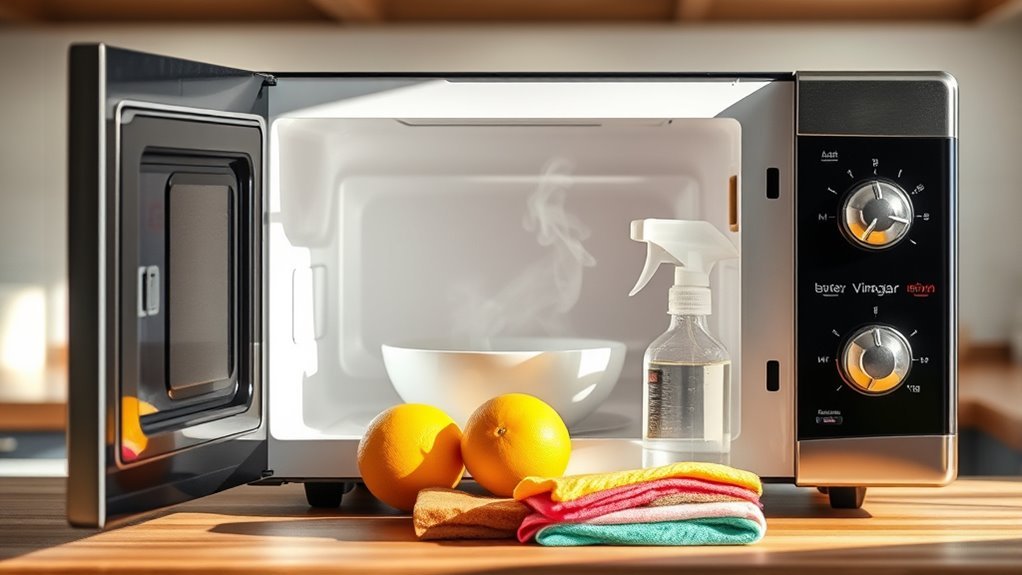
You can keep your microwave spotless by steaming a bowl of water with vinegar or lemon inside to loosen grime, then wiping it clean with a cloth. Cover your dishes during heating to prevent splatters and use microwave-safe lids. For tough stains, gently scrape with a plastic spatula and try baking soda paste as a mild abrasive. Regularly check door seals, vents, and turntables to avoid malfunctions. Stick with safe natural cleaners to keep your microwave fresh and efficient. There’s plenty more to discover about maintaining your microwave’s performance and safety.
Common Microwave Messes and How to Prevent Them
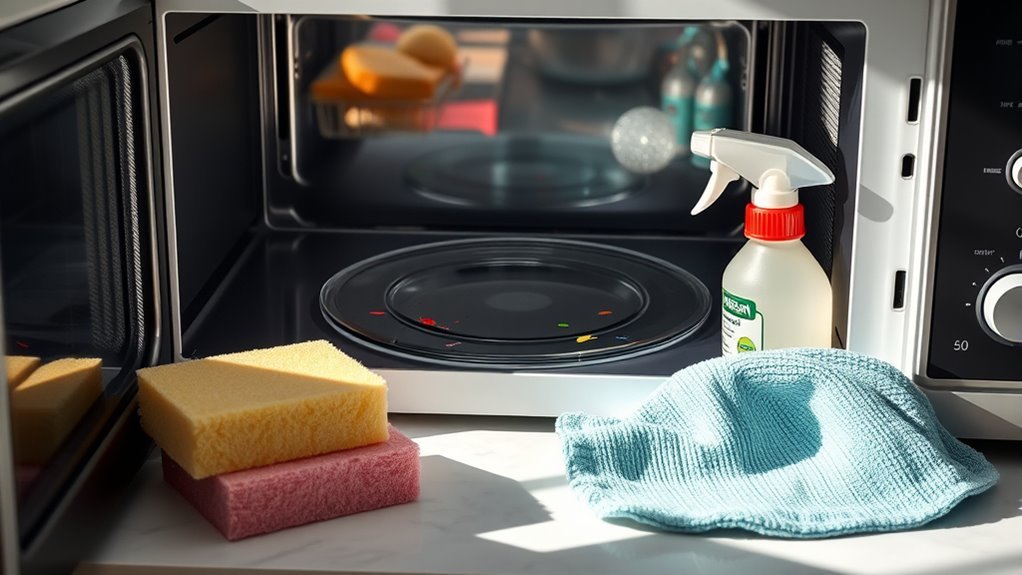
Although microwaves make reheating food quick and easy, they can quickly become messy if you’re not careful. Splattered sauces and boiled-over liquids create stubborn stains, limiting your freedom to enjoy a hassle-free kitchen. To avoid this, focus on splash prevention by covering your dishes with microwave-safe lids or vented wraps. This simple step keeps your microwave cleaner and saves you time on scrubbing. Food containment is key—choose containers that fit well and have secure lids to prevent spills. Avoid overheating, which often causes food to explode inside. By taking these small, deliberate actions, you maintain control over your microwave’s cleanliness and preserve your freedom to cook and reheat without the dread of tough messes later.
Using Vinegar and Water for Microwave Cleaning
To clean your microwave effectively, mix equal parts vinegar and water in a microwave-safe bowl. Heat the mixture until it steams, then let it sit for a few minutes to loosen grime. This simple steam cleaning method makes wiping away messes much easier.
Vinegar-Water Mixture Ratio
One common and effective vinegar-water mixture for cleaning your microwave uses equal parts of each ingredient. This simple ratio maximizes vinegar benefits, like cutting through grease and neutralizing odors, without overwhelming your senses. To get the best results, use warm water—the right water temperature helps dissolve grime faster and enhances the vinegar’s cleaning power. You can easily customize this mix depending on how dirty your microwave is, but sticking to a 1:1 ratio keeps things straightforward and effective. Remember, this balance lets you enjoy the freedom of a fresh, clean microwave without relying on harsh chemicals or complicated steps. So, grab your measuring cup, mix up the solution, and enjoy a quick, natural way to keep your microwave spotless.
Microwave Steam Cleaning Method
When you want a quick and effective way to loosen stubborn grime, the microwave steam cleaning method using vinegar and water is a great choice. You just mix equal parts vinegar and water in a microwave-safe bowl, then heat it until it steams. This steam cleaning softens residue, making it easy to wipe away without harsh scrubbing. Plus, it respects microwave safety by avoiding abrasive chemicals.
| Step | What to Do |
|---|---|
| 1. Prepare Mix | Combine vinegar & water (1:1) |
| 2. Heat | Microwave until steam forms (5-7 mins) |
| 3. Wipe Clean | Carefully remove bowl & wipe interior |
This method frees you from tough stains while keeping your microwave safe and fresh.
Cleaning With Lemon and Natural Fresheners
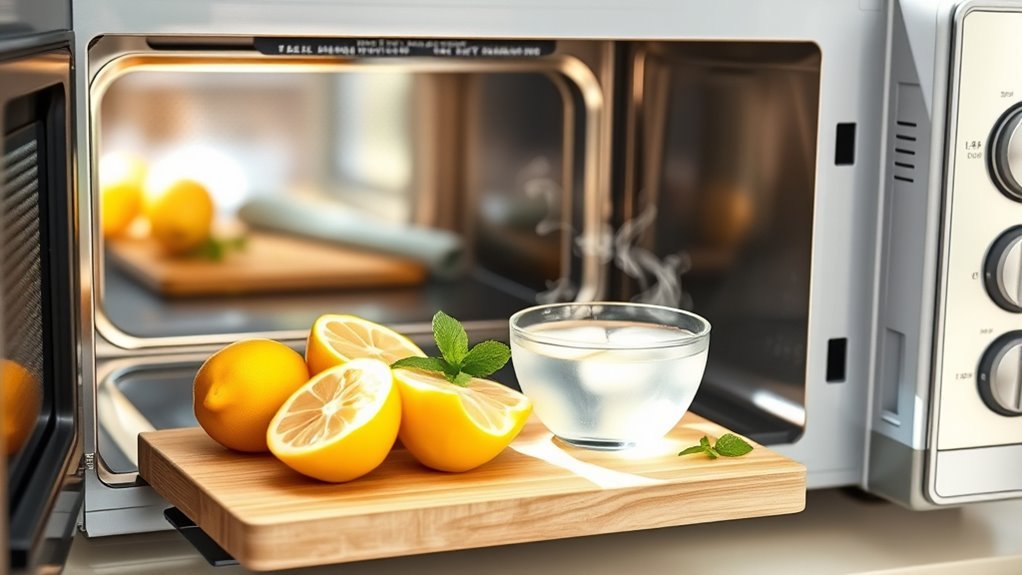
You’ll love how lemon naturally cuts through grease and leaves your microwave smelling fresh. Using lemon and other natural fresheners is a simple, chemical-free way to clean effectively. Let’s explore how these ingredients can make your microwave sparkle.
Benefits of Lemon
Although many commercial cleaners boast powerful formulas, lemon offers a natural and effective way to freshen up your microwave. The lemon benefits go beyond its pleasant scent; its natural acidity cuts through grease and grime effortlessly, making cleanup quick and straightforward. Using lemon means you avoid harsh chemicals, giving you freedom to keep your kitchen safe and eco-friendly. If you’re looking for lemon alternatives, options like vinegar or baking soda also work well, but lemon stands out for its invigorating aroma and natural antibacterial properties. Embracing lemon lets you maintain a clean microwave without sacrificing your health or the environment, giving you peace of mind while you enjoy hassle-free cleaning.
Using Natural Fresheners
Three natural fresheners stand out for cleaning your microwave effectively: lemon, vinegar, and baking soda. Using lemon slices with water, you can steam away grime while filling your kitchen with uplifting citrus scents. Vinegar’s acidity tackles stubborn stains and odors, leaving your microwave fresh without harsh chemicals. Baking soda works as a gentle abrasive, perfect for scrubbing away residue.
You might also experiment with herbal infusions, like rosemary or mint, by adding them to your steaming mixture. These not only enhance freshness but also offer a natural alternative to synthetic air fresheners. Embracing these natural fresheners gives you control over what’s inside your home, freeing you from artificial fragrances and harmful cleaners. It’s a simple, effective way to keep your microwave clean and your space smelling naturally inviting.
Removing Stubborn Stains and Baked-On Food
Dealing with stubborn stains and baked-on food in your microwave can feel frustrating, but a few targeted techniques can make the process much easier. First, try steaming the inside by microwaving a bowl of water with lemon or vinegar for several minutes. The steam loosens the baked-on food, so you don’t have to scrub endlessly. After steaming, use a soft cloth or sponge to wipe away the loosened mess. For truly stubborn stains, gently scrape with a plastic spatula to avoid scratching. Regular quick cleanups prevent buildup, but when you do face tough grime, these steps free you from harsh scrubbing and keep your microwave fresh. You deserve a hassle-free clean, not a chore locked in stubborn stains and baked-on food.
Safe Cleaning Products for Microwaves
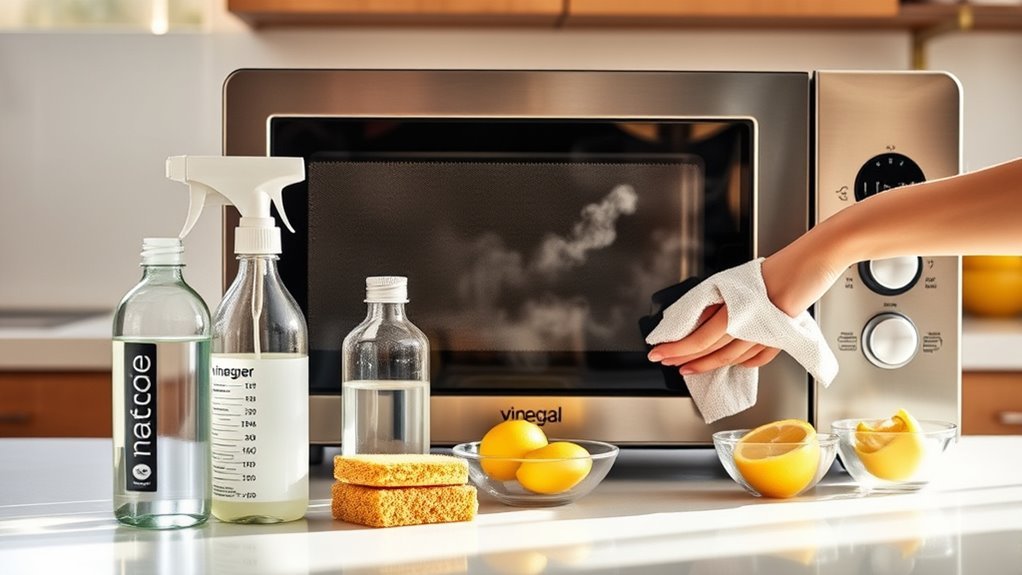
Now that you know how to tackle tough stains and baked-on food, choosing the right cleaning products is just as important. You’ll want to use eco friendly cleaners or chemical free options to keep your microwave safe and your air clean. These products free you from harsh toxins, letting you clean with confidence and ease.
| Product Type | Benefits | Recommended Use |
|---|---|---|
| Vinegar Solution | Natural disinfectant | Wiping interior surfaces |
| Baking Soda Paste | Gentle abrasive | Removing stubborn spots |
| Commercial Eco Cleaner | Chemical free, biodegradable | Quick daily cleaning |
Pick the option that suits your lifestyle best and enjoy a microwave that’s spotless and safe without sacrificing your freedom from chemicals.
Cleaning Microwave Turntables and Racks
Cleaning your microwave’s turntable and racks is essential to maintain hygiene and prevent odors. You want to make sure these parts stay spotless since they directly contact your food. For turntable care, start by removing it carefully and washing it with warm, soapy water. Avoid harsh abrasives that could scratch the surface. Rinse thoroughly and dry before placing it back. When it comes to rack maintenance, take it out and soak it if needed to loosen stuck-on bits. Use a non-abrasive sponge to wipe it clean, ensuring you reach all the nooks. Regular cleaning not only keeps your microwave fresh but also lets you enjoy the freedom of cooking without worrying about grime or lingering smells. Keep these parts clean, and your microwave will serve you better for longer.
Deodorizing Your Microwave Effectively
Why does your microwave sometimes hold onto unpleasant smells even after a thorough cleaning? It’s because odors can cling to the interior surfaces and vents, making your microwave less inviting. To deodorize effectively, place a small bowl of water mixed with a tablespoon of baking soda inside your microwave. Heat it on high for about five minutes—the steam helps lift stubborn smells. Afterward, wipe down the interior with a clean cloth. For a fresher scent, add a few drops of your favorite essential oils, like lemon or eucalyptus, to the water before heating. This simple, chemical-free method frees your microwave from lingering odors, giving you a clean, fresh space that supports your freedom to enjoy every meal without unwanted smells.
Tips for Regular Microwave Maintenance
Everyone benefits from keeping their microwave in top shape, and regular maintenance is key to guaranteeing it runs efficiently and lasts longer. You’ll want to make routine inspection a habit—check the door seals, clean the interior, and guarantee the turntable moves smoothly. This simple upkeep not only boosts performance but also enhances microwave safety by preventing sparks or malfunctions. Avoid harsh chemicals; instead, use mild cleaners and a damp cloth to wipe down surfaces. Don’t forget to keep vents clear to prevent overheating. By staying proactive with these easy tips, you’ll enjoy the freedom of a reliable microwave that’s ready whenever you need it, without unexpected breakdowns or safety concerns. Regular care is your best defense for hassle-free cooking.
Frequently Asked Questions
Can Microwaves Be Cleaned in a Dishwasher?
You might wonder if microwaves can be cleaned in a dishwasher, but it’s not advisable. Most microwave materials, especially the electronic parts and door seals, aren’t dishwasher safe. Putting them in a dishwasher could damage the appliance or cause safety issues. Instead, you’re better off wiping the interior and exterior with a damp cloth and mild detergent, giving you freedom to clean safely without risking harm to your microwave.
How Often Should I Deep Clean My Microwave?
Did you know that 70% of microwaves develop odors or stains within a month if not cleaned properly? To keep yours fresh, you should deep clean it once a month, even if you do weekly maintenance wiping away crumbs and spills. This routine helps prevent tough stains from setting in, giving you the freedom to enjoy quick, hassle-free meals without worrying about lingering messes or smells.
Is It Safe to Use Bleach Inside a Microwave?
You shouldn’t use bleach inside your microwave—it’s not safe and can leave harmful residues. Instead, try bleach alternatives like vinegar or lemon juice, which are natural and effective for cleaning. Keeping microwave safety in mind, these alternatives won’t release toxic fumes or damage your appliance. You’ve got the freedom to choose safer, eco-friendly options that protect both you and your microwave while keeping it fresh and clean.
Can Microwave Cleaning Damage the Appliance’S Electronics?
You might worry that cleaning your microwave could harm its electronics, but as long as you follow proper microwave maintenance, you’re usually safe. Avoid spraying liquids directly inside or near electronic components to protect electronics safety. Using gentle, non-abrasive cleaners and wiping carefully guarantees your appliance stays in top shape without risking damage. This way, you keep your freedom to use your microwave without stress or costly repairs.
How Do I Clean the Microwave Exterior Safely?
Imagine you’ve got a stainless steel microwave with fingerprint smudges—easy fix! To clean the exterior safely, first check your microwave’s exterior materials. Most surfaces handle mild cleaning solutions like a mix of water and vinegar or gentle dish soap. Avoid abrasive cleaners or soaking buttons. Use a soft cloth dampened with your solution, wipe down gently, and dry with a microfiber towel. This keeps your microwave looking fresh without risking damage, giving you freedom to maintain it effortlessly.