How to Remove Stubborn Stains From Mattress
To remove stubborn mattress stains, start by vacuuming and clearing debris. For sweat stains, mix hydrogen peroxide, dish soap, and baking soda; spray, let sit, then blot gently. Use baking soda to absorb odors and vinegar diluted with water for general stains, but always test first. Enzyme cleaners work wonders on organic stains like blood and urine. Applying these methods carefully helps prevent damage. Keep exploring for tips on protecting your mattress and tackling various stain types effectively.
Understanding Common Types of Mattress Stains
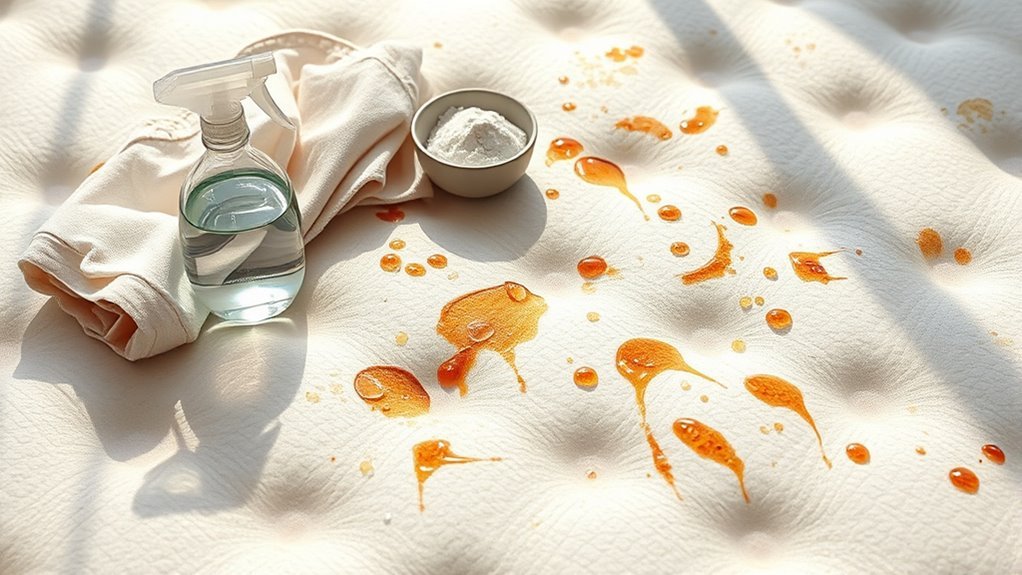
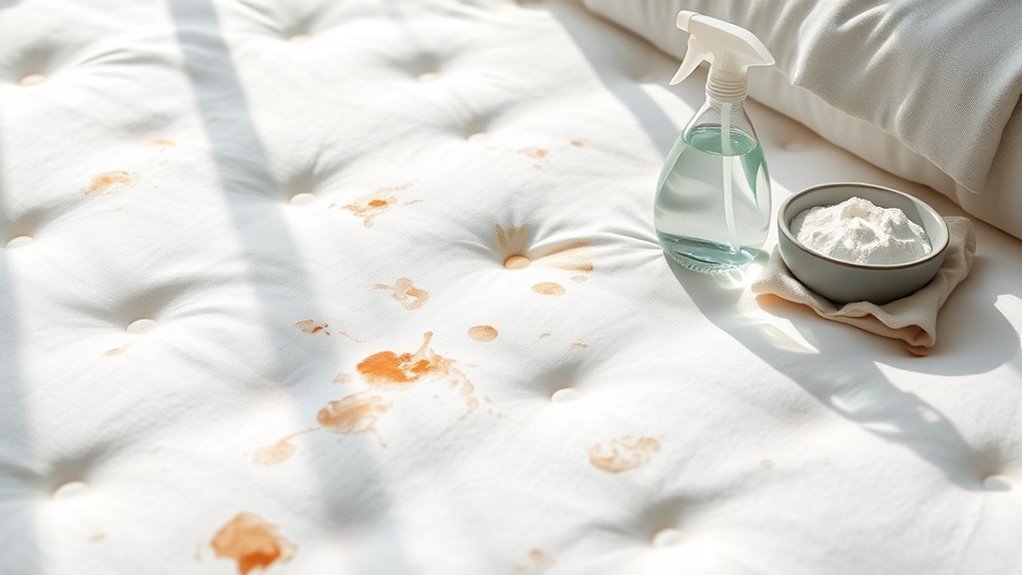
Before you can effectively remove stains from your mattress, it’s important to recognize the most common types you might encounter. Knowing these helps you take control of mattress care and stain prevention, freeing you from frustration. Typical stains include sweat, which seeps through bedding; body oils that build up over time; and spills from drinks like coffee or wine. You might also face stains from blood or pet accidents. Each stain type requires a unique approach, so understanding them lets you respond swiftly and confidently. With this knowledge, you’re better equipped to keep your mattress fresh and clean, maintaining your freedom from worries about stubborn marks. Staying proactive with mattress care and stain prevention is the key to a healthier, more comfortable sleeping space.
Preparing Your Mattress for Cleaning
Before you start tackling those stains, make sure to clear any surface debris from your mattress. This will help your cleaning efforts be more effective. Next, gather all the cleaning supplies you’ll need to avoid interruptions during the process.
Clear Surface Debris
Although it might seem simple, clearing surface debris from your mattress is an essential first step to guarantee effective stain removal. This initial phase of mattress maintenance guarantees that dirt, dust, and loose particles don’t interfere with your cleaning efforts. To start, you’ll want to focus on surface cleaning carefully and thoroughly. Here’s how:
- Use a vacuum with a clean upholstery attachment to remove dust, hair, and crumbs.
- Gently brush off any loose debris with a soft-bristled brush.
- Shake out or lift the mattress slightly to dislodge hidden particles.
Gather Cleaning Supplies
Gathering the right cleaning supplies is essential to tackling stubborn mattress stains effectively. Before you get started, identify the stain types—whether it’s sweat, blood, or spills—so you can pick the best cleaning tools. You’ll want a good vacuum with upholstery attachments to start, plus clean cloths or sponges for blotting. Keep a spray bottle handy for applying solutions evenly. Depending on the stain types, prepare gentle options like baking soda, hydrogen peroxide, or mild detergent. Avoid harsh chemicals that could damage your mattress or limit your freedom to choose natural remedies. Having everything ready lets you move swiftly and confidently, freeing you from lingering stains and sleepless nights. With these supplies, you’re set to restore your mattress without hassle or compromise.
Using Baking Soda to Lift Stains
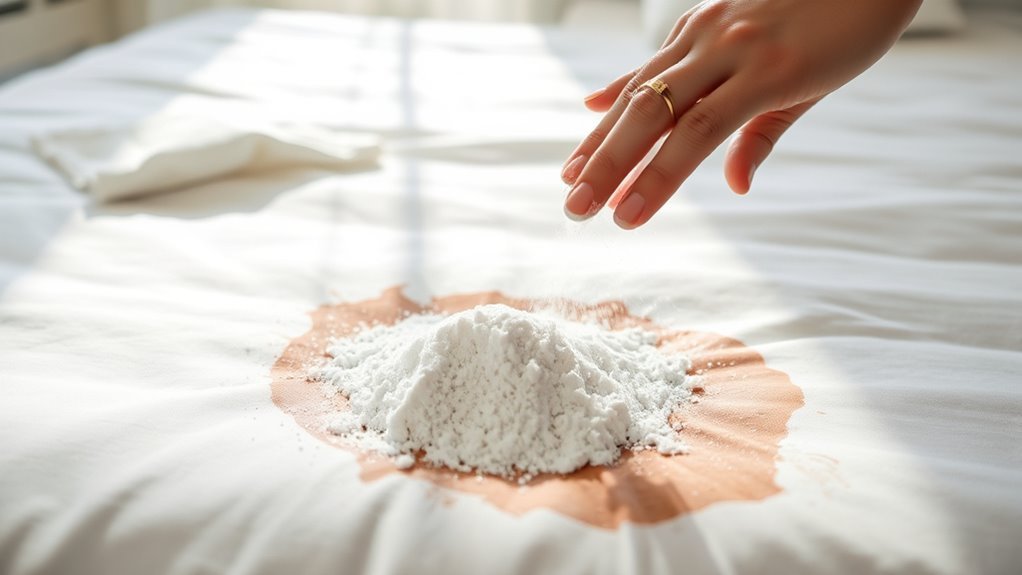
Anyone dealing with stubborn mattress stains will find baking soda a surprisingly effective solution. It’s a natural, affordable way to boost stain removal without harsh chemicals. Here’s how you can use baking soda to lift those marks and enjoy a fresher mattress:
- Sprinkle a generous layer of baking soda over the stained area to absorb moisture and odors.
- Let it sit for several hours, or ideally overnight, to break down the stain’s hold.
- Vacuum the baking soda thoroughly to remove residue and reveal a cleaner surface.
Applying Vinegar Solutions Safely
Before you start using vinegar on your mattress, it’s important to pick the right type and dilute it properly to avoid damage. Always test the solution on a small, hidden area first to make sure it won’t cause discoloration or weaken the fabric. This way, you’ll keep your mattress safe while tackling those tough stains.
Choosing the Right Vinegar
Though vinegar is a popular choice for tackling mattress stains, not all types work equally well. You want to select the right vinegar type to maximize vinegar benefits without harming your mattress. Here’s what to keep in mind:
- White distilled vinegar: Your best bet for stain removal. It’s strong, odorless when dry, and won’t discolor fabrics.
- Apple cider vinegar: Offers a gentler alternative with a mild scent but may leave slight discoloration.
- Balsamic or flavored vinegars: Avoid these; they can stain and leave residues.
Choosing the right vinegar types lets you clean effectively while preserving your mattress’s integrity. By selecting carefully, you maintain freedom from harsh chemicals and enjoy a fresh, stain-free sleeping space.
Dilution Ratios for Safety
Selecting the right type of vinegar is just the start; knowing how to dilute it properly is key to protecting your mattress while removing stains. Stick to vinegar-water dilution guidelines, usually one part vinegar to two or three parts water, to prevent fabric damage or lingering odors. This balance lets you tackle stains effectively without compromising your mattress’s integrity. Remember, safety precautions aren’t just about your mattress—they’re about your skin and respiratory comfort too. Always mix solutions in well-ventilated areas and avoid using undiluted vinegar, which can be too harsh. By following these dilution guidelines, you maintain freedom from harsh chemicals while keeping your mattress fresh and stain-free. It’s all about smart, safe choices that empower you to care for your bed confidently.
Spot Testing Procedures
While vinegar solutions are effective for removing stains, you should always perform a spot test first to confirm they won’t damage your mattress fabric. Spot testing methods are essential to check fabric compatibility and avoid unwanted discoloration or weakening. Here’s how you can safely apply vinegar solutions:
- Choose a hidden area of your mattress, like under the seams or near the edge.
- Dab a small amount of diluted vinegar solution with a clean cloth and wait 10-15 minutes.
- Observe any color changes, fabric distortion, or residue after drying.
If the spot looks unchanged, you’re free to proceed confidently. This simple step confirms your mattress stays intact while you enjoy a fresh, stain-free surface. Don’t skip it—your mattress deserves safe care.
Removing Sweat Stains With Hydrogen Peroxide
If you’re dealing with sweat stains on your mattress, hydrogen peroxide can be an effective solution. Start by mixing a 3% hydrogen peroxide solution with a few drops of liquid dish soap and baking soda. This combo boosts stain removal power without harsh chemicals. Lightly spray the mixture onto the stained area and let it sit for about 10 minutes. Then, gently blot with a clean cloth—don’t rub, as that can spread the stain. Once the stain fades, use a damp cloth to wipe away any residue. Allow your mattress to air dry completely before putting sheets back on. Using hydrogen peroxide this way gives you a straightforward, chemical-free method to reclaim your mattress from sweat stains and enjoy your freedom from stubborn marks.
Tackling Blood Stains Effectively
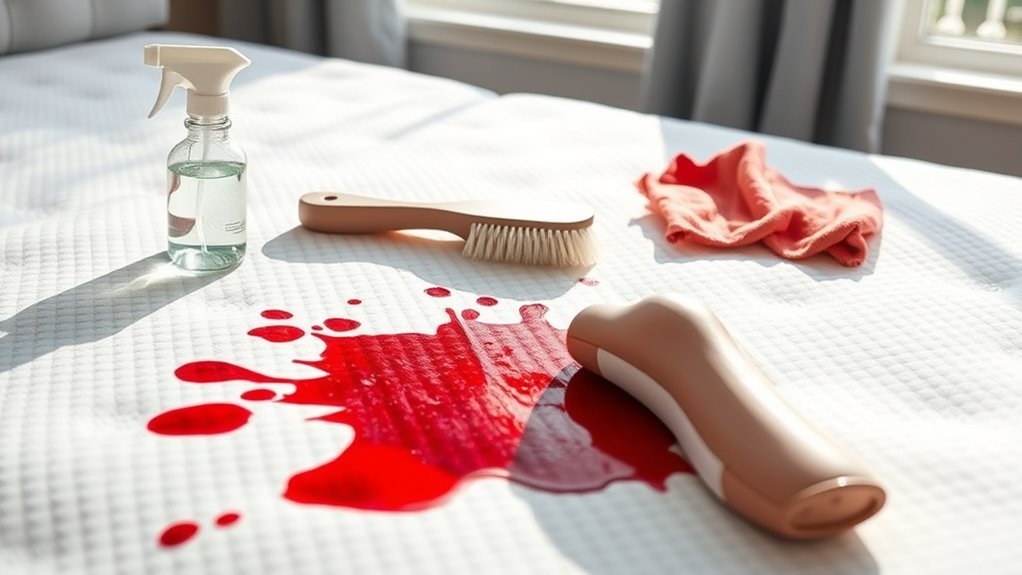
If you catch a blood stain early, rinse it with cold water right away to prevent it from setting. After that, applying an enzyme cleaner can break down the proteins and lift the stain effectively. Acting quickly is key to keeping your mattress looking fresh.
Immediate Cold Water Rinse
Because blood stains can set quickly, you’ll want to act fast by rinsing the affected area with cold water immediately. Using cold water is key—it prevents the blood from coagulating and embedding deeper into your mattress fibers. Here’s how to make the rinse techniques work for you:
- Gently run cold water over the stain without soaking the mattress to avoid damage.
- Blot the area with a clean cloth to lift loosened blood—don’t rub, or you’ll spread the stain.
- Repeat rinsing and blotting until the blood visibly lightens.
Enzyme Cleaner Application
When you’re ready to move beyond rinsing, applying an enzyme cleaner can break down the proteins in blood stains, making them easier to remove. You’ll want to apply the cleaner generously, letting it sit for at least 15 minutes to maximize enzyme cleaner effectiveness. This gives the enzymes time to digest the stain at its source, freeing you from stubborn marks. If you don’t have an enzyme cleaner on hand, enzyme cleaner alternatives like a mixture of baking soda and hydrogen peroxide can work, though they might need a bit more elbow grease. After treatment, blot the area and let it air dry. Using enzymes gives you a powerful, natural way to reclaim your mattress, keeping your space fresh and stain-free without harsh chemicals.
Dealing With Urine Stains and Odors
Though urine stains and odors can be tough to tackle, you can effectively remove them with the right approach. Start by blotting the stain gently to absorb excess moisture—don’t rub, or it’ll spread. Next, sprinkle baking soda over the area to neutralize urine odor and leave it for several hours. Finally, vacuum it off thoroughly.
Gently blot urine stains, sprinkle baking soda to neutralize odors, then vacuum thoroughly for effective removal.
To keep your mattress fresh and protected long-term, consider these tips:
- Use waterproof mattress protectors to prevent future stains.
- Apply an enzyme cleaner that breaks down urine proteins.
- Air out your mattress regularly to reduce lingering smells.
Employing Dish Soap for Grease and Food Stains
Urine stains can be challenging, but grease and food stains bring a different set of difficulties that require a slightly different approach. When tackling these, dish soap effectiveness is your secret weapon. Its grease removal power breaks down stubborn oily residues without harsh chemicals. Start by mixing a few drops of dish soap with warm water. Lightly dab the solution onto the stain using a clean cloth, working from the outside in to avoid spreading. Gently blot until the stain begins to lift. Avoid soaking the mattress, as too much moisture can cause damage. Once the stain fades, rinse the area with a damp cloth and let it air dry completely. This simple method frees you from sticky messes, restoring your mattress’s freshness without hassle.
Utilizing Enzyme Cleaners for Organic Stains
Since organic stains like sweat, blood, and bodily fluids can deeply penetrate mattress fibers, using enzyme cleaners is a smart choice. These cleaners break down proteins and fats, boosting enzyme cleaner effectiveness against tough spots you can’t just wipe away.
When tackling organic stain types, keep these tips in mind:
- Apply the cleaner generously to saturate the stain for better breakdown.
- Let it sit for 10-15 minutes to allow enzymes to work their magic.
- Blot gently with a clean cloth, avoiding rubbing to prevent spreading.
Preventative Measures to Keep Your Mattress Stain-Free
While enzyme cleaners help tackle tough organic stains, preventing those stains from happening in the first place will save you time and effort. One of the easiest ways to do this is by investing in a quality mattress protector. It acts as a barrier, shielding your mattress from spills, sweat, and dirt. Using a mattress protector not only enhances stain prevention but also extends your mattress’s lifespan, giving you the freedom to enjoy a fresh, clean bed without constant worry. You should also avoid eating or drinking in bed, and clean any messes immediately to keep stains at bay. By taking these simple, proactive steps, you’ll keep your mattress looking and feeling fresh, freeing yourself from the hassle of stubborn stain removal down the line.
Frequently Asked Questions
Can Professional Mattress Cleaning Services Remove All Types of Stains?
You might wonder if professional mattress cleaning services can handle every stain removal challenge. While they use advanced cleaning techniques tailored to various stain types, some marks can be stubborn or set in deeply, making complete removal tricky. However, these experts maximize your mattress’s freshness and hygiene, giving you more freedom from worry about allergens or odors. So, while not all stains vanish perfectly, professionals do a remarkable job restoring your mattress’s cleanliness.
How Long Should a Mattress Dry After Cleaning to Prevent Mold?
You’ll want to give your mattress at least 6 to 12 hours of drying time after cleaning to prevent mold. It’s essential to let it dry completely, so moisture doesn’t get trapped, which could cause mold growth. Open windows, use fans, or even a dehumidifier to speed up the process. Taking these steps guarantees your mattress stays fresh and mold-free, giving you the freedom to sleep soundly without worries.
Are There Any Mattress Materials That Stain More Easily Than Others?
You’ll find memory foam tends to stain more easily because it’s porous and absorbs liquids quickly, making spills a challenge. On the other hand, organic cotton covers are usually more resistant and easier to clean, giving you freedom from stubborn stains. If you want a mattress that keeps its fresh look longer, choosing organic cotton might be your best bet. Just remember, quick action helps no matter the material!
Can Mattress Protectors Help Reduce the Need for Frequent Cleanings?
You might think mattress protectors limit your freedom, but they actually grant you more by reducing cleaning frequency. While they act as a barrier to stains, promoting stain prevention, they don’t trap you in endless scrubbing sessions. With a good protector, you can enjoy a fresher mattress without constant worry. So, using one means less hassle and more freedom to live without stressing about every spill or stain.
Is It Safe to Use Bleach on Mattress Stains?
You might wonder if it’s safe to use bleach on mattress stains. It’s best to avoid bleach since it can damage fabric fibers and affect mattress safety. Instead, try bleach alternatives like baking soda mixed with vinegar or enzyme-based cleaners—they’re gentler and effective. These options let you keep your mattress fresh without harsh chemicals, giving you the freedom to clean confidently while protecting your mattress’s integrity and your health.