Daily Maintenance Tips for Curtains
You can keep your curtains looking fresh by dusting them weekly with a microfiber cloth or using a vacuum on low suction to avoid damage. Quickly blot any stains with a mild detergent, and regularly open windows to circulate air and prevent odors. Rotate your curtains periodically to guarantee even wear and reduce sun damage. Managing pet hair with a lint roller also helps maintain a clean look. If you want to protect your curtains even more, there are a few other easy steps to explore.
Regular Dusting Techniques
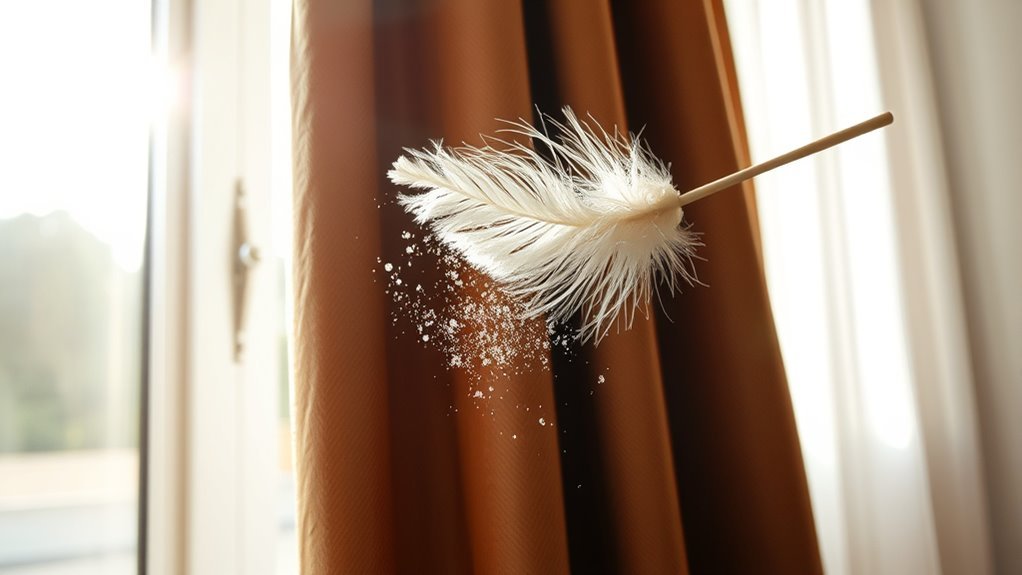
Although it might seem simple, regular dusting is essential for keeping your curtains looking fresh and extending their lifespan. You want to embrace a dusting schedule that fits your lifestyle, giving you the freedom to maintain your space without hassle. Choose effective dusting tools like microfiber cloths or soft brushes that gently lift dust without damaging fabric. By sticking to your dusting schedule, you prevent buildup, which can dull colors and weaken fibers over time. Make dusting a quick, routine habit—just a few minutes each week can make a big difference. This simple step lets you enjoy crisp, clean curtains effortlessly, preserving their beauty while freeing you from the burden of deep cleaning more often than necessary.
Gentle Vacuuming Methods
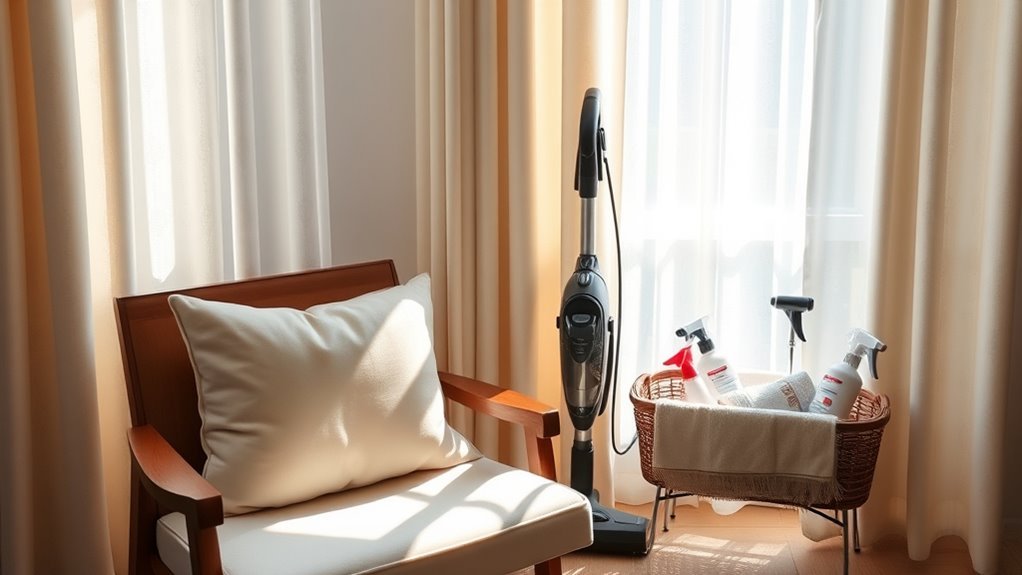
When you want to remove deeper dust and allergens from your curtains, gentle vacuuming is a great option that won’t harm the fabric. You’re free to refresh your space without risking damage to delicate curtain fabrics. Use a vacuum cleaner with a soft brush attachment to glide smoothly over the material. Keep the suction low to avoid pulling or stretching. Move slowly and patiently, focusing on areas where dust collects most.
Gently vacuum curtains with a soft brush and low suction to remove dust without damaging fabric.
- Feel the satisfaction of breathing cleaner air.
- Enjoy the freedom of maintaining your curtains easily.
- Protect your investment with care that lasts.
Gentle vacuuming lets you keep your curtains fresh and vibrant, giving you control over your home’s cleanliness without hassle or harsh treatments.
Spot Cleaning for Stains
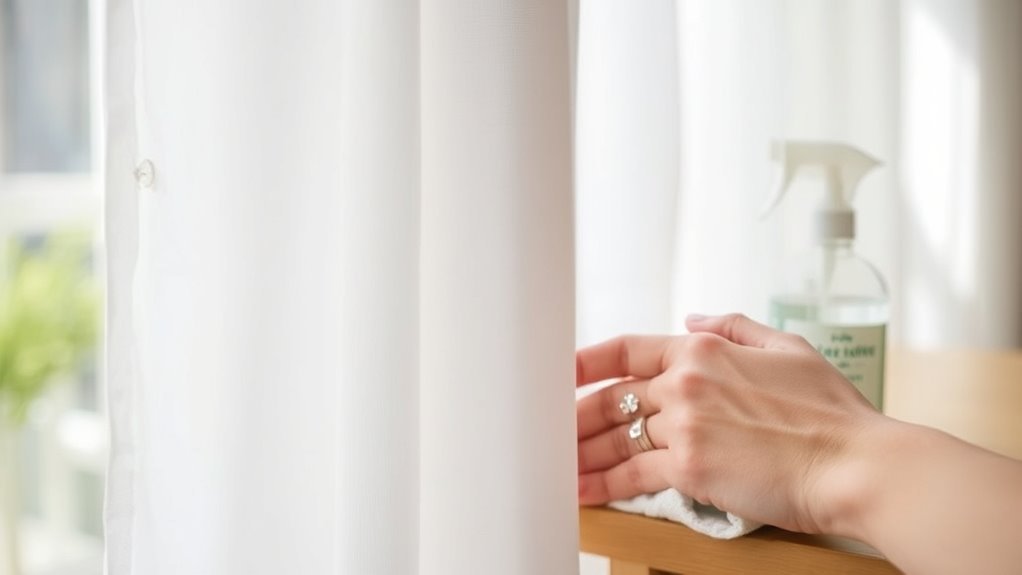
Anyone can accidentally spill something on their curtains, but you don’t have to worry—spot cleaning lets you tackle stains quickly before they set. First, grab a clean cloth and gently blot the stain to absorb excess liquid without rubbing it in. Then, mix a mild detergent with water and test it on a small, hidden area to verify your fabric care routine won’t cause damage. Using a soft cloth, apply the solution carefully to the stain, working from the outside in to prevent spreading. Rinse the spot with a damp cloth and let it air dry fully. By addressing stains promptly with these stain removal steps, you maintain your curtains’ fresh look and enjoy the freedom of a clean, inviting space without hassle.
Proper Ventilation to Prevent Odors
After spot cleaning stains, it’s important to address another factor that keeps your curtains fresh: proper ventilation. You want your space to feel open and free, and ensuring good curtain airflow plays a huge role in odor prevention. Stale air trapped behind curtains can lead to musty smells, but with simple steps, you can keep your curtains smelling clean and vibrant.
- Open windows regularly to let fresh air circulate around your curtains.
- Use a fan or air purifier to enhance airflow, especially in less ventilated rooms.
- Occasionally draw your curtains fully open to let them breathe and avoid dampness.
Handling Sunlight Exposure

When your curtains face constant sunlight, it’s important to minimize UV damage to keep them looking fresh. Choosing the right materials can make a big difference in durability and fading resistance. You might also consider adding protective window treatments to shield your curtains and extend their lifespan.
Minimizing UV Damage
Although sunlight brightens up a room, it can quickly cause curtains to fade and weaken. To keep your curtains vibrant and strong, you’ll want to minimize UV damage. Start by choosing curtain linings designed specifically for UV protection—they act like a shield, reducing harmful rays without sacrificing natural light. You can also rotate your curtains regularly to avoid prolonged exposure on one side. Finally, consider using sheer panels during peak sunlight hours; they filter light gently and protect your fabric.
- Keep your curtains looking fresh and full of life
- Enjoy the freedom of natural light without the worry of damage
- Preserve your space’s beauty effortlessly
Optimal Curtain Materials
Because curtains play a key role in managing sunlight, choosing the right material can make all the difference in protecting your space. When selecting curtain fabrics, look for options that balance light control and durability. Natural fibers like organic cotton or linen not only filter sunlight effectively but also come from sustainable materials, helping you reduce your environmental impact. You’ll want fabrics that resist fading and wear, so your curtains stay fresh and functional longer. Consider heavier weaves if you want to block more light or sheer fabrics if you prefer a softer glow. By picking curtain fabrics thoughtfully, you maintain your freedom to enjoy natural light while safeguarding your interiors. Sustainable materials offer peace of mind, blending style, function, and responsibility seamlessly.
Protective Window Treatments
To keep your curtains and interiors safe from harsh sunlight, you’ll want to invest in protective window treatments that manage exposure effectively. Choosing the right protective fabric options not only enhances curtain longevity but also preserves your space’s vibrant feel. When you control sunlight, you protect your freedom to enjoy a comfortable, beautiful home without constant worry about fading or damage.
Consider these curtain longevity tips to shield your interiors while embracing natural light:
- Install UV-blocking liners that guard fabric without sacrificing brightness.
- Use adjustable blinds or shades to customize light flow and privacy.
- Opt for specially treated fabrics designed to resist sun damage.
Using Fabric Fresheners Safely
How can you keep your curtains smelling fresh without risking damage? Start by choosing the right fabric fresheners types—opt for those specifically designed for upholstery or delicate fabrics to avoid harsh chemicals. Spray lightly from a distance, ensuring an even, gentle coating. Never saturate the fabric, as excess moisture can lead to stains or mildew. Test any freshener on a small, hidden area first to check for colorfastness and fabric reaction. For a natural alternative, consider diluted essential oils or baking soda sprinkled lightly, then vacuumed off. Remember, safe application means respecting your curtains’ material and following product instructions closely. By doing this, you keep your curtains fresh while preserving their beauty and your freedom to enjoy a clean, inviting space.
Maintaining Curtain Rods and Hardware
Curtain rods and hardware play an essential role in keeping your curtains functional and looking their best. To enjoy the freedom of effortless window style, you’ll want to care for your curtain rod types and hardware materials regularly. Dust and grime can build up, causing wear and limiting smooth movement. Keep your hardware operating freely by wiping rods with a soft cloth and mild cleaner. Check for loose brackets or screws to avoid any unexpected falls. Lubricate moving parts sparingly for seamless gliding.
Regular care of curtain rods and hardware ensures smooth operation and lasting style.
- Feel the ease of curtains that open and close without a hitch
- Experience the freedom of choosing from various curtain rod types that suit your style
- Trust in durable hardware materials that support your curtains securely and beautifully
Taking these steps guarantees your windows remain a source of joy, not frustration.
Rotating Curtains for Even Wear
To keep your curtains looking fresh and prevent uneven fading, it’s smart to rotate them regularly. You’ll want to follow a simple schedule and use easy techniques to switch their positions. Let’s explore how often you should rotate and the best ways to do it.
Benefits of Rotation
Although it might seem like a small task, regularly rotating your curtains can greatly extend their lifespan. You’ll enjoy the rotation benefits by preventing uneven fading and wear caused by constant sun exposure on one side. This simple habit boosts curtain longevity, keeping your space feeling fresh and vibrant longer. Plus, rotating lets you switch styles or fabrics effortlessly, giving your room a subtle refresh without extra spending.
Here’s why you’ll love rotating your curtains:
- Protects fabric from harsh UV damage, preserving colors and texture
- Encourages even wear, so your curtains look great from every angle
- Offers freedom to change your room’s vibe with minimal effort
Embrace rotation to keep your curtains—and your space—feeling free and alive.
Rotation Frequency Guide
Since uneven sun exposure can wear out one side faster, you’ll want to rotate your curtains regularly to keep them looking fresh. Establishing a clear curtain rotation maintenance schedule helps you evenly distribute wear and extend their lifespan. Here’s a simple guide to get you started:
| Frequency | Recommended Action | Benefits |
|---|---|---|
| Weekly | Slight position shift | Prevents heavy wear |
| Monthly | Swap curtain panels | Balances sun exposure |
| Quarterly | Full rotation | Maximizes fabric life |
Techniques for Rotating
Three simple techniques can help you rotate your curtains effectively to guarantee even wear. By mastering curtain arrangement and fabric rotation, you’ll extend the life of your curtains while keeping your space fresh and inviting. Here’s how to do it with freedom and ease:
- Swap positions: Regularly change the curtain panels from one side to the other to balance sun exposure and prevent uneven fading.
- Flip panels: If your curtains have two fabric sides, flip them occasionally to distribute wear evenly on both surfaces.
- Alternate fabrics: Use different curtain styles or weights seasonally, embracing fabric rotation to keep your windows stylish and protected.
These techniques empower you to maintain your curtains effortlessly, freeing you from constant worry about damage or dullness.
Dealing With Pet Hair on Curtains
Pet hair can quickly cling to your curtains, making them look untidy and worn. To keep your space feeling fresh, tackle pet hair regularly using the right cleaning tools. A handheld vacuum with a brush attachment is perfect for gently lifting hair without damaging fabric. Alternatively, a lint roller or sticky tape can swiftly grab hair from tricky spots. You might also try a rubber glove—dampen it slightly, then run your hand over the curtains to gather pet hair effortlessly. Incorporating these simple steps into your routine lets you maintain clean curtains while enjoying the freedom of living with pets. With consistent care, your curtains will stay vibrant, and pet hair won’t steal your space’s charm.
When to Schedule Deep Cleaning
You should plan deep cleaning your curtains based on the season, usually every few months to keep them fresh. Watch for signs like persistent odors, discoloration, or fabric stiffness that indicate it’s time. Remember, different fabrics need different cleaning schedules, so check what works best for your curtains.
Seasonal Cleaning Frequency
Deep cleaning your curtains at least twice a year helps keep them looking fresh and extends their lifespan. By aligning your cleaning schedules with seasonal considerations, you free yourself from constant maintenance worries and enjoy a carefree living space. Think of it as a simple ritual that refreshes your home and your spirit.
Consider these seasonal cues to plan your deep cleaning:
- Spring: Shake off winter dust and allergens, welcoming a new season with clean curtains.
- Fall: Prepare for colder months by removing accumulated dirt and pollen.
- Special occasions: Deep clean before holidays or gatherings to impress guests effortlessly.
Sticking to these times keeps your curtains vibrant and your home feeling open, light, and unburdened—just the freedom you deserve.
Signs Curtains Need
Although regular seasonal cleaning is essential, certain signs can tell you when your curtains need attention sooner. Keep an eye out for curtain color change, which indicates fading or dirt buildup. Fabric wear indicators such as thinning or fraying suggest it’s time to deep clean or repair. Also, persistent odors or visible stains are clear signals that a thorough refresh is needed.
| Sign | What It Means | Action Needed |
|---|---|---|
| Curtain Color Change | Dirt or sun damage | Deep cleaning |
| Fabric Wear Indicators | Thinning or fraying | Repair or clean gently |
| Odors/Stains | Dirt or spills | Immediate cleaning |
Trust your instincts—address these signs early to keep your curtains vibrant and fresh.
Fabric-Specific Cleaning Timelines
Since different fabrics react uniquely to wear and dirt, knowing when to schedule cleaning can save your curtains from damage. For instance, silk curtains demand gentle care every 6-12 months to maintain their delicate sheen, while cotton curtains can usually handle a deeper clean twice a year without losing vibrancy. Velvet curtains require professional attention annually to preserve their plush feel. Linen curtains and synthetic fabrics benefit from seasonal washing, but blackout fabrics and sheer fabrics often need more frequent dusting to retain their effectiveness. Upholstery fabrics, used in heavier curtains, should be cleaned every 6-8 months to avoid buildup.
- Freedom to enjoy fresh, vibrant curtains without worry.
- Confidence that your unique fabrics stay protected.
- Peace of mind knowing you’re caring for your home’s style.
Frequently Asked Questions
How Do I Choose the Right Curtain Fabric for My Room?
When you’re choosing curtain fabric, think about fabric patterns that reflect your style and the vibe you want. Don’t be afraid to mix bold patterns if you crave freedom and creativity. Color coordination is key—pick hues that complement your walls and furniture to create harmony. Also, consider the room’s purpose and light needs; lighter fabrics brighten spaces, while heavier ones add coziness. Trust your instincts and let your personality shine through your choices.
Can I Use Steamers on All Types of Curtains?
You’d think steamers could handle every curtain type like superheroes, but that’s not always true. Different steam types—handheld or standing—work better on certain fabrics. Delicate silks and velvets need gentle steam and cautious fabric care, while heavier cottons or synthetics can take more heat. Always check the fabric care label before you steam, so you won’t accidentally turn your curtains into a wrinkled mess. Freedom means knowing when to steam and when to skip it!
What Are the Best Curtain Styles for Privacy?
If privacy’s your priority, you’ll want to avoid sheer curtains alone since they let a lot of light—and eyes—through. Instead, consider room darkening curtains or layering sheer curtains with heavier drapes. This way, you get the freedom to enjoy natural light when you want it, and the privacy you need when you don’t. It’s all about balancing openness with seclusion, so choose styles that let you control your space effortlessly.
How Can I Prevent Curtains From Fading Over Time?
To prevent your curtains from fading over time, you’ll want to manage their light exposure carefully. Too much direct sunlight can drain colors quickly. Consider using fabric protection methods like UV-resistant liners or sheer curtains underneath to shield your main fabric. You don’t have to sacrifice style or freedom—these simple steps let your curtains stay vibrant while still letting you enjoy natural light and an open, airy feel in your space.
Are Blackout Curtains Energy Efficient?
Think of blackout curtains as a shield, guarding your sanctuary from harsh sunlight and chilly drafts. When you use them, you’re embracing energy savings by reducing the need for constant heating or cooling. Their thermal insulation acts like a cozy blanket, keeping your space comfortable and your utility bills lower. By choosing blackout curtains, you’re not just decorating—you’re creating a liberating environment where comfort and freedom go hand in hand.