How to Clean Your Dryer Safely
To clean your dryer safely, first unplug it to avoid electric shock and clear the area around it. Gather tools like a vacuum with a hose, a soft brush, and microfiber cloths. Remove and clean the lint trap and vent hose thoroughly to prevent fire risks. Wipe down the drum and exterior with a mild detergent. Ultimately, inspect seals, belts, and connections for wear. Following these steps helps your dryer work efficiently and last longer—there’s more to know for thorough care.
Gather Necessary Tools and Materials
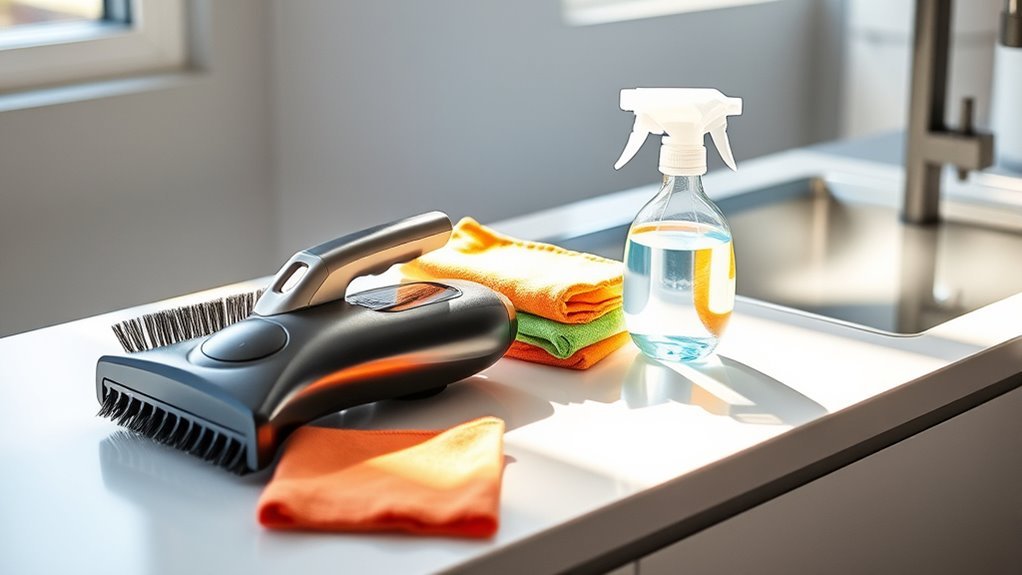
Before you begin cleaning your dryer, you’ll need to gather a few essential tools and materials to make the process smooth and effective. Prioritizing dryer safety means having the right cleaning supplies ready, like a vacuum with a hose attachment, a soft brush, and a microfiber cloth. You’ll also want a screwdriver to access any panels, and a mild detergent or dryer vent cleaner for stubborn lint buildup. Having these items at hand guarantees you won’t be interrupted once you start, keeping the task efficient and safe. Taking this step lets you take control of your appliance’s upkeep, preventing hazards and boosting performance. With the right tools, you’re empowering yourself to maintain your dryer safely and confidently.
Unplug and Prepare Your Dryer
To start cleaning your dryer safely, unplug it from the power source to eliminate any risk of electric shock. This essential safety precaution guarantees you can work freely without worry. Next, clear around the dryer to give yourself ample space for thorough dryer maintenance. Prepare your tools nearby but keep water away from electrical components.
| Step | Action | Safety Tip |
|---|---|---|
| 1 | Unplug the dryer | Prevents electric shock |
| 2 | Clear surrounding area | Avoid tripping hazards |
| 3 | Gather tools and materials | Keep tools dry |
| 4 | Check dryer manual | Follow specific safety advice |
| 5 | Wear gloves if needed | Protect hands during cleaning |
Following these steps assures a safe, effective maintenance routine.
Clean the Lint Trap and Vent Hose

One of the most important steps in maintaining your dryer is cleaning the lint trap and vent hose regularly. Lint buildup not only reduces your dryer’s efficiency but also poses a serious fire hazard. Start by removing the lint trap and clearing away all the lint you can reach with your hands or a soft brush. Next, detach the vent hose from the back of the dryer to inspect and clean it thoroughly. Use a vacuum or a vent cleaning brush to remove trapped lint inside the hose and vent opening. Keeping these parts clear guarantees your dryer runs smoothly and frees you from worries about overheating or dangerous blockages. Regular vent cleaning is a simple way to protect your home and extend your dryer’s lifespan.
Wipe Down the Drum and Exterior
Keeping the lint trap and vent hose clean helps your dryer work efficiently, but don’t forget the drum and exterior also need attention. For drum cleaning, grab a soft cloth dampened with mild soap and water. Wipe the inside drum thoroughly to remove any residue, lint, or fabric softener buildup. This prevents odors and keeps your clothes fresh. When it comes to exterior maintenance, use a gentle cleaner or a damp cloth to wipe down the dryer’s outer surfaces. This not only keeps it looking good but also prevents dust and grime from settling in vents or controls. Regularly wiping down both the drum and exterior helps your dryer run smoothly and extends its lifespan, giving you the freedom to rely on it without hassle.
Inspect and Maintain Dryer Components
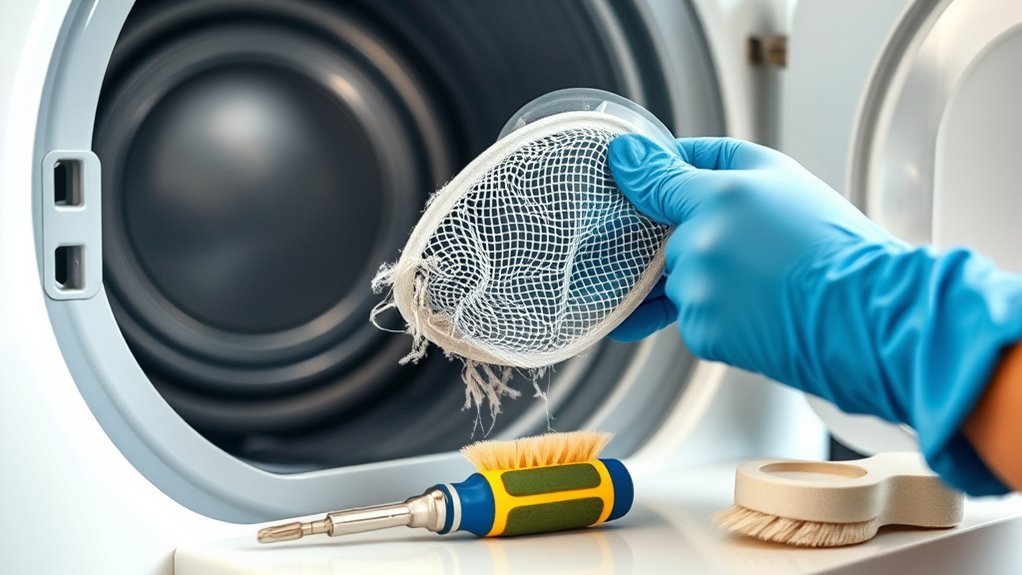
Several key dryer components need regular inspection to guarantee your machine runs safely and efficiently. Focusing on component inspection not only boosts dryer safety but also extends your dryer’s lifespan, giving you freedom from costly repairs. Here’s what you should check:
- Lint Trap and Vent: Verify they’re clear to prevent fire hazards and maintain airflow.
- Drum Seals and Belts: Look for wear or damage that could cause malfunction or noise.
- Electrical Connections: Inspect wires and plugs for any signs of fraying or corrosion.
Frequently Asked Questions
Can I Use Bleach to Clean My Dryer Drum?
Using bleach on your dryer drum is like releasing a storm in a teacup—it might cause more harm than good. Instead, you’ll want to explore bleach alternatives like vinegar or baking soda, which are gentler and just as effective. These dryer cleaning methods help keep your appliance fresh without damaging the metal. You deserve freedom from harsh chemicals, so go for safe, natural options that protect your dryer and your peace of mind.
How Often Should I Professionally Service My Dryer?
You should aim for professional dryer maintenance at least once a year to keep things running smoothly and safely. Regular service frequency helps prevent lint buildup, reduces fire risks, and extends your dryer’s lifespan. If you use your dryer heavily, consider scheduling a check-up every six months. Staying on top of maintenance frees you from unexpected breakdowns, letting you enjoy hassle-free laundry days without worry or disruption in your routine.
Is It Safe to Use a Dryer Without a Vent?
It’s funny how you might think using a dryer without a vent is risky, yet ventless dryers were designed to give you freedom from traditional setups. Yes, it’s safe because ventless dryers recycle air and reduce moisture without venting outside, aligning with dryer safety standards. So, if you crave flexibility in your space, ventless dryers let you dry clothes efficiently without worrying about vent installation or harmful lint buildup.
What Are Signs My Dryer Is Overheating?
If you notice overheating symptoms like your dryer feeling excessively hot to the touch, clothes taking longer to dry, or a burning smell, it’s a clear signal to prioritize dryer safety. You don’t want to risk fire hazards or damage. Also, if the dryer shuts off unexpectedly or the drum stops spinning, it’s time to check it out. Staying alert helps you keep your laundry routine hassle-free and safe.
Can Dryer Sheets Cause Lint Buildup Inside the Machine?
Yes, dryer sheets can contribute to lint buildup inside your machine. Their residue can cling to the lint trap and inside surfaces, making lint removal trickier. For effective dryer maintenance, you’ll want to clean the lint trap after every load and occasionally wipe down the drum and vent. Staying on top of this keeps your dryer running freely and safely, giving you more freedom from appliance troubles.