Weekly Cleaning Routine for Baby Items
You should rinse baby bottles and nipples daily and deep clean them weekly using a bottle brush and sterilization methods like boiling or steam. Wash pacifiers and teething toys regularly, sterilizing as needed. Sanitize feeding utensils and plates with warm soapy water, and launder baby clothes and bibs using gentle detergent. Wipe down toys and mats with baby-safe disinfectants, and clean crib sheets and blankets with mild detergent. Organize and store everything safely to keep germs away. There’s plenty more to help you create an easy, thorough routine.
Cleaning Baby Bottles and Nipples
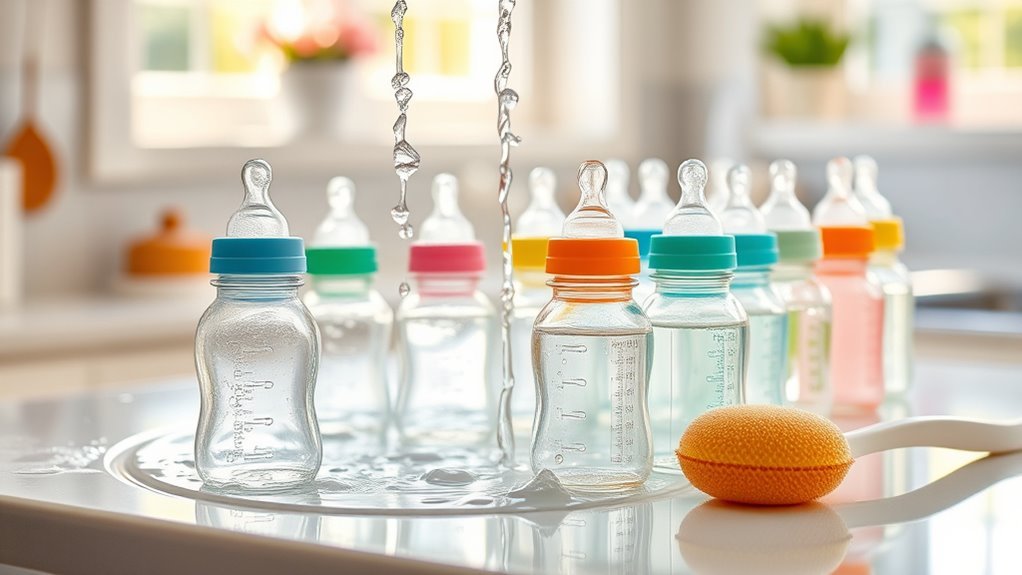
When it comes to cleaning baby bottles and nipples, you’ll want to do it thoroughly after each use to prevent bacteria buildup. Start by rinsing the bottles and nipples with cool water to remove milk residue. Use a bottle brush and mild soap to clean every nook. To guarantee freedom from germs, explore effective bottle sterilization techniques like boiling, steam sterilizers, or UV sanitizers. These methods give you peace of mind without extra hassle. For nipple care tips, check for cracks or discoloration regularly—replace them if you notice any damage. Also, clean nipples separately with a small brush to reach inside crevices. Staying consistent with these steps means you’re keeping your baby safe while enjoying the freedom to focus on what truly matters.
Washing Pacifiers and Teething Toys
You should regularly wash pacifiers and teething toys to keep them free from germs and safe for your baby to use. Choose sterilization methods that fit your lifestyle—boiling, steam sterilizers, or quick microwave bags all work well. These methods guarantee thorough cleaning without chemicals, giving you peace of mind while keeping things simple. After washing, dry items completely before storing them to prevent mold or bacteria growth. Use designated pacifier storage containers that keep these essentials clean and easily accessible, especially when you’re on the go. By maintaining a routine that fits your freedom-loving mindset, you’re not only protecting your baby’s health but also simplifying your life. Keeping pacifiers and teething toys clean is straightforward and essential for your baby’s well-being.
Sanitizing Feeding Utensils and Plates
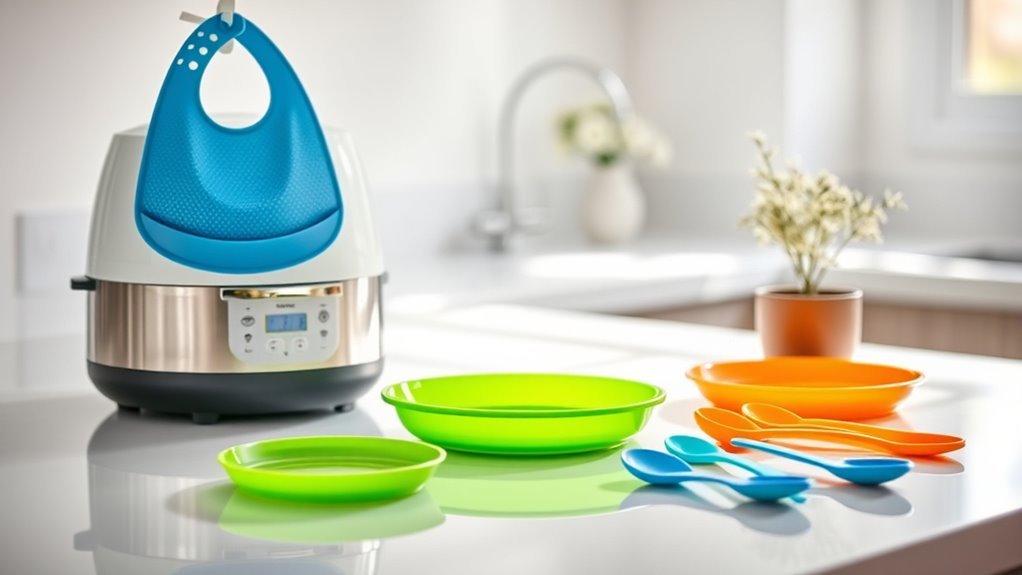
When sanitizing feeding utensils and plates, you’ll want to pick cleaning agents that are safe for your baby’s sensitive system. Using proper washing techniques guarantees all germs are effectively removed without damaging the items. Don’t forget to dry everything thoroughly and store them in a clean, dry place to keep them fresh and ready for use.
Choosing Safe Cleaning Agents
Although it might seem simple, choosing safe cleaning agents for your baby’s feeding utensils and plates is essential to prevent exposure to harmful chemicals. You want eco friendly cleaners and non toxic options that protect your little one while respecting the environment. Here’s a quick guide to help you pick wisely:
| Cleaning Agent | Safety Feature |
|---|---|
| Baby-Safe Dish Soap | Free of dyes, fragrances |
| Vinegar Solution | Natural disinfectant |
| Baking Soda Paste | Gentle abrasive |
| Plant-Based Cleaners | Biodegradable, non toxic |
| Water (Hot) | Effective rinse agent |
Proper Washing Techniques
Proper washing techniques for baby feeding utensils and plates are essential to keep germs at bay and confirm your little one stays healthy. Start by rinsing off any leftover food to prevent stubborn stains, much like you’d tackle baby laundry with stain removal strategies. Use warm, soapy water and a dedicated brush or sponge to clean every nook and cranny thoroughly. Avoid harsh chemicals that might linger and compromise safety. If you have a dishwasher, place items on the top rack and use a baby-safe cycle to guarantee thorough sanitization. Remember, consistent cleaning stops bacteria buildup and keeps your baby’s feeding gear fresh and safe, freeing you from constant worry while letting your little one enjoy mealtime without risk.
Drying and Storage Tips
Three key steps can help you dry and store your baby’s feeding utensils and plates safely to prevent contamination. First, use drying racks to air-dry items thoroughly, avoiding dampness that encourages bacteria growth. Next, choose clean, ventilated storage bins to keep everything organized and protected from dust or pests. Remember, keeping your space clutter-free lets you maintain freedom and peace of mind. Finally, regularly inspect utensils and plates for wear or damage, replacing anything compromised.
- Opt for open drying racks to speed up drying time
- Store items separately to avoid cross-contamination
- Use labeled storage bins for easy access and rotation
- Keep drying racks and storage bins clean and sanitized
Laundering Baby Clothes and Bibs
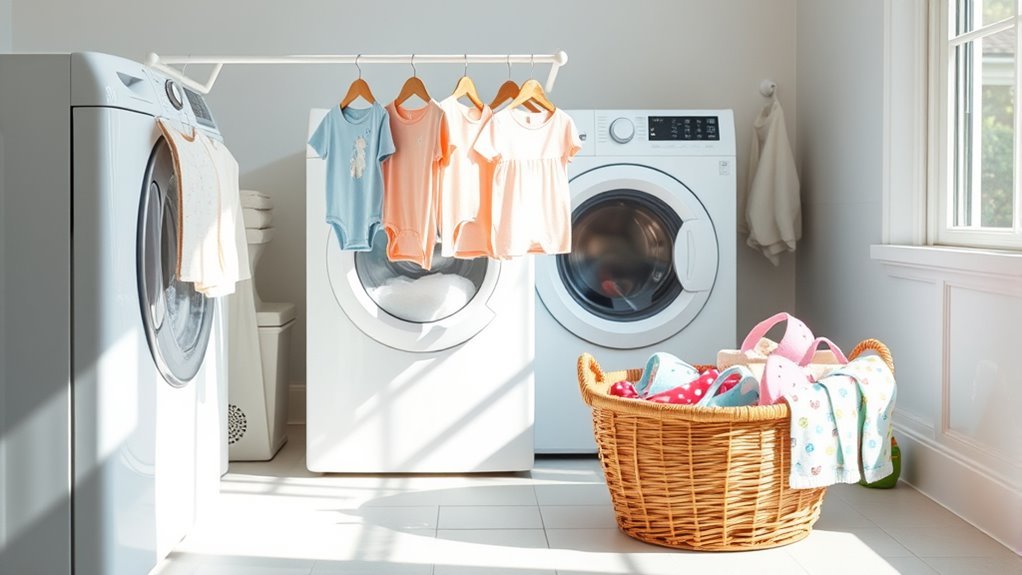
When laundering baby clothes and bibs, you’ll want to use a gentle detergent that’s free of harsh chemicals to protect your little one’s sensitive skin. Addressing stain removal quickly helps prevent setting, and always follow fabric care labels to keep clothes soft and durable. Sorting by color and fabric type gives you freedom to wash efficiently without compromising quality.
| Stain Type | Treatment Method | Fabric Care Tip |
|---|---|---|
| Milk or formula | Cold water soak | Use gentle cycle |
| Food stains | Pre-treat with detergent | Avoid bleach |
| Drool or spit-up | Mild stain remover | Air dry or low heat tumble |
| Dirt or mud | Scrub gently before wash | Check for colorfastness |
This routine keeps baby clothes fresh, soft, and safe for daily wear.
Disinfecting Toys and Play Mats
Keeping baby clothes clean is just one part of maintaining a healthy environment for your little one. Disinfecting toys and play mats is equally important to keep germs at bay while respecting toy material safety and ensuring proper play mat maintenance. Here’s how you can do it freely and effectively:
- Use gentle, non-toxic disinfectants suited for the specific toy materials to avoid damage.
- Wipe down plastic and rubber toys with a diluted vinegar solution or baby-safe wipes.
- For fabric play mats, spot clean regularly and deep clean weekly following manufacturer guidelines.
- Air-dry toys and mats thoroughly in sunlight when possible to naturally disinfect and freshen them.
Cleaning Crib Sheets and Blankets
You should wash crib sheets and blankets at least once a week to keep them fresh and safe for your baby. Use gentle, baby-friendly detergents that won’t irritate sensitive skin. After washing, make sure everything is thoroughly dried and stored in a clean, dry place to prevent mold and odors.
Frequency of Washing
Crib sheets and blankets should generally be washed at least once a week to maintain a clean and healthy environment for your baby. Following frequency guidelines helps you keep those washing intervals consistent without feeling overwhelmed. Remember, a regular schedule not only keeps germs at bay but also supports your baby’s comfort.
Consider these tips for frequency of washing:
- Increase washing intervals if your baby has allergies or sensitive skin.
- Wash immediately after any spills, accidents, or visible stains.
- Adjust frequency during colder months when blankets get heavier use.
- Stick to weekly washing as a baseline for general hygiene and freshness.
Safe Cleaning Products
Although choosing the right cleaning products might seem straightforward, it’s important to pick ones that are gentle and safe for your baby’s sensitive skin. When cleaning crib sheets and blankets, opt for natural alternatives that avoid harsh chemicals, fragrances, and dyes. These eco friendly options reduce the risk of irritation and keep your little one comfortable. You don’t have to sacrifice effectiveness—many plant-based detergents clean thoroughly while being kind to the environment. Look for labels that specify hypoallergenic and biodegradable ingredients, giving you peace of mind. By choosing these safer products, you’re not only protecting your baby but also supporting a freer lifestyle that respects both health and the planet. This way, you maintain a clean nursery without compromising your values or your baby’s well-being.
Drying and Storage Tips
Choosing safe cleaning products is just one part of keeping your baby’s crib sheets and blankets fresh. How you dry and store them matters just as much. Opt for drying methods that preserve softness and prevent mildew, like air drying in a sunny, breezy spot or using a low-heat setting in your dryer. When it comes to storage solutions, keep things breathable and organized to maintain cleanliness and ease.
- Use mesh bags for delicate items during drying to protect fabric integrity.
- Avoid plastic bags for storage; choose cotton bins or breathable fabric bags instead.
- Store sheets and blankets in a cool, dry place away from direct sunlight to prevent fading.
- Rotate items regularly to keep everything feeling fresh and ready for use.
These tips give you freedom to keep baby’s bedding clean without hassle.
Organizing and Storing Baby Items Safely
When you organize and store baby items safely, you not only keep your space tidy but also protect your little one from potential hazards. Choosing smart baby item organization and safe storage solutions helps you maintain freedom in your daily routine and peace of mind. Use containers with lids, label everything, and keep small parts out of reach. Here’s a quick guide:
| Item | Safe Storage Solution |
|---|---|
| Bottles | Sealed bins on high shelves |
| Pacifiers | Labeled small containers |
| Toys | Mesh baskets with lids |
| Diapers | Closed hampers |
| Medicines | Locked cabinets |
This setup frees you from clutter while ensuring your baby’s items stay clean and accessible—making your life easier and safer.
Frequently Asked Questions
How Often Should I Replace Baby Bottles and Pacifiers?
You should replace baby bottles every 3 to 6 months to keep things safe and fresh. For pacifiers, pacifier hygiene is key—swap them out every 1 to 2 months or sooner if you notice cracks or tears. Staying on top of bottle replacement and pacifier hygiene lets you enjoy worry-free moments with your little one, giving you the freedom to focus on fun, not germs or wear and tear.
Can I Use Natural Cleaning Products for Baby Items?
You absolutely can use natural cleaning products for baby items! Look for eco friendly options that contain baby safe ingredients, so you’re protecting your little one without harsh chemicals. These products often use plant-based cleaners that effectively clean while being gentle. Plus, using natural solutions gives you the freedom to keep your baby’s things safe and clean, all while caring for the environment. Just double-check labels to verify they’re truly baby-friendly.
How Do I Handle Cleaning Items With Mold or Mildew?
When dealing with mold or mildew, you’ll want to act fast to prevent it from spreading. For mildew removal, use a mixture of white vinegar and water—it’s natural and effective. After cleaning, make sure to dry items thoroughly to aid mold prevention. Keep your space well-ventilated, too, so moisture doesn’t build up. This way, you’re keeping things fresh and safe without feeling restricted by harsh chemicals.
What Is the Best Way to Clean Baby Car Seats?
Imagine your baby’s car seat as a tiny fortress battling crumbs, spills, and dirt daily! To keep it fresh, check the car seat materials—fabric covers usually need gentle hand washing or machine cycles on low, while plastic parts can be wiped with mild soap and water. Aim for a cleaning frequency of once a month, or more if freedom-loving messes happen often. This keeps your baby’s ride safe, comfy, and ready for every adventure!
Are UV Sanitizers Safe and Effective for Baby Items?
UV sanitizers can be a handy tool for keeping baby items germ-free, but you should be aware of safety concerns. While they’re effective at killing bacteria and viruses, improper use or overexposure to UV light might harm delicate materials or pose risks to skin and eyes. If you decide to use UV sanitizers, follow the manufacturer’s guidelines closely to enjoy their benefits without compromising your baby’s safety or your peace of mind.