How to Clean Your Home After Toilet
After a toilet overflow, first assess the damage and gather supplies like gloves, disinfectants, and towels. Remove excess water and debris carefully, working from clean to dirty areas to avoid spreading germs. Then disinfect all affected surfaces thoroughly with a bleach solution. Don’t forget to clean and sanitize bathroom fixtures carefully to prevent bacteria buildup. Finally, take steps to avoid future mishaps by checking for leaks and maintaining your plumbing. Keep going to learn how to make your space fully safe and fresh.
Assess the Situation and Gather Supplies
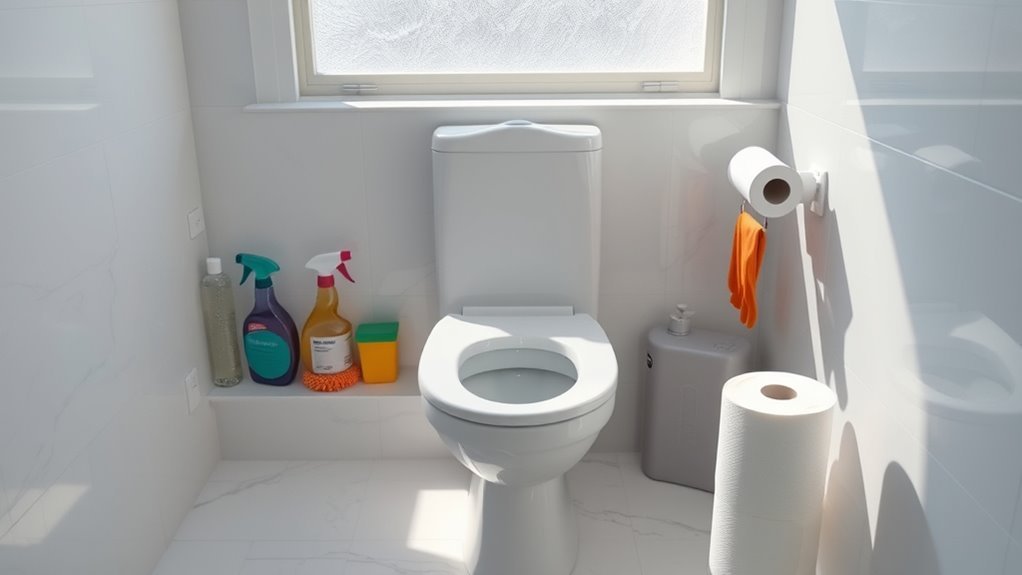
Before you begin cleaning, take a moment to assess the situation carefully. You need a clear damage assessment to understand how extensive the mess is and what areas require immediate attention. This step frees you from chaos, letting you tackle the task with control. Next, prepare your supply checklist to guarantee you have everything needed for a thorough cleanup—gloves, disinfectants, absorbent towels, and trash bags. Having your supplies ready prevents unnecessary interruptions, allowing you to move swiftly and efficiently. By organizing yourself upfront and knowing the damage scope, you reclaim your space without feeling overwhelmed. This approach empowers you to restore your home quickly and confidently, embracing the freedom that comes with a clean, safe environment.
Remove Excess Water and Debris
Once you’ve gathered your supplies and assessed the damage, start by removing any excess water and debris to prevent further contamination. Efficient water removal is key—use a wet/dry vacuum or mop up standing water quickly to avoid lingering moisture that can cause mold or odors. For debris disposal, carefully collect solid waste with disposable gloves, placing it in a sealed bag to contain germs and prevent spread. Avoid spreading contaminants by working methodically from the cleanest areas toward the dirtiest. Remember, prompt water removal and debris disposal free your space from immediate hazards, giving you control and peace of mind. Taking these initial steps confidently sets the stage for restoring your home’s safety without feeling overwhelmed.
Disinfect Affected Areas Thoroughly
Three key steps will help you disinfect affected areas thoroughly and guarantee your home is safe after dealing with toilet-related messes. First, focus on disinfecting surfaces by applying a bleach solution—mix one cup of bleach with one gallon of water. This powerful mix kills germs and bacteria effectively. Second, wear gloves and verify the area is well-ventilated to protect yourself from harsh fumes. Third, allow the bleach solution to sit on surfaces for at least 10 minutes before rinsing with clean water. Avoid shortcuts; thorough disinfection prevents lingering pathogens that could compromise your freedom to enjoy a clean, healthy space. By committing to these steps, you take control, verifying your home feels fresh and safe again.
Clean and Sanitize Bathroom Fixtures
Tackle bathroom fixtures with care to make sure they’re not only clean but truly sanitized after a toilet mishap. Proper fixture maintenance tips make certain your bathroom hygiene essentials stay effective and reliable. Start by wiping down faucets, handles, and toilet flush levers with a disinfectant that kills germs. Don’t forget to:
- Use disposable gloves to protect your hands
- Clean around the base of the toilet and under the seat thoroughly
- Apply a bathroom-safe sanitizer to mirrors and countertops
- Rinse and dry fixtures to prevent water spots and bacteria buildup
Prevent Future Toilet Mishaps
Although accidents happen, you can reduce the chances of future toilet mishaps by taking a few simple precautions. Start by following essential toilet maintenance tips like regularly checking for leaks and ensuring the flush mechanism works smoothly. Avoid flushing anything other than toilet paper and waste to prevent clogs. Make it a habit to schedule plumbing inspections at least once a year; these help catch hidden issues before they escalate. Keeping an eye on water pressure and addressing any unusual sounds early on can save you from costly repairs. By taking control with these straightforward actions, you maintain your bathroom’s freedom from unexpected problems and enjoy peace of mind knowing your toilet operates reliably. Prevention is always better than cleanup!
Frequently Asked Questions
Can I Use Bleach With Other Cleaning Agents Safely?
You shouldn’t mix bleach with other cleaning agents because it can create dangerous fumes. For cleaning safety, it’s better to choose bleach alternatives like vinegar or baking soda, which are effective and less risky. If you want freedom in your cleaning routine, using these alternatives lets you avoid harmful chemical reactions while still keeping your space fresh and clean. Always read labels and ventilate well to stay safe.
How Do I Know if My Plumbing Needs Professional Repair?
If your plumbing’s acting like a leaky faucet dripping away your peace, it’s time to pay attention. Plumbing signs like persistent clogs, strange noises, or water stains could mean you need professional repair. Don’t let these issues chain you down—early fixes often save you from soaring repair costs and bigger headaches. Trust your gut; if something feels off, calling a pro helps you reclaim your home’s freedom and comfort.
What Are the Best Air Fresheners After a Toilet Spill?
When you’re dealing with a toilet spill, choosing the best air fresheners means focusing on effective odor elimination and fragrance options that suit your vibe. You’ll want something that not only masks but neutralizes odors, like activated charcoal sprays or essential oil diffusers. If you prefer freedom in scent, try customizable blends with lavender, eucalyptus, or citrus—these keep your space fresh without feeling overpowering. This way, you control the atmosphere and breathe easy.
How Often Should I Deep Clean My Toilet to Prevent Clogs?
Think of your toilet like a trusty steed—it needs regular care to keep running smoothly. For effective toilet maintenance and clog prevention, you should deep clean it at least once a week. This routine helps you avoid pesky blockages and keeps things flowing freely. Don’t wait for a crisis—embrace this habit to maintain your bathroom’s freedom from clogs and enjoy hassle-free mornings every day.
Are There Eco-Friendly Cleaners Effective for Bathroom Sanitation?
You can definitely choose eco-friendly cleaners that work great for bathroom sanitation. Natural disinfectants like vinegar, baking soda, and tea tree oil offer powerful green cleaning without harsh chemicals. They’re safe, effective, and give you the freedom to keep your space fresh while protecting the environment. Using these natural options lets you maintain cleanliness confidently, knowing you’re making a healthier choice for your home and the planet.