Cleaning Tips Before and After Bike
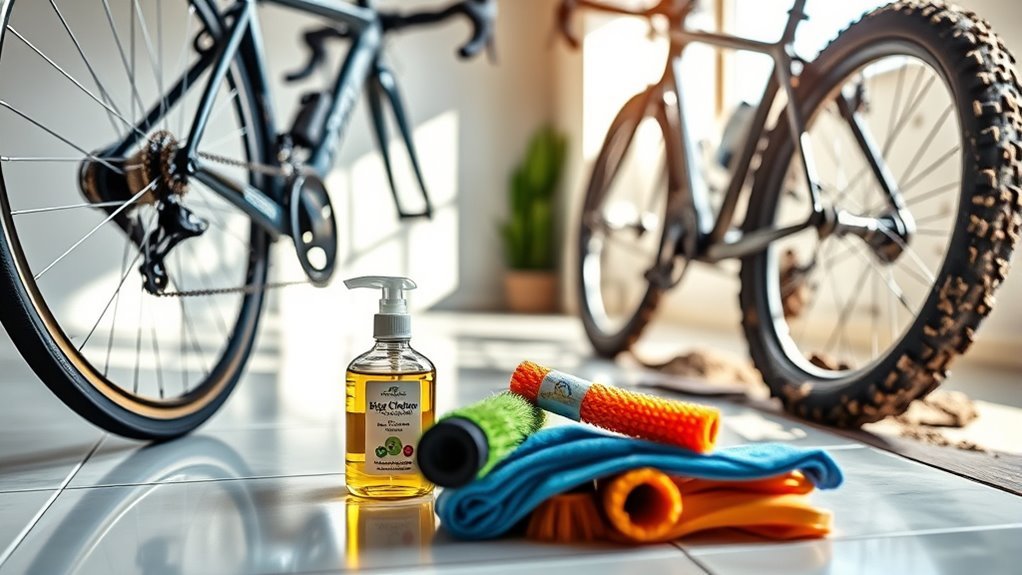
Before and after rides, gather brushes, degreasers, and a bucket to clean your bike effectively. Secure your bike, remove accessories, and rinse mud gently using soft or stiff brushes where needed. Clean the frame with appropriate solutions, degrease and lubricate the chain sparingly, and inspect brakes and suspension for wear. Don’t forget to dry thoroughly and store your bike in a dry, sheltered spot. Keep these steps in mind to extend your bike’s life and performance, with plenty more tips to optimize care.
Essential Tools for Bike Cleaning
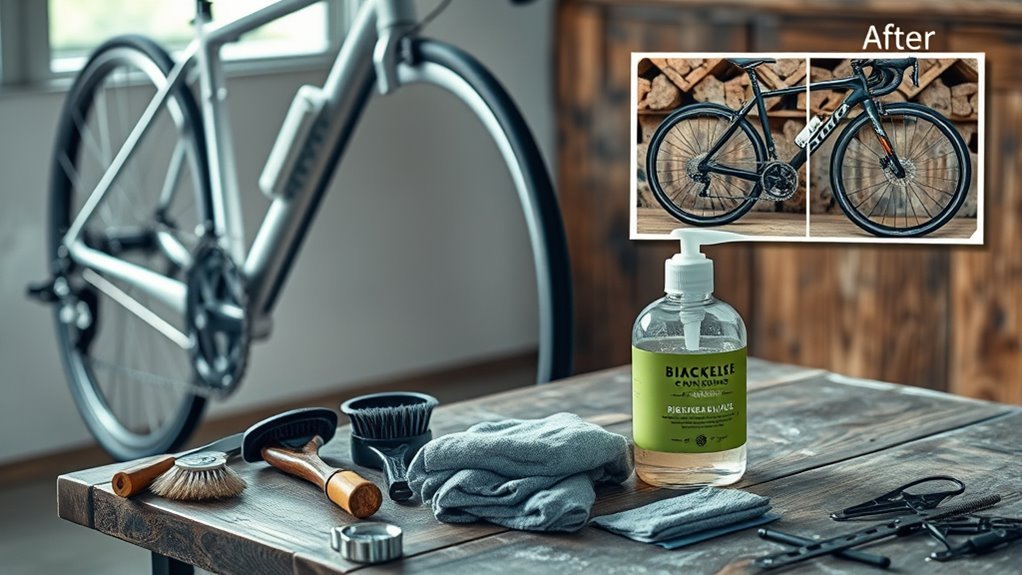
Before you plunge into cleaning your bike, make sure you have the right tools on hand. Having the proper bike cleaning supplies sets you free to tackle every nook and cranny without frustration. Essential brushes are a must—they help you reach tight spots like the chain, gears, and spokes, areas that collect dirt and grime. A soft-bristled brush works well for delicate parts, while a stiff brush handles stubborn mud. Don’t forget a bucket, bike-specific cleaner, and a sponge to gently lift dirt without damaging your frame. With these tools at your disposal, you’ll maintain your bike’s performance and appearance, ready for your next adventure. Being prepared means you can enjoy the ride, not the maintenance hassle.
Preparing Your Bike for Cleaning
With your tools ready, the next step is to get your bike set up for cleaning. Proper bike preparation guarantees a smooth process and protects your ride. Start by positioning your bike on a stand or leaning it securely, so it doesn’t wobble while you work. Next, remove any accessories like water bottles or bags to avoid damage. Check your cleaning checklist to verify you’ve gathered everything—cleaning brushes, degreaser, and rags. Inspect the drivetrain and tires for stubborn dirt spots that need special attention. Cover sensitive parts like the headset and bottom bracket to prevent water intrusion. Taking these prep steps lets you clean efficiently and keeps your bike in top condition, so you can hit the road or trails freely, knowing your ride is ready.
How to Clean the Frame Safely
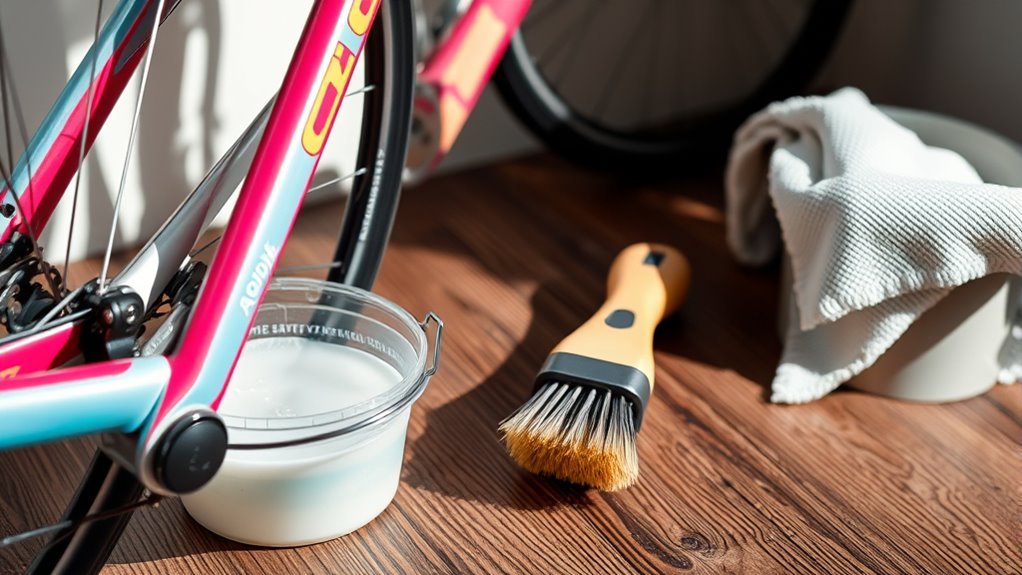
Even if your bike’s frame looks clean at first glance, dirt and grime can build up in hard-to-see spots that need gentle attention. To keep your ride free and clear, choose cleaning solutions suited to your frame materials. Avoid harsh chemicals that might damage paint or carbon fiber. Use a soft cloth or sponge, and rinse with water to prevent residue.
| Frame Material | Recommended Cleaning Solution |
|---|---|
| Aluminum | Mild soap and water |
| Carbon Fiber | pH-neutral bike cleaner |
| Steel | Gentle detergent, avoid abrasives |
Cleaning the Drivetrain Effectively
Though it’s easy to overlook, keeping your drivetrain clean is essential for smooth shifting and prolonging the life of your bike’s components. Drivetrain maintenance isn’t just about looks—it guarantees your ride stays efficient and responsive, giving you the freedom to explore without mechanical hiccups. Start by applying a degreaser to the chain, chainrings, cassette, and derailleur pulleys, then scrub gently with a stiff brush. Rinse thoroughly and dry completely to prevent rust. Afterward, lubricate the chain sparingly to avoid attracting dirt. Regular drivetrain cleaning prevents buildup that can wear down gears and reduce performance. By dedicating a little time to this, you’ll keep your bike running smoothly and enjoy every ride with confidence and ease.
Maintaining the Wheels and Tires
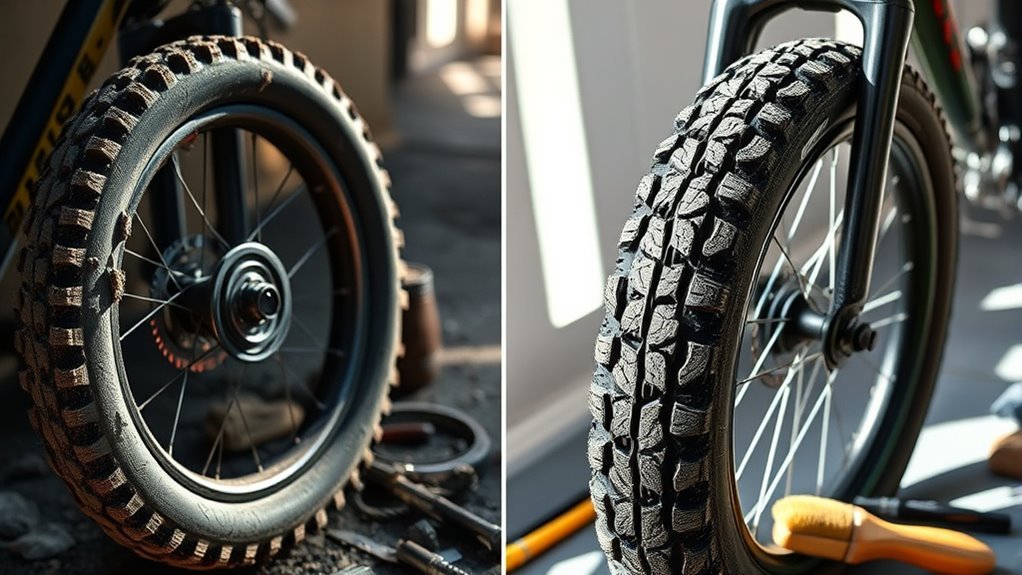
A well-maintained set of wheels and tires is essential for a safe and smooth ride. Start by checking your tire pressure regularly; it guarantees ideal grip and reduces the risk of flats, letting you roam freely without interruptions. Use a reliable gauge to keep pressure within the recommended range printed on your tire’s sidewall. Then, inspect the wheels for proper alignment—misaligned wheels can cause uneven wear, wobbling, and reduced control. Spin each wheel and watch for any side-to-side movement or rubbing against the brake pads. If you notice any issues, it’s best to adjust the spokes or visit a pro. Keeping your wheels and tires in top shape means you’re always ready to hit the road or trail, embracing freedom with confidence.
Proper Care for Brakes and Suspension
You’ll want to keep your brakes sharp by checking for wear and cleaning them regularly. Don’t forget to wipe down your suspension and inspect it for any damage or dirt buildup. Regular lubrication and careful inspection will help everything work smoothly and last longer.
Brake Maintenance Essentials
Since your brakes and suspension are crucial for safety and performance, maintaining them regularly is important. When it comes to brakes, knowing your brake types—whether disc or rim—and checking brake pads for wear is key. Here’s how you can keep your brakes in top shape:
- Inspect brake pads frequently and replace them if they’re worn down.
- Clean brake surfaces to remove dirt and debris that reduce stopping power.
- Check brake cables or hydraulic lines for damage or leaks.
- Adjust brake tension to guarantee a responsive feel without dragging.
Suspension Cleaning Techniques
Though suspension might not get as much attention as brakes, keeping it clean is just as essential for your bike’s performance and longevity. Regular suspension maintenance prevents grit buildup that can damage seals and reduce smoothness. Start by gently wiping down stanchions and pivots after every ride. Use mild soap and water to avoid stripping protective coatings. Suspension inspection is key—check for scratches, leaks, or unusual wear. Avoid high-pressure water, which can force dirt inside.
| Step | Action |
|---|---|
| 1 | Rinse lightly with water |
| 2 | Wipe stanchions with microfiber |
| 3 | Clean pivots with soft brush |
| 4 | Check seals for damage |
| 5 | Inspect for leaks or scratches |
This routine keeps your suspension freer to move, so you stay freer on the trail.
Lubrication and Inspection
Keeping suspension clean helps it move smoothly, but lubrication and regular inspection are just as important to prevent wear and maintain performance. You want your bike’s brakes and suspension to respond perfectly every time you hit the trail. Here’s how to keep them in top shape:
- Lubricate pivot points and seals on the suspension to reduce friction and protect against dirt.
- Regularly check brake pads and rotors for wear, ensuring your stopping power stays sharp.
- Include chain care in your routine—clean and oil your chain to prevent rust and improve gear maintenance.
- Inspect suspension travel for smooth movement and listen for unusual noises that could signal a problem.
Following these steps keeps your bike ready for freedom-filled rides without unexpected breakdowns.
Drying and Lubricating Your Bike
Once you’ve washed your bike, it’s essential to dry it thoroughly to prevent rust and damage. Picking the right lubricant and applying it at the right times keeps your bike running smoothly. Let’s look at how to dry your bike effectively, choose the best lubricant, and know when to apply it.
Effective Drying Techniques
How do you guarantee your bike stays in top condition after a wash? Effective drying is key to preventing rust and keeping your ride smooth. Here’s how you can master it:
- Start with towel drying to remove excess water quickly, especially around the chain and gears.
- Use a clean, absorbent towel to avoid scratching the frame.
- Follow up with air drying by leaving your bike in a well-ventilated, shaded area to let moisture evaporate naturally.
- Avoid direct sunlight to prevent paint damage and fading.
Choosing the Right Lubricant
After your bike is thoroughly dried, the next step is to protect its moving parts with the right lubricant. Choosing from different lubricant types can seem tricky, but knowing their strengths helps you keep your ride smooth and free. You’ll want to use proper application techniques—applying just enough to avoid attracting dirt while ensuring components stay slick.
| Lubricant Type | Best For |
|---|---|
| Wet Lube | Rainy conditions |
| Dry Lube | Dry, dusty environments |
| Ceramic Lube | Long-lasting, high performance |
Apply lubricant sparingly to chain links, letting it penetrate before wiping off excess. This balance keeps your bike running freely and ready for your next adventure.
Lubrication Frequency Tips
Knowing when to lubricate your bike is just as important as choosing the right lubricant. To keep your ride smooth and free, you need to understand lubrication types and stick to proper lubrication intervals. Here’s a simple guide to help you:
- After every wet ride, dry your bike thoroughly, then apply a wet lubricant to protect against moisture.
- For dry conditions, use a dry lubricant and reapply every 100-150 miles.
- If you ride daily or in dusty areas, check and lubricate your chain weekly.
- Always clean the chain before lubrication to avoid grime buildup.
Cleaning Tips After Riding in Mud or Rain
Even if you’re careful, mud and rain can leave your bike coated in grime that’s tough to remove. Use effective mud removal techniques like rinsing with low-pressure water and scrubbing with a soft brush to protect your bike’s freedom to roam. Don’t forget rain gear maintenance—dry and clean your gear to keep it ready for your next adventure.
| What to Clean | How to Clean |
|---|---|
| Frame | Hose off mud, wipe with cloth |
| Chain & Gears | Degrease, brush, lubricate |
| Tires & Rims | Remove debris, check for damage |
| Rain Gear | Wash, air dry, inspect for tears |
Stick to these steps to keep your ride smooth and your spirit unchained.
Storing Your Bike Post-Cleaning
Once your bike is clean and dry, storing it properly is key to keeping it in top shape. Good bike storage prevents damage and gets you ready for your next adventure. Here’s how to nail it:
- Choose a dry, sheltered spot – Protect your bike from moisture and harsh weather, essential for winter preparation.
- Keep it off the ground – Use hooks or racks to avoid rust and tire deformation.
- Cover your bike – A breathable cover keeps dust and dirt off without trapping moisture.
- Lubricate moving parts – Before storing, a quick lube prevents corrosion and keeps your bike ready for freedom on the road.
Frequently Asked Questions
How Often Should I Deep Clean My Bike Each Year?
Think of your bike like a classic knight’s armor—it needs regular care to stay battle-ready. For deep cleaning frequency, aim for at least twice a year to keep everything running smoothly. This fits well into a maintenance schedule that balances freedom with responsibility. You don’t want grime holding you back on open roads, so deep clean after tough rides or muddy adventures. It guarantees your ride stays reliable and ready for new quests.
Can I Use Household Cleaners on My Bike?
You might be tempted to grab household cleaners for your bike, but you should be careful. Some household cleaners can damage bike materials like paint, rubber, or metal. Instead, opt for gentle soaps or products designed for bikes to keep your ride in top shape without sacrificing freedom or quality. Protecting your bike’s materials guarantees you enjoy smooth rides without unexpected wear or corrosion. Choose wisely, and your bike will thank you!
What Are the Signs My Bike Needs Professional Maintenance?
You might think you can handle all bike issues yourself, but some signs scream for professional maintenance. If you notice brake issues like squeaking or reduced stopping power, don’t ignore them—they’re critical for your safety and freedom on the road. Also, uneven tire wear can mean alignment problems. When these problems pop up, it’s best to get a pro involved so you can keep riding smooth and worry-free.
How Do I Prevent Rust During Winter Storage?
To prevent rust during winter storage, you’ll want to focus on rust prevention by keeping your bike dry and clean before stashing it away. Apply a thin layer of lubricant on the chain and metal parts to block moisture. Store your bike in a cool, dry place, ideally indoors, away from humidity. Using a breathable cover can also help. Taking these steps guarantees your bike stays ready for your next adventure, no matter the season.
Is It Safe to Wash My Bike With a Pressure Washer?
When it comes to pressure washer safety, you’ll want to tread lightly. Using a pressure washer might sound like a quick freedom dance for your bike, but it can push water into delicate bearings and seals, causing trouble down the road. Instead, choose gentle bike washing techniques like a soft brush and mild soap to keep your ride gleaming without risking damage. Embrace freedom wisely, and your bike will thank you!