Seasonal Maintenance Tips for Refrigerator
To keep your refrigerator running efficiently year-round, regularly clean and inspect the coils to prevent dust buildup and improve energy use. Check door seals for cracks to stop cold air from escaping. Adjust temperature settings with the seasons, aiming for 37-40°F in the fridge and 0°F in the freezer. Organize and clean the interior to reduce waste, and manage humidity levels using crisper drawers. These simple steps help maintain freshness and save money—more helpful tips can keep your fridge in top shape.
Cleaning and Inspecting Refrigerator Coils

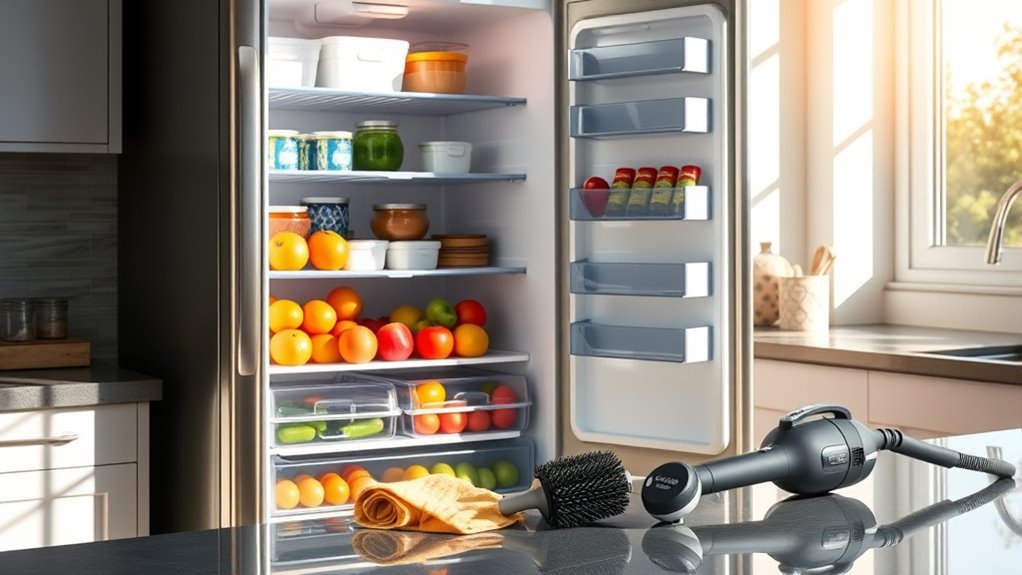
One of the most important steps you can take to keep your refrigerator running efficiently is cleaning and inspecting the coils. When dust and debris build up on the coils, your fridge has to work harder, which drains energy and limits your freedom from high utility bills. Regular coil cleaning helps maintain peak energy efficiency, letting your appliance run smoothly without unnecessary strain. You don’t need fancy tools—just a coil brush or vacuum attachment will do. Make it a habit to check the coils every few months, especially if your fridge is in a dusty or pet-friendly space. By dedicating a little time to this simple task, you guarantee your refrigerator stays reliable, giving you more freedom to focus on what matters without worrying about costly repairs or energy waste.
Checking and Replacing Door Seals
Keeping your refrigerator coils clean helps it run efficiently, but that’s only part of the equation. Door seal maintenance is just as essential for preserving your fridge’s energy efficiency. When the seals are worn or cracked, cold air escapes, forcing your appliance to work harder and consume more power. To check your door seals, close the door on a dollar bill—if it slips out easily, the seal needs attention. Clean the seals regularly with warm, soapy water to keep them flexible and free from debris. If you notice cracks or gaps, don’t hesitate to replace the seals. This simple step not only boosts energy efficiency but also guarantees your fridge maintains the right temperature, giving you the freedom to enjoy fresh food without wasting energy.
Adjusting Temperature Settings for Seasonal Changes

As the seasons change, you’ll want to adjust your refrigerator’s temperature settings to maintain peak performance. Temperature fluctuations can affect how efficiently your fridge cools, so making seasonal adjustments is key to preserving your food and saving energy. In warmer months, consider lowering the temperature slightly to combat the heat, ensuring your perishables stay fresh. During colder months, you might raise the temperature a bit to prevent overcooling, which wastes energy and can freeze items unintentionally. Most refrigerators have recommended ranges—typically 37-40°F for the fridge and 0°F for the freezer—so tweak within these guidelines for best results. By actively managing your settings with the seasons, you’ll enjoy consistent cooling, reduce wear on your appliance, and keep your kitchen running smoothly all year round.
Organizing and Cleaning Interior Components
How often do you clean and organize your fridge’s interior? Keeping your interior storage neat not only frees up space but also helps you spot expired items quickly. Start by removing everything, then wipe down shelves and drawers using gentle cleaning supplies like a mix of warm water and baking soda. Avoid harsh chemicals to keep your fridge safe and fresh. Next, group similar items together—dairy, veggies, drinks—to make grabbing what you need effortless. Use clear bins or containers if you want, but keep it simple to maintain freedom in your choices. Regularly cleaning and organizing your fridge lets you enjoy a clutter-free kitchen, saving time and reducing food waste. This straightforward routine can transform your fridge into a well-ordered, fresh space.
Monitoring and Managing Humidity Levels
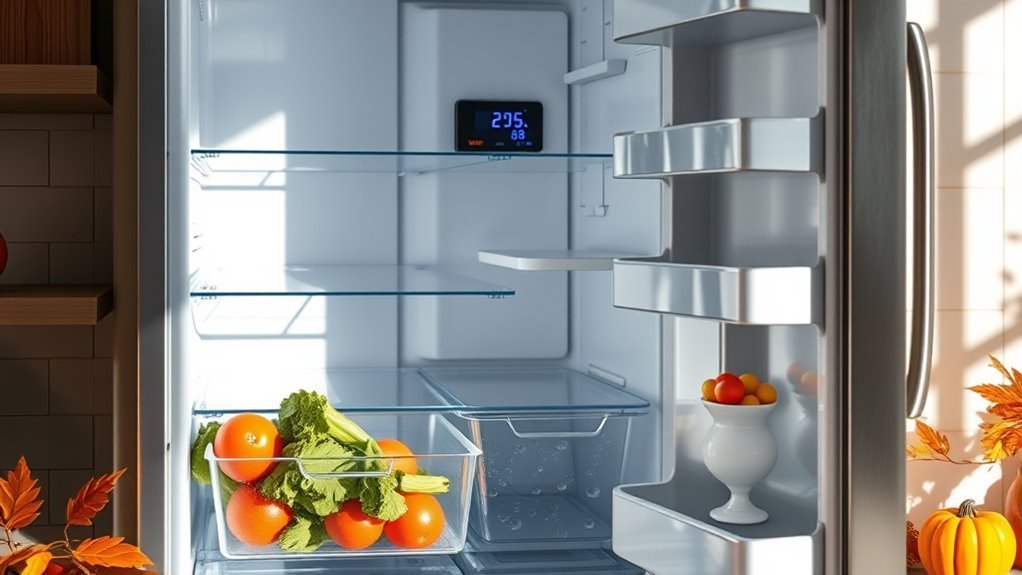
After organizing and cleaning your fridge’s interior, paying attention to humidity levels can help extend the freshness of your food. Proper humidity control and moisture regulation prevent spoilage and keep produce crisp longer. Here’s how you can manage it effectively:
Managing fridge humidity after cleaning helps keep food fresher and produces crisp longer.
- Use crisper drawers wisely – These drawers are designed for humidity control; set one to high humidity for leafy greens and the other to low for fruits.
- Avoid overpacking – Overcrowding restricts airflow, causing uneven moisture distribution and faster spoilage.
- Check seals and vents – Verify door seals are tight and vents unobstructed for consistent moisture regulation.
Frequently Asked Questions
How Often Should I Defrost My Refrigerator in Humid Climates?
You should adjust your defrost frequency depending on the humidity impact in your area. In humid climates, moisture builds up faster inside your fridge, causing frost to form more quickly. So, you’ll want to defrost your refrigerator every 1 to 2 months to keep it running efficiently. Staying on top of this gives you the freedom to avoid ice buildup and maintain ideal cooling without hassle.
Can I Use Vinegar to Deodorize My Fridge Naturally?
Yes, you can totally use vinegar to deodorize your fridge naturally. Vinegar benefits include neutralizing odors without harsh chemicals, making it a great natural deodorizer. Just mix equal parts water and white vinegar in a spray bottle, wipe down your fridge’s interior, and leave the door open for a bit to air out. It’s a simple, eco-friendly way to keep your fridge fresh while giving you the freedom to avoid synthetic smells.
What Are Signs My Refrigerator Needs Professional Servicing?
Wondering when your fridge needs professional help? If you notice frost buildup inside or hear strange noises that don’t go away, those are clear signs. You don’t want to be stuck with a broken fridge when you need it most, right? When things feel off—like inconsistent cooling or leaks—it’s time to call a pro. Keeping your fridge running smoothly means more freedom and less hassle in your daily life.
Is It Safe to Unplug the Fridge for Extended Periods?
You might wonder if fridge unplugging for a long time is safe. It is, but you’ve got to be cautious about food safety. When you unplug your fridge, all perishable items can spoil quickly, so it’s best to empty it out first. Also, leave the doors open to prevent mold and odors. This way, you’re free to unplug without worrying about nasty surprises later on.
How Do Power Outages Affect Refrigerator Performance?
Power outages can really mess with your fridge’s temperature, causing it to rise and risking food spoilage. When power restoration happens, your fridge works hard to cool back down, which might strain the compressor. To keep your freedom from worrying about spoiled food, avoid opening the door during outages and check the fridge temperature once power returns. This way, you stay in control, and your food stays fresh without hassle.