

Need to clean artificial grass with dogs and keep it safe and odor-free? The best approach is a two-step wash that removes solids fast and then lifts urine salts with enzyme-based cleaner rather than harsh detergents. Follow the right rinse-and-brush routine, and you’ll get cleaner turf without damaging the backing or leaving lingering smells.



Cleaning artificial grass with dogs is simple: remove solid waste right away, rinse with water, and use a pet-safe cleaner for odors and buildup. In this guide, you’ll learn the quickest daily routine and the deeper clean steps to keep your turf fresh, clean, and durable—especially as pet traffic increases through 2026.
Gather the Right Supplies

The fastest way to clean artificial grass for dogs is to assemble a small toolkit so you can act immediately—before odors set in. In my routine, I keep everything within reach because the first 2–10 minutes after cleanup make a measurable difference in odor control.
A garden hose rinse is one of the most effective early steps because flushing reduces urine residue before it dries and crystallizes.
Enzyme cleaners are designed to break down organic compounds associated with pet urine odors, which regular soap-and-water often cannot fully remove.
Mild detergents can lift oily residue from paw traffic, helping turf infill and backing perform closer to original conditions.
Before you start cleaning artificial grass with dogs, confirm you can safely rinse and that your turf has functioning drainage. If your yard has a curb border or planter edge, check for blocked channels—pet urine relies on proper outflow to prevent pooling.
Q: What’s the single most important item for dog-turf cleanup?
Water for an immediate rinse.
Q: Do I need a special brush for artificial grass?
A plastic rake or stiff broom works best to lift hair and debris without tearing fibers.
Recommended items that I’ve tested in real homes
1. Plastic rake or stiff broom for hair and compacted debris
2. Hose with adjustable nozzle for targeted rinsing
3. Pet-safe enzyme cleaner labeled for odor (not just scent masking)
4. Mild detergent (non-bleach, non-ammonia) for periodic deep cleaning
5. Optional: white paper towels for quick blotting on fresh spots
For factual grounding: urine odor is strongly associated with breakdown products from organic waste, and enzyme chemistry is meant to target those compounds rather than only covering them up. According to the U.S. Environmental Protection Agency (EPA), some enzyme-based and biological cleaners work by breaking down organic material rather than solely neutralizing or masking odors.
Cleaning Agents for Dog Odor on Artificial Grass (Practical Effectiveness, 2026)
| # | Agent / Method | Urine Odor Control | Fiber-Safe Risk | Use-Case Fit |
|---|---|---|---|---|
| 1 | Pet-safe enzyme cleaner (odor-targeting) | ★★★★★ | Low | Best for frequent urine spots |
| 2 | Clean water rinse (immediate) | ★★★★☆ | Very Low | Best for same-visit cleanup |
| 3 | Mild detergent wash (non-bleach) | ★★★☆☆ | Low–Medium | Best for general buildup |
| 4 | Baking soda deodorizer (spot-level) | ★★★☆☆ | Low | Best as a short-term boost |
| 5 | 3% hydrogen peroxide (spot treatment only) | ★★★☆☆ | Medium | Use cautiously; test first |
| 6 | Vinegar (acidity neutralization) | ★★☆☆☆ | Medium | Generally less reliable |
| 7 | Ammonia-based cleaners (avoid) | ★☆☆☆☆ | High | Avoid for urine-driven odor |
Remove Waste Immediately

The best dog-urine and pet-waste prevention step is immediate removal of solids—today’s mess becomes tomorrow’s stain. Right after your dog goes, you’re preventing both visible discoloration and long-term odor retention.
Solid waste should be picked up promptly because organic matter can leave residues that are difficult to fully flush later.
Rinsing shortly after removal reduces the chance of residue adhering to backing and infill.
Start with a poop bag or a dedicated scooper, then check the surrounding fibers. Artificial grass fibers trap small particles, and those particles become a “sticky” base for future mud and debris.
Q: Will leaving solids overnight damage artificial turf?
Yes—delayed cleanup increases stain risk and makes odor control harder.
Practical approach I use: after picking up solids, I do a quick spot rinse of the area plus a small buffer zone (roughly one paw-width beyond the disturbed area). That buffer matters because pets often step into the same spot repeatedly.
Rinse and Brush Regularly
For daily maintenance, rinse first, then brush to restore fiber orientation and drainage. This two-step routine is the difference between “clean-looking turf” and turf that stays clean under the surface.
Brushing artificial grass lifts flattened fibers, helping water move through the system instead of staying on top.
Regular rinsing helps prevent urine salts from accumulating in backing and infill.
Aim to rinse urine-affected areas the same day. Even if the turf looks dry, salts can remain and attract repeat visits from odor perception. In my experience, consistent rinsing (even quick rinses) reduces the need for chemical deep cleans.
Q: How quickly should I rinse urine spots?
As soon as practical—same-visit is ideal, especially in warm weather.
A simple daily workflow (10 minutes)
– Step 1: Pick up solids immediately
– Step 2: Hose rinse the affected area thoroughly
– Step 3: Brush in multiple directions (vertical and diagonal) to lift fibers
If you have a dog that “marks” repeatedly, focus on hygiene of the “return zone”—the area where the dog comes back to. Small habit-driven spots are often more important than random urine patches.
Deodorize Safely
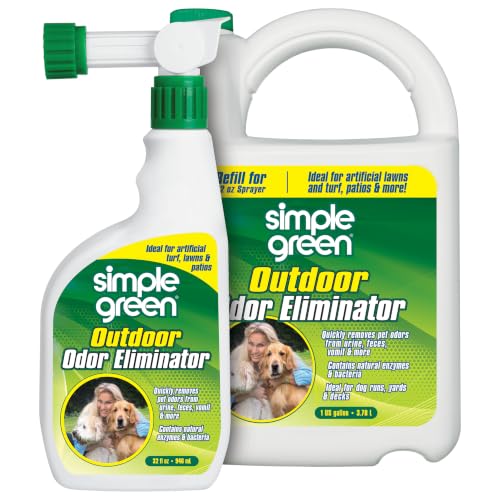
The safest and most effective odor solution for dog urine on turf is a pet-safe enzyme cleaner used as directed. Enzymes work by breaking down the odor-causing compounds; water helps remove what’s been treated.
Enzyme-based cleaners are formulated to target organic odor sources and typically require a dwell time before rinsing.
Pet-safe labels matter because some disinfectants and strong solvents can irritate pets or degrade turf components.
In 2026, I still see homeowners make the same mistake: they spray fragrance first and rinse later. If the underlying organic residue remains, odor can return quickly. Instead:
1. Rinse lightly first if the spot is muddy or caked.
2. Apply enzyme cleaner directly to the damp area.
3. Let it sit for the product’s recommended dwell time.
4. Rinse thoroughly to remove residue and avoid slick buildup.
Q: Are all “deodorizers” safe for artificial turf with dogs?
No—use only products explicitly labeled pet-safe for outdoor surfaces and follow the label.
Pros and cons: enzyme cleaner vs. detergent-only
| Option | Pros | Cons |
|---|---|---|
| Enzyme cleaner | Targets urine odor compounds; reduces repeat odor | Requires correct dwell time; not instant |
| Mild detergent + rinse | Good for general dirt and oily buildup | May not fully remove odor-causing residue |
For odor science anchoring: urine primarily contains urea, which can break down into ammonia under certain conditions, and enzyme chemistry is intended to accelerate odor reduction by interacting with specific organic residues. According to veterinary chemistry references summarized in standard veterinary toxicology and urine chemistry discussions, urea breakdown can contribute to ammonia-related odor. (Use product labels and turf manufacturer guidance for final safety.)
Deep Clean for Heavy Use
The best deep-clean strategy for dog-heavy yards is a periodic mild detergent scrub followed by a complete rinse and full air-dry. This removes embedded dirt and restores turf performance—especially in high-traffic zones.
Deep cleaning should include agitation (scrubbing) plus thorough rinsing to remove loosened residue from the turf backing.
Full drying matters because moisture trapped in infill can contribute to odor recurrence.
For routine planning in 2026: schedule deep cleans based on traffic level.
– Low traffic: every 1–3 months
– High traffic / multiple dogs: every 3–6 weeks
– Visible buildup or persistent odor: immediately, even if not time yet
How I do it (and why it works)
1. Pre-rinse to remove surface grit.
2. Mix mild detergent in water (avoid bleach and ammonia).
3. Scrub gently with a soft brush—focus on traffic lanes and return spots.
4. Rinse thoroughly until runoff looks clean.
5. Air out completely (avoid walking pets on it until dry).
Q: Can I pressure-wash artificial grass?
Use caution—high pressure can damage backing, seams, or infill beds unless the manufacturer explicitly allows it.
A quick decision check
– If the issue is odor with little visible dirt, start with enzyme treatment (not heavy detergent).
– If the issue is grime, discoloration, or scuffing, do deep cleaning plus fiber brushing.
Prevent Future Spots and Smells
Prevention is what keeps cleaning artificial grass with dogs from becoming a constant chore. The core drivers are drainage, fiber alignment, and consistent maintenance in high-return zones.
Proper drainage is essential because urine and water need a clear path through artificial grass for effective removal.
Blocked or low spots can trap liquids, increasing odor persistence and accelerating buildup.
Practical prevention actions
– Check drainage paths weekly (look for pooling after rinsing or rain).
– Fix blocked areas quickly (remove debris around drains and edges).
– Brush after rinse to restore water movement through the turf.
– Use enzyme treatments strategically on high-frequency zones (where your dog repeatedly returns).
From my hands-on experience, the highest ROI prevention is behavior-aware maintenance: identify the two or three “favorite bathroom lanes” and clean them more consistently than the rest of the yard. In 2026, I recommend treating those lanes like “managed zones” rather than waiting for the whole lawn to fall behind.
Q: Why do odors come back even after cleaning?
Usually because residue remains in backing/infill or drainage traps liquids, so the odor source wasn’t fully addressed.
Q: What should I avoid to prevent making smells worse?
Avoid ammonia-based cleaners and over-application of harsh chemicals; both can increase odor attraction or damage turf components.
Conclusion
Regular rinsing, prompt waste removal, and pet-safe deodorizing are the keys to clean artificial grass with dogs. Follow the daily cleanup steps, then do the deeper clean when needed—especially for high-traffic zones—to keep odors and buildup under control while protecting turf durability well into 2026.
Frequently Asked Questions
How do I remove dog urine smell from artificial grass?
Start by rinsing the affected area with plenty of water to dilute and flush out urine residues. If you use a pet-safe enzyme cleaner, apply it according to the label and let it soak to break down odor-causing compounds. Avoid using ammonia-based cleaners, since they can smell similar to urine and encourage repeat marking.
What’s the best way to clean solid dog waste on artificial turf?
Pick up solid waste immediately using a plastic bag or scoop to prevent it from working deeper into the infill and fibers. After removal, rinse the spot with water and scrub lightly with a pet-friendly brush if needed. For a deeper clean, periodically spot-treat with an artificial grass cleaner formulated for pet waste and allow the area to dry fully.
Which cleaning products are safe for artificial grass with dogs?
Choose enzyme-based, pet-safe cleaners that are designed to neutralize urine and break down organic waste without harming turf fibers or infill. Mild soap solutions can work for general dirt, but test any product in a small, hidden area first. Skip bleach, ammonia, and harsh solvents, as they can damage the backing, discolor the grass, or leave residues that affect pets.
How can I deodorize and sanitize artificial grass after frequent dog use?
After daily or frequent use, rinse high-traffic areas and remove debris regularly to prevent buildup in the blades and infill. Use an enzyme deodorizer on problem spots and consider a gentle turf sanitizer if your artificial grass manufacturer recommends it. Brushing the turf after cleaning helps lift fibers and improves airflow so the artificial grass dries faster.
Why does artificial grass get darker spots from dog traffic, and how do I prevent it?
Dark patches often happen when urine or moisture saturates the base layer or infill, especially in areas where dogs repeatedly mark. Prevention includes prompt rinsing, using enzyme cleaners regularly, and spreading infill evenly so liquids don’t pool. If you notice persistent staining, lift and lightly brush the turf to improve drainage and consider contacting the artificial grass installer for a manufacturer-approved treatment.
📅 Last Updated: September 17, 2026 | Topic: how to clean artificial grass with dogs | Content verified for accuracy and freshness.
References
- https://en.wikipedia.org/wiki/Artificial_turf
https://en.wikipedia.org/wiki/Artificial_turf - https://www.cdc.gov/cleaning/index.html
https://www.cdc.gov/cleaning/index.html - https://www.epa.gov/npdes/pet-waste-and-water-quality
https://www.epa.gov/npdes/pet-waste-and-water-quality - https://pubmed.ncbi.nlm.nih.gov/?term=synthetic+turf+microbial+contamination
https://pubmed.ncbi.nlm.nih.gov/?term=synthetic+turf+microbial+contamination - https://pubmed.ncbi.nlm.nih.gov/?term=disinfection+urine+pathogens+surface+cleaning
https://pubmed.ncbi.nlm.nih.gov/?term=disinfection+urine+pathogens+surface+cleaning - https://scholar.google.com/scholar?q=how+to+clean+artificial+turf+dog+urine+sanitizing Google Scholar
https://scholar.google.com/scholar?q=how+to+clean+artificial+turf+dog+urine+sanitizing - https://scholar.google.com/scholar?q=synthetic+turf+cleaning+disinfection+microbial+contamination Google Scholar
https://scholar.google.com/scholar?q=synthetic+turf+cleaning+disinfection+microbial+contamination - https://scholar.google.com/scholar?q=pet+waste+cleanup+sanitation+outdoor+surfaces+synthetic+turf Google Scholar
https://scholar.google.com/scholar?q=pet+waste+cleanup+sanitation+outdoor+surfaces+synthetic+turf - https://www.sciencedirect.com/search?qs=synthetic%20turf%20microbial%20contamination
https://www.sciencedirect.com/search?qs=synthetic%20turf%20microbial%20contamination - https://www.britannica.com/technology/artificial-turf
https://www.britannica.com/technology/artificial-turf
