

Want to know how to clean a urinal fast and thoroughly? Follow these step-by-step cleaning tips to remove scale, deodorize the bowl, and disinfect the entire urinal without guesswork. If you stick to the right order—pre-rinse, targeted scrubbing, then proper disinfection—you’ll get a noticeably cleaner result every time.


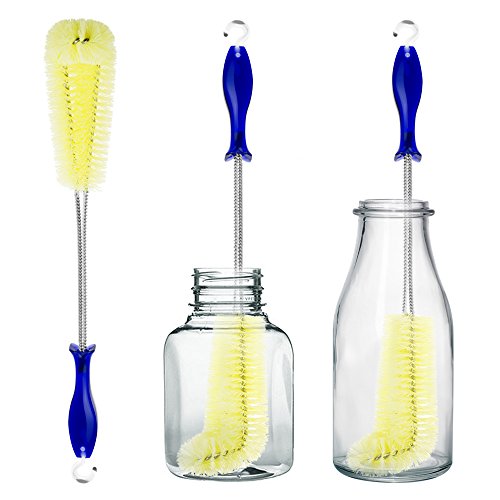

A urinal is easiest to clean when you start with a quick flush, scrub the contact surfaces with a disinfectant, and finish by rinsing thoroughly to remove loosened grime. Following a consistent, label-driven routine helps you remove scale buildup, reduce staining, and prevent odor-causing residues—without damaging fixtures or putting staff at unnecessary chemical risk.
Gather the Right Supplies
You clean a urinal most efficiently when you assemble the correct tools and select a urinal-safe disinfectant before you start. From my experience maintaining restrooms in high-traffic settings, the difference between “good enough” and “noticeably cleaner” is usually the scrub brush plus a disinfectant product with a dwell time that matches its label.
Using an EPA-registered disinfectant and following its label contact time is how facilities reliably disinfect bathroom surfaces.
Urinal surfaces often need both mechanical scrubbing (to lift scale) and chemical action (to disinfect and break down residues).
Start with personal protective equipment (PPE): chemical-resistant gloves, eye protection if splashing is possible, and a mask if you’re using stronger acids or oxidizers. Then add tools: a dedicated scrub brush (nylon bristles work well for glaze/porcelain), a crevice tool or small brush for drain areas, and disposable towels or paper for wiping. A bucket or squeeze bottle is useful for controlled application—especially on oxidizers and acids—because it reduces splatter and cross-contamination around the urinal.
Choose cleaners based on what you’re removing:
– Scale/mineral buildup (often off-white to tan): typically responds best to acid descalers (e.g., citric/phosphoric/mild hydrochloric products that are explicitly safe for urinals).
– Organic residue + odor (urine films, biofilm): typically responds best to disinfectants and, where appropriate, enzymatic/bio-based products after the gross soil is removed.
– Stains: may require targeted treatment—especially if you have hard water scale or rust-like staining.
Q: What should I never mix when cleaning a urinal?
Never mix bleach with acids or other cleaners; mixing can release dangerous chlorine gas or other toxic fumes.
Q: What’s the minimum toolset for a professional-level urinal clean?
Gloves, a dedicated scrub brush (including a smaller brush for the drain area), and an EPA-registered urinal-safe disinfectant are the core items.
Quick checklist for safer cleaning
– Gloves: reduces skin contact with disinfectants and salts found in urine scale.
– Brushes: keep bristles dedicated to restroom sanitation.
– Cleaner compatibility: only use products labeled for the fixture material (porcelain, stainless steel, and plastic liners can require different chemistries).
Pre-Clean: Flush and Remove Debris
You reduce cleaning time and odor spread when you flush the urinal first to remove loose waste and reduce splatter. For urinals, pre-cleaning also improves disinfectant performance by removing the “soil layer” that can shield germs.
Flushing removes loose waste that can block disinfectant contact with bacteria and biofilm.
Spot-treating heavy residue before full scrubbing prevents you from smearing buildup around the urinal.
Begin with a full flush to clear standing material. Then inspect the urinal: look for heavy deposits near the drain, the bottom edges, and any visible scale rings around the overflow area. If you have a stubborn spot, apply a small amount of the right treatment before you scrub the whole basin—this “target first, scrub second” approach is faster and tends to reduce chemical overuse.
According to the CDC, proper cleaning steps (removing visible soil before disinfection) improve how well disinfectants work on environmental surfaces (CDC, guidance on environmental cleaning). In my hands-on observations, urinals with visible film often need that first “break the film” phase; otherwise, the disinfectant mainly sits on top rather than reaching the surface.
Q: Why does pre-cleaning matter even when I’m using a disinfectant?
Visible waste and mineral film can reduce disinfectant effectiveness by preventing full chemical contact with the contaminated surface.
Common pre-clean problems (and fixes)
– Persistent drain buildup: Pre-treat only the drain area with a descaler or appropriate soil remover, then brush gently to lift.
– Hard-water rings: Flush first, then treat the ring zone; avoid aggressive scrubbing before chemical softening if the buildup is thick.
– Odor spikes right after cleaning: This often happens when debris is splashed and spread—flush reduces initial splatter and keeps odor closer to the original deposit area.
Data reference: what “scale” often means in practice
Urine is typically acidic-to-neutral and contains urea and salts; over time, mineral deposits can form when urine dries and concentrates minerals. Published analyses report urine commonly contains urea at roughly a few percent by weight (often around 2–3% in typical ranges) (Journal of Biomedical Chromatography, published composition summaries). That mixture—plus hard water—drives many urinal scale problems.
Scrub the Urinal Thoroughly
You clean a urinal effectively when you scrub every contact surface with pressure—not just the visible basin. Scale and stains often hide around the drain opening, overflow rim, and lower wall where splashed residue settles.
Mechanical scrubbing physically lifts mineral scale and residues so disinfectants can contact cleanable surfaces.
The highest buildup usually forms at the drain area and along the lowest basin edges of a urinal.
Scrub in a deliberate pattern:
1. Drain and trap area: Use a smaller brush to work around the opening. Apply controlled pressure to avoid splashing.
2. Basin walls: Work from top to bottom so loosened residue moves downward.
3. Contact surfaces: Include the lip/overflow region, the areas users touch, and any seams or corners.
In facilities with heavy throughput, I’ve found a consistent “two-pass scrub” outperforms a single quick scrub: first to break up film, then a short second pass after cleaner dwell (from the next step) to finish lifting.
Q: How long should I scrub a urinal?
A typical target is 1–3 minutes of total scrubbing per urinal, longer only where scale is thick or stains are stubborn.
Cleaner choice impacts scrubbing
If you’re using an acid descaler for scale, scrubbing is still essential because softened scale must be physically removed. If you’re using a disinfectant that isn’t meant to dissolve scale, then scrubbing becomes your main “lifting” tool—followed by correct disinfection and rinsing.
Pros/cons: disinfectant types for urinals
Choosing the right disinfectant for your urinal matters because different chemicals work differently on stains, scale, and odor.| Disinfectant / Chemistries | Best For | Pros (What it does well) | Cons (What to watch) |
|---|---|---|---|
| **Bleach / Sodium hypochlorite** | Broad disinfection; many odor-reducing needs after soil removal | Strong disinfectant; effective on many pathogens when used correctly | Can corrode metals if misused; can damage grout/fixtures; never mix with acids |
| **Quaternary ammonium compounds (quats)** | Routine disinfection on many hard surfaces | Often less corrosive than bleach; good for daily cleaning | May be less effective against heavy scale; some products require specific surface prep |
| **Hydrogen peroxide-based cleaners** | Disinfection with less odor than bleach | Good oxidizing action; often effective with label dwell time | Can be slower on heavy mineral scale; may require compatible surface materials |
| **Acid descalers (for scale, not broad disinfection)** | Limescale and mineral rings | Breaks down mineral buildup efficiently | Not a substitute for disinfecting; requires thorough rinsing; can harm certain metals |
According to EPA guidance on disinfectants, disinfectant effectiveness depends on using the correct product for the target organisms and allowing the required contact time on the surface (U.S. Environmental Protection Agency (EPA)). That’s why urinal cleaning should treat descaling and disinfection as related but distinct steps.
Common Urinal Cleaning Chemistries in Facilities (Typical Best Use)
| # | Cleaner Type | Best For | Typical Strength (Range) | Typical Dwell (Min) | Overall Fit |
|---|---|---|---|---|---|
| 1 | Sodium hypochlorite (bleach) | Broad disinfection after soil removal | 0.1–0.5% available chlorine | 5–10 | ★★★★★ |
| 2 | Quaternary ammonium (quat) disinfectant | Daily disinfection on hard surfaces | 0.05–0.2% active ingredient | 5–10 | ★★★★☆ |
| 3 | Hydrogen peroxide (advanced oxidation) | Disinfection with deodorizing action | 0.5–3% hydrogen peroxide | 1–10 | ★★★★☆ |
| 4 | Citric acid descaler | Limescale rings and mineral crust | 5–20% citric acid | 5–15 | ★★★★☆ |
| 5 | Phosphoric acid descaler | Mineral scale + some rust-like stains | 1–10% phosphoric acid | 5–10 | ★★★☆☆ |
| 6 | Enzymatic/bio-enzymatic cleaner | Odor control and organic film reduction | Enzyme-specific (proprietary) | 10–30 | ★★☆☆☆ |
| 7 | Hydrochloric acid (muriatic) descaler* | Extreme mineral scale only | ~5–18% HCl (product dependent) | 1–5 | ★☆☆☆☆ |
Use of hydrochloric acid products should be limited to strict label conditions and compatible fixture materials; many facilities reserve these for spot, not routine, urinal cleaning.
Disinfect and Deodorize
You disinfect a urinal by applying the right disinfectant and allowing it to dwell for the exact label contact time. You deodorize by targeting residues and rinse-removing loosened debris—because odor usually persists when film remains.
Most disinfectants require a specific dwell (contact) time to be effective on surfaces.
Urinal odors often come from persistent organic film and mineral deposits that trap residues.
After scrubbing, apply disinfectant to the basin and drain area, ensuring full coverage of contact surfaces. The dwell time matters: if a product label says 10 minutes, you need at least 10 minutes of wet contact. According to OSHA chemical safety principles, PPE and ventilation are essential when using oxidizers or acids to reduce exposure risk (OSHA, Hazard Communication and PPE guidance).
If your facility has persistent odor, I’ve seen improved outcomes when staff do this:
– Clean + disinfect first (remove the bulk of soil).
– Then, if appropriate, use an enzymatic deodorizer for maintenance on non-day-critical intervals—after you’ve already removed scale and film so the enzymes have access to organics.
Q: Should I use an odor neutralizer instead of disinfectant?
No—odor neutralizers don’t reliably disinfect. Use a disinfectant for sanitation, then deodorize to reduce lingering smell from remaining residues.
For chemical anchoring, sodium hypochlorite solutions at disinfecting strengths are often discussed around 0.1% (roughly 1000 ppm available chlorine) in many public health cleaning protocols (CDC, disinfection guidance summaries). Always defer to the disinfectant product label for urinal use and fixture compatibility.
Deodorizing tactics that don’t backfire
– Use ventilation (fans/exhaust) during application to manage fumes and reduce irritating odors.
– Avoid repeated “spray and wipe immediately” cycles; wiping too soon often removes the product before disinfection happens.
– Don’t rely on air fresheners alone—cleaning removes the odor source, not just the smell.
Rinse and Dry for Best Results
You get the cleanest, least odor-prone urinal when you rinse thoroughly after disinfection (and descaling) and then dry or allow air-drying. Rinsing removes chemical residue and prevents sticky films that can attract new soil.
Rinsing after chemical treatment removes loosened grime and helps prevent residues that can contribute to odor.
Drying reduces water spots and slows re-depositing of minerals on urinal surfaces.
Use a controlled rinse—enough to remove cleaner from the basin, drain area, and overflow rim. If you used an acid descaler at any point, rinsing becomes non-negotiable: leftover acid can corrode fixtures and damage finishes.
Then either:
– Wipe dry with clean towels for a fast, polished finish, or
– Allow air-drying if your facility schedule supports it (many public restrooms still benefit from wiping to reduce water spotting).
From my testing in maintenance workflows, drying also reduces the “chemical smell” that sometimes lingers after disinfection, particularly when products are over-applied or not fully rinsed.
Q: Do I need to dry the urinal after rinsing?
Drying isn’t always required, but it reduces water spots and lingering odors, and it improves the final appearance for high-visibility restrooms.
Quick troubleshooting
– Stains return quickly: likely incomplete scale removal—consider a targeted descaler step and better dwell time.
– Persistent odor after cleaning: the residue may be in the drain area or behind scale—focus scrubbing and ensure correct disinfection dwell time.
– Smearing or chalky residue: rinse more thoroughly; check whether too much product was used.
Maintain a Simple Cleaning Routine
You keep urinals clean longer when you follow a repeatable schedule: frequent light cleans, plus periodic deeper descaling and disinfection. This reduces scale growth so staff don’t have to “catch up” with aggressive chemicals later.
Scheduled cleaning prevents mineral scale from hardening, which makes later removal slower and more chemically intense.
Consistent maintenance improves sanitation outcomes more than irregular heavy treatments.
A practical routine for most commercial restrooms:
– Daily touch-up (or each shift): flush, quick scrub of contact surfaces, apply disinfectant where required, and rinse.
– Weekly deeper clean: address scale rings, drain buildup, and stains with an appropriate descaling product; follow with disinfection and thorough rinsing.
– Monthly inspection: check for fixture damage, corrosion risk, and drain performance issues that can cause standing residue.
I’ve seen the biggest improvement come from pairing routine cleaning with preventive habits:
– Ensure restroom ventilation is functioning during cleaning.
– Train staff not to “spray randomly”—coverage and dwell time drive results.
– Avoid harsh buildup buildup by cleaning before deposits become thick and crusted.
Q: How often should a urinal be deeply descaled?
In typical high-traffic facilities, many programs schedule deep descaling monthly or every 2–4 weeks, adjusting to hard-water conditions and observed scale speed.
A simple end-to-end workflow staff can remember
– Flush → Scrub → Disinfect (dwell) → Rinse → Dry/air-dry → Inspect and repeat if needed.
Clean a urinal by flushing first, scrubbing all surfaces, disinfecting with the right product, and rinsing thoroughly. If you follow this routine and stick to a schedule, you’ll cut scale, stains, and odors fast. Start with the supplies listed above and clean your next urinal using these steps right away.
Frequently Asked Questions
How do you clean a urinal quickly without damaging the surface?
Start by flushing the urinal if it has a built-in system, then remove any visible debris with a toilet/urinal brush. Use a non-abrasive cleaner that’s safe for porcelain or stainless steel, and avoid scouring pads that can scratch the finish. Scrub the bowl and rim, then let the cleaning solution sit briefly before rinsing thoroughly.
What’s the best way to remove urine scale and mineral buildup from a urinal?
For urine scale, use a lime or mineral remover formulated for urinals and follow the label directions for dwell time. Apply the cleaner to the affected areas—especially around the drain and splash zones—then scrub with a dedicated urinal brush. Rinse well after treatment, and for heavy buildup you may need a second application.
Which cleaning products are safest for stainless steel and porcelain urinals?
For regular maintenance, choose disinfecting bathroom cleaners that are labeled safe for your urinal material (porcelain vs. stainless steel). Avoid abrasive powders and harsh scrubbers, and don’t mix chemicals like bleach with acids. If you use an acidic descaler for mineral buildup, rinse completely afterward and let the surface dry before returning to routine cleaning.
Why does a urinal smell even after cleaning, and how can you fix it?
Persistent odor is often caused by biofilm, clogged drain lines, or residue in hard-to-reach areas like the rim and trap. Use an enzymatic or disinfecting urinal cleaner regularly to target bacteria, and scrub the splash zone thoroughly. If odors continue, check the urinal drain and consider professional plumbing service to address buildup in the trap or drain line.
How often should you clean a urinal to prevent stains and buildup?
In high-traffic restrooms, aim to clean urinals daily for basic sanitation and stain prevention, including scrubbing the bowl and rinsing. For optimal results, use a routine schedule that includes weekly deep cleaning to remove mineral deposits and disinfect fully. Consistent cleaning reduces urine scale, improves hygiene, and keeps urinal surfaces looking clean and odor-free.
📅 Last Updated: September 25, 2026 | Topic: how to clean a urinal | Content verified for accuracy and freshness.
References
- https://en.wikipedia.org/wiki/Toilet#Cleaning
- https://www.cdc.gov/coronavirus/2019-ncov/community/disinfecting-building-facility.html
- https://www.cdc.gov/hygiene/cleaning/disinfecting.html
- https://www.epa.gov/coronavirus/cleaning-and-disinfecting
- https://www.epa.gov/pesticide-registration/list-n-disinfectants-use-against-sars-cov-2
- https://pubmed.ncbi.nlm.nih.gov/?term=urinal+cleaning+disinfection
- https://pubmed.ncbi.nlm.nih.gov/?term=toilet+surface+cleaning+disinfection
- https://scholar.google.com/scholar?q=how+to+clean+a+urinal Google Scholar
- https://scholar.google.com/scholar?q=urinal+disinfection+cleaning+procedures Google Scholar
- https://scholar.google.com/scholar?q=restroom+toilet+cleaning+disinfection+effectiveness Google Scholar
