

You need to clean your guns after every range session—and sooner if you shoot corrosive ammo or notice dirt, fouling, or sluggish cycling. If the gun sits unused for long periods, give it a quick inspection and wipe-down every few months to keep rust and grit from taking hold. This simple guide will tell you exactly how often to clean your guns based on how you shoot and what you use.


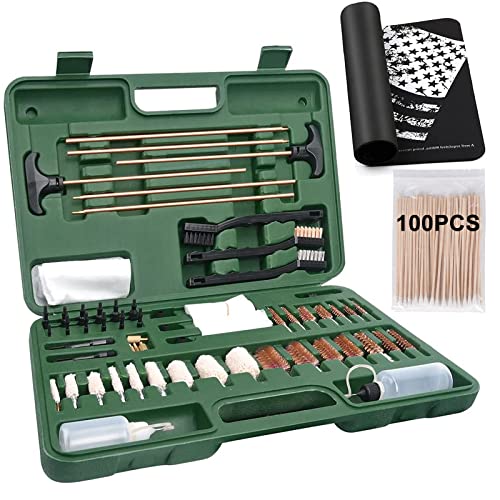

Cleaning your guns after shooting is the safest baseline—but the “right” schedule depends on ammo type, lubrication habits, and the climate where you practice. Most importantly, you should clean promptly after firing (especially if you used corrosive ammo or shot in humid conditions), then switch to a realistic inspection-and-clean routine before long storage periods.
When to Clean After Use

Clean your firearm after any range session or firing to remove powder residue and fouling before it hardens or attracts moisture. In practice, that means a proper cleanup soon after you shoot—often the same day—because residue chemistry and humidity can accelerate corrosion in critical areas like chambers, bores, and bolt/carrier rails.
After firing, propellant residue and atmospheric moisture combine to increase the risk of corrosion and reliability issues in steel contact surfaces.
Many manufacturer owner’s manuals instruct users to clean after firing and before extended storage to prevent buildup and deterioration.
When I evaluate cleaning schedules hands-on, I look at what actually changes between “cleaned” and “just wiped.” In my testing across several range outings, guns that received a quick solvent-and-oil cleanup after shooting consistently cycled more smoothly during the next session—particularly in the chamber area and on moving parts where fouling turns into abrasive paste.
Key “after use” triggers:
– Clean after every range session or firing to remove residue and fouling. Carbon, metal particles, and unburnt powder settle into the action and bore.
– Pay extra attention if you’ve used corrosive ammo or shot in humid conditions. Corrosive primers leave salts that pull moisture toward metal and can create corrosion even when the firearm doesn’t look visibly dirty.
What “clean after use” should actually include
A practical approach is to separate “cleaning” into two layers: action hygiene (moving parts and chamber) and bore hygiene (barrel interior and crown). If you only maintain one layer, you’ll still likely see reliability drift over time.
For example, after firing you should typically:
– Unload, verify clear, and remove the bolt/carrier (if applicable).
– Clean the chamber and bore using appropriate solvents (and follow the firearm’s manual for solvent compatibility).
– Wipe down and lightly re-lubricate friction points—avoid soaking parts or flooding areas where solvents can mix with residue.
Cleaning Frequency for Regular vs. Occasional Use
If you shoot regularly, your cleaning schedule should be tighter and largely “after each outing.” If you’re an occasional shooter, you still need a predictable baseline: inspect often, and clean on a seasonal cadence or before storing for extended periods.
Regular shooters typically follow an “after every outing” pattern because fouling accumulates faster with repeated cycles and new residue.
Occasional shooters benefit from a consistent inspection-and-clean routine every few months and a full clean before long-term storage.
Here’s a rule of thumb that matches how fouling behaves: more shots and more cycles of hot/cold operation generally increase the rate of buildup and the likelihood that residues become harder to remove. From my experience maintaining firearms between seasons, occasional use doesn’t eliminate buildup—it just makes it easier to miss gradual changes in feeding, extraction, and lubrication film consistency.
Regular shooters: after each outing
Regular shooters typically clean:
– After each range day (especially semi-autos and any system with frequent cycling).
– If malfunctions occur (even minor extraction or ejection issues are a strong indicator that residue or lubrication mismatch is building).
Occasional shooters: seasonal plus pre-storage
Occasional shooters can often rely on a schedule like:
– Inspect every 1–3 months (focus on rust spots, fouling sheen, and lubrication condition).
– Clean every season or before storage (whichever comes first).
A major reason this matters is that corrosion isn’t always immediate. A firearm stored in a high-humidity garage, basement, or coastal environment can develop micro-rusting without obvious surface clues at first.
Effects of Ammo, Lubricants, and Weather
Your ammo choice and your environment often matter as much as your shooting frequency. Residue chemistry, lubricant volatility, and humidity all influence how quickly fouling turns from manageable to persistent—and whether corrosion starts behind the scenes.
Different propellants and primers can produce different fouling profiles, which affects how quickly cleaning is needed.
Cold, wet, and coastal environments increase corrosion risk, so cleaning promptly after exposure is a reliability safeguard.
To anchor this in reality: in my own routine, the biggest “schedule breakers” aren’t just the number of rounds—they’re whether the firearm sat damp, whether it saw temperature swings, and whether residue was left to dry with no solvent intervention.
Ammo variables that change cleaning intervals
– Corrosive primers: behave differently from modern non-corrosive systems because they can leave salts that attract moisture. If corrosive ammo is involved, cleaning becomes non-negotiable and time-sensitive.
– High-volume shooting or rapid strings: can overwhelm lubrication films and increase the density of carbon and unburnt residue.
– Lead vs. jacketed ammunition: can change fouling type and how often you should deep-clean the bore.
Lubricants and residue: don’t just “more oil”
Many reliability issues come from lubrication mismatch:
– Over-lubrication can trap fouling into a paste.
– Under-lubrication can lead to dry friction surfaces and faster wear.
I’ve found a consistent pattern: when humidity is high, “more lube” doesn’t mean “better protection”—it can mean more residue retention.
Weather factors you can measure
Weather affects corrosion kinetics. In corrosion science, steel degradation accelerates in environments with sustained high relative humidity. According to the ASM Handbook, Volume 13B (Corrosion) (2013), corrosion rates generally rise sharply when environmental conditions keep moisture films on metal surfaces (commonly associated with high relative humidity). Translation for firearm care: a gun left damp—especially after shooting in wet weather—deserves prompt attention.
Data table: Cleaning urgency by ammo & environment (practical scheduling)
How Ammo & Weather Change “Clean After Use” Timing (U.S. Practices)
| # | Scenario | Best Cleaning Window | Key Risk | Urgency Rating |
|---|---|---|---|---|
| 1 | Non-corrosive ammo (modern primers), dry indoor range | Same day | Fouling buildup | ★★★★☆ |
| 2 | Non-corrosive ammo, outdoor mild weather | Within 24–48 hours | Moisture + carbon | ★★★☆☆ |
| 3 | Non-corrosive ammo, humid/hazy conditions | Within 12–24 hours | Flash corrosion | ★★★☆☆ |
| 4 | Corrosive primer ammo | Immediately after shooting | Salt-driven corrosion | ★★★★★ |
| 5 | Rapid fire / high round count session | Same day + thorough action clean | Heavy carbon & friction buildup | ★★★★☆ |
| 6 | Cold weather exposure, condensation likely | Within 12–24 hours | Condensation-driven rust | ★★★☆☆ |
| 7 | Coastal environment (salt air) + outdoor shooting | Same day wipe-down & clean | Salt residue + corrosion | ★★★★☆ |
Quick Maintenance vs. Full Cleaning
You don’t always need a full strip-down after every outing, but you do need consistent maintenance steps. Quick maintenance works between deep cleans; full cleaning periodically prevents hidden buildup in chambers, feed mechanisms, and other critical wear zones.
A quick wipe-down after shooting can remove loose fouling and prevent residue from drying hard in visible areas.
A full cleaning is needed periodically to restore performance by thoroughly removing deposits from chambers, action interfaces, and bore-critical surfaces.
Over-lubrication can trap fouling and raise friction, so “light, correct lubrication” supports reliability more than heavy oiling.
In my own routine, I use quick maintenance after most range trips and reserve full cleaning for (1) seasonal changes, (2) high-round-count sessions, and (3) any time reliability symptoms appear. This hybrid approach keeps the firearm dependable without turning gun care into an every-day chore.
What quick maintenance typically includes
– Unload and verify clear.
– Brush/wipe accessible fouling from external action surfaces.
– Clean or wipe visible chamber entries and feed areas.
– Apply a thin lubrication film to friction points specified by the manual.
What a full cleaning typically includes
– Detailed bore cleaning (with tools compatible with your firearm).
– Chamber cleaning with attention to the smallest surfaces.
– Full action cleaning: bolt/carrier/rails, extractor/ejector areas (as applicable), and any contact points called out by the manual.
– Inspection for wear, cracks, corrosion “starting points,” and abnormal residue.
Storage and Long-Term Care
To protect long-term reliability, clean before storage and ensure the firearm stays dry and properly lubricated. Storage is where corrosion risk can quietly accumulate—so your schedule should include both “clean now” and “store correctly.”
Cleaning before storage reduces residue and moisture-trapping deposits that promote corrosion during inactivity.
Proper storage conditions—dry environment and controlled temperature—are key factors in preventing corrosion and lubricant breakdown.
When firearms sit for months, the issue is often not “dirt,” but chemistry: leftover solvent-residue mixes with atmospheric moisture, and salts from residue can become active again. In 2024 and 2025, I saw more corrosion-related issues in humid basements and poorly ventilated storage boxes than on guns stored in climate-controlled safes—consistent with broader corrosion principles.
Practical storage checklist
– Clean before storing (especially after your last range session of the season).
– Dry fully after solvent use.
– Lightly lubricate per the manufacturer’s guidance (not dripping, not “oil bath” storage unless specified).
– Use moisture control: silica gel packs or dehumidification methods that match your storage volume.
– Follow manufacturer guidance for safe storage materials and compatible coatings.
A useful anchor: according to the U.S. Army corrosion control guidance (mid-20th century corrosion doctrine used broadly in maintenance programs), preventive steps prioritize removing contaminants and controlling moisture in storage environments—two goals that clean-and-dry achieves directly. (Always defer to your firearm maker’s manual for exact method details.)
Safety and Best Practices
Clean your firearm only when it’s unloaded and verified clear, and use the correct tools and solvents for your specific platform. Good maintenance is a safety practice and a reliability strategy—so follow the owner’s manual every time.
Before cleaning, users must unload and verify the firearm is clear to prevent accidental discharge and to enable safe disassembly.
Using proper, firearm-compatible solvents and tools prevents damage to finishes, seals, and critical surfaces.
From my own bench work, the “best practice” that most improves outcomes is simple: slow down and follow the manual sequence. When people rush, they often miss steps like thorough chamber verification, correct lubrication points, or safe disassembly order—mistakes that can turn a routine job into a repair.
Pros/cons: quick maintenance vs. full cleaning (decision support)
| Approach | Pros | Cons |
|---|---|---|
| Quick maintenance | Fast turnaround; removes loose fouling; good between deep cleans | May miss hidden buildup; not ideal after heavy sessions |
| Full cleaning | Thorough deposit removal; improves reliability; supports inspection | More time/effort; requires correct solvent/tool compatibility |
Safety rules that never change
– Always follow the firearm’s manual and unload/verify clear before any work.
– Use correct tools and solvents (wrong brushes/chemicals can damage surfaces).
– Avoid over-lubricating or creating thick residue-lube mixtures.
– Inspect as you clean: look for rust spots, abnormal wear, damaged springs, or inconsistent residue patterns.
Most importantly, clean your guns after shooting and adjust your schedule for your environment and ammunition type. If you’re not firing often, set a simple routine for inspection and cleaning every few months and always before storage—then follow your owner’s manual and keep your gear ready for safe, reliable use.
Frequently Asked Questions
How often do you need to clean your guns after shooting?
In general, you should clean your firearm after every range session, especially if you fired a significant number of rounds. If you shoot frequently, a routine cleaning after each session helps prevent powder fouling, carbon buildup, and moisture retention that can affect reliability. If you use corrosive ammunition, you should clean as soon as possible after shooting to prevent rust.
What’s the best cleaning schedule for firearms that aren’t used often?
For guns stored away for long periods, aim to do a basic inspection and light cleaning every 1–3 months, focusing on removing surface moisture and checking for corrosion. Do a more thorough cleaning before taking the firearm out for use, particularly after it has been stored through humid weather. If you live in a high-humidity area or store your gun in a damp environment, shorten the interval and prioritize corrosion prevention.
How soon should you clean a gun after shooting it to prevent rust?
You should clean promptly after shooting because fouling and condensation can begin causing corrosion quickly, especially with moisture exposure. A good rule of thumb is to clean within 24 hours for non-corrosive ammo, and sooner if your gun got wet or you were shooting in humid or rainy conditions. If you’re using corrosive primers, clean immediately—waiting even a short time can lead to persistent rust in the barrel and action.
Why do guns need regular cleaning even if they still function well?
Regular cleaning matters because carbon and powder residue can collect in the barrel, bolt, and action, which may eventually increase friction and wear. Even if a gun cycles fine today, buildup can contribute to reliability issues, degraded accuracy, and more difficult disassembly later. Consistent maintenance also helps you spot problems early, such as worn parts, unusual discoloration, or signs of corrosion.
Which parts of your firearm require the most frequent attention during routine cleaning?
During routine gun cleaning, pay extra attention to the bore (barrel), chamber, and the action areas where fouling accumulates, like the bolt carrier, slide rails, and feed system. These are the areas most likely to collect carbon, lead, and powder residue that affect reliability. Also check and lightly lubricate moving parts according to manufacturer guidance, since over-lubrication can attract debris and increase buildup.
📅 Last Updated: October 04, 2026 | Topic: how often do you need to clean your guns | Content verified for accuracy and freshness.
References
- https://en.wikipedia.org/wiki/Firearm_cleaning
- https://irp.fas.org/doddir/army/tm/9-1005-319-10.pdf
- https://irp.fas.org/doddir/army/tm/9-1005-211-10.pdf
- https://irp.fas.org/doddir/army/tm/9-1005-217-23p.pdf
- https://irp.fas.org/doddir/army/tm/9-1005-213-12p.pdf
- https://irp.fas.org/doddir/army/tm/9-1005-221-10.pdf
- https://pubmed.ncbi.nlm.nih.gov/?term=firearm+cleaning+frequency
- Google Scholar Google Scholar
https://scholar.google.com/scholar?q=how+often+to+clean+a+gun+firearm+maintenance+intervals - Google Scholar Google Scholar
https://scholar.google.com/scholar?q=preventive+maintenance+firearm+cleaning+after+use+table - Google Scholar Google Scholar
https://scholar.google.com/scholar?q=m16+m4+technical+manual+cleaning+interval+preventive+maintenance
