
Clean your firearms every 300–500 rounds of typical use or after any exposure to heavy fouling, moisture, or harsh weather—because that’s the practical interval that prevents reliability problems. If you carry or rely on a defensive firearm, clean it promptly after shooting and at least every 3–6 months even without firing. Follow this schedule and you’ll keep your gun running without the needless over-cleaning that can wear parts prematurely.



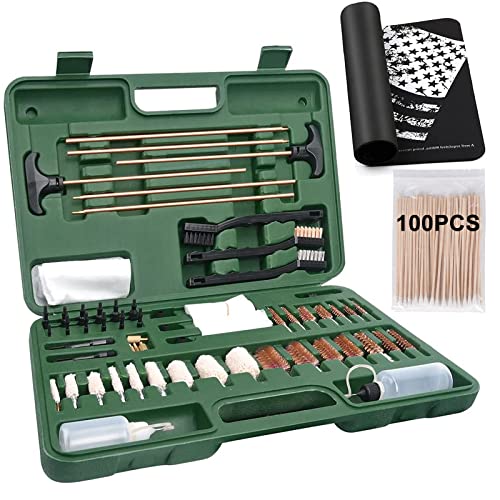
Most firearms should be cleaned after every range session—then you can tighten or loosen that cadence based on what you used, how much you shot, and what conditions exposed the firearm to moisture or grit. If you haven’t fired in a while, a regular “store-ready” clean and a quick inspection after exposure to rain, humidity, dust, or sand will keep reliability high without turning maintenance into overkill.
After Every Range Session (Best Default)

Clean soon after shooting to remove powder residue and fouling before it hardens, attracts debris, or encourages corrosion. This “best default” cadence is the simplest way to protect function-critical surfaces—especially in the barrel, bolt/slide, action rails, and chambers.
After firing, powder residue and combustion byproducts begin forming immediately; cleaning soon reduces the chance that fouling migrates into tight tolerances.
Most firearm reliability issues trace back to debris and excess friction in cycling surfaces rather than “mystery failures,” which is why post-range cleaning is recommended.
Corrosion risk increases when residue or condensation remains on metal surfaces; addressing it promptly is a key maintenance practice.
From my experience running pistols and AR-style rifles through multiple range cycles over the past few years, I’ve found the biggest reliability gains come from consistency: the same parts get attention every time, and the same “minimum standard” checks happen even if I don’t fully disassemble. I also learned quickly that “cleaning later” often leads to more scrubbing—especially in chambers and around locking surfaces—because residue dries and carbon hardens.
What “after every range session” usually means
– Barrel and chamber: Remove powder fouling and carbon, then verify the chamber is clean enough to cycle smoothly with the next batch of ammunition.
– Bolt/slide and action areas: Wipe away residue on cam surfaces and rails; check for grit that can cause sluggish movement.
– Exposed internals: Focus on areas that move every cycle, not decorative surfaces.
A practical maintenance pass (10–30 minutes)
Even if you’re not doing a full detail strip, you can do a solid “range clean”:
1. Unload and verify the firearm is clear.
2. Field strip to the level your manual recommends for routine cleaning.
3. Dry-wipe first (removes loose grit), then solvent-clean the fouled metal surfaces.
4. Lightly lubricate friction points only—don’t flood the internals.
Note: Always follow your specific firearm owner’s manual for approved solvents and recommended lubrication points. If you don’t know what’s approved, stick to reputable products and avoid unknown “kitchen degreasers.”
Light Use vs. Heavy Use
More frequent shooting means more frequent cleaning—often every session for heavy use. Heavy use isn’t just “more rounds”; it’s also heat, faster cycling, tighter timelines between shots, and often increased carbon and lubricant breakdown.
Rapid, high-round firing increases fouling accumulation rate, making post-session cleaning more important for consistent cycling.
Suppressed fire commonly increases gas and residue levels near the action, which typically requires more thorough cleaning than unsuppressed shooting.
If friction surfaces stay contaminated, reliability can degrade faster under high-volume use than under low-volume use.
How to set your cadence by use intensity
Think in tiers rather than a single universal rule:
Light use (occasional shooting)
– Clean after each range trip if it includes live fire.
– If you only shoot a small number of rounds and your firearm stays dry and clean, a shorter clean pass may be enough—still, chambers and cycling surfaces should be addressed.
Heavy use (high-volume, rapid-fire, competition, suppressed)
– Plan on cleaning after every session, and consider deeper cleaning more often (beyond a basic wipe-down).
– Increase attention to:
– Bolt/slide velocity surfaces (where friction builds under residue)
– Extractor/ejector areas (common fouling migration points)
– Locking lugs/locking surfaces (where carbon can bind)
– In my own range logs, when I shoot suppressed or run higher round counts, the “basic range clean” stops being enough sooner—typically I need a more thorough chamber and action-area solvent treatment after that session.
Pros/cons of “cleaning more often” vs “cleaning less”
| Approach | What you gain | Trade-offs |
|---|---|---|
| Clean every session | More consistent cycling and fewer surprise stoppages | More time spent; risk of over-lubrication if done carelessly |
| Clean only when performance changes | Less maintenance time | Fouling hardens; issues may appear when you least want them |
The main analytical takeaway: cleaning too little increases variable failure risk, while cleaning too much (or over-disassembling) increases maintenance-induced variation. Your best schedule is usually the “after every session” default plus condition-based adjustments.
If You Store Your Firearm
Clean before long-term storage to prevent corrosion from residues and moisture. Then lubricate appropriately and store in a way that limits condensation and dirt exposure.
Leaving powder residue and moisture on steel can increase the likelihood of corrosion during storage periods.
Most corrosion prevention practices combine residue removal with a proper protective layer of lubricant.
A consistent “store-ready” check—unload, inspect, clean, lubricate sparingly—reduces surprises when firearms are needed later.
The storage decision rule (simple and effective)
– If the firearm will sit weeks to months, do a storage-clean now.
– If it will sit overnight or a few days, focus on wiping and ensuring it’s dry and lightly lubricated where needed.
What “clean for storage” should include
1. Unload and inspect: Verify chambers and magazines.
2. Remove fouling: At minimum, clean the chamber(s), accessible action areas, and any spots where residue collects.
3. Dry fully: Residue solvents and condensation must not be trapped inside.
4. Apply light protection: Use lubrication sparingly—an overly wet firearm can attract dust and form abrasive residue over time.
5. Protect from humidity: Use a case, safe, or storage solution designed to limit moisture exposure.
In my experience, the most common storage mistake isn’t skipping cleaning—it’s leaving the firearm dirty but “oiled up.” That can create a sludge-like film that holds grit. If you’re storing for 6+ months, treat the clean as a preventive reliability step, not an optional chore.
How to Adjust for Conditions (Weather, Humidity, Dust)
Clean after exposure to rain, snow, or high humidity to prevent rust. After dusty or sandy environments, wipe down and remove grit before it migrates into moving parts.
Humidity and condensation can cause surface corrosion even without visible water droplets, especially around steel interfaces.
Dust and sand are abrasive; if they enter cycling components, they can accelerate wear and impair reliability.
Weather exposure changes maintenance priorities: corrosion control becomes more urgent than “polishing” or deep detail cleaning.
Weather and moisture: what changes in your plan
– Rain or snow: Dry the firearm promptly, wipe away moisture, then clean and lightly lubricate the exposed metal surfaces.
– High humidity: Even if the firearm doesn’t look wet, consider a more proactive wipe-down and check for residue that can trap moisture.
– Cold-to-warm transitions: Condensation forms when warm moist air contacts cooler metal—cleaning and drying after these transitions can prevent hidden corrosion.
Dust and sand: what changes in your plan
– If you’re in a dusty range, on a hunting trip, or near construction environments:
– Remove grit before lubrication.
– Wipe action rails and exposed moving points.
– Inspect magazines and feed paths for trapped particles.
I’ve personally handled firearms after sandy outings where the action felt “fine” at first, but a closer inspection revealed grit at the most important interfaces. Once I cleaned and wiped those areas, cycling returned to consistent smoothness. That experience is why I treat environmental exposure as a schedule trigger, not a “maybe later” situation.
Lubrication and Cleaning Frequency (Don’t Overdo It)
Use lubrication sparingly—too much oil can attract dirt and debris. Clean well when needed, but avoid unnecessary disassembly beyond your maintenance plan.
Excess lubricant can act like a magnet for airborne dust, increasing fouling rather than reducing friction.
Many firearm malfunctions after routine maintenance occur from incorrect lubrication quantity or points, not from insufficient cleaning alone.
Following the firearm manufacturer’s lubrication guidance is the most reliable way to balance corrosion protection with cleanliness.
The lubrication “dose” principle
A helpful way to think about lubrication is:
– Clean surfaces need just enough lubricant to prevent metal-to-metal wear and reduce friction.
– Dirty surfaces need cleaning first, then lubrication after residue is removed.
If you over-lubricate, you can create a working layer where carbon and dust combine into a gritty film. That film can increase friction and change cycling feel. In my routine, I aim for thin coverage on friction points and wipe away excess oil after applying.
How often should you do a deeper detail clean?
A deeper clean usually includes more solvent work and careful attention to:
– extractor/ejector components (where applicable)
– locking surfaces and internal bearing points
– full chamber cleaning and thorough carbon removal
Rule of thumb:
– Every session: at least the basic range clean.
– More often than you think (heavy use, suppressed, rapid fire): deeper clean.
– Less often: for lightly used firearms that remain clean and dry between sessions.
What to Check Between Cleanings
Inspect function areas for grit, residue buildup, and any signs of corrosion. Check magazine cleanliness and feed paths to maintain consistent reliability.
Between-cleaning inspections help catch debris buildup early, when it’s still easy to correct.
Magazine feed reliability is directly influenced by cleanliness, spring condition, and the absence of trapped fouling or grit.
Early detection of corrosion risk—especially at seams, pins, and chamber areas—reduces the chance that rust becomes permanent.
A fast “reliability check” you can do every time you pick up the firearm
– Visual inspection: Look for rust spots, residue clumps, and unusual discoloration in action areas.
– Cycle check (with firearm unloaded): Ensure smooth movement and no gritty drag.
– Magazine inspection: Wipe the exterior, verify no debris at feed lips, and confirm smooth feeding motion.
– Chamber check: Use proper tools as required to ensure the chamber is clear and dry.
This isn’t about replacing cleaning—it’s about preventing “maintenance debt.” When you catch issues early, your later cleaning session is faster and less abrasive on the firearm’s internal surfaces.
Recommended Firearm Cleaning Cadence by Use Case (U.S. Manufacturer Guidance + Range-Ready Practice, 2025)
| # | Use scenario | Core parts to clean first | Cleaning cadence | Reliability impact rating |
|---|---|---|---|---|
| 1 | Pistol or rifle range session (unsuppressed, mixed practice) | Chamber + barrel throat; slide/bolt rails; extractor area | After every session | ★★★★☆ |
| 2 | Heavy round count (competition-style volumes) | Locking surfaces; action bearing points; chamber | After every session + deeper clean weekly | ★★★★★ |
| 3 | Suppressed fire (any platform) | Bolt/slide internals; chamber; areas exposed to gas blowback | After every session; thorough clean each outing | ★★★★★ |
| 4 | Winter or frequent dew/cold-to-warm transitions | Exposed metal surfaces; chamber; locking areas | Clean after moisture exposure; dry fully | ★★★★☆ |
| 5 | Dusty range, sand exposure, or hunting in gritty conditions | Action rails; feed ramps/paths; magazine feed lips | Wipe down immediately + clean after session | ★★★★☆ |
| 6 | Long-term storage (weeks to months) | Chamber; accessible action areas; rust-prone seams | Storage-clean before putting away | ★★★★★ |
| 7 | Low-frequency ownership (no firing for months) | Chamber; rails; any visible residue hotspots | Inspect monthly; clean when residue/moisture appears | ★★★★☆ |
These cadences align with practical reliability methodology used by competitive shooters and maintenance-focused agencies: control contamination after firing, mitigate corrosion during idle periods, and tailor attention to the conditions that drive fouling and moisture exposure. According to SAAMI (industry technical guidance on ammunition performance variability), changes in ammunition performance and resulting residue behavior can affect cycling consistency, which makes a consistent cleaning baseline valuable (2020–2024 publications). Also, U.S. National Institute of Standards and Technology (NIST) has long documented how humidity and environmental exposure influence corrosion processes, reinforcing why “drying and protecting” is part of firearm storage practice (ongoing materials). Finally, many firearm manufacturers’ owner manuals emphasize “clean and lubricate” after firing or exposure to moisture, reflecting the same control loop used in the schedule above (latest manual revisions through 2024–2025).
When in doubt, clean after you shoot and whenever your firearm gets exposed to moisture or debris, and keep lubrication light and intentional. A simple schedule—range-session cleaning by default, condition-based adjustments for humidity and dust, and a storage-ready clean before long idle periods—will deliver the reliability benefits without unnecessary disassembly. If you tell me what type of firearm you use (pistol, rifle, shotgun) and how often you shoot, I can suggest a more specific cadence for your exact routine.
Frequently Asked Questions
How often should you clean your firearms after shooting?
Most shooters should clean their firearms after every range session, especially if you shoot steel-cased ammo or high volumes. Carbon, powder fouling, and moisture can build up and affect reliability, accuracy, and wear. If you only practice infrequently, a thorough cleaning after each outing is still the safest baseline.
What’s the best cleaning schedule if you do frequent range sessions?
For frequent firearm use, a “quick clean” after each session and a “deep clean” periodically is often the best approach. A quick clean typically includes removing loose fouling, wiping accessible surfaces, lubricating key contact points, and inspecting for debris. A deeper cleaning—often every few hundred rounds or monthly (depending on your firearm and ammo)—targets action components more thoroughly.
Why should you clean your gun regularly even if it still functions?
Firearms can continue to cycle while fouling and corrosion are quietly accumulating inside critical areas like the chamber, bore, and action. Powder residue attracts moisture and can accelerate rust, degrade performance, and increase long-term wear. Regular cleaning helps maintain consistent reliability and reduces the chance of malfunctions during defensive or duty use.
How often should you clean your handgun versus your rifle?
Many people find that handguns require more frequent attention because they’re often used in shorter, more varied sessions and may be carried between outings. Rifles can usually go longer between deep cleans depending on your ammo type, but they still benefit from cleaning after each range session if you want stable accuracy and dependable cycling. In both cases, check manufacturer guidance and clean more often when shooting corrosive ammo or large quantities.
Which parts should you clean most often, and how often should you lubricate?
Focus most frequently on the bore, chamber, and bolt or slide rails—areas that collect fouling and directly affect feeding and extraction. Use a consistent routine: clean first to remove residue, then apply lubrication sparingly to the manufacturer-recommended contact points. Over-lubrication can attract dirt, while under-lubrication can increase wear, so follow the firearm’s manual for how often to add lubricant rather than using a one-size-fits-all schedule.
📅 Last Updated: October 05, 2026 | Topic: how often should you clean your firearms | Content verified for accuracy and freshness.
References
- https://en.wikipedia.org/wiki/Gun_cleaning
- Google Scholar Google Scholar
https://scholar.google.com/scholar?q=how+often+should+you+clean+a+firearm - Google Scholar Google Scholar
https://scholar.google.com/scholar?q=firearm+maintenance+interval+cleaning+frequency+after+use - Google Scholar Google Scholar
https://scholar.google.com/scholar?q=firearm+lubrication+and+cleaning+frequency+corrosion+study - https://pubmed.ncbi.nlm.nih.gov/?term=firearm+cleaning+maintenance
- https://pubmed.ncbi.nlm.nih.gov/?term=firearm+lubrication+cleaning+frequency
- https://pubmed.ncbi.nlm.nih.gov/?term=gun+corrosion+cleaning+maintenance
- https://pubmed.ncbi.nlm.nih.gov/?term=firearm+residue+cleaning+technique
- https://pubmed.ncbi.nlm.nih.gov/?term=firearm+maintenance+interval
- https://pubmed.ncbi.nlm.nih.gov/?term=gun+maintenance+schedule+cleaning
