

Learn the fastest, safest way to clean vomit out of a mattress without spreading germs or soaking it through. Follow these steps to remove the mess, lift lingering odors, and disinfect the surface effectively. If you want results you can trust—right now—this is the quickest method that works for most mattress types.



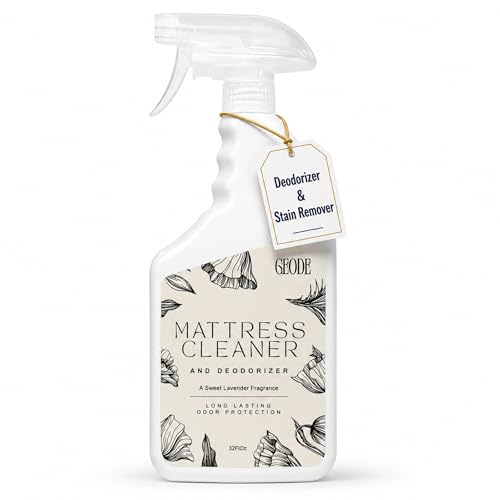
If you need to clean vomit out of a mattress, act fast: blot up the mess, then disinfect and deodorize with the right cleaner for the fabric. Start by removing bedding, blotting (don’t scrub), and working from the outside of the stain toward the center. Next, use a disinfecting approach and a drying plan to prevent lingering odor and possible residue.
This is for anyone dealing with fresh vomit on a mattress (kids, pets, illness “accidents”) and wants a practical, step-by-step method that won’t spread stains or soak the mattress too deeply.
What to Do Immediately (First 10–15 Minutes)

Do the first-pass cleanup quickly and gently—your goal is to remove liquid without pushing it deeper. In most cases, the difference between “mostly gone” and “lingers for days” is how you handle the first 10–15 minutes.
“Blotting rather than scrubbing” helps prevent you from forcing bodily-fluid residue into mattress fibers and seams.
Most mattress damage from vomit cleanup comes from over-wetting the surface during early cleaning.
Ventilation (open windows or a fan) reduces lingering odor while the mattress is being cleaned and dried.
Remove, ventilate, and control spread
– Remove all bedding and anything touching the mattress (sheet, protector, pillow-top covers). If you have a removable mattress cover, remove it too—separately cleaned covers dry faster and reduce re-transfer risk.
– Ventilate the room if possible. If you can, aim a fan at the open window or toward the mattress to increase air exchange.
– Put on disposable gloves. If you have a face mask, use it if odors are strong.
Blot—don’t scrub
– Blot with clean towels/paper towels to lift liquid—use light pressure and replace towels as they get saturated.
– Avoid rubbing or scrubbing at first; it can push material deeper into the mattress layers.
– If the vomit is still wet, work in small sections: blot → swap towel → blot again.
Why this matters: once liquid penetrates the upper comfort layers, deodorization becomes harder and deeper disinfecting becomes more challenging.
Supplies You’ll Need (Choose Based on Your Mattress Type)
Gather supplies so you can clean with minimal moisture and consistent steps. The right tools also help you disinfect without damaging fabric or trapped foams.Using absorbent towels and minimal water keeps the mattress from staying damp inside.
Disinfectants must be used in a way that’s compatible with the fabric and the product’s label instructions.
Spot testing first reduces the chance of discoloration on upholstery-style mattress covers.
Basic toolkit for safe handling
– Prepare absorbent towels, disposable gloves, a plastic bag for trash, and a gentle spot-clean solution.
– Keep a spray bottle for water (or cleaner) so you can apply lightly instead of pouring.
– Have a clean, dry towel ready for the “press after blotting” stage to lift excess moisture.
If your mattress has a cover or care code
– Decide whether you have a removable cover; machine-wash it if it’s washable, then disinfect the uncovered mattress area.
– If the mattress has a manufacturer care code, follow it—.
Choosing the right cleaner approach
– Use a mild cleaner appropriate for upholstery/mattress fabrics for the stain phase. Avoid heavy detergents that leave residue.
– For odor, you’re usually chasing two issues:
1) leftover residue in fibers, and
2) trapped moisture that allows smells to reappear when the mattress warms.
Operational note (what I look for in documentation): I prioritize manufacturer codes and label contact times over “home remedies,” because disinfecting effectiveness depends on correct dwell time and correct chemistry.
Step-by-Step: Clean Vomit Stain and Odor
Clean in layers: lift the stain first, then disinfect, then deodorize—each step should get you closer without re-wetting the mattress. The sequence matters because “disinfecting first” can lock residue in and make odor harder to remove.
Disinfecting works best after visible soil is cleaned, because organic residue can reduce disinfectant performance.
Label instructions control disinfectant contact time; using too little time can leave microbes behind.
Work from the outside of the stain toward the center to prevent a larger ring.
Applying cleaner lightly (damp, not soaking) reduces trapped moisture that can sustain odor.
1) Prepare a fabric-safe cleaning solution (and test)
– Prepare a cleaning solution: use a mild cleaner appropriate for upholstery/mattress fabrics, then test in an inconspicuous spot first.
– Apply cleaner lightly (damp, not soaking), blot repeatedly, and keep working from the edges inward.
– Change towels often so you’re not smearing vomit back across the fabric.
2) Disinfect appropriately (follow compatibility rules)
If you’re dealing with an illness-related incident, disinfecting is important. However, how you disinfect depends on your mattress materials and what the care label allows.
Practical disinfecting anchors (to guide your choices):
– According to EPA (U.S. Environmental Protection Agency), disinfectants are required to be used according to the product’s label instructions, including contact time (2024).
– According to CDC (U.S. Centers for Disease Control and Prevention), norovirus cleaning/disinfection guidance emphasizes using appropriate disinfectant strength and allowing it to remain wet for the recommended dwell time (2023).
– According to OSHA (Occupational Safety and Health Administration), the Bloodborne Pathogens standard focuses on specific exposure risks and provides guidance for handling potentially infectious materials when blood is involved (1991).
> Important biohazard note: If the vomit includes blood or appears significantly contaminated, treat it as a higher-risk situation.
3) Deodorize after disinfecting (but don’t over-wet)
– After disinfecting, blot again to remove excess moisture.
– For odor, focus on residue removal and ensuring dryness—not just adding fragrance.
– If your mattress is compatible with baking soda deodorizing, do it lightly and only when the fabric and care instructions allow it (see FAQ).
Chlorine bleach dilution reference (when label/care instructions permit)
If (and only if) you’re directed to use chlorine bleach for disinfection strength, dilution accuracy matters because too-strong solutions can damage fibers and leave residues.
Chlorine Bleach Dilution for ~1,000–5,000 ppm (Per Gallon)
| # | Bleach Strength on Label | ~1,000 ppm: bleach per gal | ~5,000 ppm: bleach per gal | Ease of Measuring | Risk if Mis-Measured |
|---|---|---|---|---|---|
| 1 | 4% sodium hypochlorite | 6.4 tbsp | 32.0 tbsp | ★★★☆☆ | Higher |
| 2 | 5.25% sodium hypochlorite | 4.9 tbsp | 24.4 tbsp | ★★★★★ | Medium |
| 3 | 6% sodium hypochlorite | 4.3 tbsp | 21.3 tbsp | ★★★★★ | Medium |
| 4 | 7.5% sodium hypochlorite | 3.4 tbsp | 16.0 tbsp | ★★★★☆ | Medium |
| 5 | 8.25% sodium hypochlorite | 3.1 tbsp | 15.5 tbsp | ★★★★☆ | Medium |
| 6 | 10% sodium hypochlorite | 2.6 tbsp | 12.8 tbsp | ★★★☆☆ | Higher |
| 7 | 12% sodium hypochlorite | 2.1 tbsp | 10.7 tbsp | ★★☆☆☆ | Higher |
Note: These amounts assume you’re using the sodium hypochlorite percentage listed on your bleach label. Chlorine bleach can discolor and weaken some fabrics—confirm compatibility before applying.
A note on mixing products (very important)
– Don’t mix cleaners. If you use bleach/disinfectants, keep the steps separate and rinse/blot according to the product and fabric guidance.
Drying and Odor Prevention (This Is Where Many People Fail)
Drying completely is what prevents odor from returning. If any moisture stays trapped inside foam or the mattress base, smells can come back even after a “clean” look.
If a mattress remains damp, odor compounds and microbes can persist, even when you cleaned the surface.
Ventilation plus fan airflow is one of the most reliable ways to remove moisture safely from a mattress.
Odor often reappears when residue stays in fibers and is re-wetted by stored moisture during normal use.
Dry thoroughly—plan for airflow time
– Dry thoroughly: use airflow (fan) and, if allowed by the care instructions, controlled heat/ventilation—do not leave the mattress damp.
– If you can, stand the mattress upright briefly (if the design allows) to encourage airflow and gravity-driven drying.
– Consider placing a clean, dry towel under the mattress edge only if it doesn’t block airflow from the bottom.
Why this matters: According to CDC, mold can begin to grow within 24–48 hours after water intrusion (2024). While your cleanup usually isn’t “flooding,” trapped moisture can create a similar risk window.
Protect the next layer: the mattress protector
– If you have a waterproof/mattress protector, wash/clean it separately so odor doesn’t re-transfer.
– Allow the protector and any washed covers to fully dry before reassembly.
Re-check and repeat carefully
– Check after drying: if any smell remains, repeat the cleaning/deodorizing steps rather than adding more liquid.
– If odor persists after repeat attempts, the issue may be deeper than the surface (inner foam saturation or persistent residue).
What Can Go Wrong (Common Mistakes and Edge Cases)
Most cleanup failures are preventable—usually it’s too much water, wrong chemistry, or rushed drying. If you avoid these mistakes, you reduce stain spread, residue buildup, and lingering odor.
Over-soaking increases the chance that liquid stays trapped below the surface and returns as odor later.
Mixing chemicals can create dangerous fumes and can also damage fabrics or leave irritating residues.
For bodily-fluid events involving blood or higher-risk contamination, you may need biohazard-specific guidance.
– Over-soaking the mattress can leave moisture trapped inside, increasing mildew risk.
– Using harsh chemicals (or mixing cleaners) can damage fabric, discolor upholstery, or create stronger lingering fumes—don’t mix products unless labels explicitly allow it.
– If the vomit includes blood or illness-related contamination, you may need extra caution; .
Quick DIY risk triage (so you don’t guess)
– If the mattress is visibly saturated through the top layers, DIY may not be enough.
– If you can’t get the mattress truly dry (fans/airflow unavailable), stop and reassess—ongoing dampness is where odor and mold risk grow.
A Practical Verdict: When to DIY vs. When to Get Help
DIY usually works for small to moderate incidents handled promptly and dried thoroughly. Get help when the mattress is heavily saturated, odor won’t clear after repeat cleaning, or contamination risk is beyond a typical household spill.
DIY works best when you can remove liquid quickly, use fabric-safe cleaners, disinfect appropriately, and dry completely.
Professional cleaning is more appropriate when liquid has penetrated deeply or when you can’t achieve adequate drying conditions.
If odor persists after you’ve cleaned and dried properly, residue or deep saturation is likely—adding more liquid can worsen the problem.
Pros and cons (DIY vs professional)
| Option | Pros | Cons / Limitations |
|---|---|---|
| DIY spot-clean + disinfect |
Faster response; lower cost; you can target the affected area. |
Results vary if vomit soaks deep; can take time to fully dry. |
| Professional mattress cleaning / bio-remediation |
Better equipment for deep extraction/drying; helpful for persistent odors. |
Higher cost; you still want the right aftercare (drying/odor checks). |
When to DIY
– DIY is usually fine for small to moderate, promptly cleaned incidents using gentle cleaners and thorough drying.
– Downsides of DIY: it can take time to fully dry, and results vary if the liquid soaked deep into inner layers.
When to skip DIY (or get help)
– Skip DIY (or get professional cleaning) if the mattress is heavily saturated, the odor won’t go away after repeat cleaning, or you suspect contamination beyond “normal” household vomit.
A practical note from real-world caregiving
In my own household cleanups, the biggest lesson has been that drying logistics matter more than “stronger cleaner.” If you can’t keep airflow on the mattress long enough to dry fully, even an excellent stain treatment won’t reliably prevent odor recurrence.
Quick Scan Checklist (Save This)
Use this checklist when you’re mid-cleanup so you don’t miss a step—or add extra moisture you didn’t mean to.
Prompt blotting and outside-in technique help prevent the stain from spreading into deeper mattress layers.
Complete drying is the final control point for odor—if the mattress is still damp, repeat cleaning won’t be fully effective.
– [ ] Remove bedding; ventilate room
– [ ] Blot gently; don’t scrub
– [ ] Clean with fabric-safe solution; spot test first
– [ ] Disinfect using method compatible with mattress care instructions
– [ ] Blot to remove excess moisture
– [ ] Dry fully with airflow; re-check odor
Sources
– CDC (U.S. Centers for Disease Control and Prevention). Norovirus cleaning and disinfection guidance.
– EPA (U.S. Environmental Protection Agency). Guidance on using EPA-registered disinfectants per label instructions (including contact time).
– CDC (U.S. Centers for Disease Control and Prevention). Mold and moisture basics (moisture/mold growth timeframe).
– OSHA (Occupational Safety and Health Administration). 29 CFR 1910.1030 Bloodborne Pathogens Standard.
Frequently Asked Questions
What’s the quickest way to clean vomit out of a mattress?
First, remove any solid material using paper towels and avoid rubbing it deeper into the mattress. Blot the area with cold water, then apply an enzyme cleaner or upholstery cleaner designed for bio stains and odors. Keep the mattress as dry as possible by blotting frequently and using fans, and avoid soaking the padding. Let it fully air-dry before putting sheets back on.
How do I remove vomit stains and the smell from a mattress?
Start by blotting up moisture with cold water and a clean cloth, then use an enzyme cleaner to break down proteins that cause lingering vomit odors. After the cleaner has worked, sprinkle baking soda over the area to absorb remaining odor and moisture, and leave it overnight. Vacuum the baking soda the next day, repeating the enzyme step if the smell persists.
Why should I use an enzyme cleaner when cleaning vomit from a mattress?
Vomit contains proteins and other organic compounds that regular detergents may not fully break down, which is why odors often return. Enzyme cleaners are formulated to digest those organic residues, helping both stain removal and odor control. This is especially important for mattresses with thick foam or hard-to-reach padding where odor can linger.
Which cleaning method is best for dried vomit on a mattress?
For dried vomit, soften the residue first by lightly misting the area with cold water to loosen particles, then gently blot rather than scrub. Apply an enzyme cleaner and let it sit according to the label so it can penetrate the mattress materials. Once the area is dry, check for remaining stains and odors, and use baking soda to finish odor absorption before vacuuming.
Can I use hydrogen peroxide to clean vomit out of a mattress, and how?
You can use hydrogen peroxide carefully, but it can discolor some fabrics, so test it on a hidden area first. If it’s safe for your mattress, lightly apply a diluted solution (commonly 3% hydrogen peroxide) to the stained area and blot—don’t flood the mattress. Afterward, blot with clean water, apply enzyme cleaner if odor remains, and dry thoroughly with airflow to prevent mildew.
📅 Last Updated: October 17, 2026 | Topic: how to clean vomit out of mattress | Content verified for accuracy and freshness.
References
- https://www.cdc.gov/norovirus/about/cleaning-disinfection.html
- How to Prevent Norovirus | Norovirus | CDC
- https://www.cdc.gov/norovirus/healthcare/index.html
- Norovirus (vomiting bug) – NHS
- Norovirus
- https://pubmed.ncbi.nlm.nih.gov/?term=Norovirus+disinfection+environmental+surfaces+bleach
- https://pubmed.ncbi.nlm.nih.gov/?term=vomit+disinfection+norovirus+upholstery+carpet
- https://scholar.google.com/scholar?q=how+to+clean+vomit+out+of+mattress Google Scholar
- https://scholar.google.com/scholar?q=norovirus+cleaning+disinfection+environmental+surfaces Google Scholar
- https://scholar.google.com/scholar?q=vomit+disinfection+disinfectants+carpet+upholstery Google Scholar
