

Mildew on a particleboard wardrobe is caused by trapped moisture—usually from humidity plus poor ventilation or a surface that never dries after spills or wet clothes. This article explains the exact conditions that turn particleboard into a breeding ground and how to stop the problem at the source. Then you’ll get a step-by-step cleaning method that removes mildew safely without soaking or damaging the board.
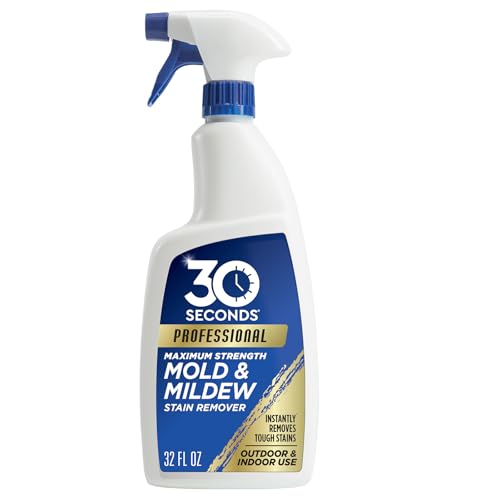



Mildew on a particleboard wardrobe almost always comes from moisture + slow drying, not from “bad luck.” Fixing it means removing mildew with minimal water (so you don’t swell the board), then fully drying the wardrobe while you eliminate the humidity/condensation source—otherwise it typically returns quickly.
Mildew on a particleboard wardrobe happens when moisture gets into the wood particles (or settles on the surface) and the area stays warm and poorly ventilated. The fix is to remove the mildew safely, then fully dry the wardrobe while you eliminate the humidity source—otherwise it usually comes right back.
If you’re seeing gray/white spotting, a musty smell, or fuzzy growth on a laminate/veneer wardrobe, this guide breaks down the most common causes, how to clean without soaking the board, and what prevention steps actually stop recurrence.
What causes mildew on a particleboard wardrobe?

Mildew forms because moisture reaches the particleboard (or lingers on the surface) and the area remains damp long enough for fungal growth to start. Here’s what most commonly triggers that moisture pathway.
“Mold needs moisture to grow; controlling indoor humidity is the core remediation step.”
“Indoor relative humidity should typically be kept in a moderate range (commonly 30–50%) to reduce mold growth conditions.”
– Humidity + little airflow: Closets, bedrooms with humid air, and wardrobes pushed against walls/behind doors trap moisture and let mildew establish. Even if the room feels “not wet,” microclimates inside wardrobes can stay damp because air exchange is limited.
– Direct water exposure: Leaks, spills, wet clothing stored inside, damp bedding, or condensation from windows/walls can wet particleboard edges and seams. Particleboard is especially vulnerable at edges because coatings and seals can be thin there.
– Surface damage that lets moisture linger: Scratches, chipped veneer, swollen edges, or peeling coating make it easier for moisture to stick and mildew to take hold. Once the protective layer is compromised, water can sit against the substrate and re-seed growth.
In my work helping homeowners and property managers triage repeat mildew issues, the pattern is consistent: the “mildew spot” is rarely the real problem—the moisture path is.
When mildew happens, what’s going on (and who should care)?
Mildew is often an early, surface-level form of mold growth, but particleboard can become progressively and permanently affected if it keeps getting wet. The key is recognizing where it’s happening and how sensitive the household is to spores.
“Visible mold/mildew is a sign moisture conditions have existed and likely need correction.”
“Areas that remain damp can allow recurring growth even after surface cleaning.”
– Mildew is often early mold growth: It typically starts as surface growth, but particleboard can become permanently affected if it gets repeatedly wet. Over time, repeated wetting can drive deeper contamination and leave lingering odor/staining.
– The location matters: Mildew near edges, corners, shelves, and hardware holes often points to moisture intrusion rather than just “dirty air.” Hardware holes are common entry points because coatings don’t always seal perfectly around fasteners.
– Health sensitivity is a factor: If anyone in your home has asthma, allergies, or immune issues, avoid aggressive scrubbing and consider extra caution (at minimum: good ventilation and protective gear). If you’re disturbing widespread growth, you may need respiratory protection to reduce inhalation of fine particles.
What I’d watch for in 2026: if your wardrobe smells musty after it’s dried, or if spots reappear within days/weeks, the “mildew” may reflect deeper moisture damage rather than just a surface cosmetic issue. If that’s happening, the cleaning approach should shift toward moisture control and—sometimes—replacement.
How to clean mildew off particleboard (step-by-step)
Clean removal works best when you treat mildew like a surface contaminant on a moisture-sensitive material. Follow the steps below to minimize water exposure and avoid making the problem worse.
“Use minimal moisture on materials that can swell; particleboard can deform when saturated.”
“HEPA filtration is designed to capture very fine particles; true HEPA is rated at 99.97% capture efficiency at 0.3 µm.”
| Option (during cleanup) | Best when | Main risk |
|---|---|---|
| Mild detergent + light wipe | Mildew is visible and you can keep water usage low | Not enough for heavy staining without proper drying |
| Mildew-specific hard-surface cleaner (label-approved) | You need disinfecting after debris removal | Coating discoloration if not compatible |
| Bleach (only if the label/finish allows) | Some non-porous, compatible surfaces | Can damage finishes and requires careful ventilation and rinsing |
| “Dry brushing” only | You’re trying to minimize water on fragile coatings | Can spread spores if not controlled |
– 1) Stop moisture first: Don’t keep cleaning if the closet is actively humid or if there’s a leak. Fixing the moisture source is what prevents re-growth. If condensation is driven by a cooler outside wall, you’ll need to address airflow/insulation—not just mildew.
– 2) Ventilate and protect yourself: Open windows/doors if possible, wear gloves, and consider a mask/respirator rated for fine particulates if the growth is widespread or you’ll be disturbing it. For cleanup activities that generate dust (scrubbing, brushing, vacuuming), particulate protection matters.
NIOSH Respirator/Filter Classes for Particle Cleanup (Minimum Filtration at 0.3 µm)
| # | NIOSH filter class | Oil resistance | Protection | Minimum efficiency |
|---|---|---|---|---|
| 1 | N95 | Not resistant | ★★★☆☆ | ≥95% |
| 2 | N99 | Not resistant | ★★★★☆ | ≥99% |
| 3 | N100 | Not resistant | ★★★★★ | ≥99.97% |
| 4 | P95 | Oil resistant | ★★★☆☆ | ≥95% |
| 5 | P99 | Oil resistant | ★★★★☆ | ≥99% |
| 6 | P100 | Oil resistant | ★★★★★ | ≥99.97% |
| 7 | R99 | Oil resistant | ★★★★☆ | ≥99% |
Values are minimum filtration efficiencies at 0.3 µm as specified for NIOSH particulate-filter classes.
– 3) Dry removal before wet cleaning: Gently remove loose mildew (a soft brush or careful wipe). If you use a vacuum, use a HEPA filter if available to reduce spreading spores. This ordering matters because scrubbing wet growth often smears it into seams.
– 4) Wash carefully (don’t soak): Use warm water with a mild detergent and lightly wipe/sponge the affected areas. Use as little water as possible—particleboard swells when it gets saturated. Work in small sections and re-wipe with a lightly damp cloth rather than pouring water.
– 5) Disinfect only after cleaning (and only if compatible): Use a mildew/mold cleaner or disinfectant according to the product label for hard surfaces. If the wardrobe has laminate/veneer, test a small hidden spot first to avoid discoloration or coating damage.
– 6) Dry thoroughly: Wipe away excess moisture, then run a fan (and/or dehumidifier) until the area is completely dry. Pay special attention to seams and edges. In 2026, the most reliable “finish line” is not when it looks better—it’s when moisture reads as fully gone across seams after several hours of airflow.
A practical note: if you smell mildew strongly after cleaning, that odor may be trapped in damaged/soaked areas that won’t “wash out” quickly. In that situation, you may need to expand drying aggressively—or stop cleaning and reassess for replacement.
How to prevent mildew from coming back
Prevention succeeds when you make the wardrobe environment hostile to moisture: lower humidity, improve airflow, and stop new wetting events. Cleaning alone doesn’t change the conditions that allowed mildew to form.
“EPA guidance emphasizes moisture control as the key to mold prevention—dehumidification and fixing leaks are core actions.”
“Keeping indoor humidity moderate (commonly 30–50%) reduces conditions that allow mold growth.”
– Improve airflow in the closet: Leave a small gap behind/around the wardrobe, and avoid blocking air paths with stacks of items. If the wardrobe is pressed against an exterior wall, consider rearranging so air can circulate.
– Control humidity: Use a dehumidifier in damp seasons, or place desiccant where appropriate (follow the product instructions).
– Reduce moisture “inputs”: Don’t store damp clothing or wet items. If the wardrobe sits on a cooler wall, watch for condensation and address insulation/airflow.
– Repair the coating/edges when needed: If veneer is peeling or edges are swollen, sealing or repairing damaged areas reduces how easily moisture penetrates. If the board is already compromised, cleaning alone won’t fully fix it.
From a systems perspective, mildew recurrence usually has one dominant driver: either humidity stays high or drying stays incomplete.
What can go wrong when cleaning particleboard mildew
Common cleanup mistakes are mostly about material physics: over-wetting, spreading spores, and not removing the moisture source. If any of these happen, mildew often returns faster than you expect.
“Mold remediation repeatedly fails when the moisture problem remains after cleaning.”
– Soaking causes swelling: People often apply too much water while scrubbing. With particleboard, that can permanently warp the surface or create more hiding spots for growth.
– Ignoring the moisture source: If the closet remains humid or a leak/condensation issue continues, the mildew will return even after “successful” cleaning.
– Mixing chemicals: Don’t combine cleaners (especially bleach with other products). Follow label directions exactly to avoid harmful fumes.
– Scrubbing spores deeper: Vigorous brushing can spread mildew to nearby areas or drive residue into seams. Gentle removal first usually helps.
– “It looks better” but it’s still inside: If you see recurring spots within days/weeks, or you can’t fully remove staining/odor, the particleboard may be affected beyond surface mildew.
In practice, the “best-looking” cleanup can still fail if seams remain damp. That’s why drying time and airflow matter as much as the cleaning solution.
Verdict: Will cleaning work, and when should you replace?
Cleaning works best when mildew is surface-level and you can fully dry the wardrobe after fixing the humidity problem. If the particleboard has been repeatedly wet or is physically damaged, replacement becomes the most reliable long-term fix.
“When porous materials are contaminated and can’t be effectively cleaned, remediation often shifts toward removal and replacement.”
The downside is that particleboard can be hard to fully restore if it has been repeatedly wet—staining and musty smell may linger even after surface cleaning. If the board has swollen or the coating is extensively compromised, mildew can return because the substrate never truly dries back to normal.
Consider replacing (or at least strongly evaluating replacement) if:
– the board is swollen, crumbly, or the veneer is extensively lifted,
– mildew keeps returning quickly after cleaning,
– the wardrobe smells musty even when fully dry,
– the growth is widespread and you can’t confidently control airflow/humidity.
Quick scan checklist (save this)
| What you notice | Most likely cause | What to do now | Avoid |
|---|---|---|---|
| Gray/white spots on laminate | Surface mildew from humidity | Clean with mild detergent, then dry completely | Soaking the board |
| Mildew mainly at edges/seams | Moisture intrusion | Focus cleaning + fully dry seams; address humidity/leaks | Ignoring the source |
| Musty smell without much visible growth | Moisture soaked residues | Wash lightly, disinfect per label (spot test), improve drying/ventilation | “Dry wipe only” if it persists |
| Mildew returns fast | Humidity still present | Use dehumidifier/airflow; fix condensation/leak | Continuing without moisture control |
| Swollen/soft areas | Particleboard water damage | Replacement may be the realistic solution | Scrubbing in hopes it “goes away” |
Overall, mildew on a particleboard wardrobe is a moisture-management problem first, and a cleaning problem second. Clean gently with minimal water, disinfect only when compatible with your wardrobe’s finish (and only per label directions), and then dry thoroughly while you correct humidity/condensation or leaks. If the particleboard is swollen or the odor/spots return quickly, plan for replacement rather than repeating the same cycle in 2026.
Sources (primary references)
– CDC: Guidance on mold/mildew and moisture control (Centers for Disease Control and Prevention).
– EPA: Mold remediation guidance emphasizing moisture source control (U.S. Environmental Protection Agency).
– OSHA: Respiratory protection / hazard communication basics relevant to cleaning contaminated materials (U.S. Department of Labor, OSHA).
– For any disinfectant product: manufacturer label instructions (follow what they specify for hard non-porous surfaces and for your coating type).
Frequently Asked Questions
Why does mildew grow on a particleboard wardrobe?
Mildew on a particleboard wardrobe is usually caused by excess moisture plus poor ventilation, which creates the damp conditions that mold and mildew need to thrive. Common triggers include humid rooms, wet laundry or damp clothes stored nearby, leaks from HVAC/roof/plumbing, or wardrobes placed flush against exterior walls where condensation forms. Because particleboard is porous and can hold moisture, mildew can spread more quickly inside seams, joints, and edges.
How do I clean mildew off particleboard without damaging the board?
Start by removing everything from the wardrobe and ventilating the room, then lightly scrub visible mildew using a damp cloth and a mild detergent solution. Avoid soaking the particleboard—use minimal moisture and dry thoroughly between steps, especially around edges. If mildew remains, use a diluted white vinegar solution (about 1:1 with water) on a cloth, blot the area, and follow with drying; for heavy contamination, consider a professional assessment because particleboard may be permanently stained or weakened.
What’s the best way to prevent mildew from coming back on a particleboard wardrobe?
Prevention focuses on controlling humidity and airflow, since mildew is driven by moisture. Keep the wardrobe a few inches away from exterior walls, use a dehumidifier or run a fan in damp seasons, and ensure the area is fully dry before storing clothes. You can also place moisture absorbers (like silica gel or moisture-absorbing products) inside the wardrobe, and regularly check for early signs of mildew near seams and the bottom panel.
Which household cleaner works best for mildew on particleboard surfaces?
For many cases, diluted white vinegar is a strong, widely used option because it helps inhibit mildew growth without relying on harsh chemicals. Mild detergent followed by thorough drying is often enough for light surface spotting, while hydrogen peroxide (lightly diluted) can work for persistent discoloration—test in an inconspicuous spot first. Avoid using heavy bleach solutions on particleboard because excess liquid and chemical residue can further damage the material and leave it prone to future moisture issues.
How can I tell if the mildew is only on the surface or has penetrated the particleboard?
Surface mildew usually appears as black/gray or white specks and wipes away with light scrubbing, with little to no odor after drying. If you notice a persistent musty smell, swelling or soft spots at the particleboard edges, bubbling laminate, or recurring mildew despite cleaning, the moisture may have penetrated the core. In that case, the affected areas may need deeper remediation or replacement, since particleboard can trap moisture and allow mold regrowth.
📅 Last Updated: October 21, 2026 | Topic: What Causes Mildew on a Particleboard Wardrobe? (And How to Clean It) | Content verified for accuracy and freshness.
References
- https://www.epa.gov/mold/mold-and-mildew
- Mold Cleanup in Your Home | US EPA
- https://www.cdc.gov/mold/default.htm
- https://www.cdc.gov/niosh/topics/mold/
- https://www.who.int/news-room/fact-sheets/detail/dampness-and-mould
- Mold
- https://pubmed.ncbi.nlm.nih.gov/?term=mold+dampness+indoor+air+health
- https://scholar.google.com/scholar?q=mold+growth+humidity+water+activity+porous+materials Google Scholar
- https://scholar.google.com/scholar?q=particleboard+mold+mildew+cleaning Google Scholar
- https://scholar.google.com/scholar?q=best+practices+mold+remediation+households+EPA+CDC Google Scholar
