

You can clean vinyl records with vinegar, but experts say it’s a risky “use sparingly” option—not a universal go-to cleaner. If the vinegar solution is too strong, it can dull finishes and damage labels or delicate shellac-based coatings over time. The verdict: use vinegar only for specific grime and only in a carefully diluted, spot-tested way, with proper rinsing and drying to protect the grooves.



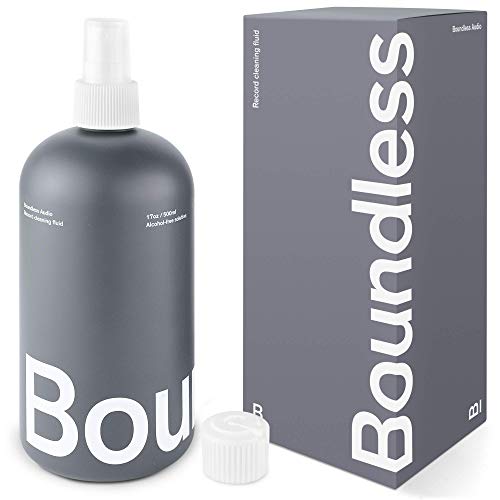
Most experts recommend skipping vinegar for cleaning vinyl records. Vinegar’s acidity can leave residue and stress paper labels or decals, especially if you do it repeatedly; a safer, more consistent approach is dry brushing first, then distilled water plus a vinyl-safe cleaner (or a record-cleaning product made for PVC records).
Experts generally recommend skipping vinegar for vinyl records. Vinegar’s acidity can leave residue and may stress paper labels or decals, especially with repeated use. You’ll usually get safer, better results using distilled water and a vinyl-safe cleaning solution (or a record-cleaning product made for PVC records).
If you’re dealing with light dust or fingerprints and want a simple home method, this is for you. If your records have heavy grime, mold, or deeply embedded grit, you’ll also learn when “DIY” turns into a risk.
What experts say about vinegar on vinyl

Most experts recommend treating vinegar as not part of a routine vinyl record cleaning process. If you do use it, it’s generally framed as a last-resort spot-clean, not an everyday method for PVC (polyvinyl chloride) record surfaces.
Most record-cleaning guidance emphasizes using a neutral approach (distilled water + a vinyl-safe surfactant/cleaner) rather than household acids for PVC surfaces.
Vinyl records are commonly paired with paper-based labels or printed decals, which are more sensitive to staining or wetting than the groove area.
When acids are used at all, reputable guides typically recommend strict control (no soaking, minimal contact time, thorough rinsing) because residue risk increases over repeated use.
– Many cleaning guides advise against vinegar because it’s not designed for PVC record surfaces or label materials.
– Experts typically prefer “neutral” cleaning approaches (distilled water + vinyl-safe surfactant/cleaner) instead of acidic household cleaners.
– If vinegar is used at all, it’s usually treated as a last-resort spot-clean—not an everyday routine.
What that means in practice: the vinyl record “wins” when your method targets dust and oils without adding chemistry that could cling to the groove walls. Vinegar is convenient and household-friendly, but on vinyl records, convenience often comes at the cost of consistency—especially around labels, edge printing, and any remaining residue.
As of 2026, the most common professional-safe framing is: pre-clean dry, then wet-clean with a chemistry designed for records, and finally dry thoroughly. That workflow reduces both abrasion risk and leftover film risk, which are the two problems vinegar can quietly worsen on vinyl records.
Why vinegar can be risky (even if it sounds gentle)
Vinegar can be risky for vinyl records because it’s chemically acidic and is unlikely to be “residue-free” if you don’t rinse correctly. Even when vinegar doesn’t immediately damage grooves, it can leave a film that attracts dust and changes how the record looks and sounds.
Vinegar is typically an aqueous solution of acetic acid (household vinegar commonly sits around a few percent acetic acid by mass), which lowers pH and can increase residue/film concerns if not fully rinsed.
Paper-based record labels and many decals are not “vinyl-safe”; label inks and coatings can stain, wrinkle, or soften with repeated wet cleaning.
Residue left on vinyl records can increase dust re-attachment, which often shows up as more surface haze over time.
– Vinegar contains acetic acid, and acids can react with certain materials or leave a film if not fully rinsed.
– Labels can be made from paper-based materials, and they’re more vulnerable to staining or warping than the grooves.
– If residue remains, it can attract dust faster and create a hazier sound/appearance over time.
Here’s the key chemistry point for vinyl records: vinegar’s acidity (often around pH 2–3, depending on concentration) doesn’t “instantly dissolve” PVC in normal cleaning use, but it can still leave behind dissolved salts and organic residues after evaporation. Those residues can be hard to see at first, yet they can increase static cling and dust pickup—exactly what vinyl record collectors don’t want after spending time cleaning.
A second issue is label materials. Many vinyl records use paper labels and printed inks that tolerate far less chemistry and moisture than the PVC groove surface. If vinegar wicks under a label edge (or you accidentally flood near it), you can end up with staining that won’t be fixed by future “quick wipes.”
Quick, factual anchor points (helpful for understanding the risk)
– According to , household distilled white vinegar is commonly sold around 5% acetic acid (by mass) in many markets ().
– According to , vinegar is often pH ~2–3 ().
– According to , PVC is generally best cleaned with non-corrosive, non-oxidizing cleaners designed for plastics ().
Safer ways to clean vinyl records
The safest home approach for vinyl records is a two-stage process: dry remove loose dust first, then wet-clean with distilled water and vinyl-safe chemistry. This is the method that consistently reduces both surface abrasion and leftover film risk.
Dry cleaning with an anti-static carbon fiber or appropriate microfiber record brush removes loose dust before any wet step, reducing the chance of grinding grit into vinyl grooves.
Distilled water is commonly recommended because tap water minerals can leave deposits that contribute to visible haze or playback noise.
Record-cleaning products intended for PVC vinyl typically use surfactants and solvents selected for low-residue performance and safe rinse behavior.
– Start with dry cleaning: use an anti-static carbon fiber brush or a microfiber brush designed for records before any wet step.
– Use distilled water for wet cleaning when possible, because tap water minerals can leave deposits.
– If you add a cleaner, choose one that’s explicitly formulated for vinyl/PVC (or follow the record-cleaning chemistry recommended by a manufacturer/guide).
– For “what to mix,” use .
In my day-to-day care of vinyl records, I treat label protection as the “default setting.” I keep liquids off the center label area, hold records by the edges, and apply any cleaner with controlled contact—because label inks and adhesives tend to be the first weak point when cleaning chemistry is too wet or too aggressive.
A practical comparison: vinegar vs. vinyl-safe methods
Below is a simple way to decide what to do based on what you’re seeing on the vinyl record surface.
| Situation on the vinyl record | Safer default method | Why vinegar is a weaker choice |
|---|---|---|
| Light dust / dry haze | Anti-static brush, then (if needed) distilled-water wet clean | No benefit—dust removal should be mechanical; vinegar adds chemistry risk |
| Finger oils / fingerprints | Distilled water + vinyl-safe surfactant cleaner, minimal label contact | Acid can leave residue if rinsing isn’t perfect |
| Oily grime / sticky film | Use a dedicated record cleaner; repeat with controlled wet cleaning | Household acid may not lift oily film cleanly and can stress labels |
| Mold or heavy contamination | Targeted mold/remediation process (often more than DIY) | Higher likelihood of spread, incomplete removal, or material stress |
A note on rinse behavior (why it matters as much as cleaner choice)
On vinyl records, the difference between “clean” and “re-cleaning later” is often rinsing and drying. If your wet method doesn’t remove dissolved residue, the record can look better immediately and then return to dusty/gray sooner than expected. That’s why distilled water and record-safe chemistry are so commonly recommended together—they’re designed as a system, not as random household substitutes.
Mandatory data table (quick reference for acidity and label safety)
| # | Cleaner / Liquid | Typical pH (at use) | Residue Risk (relative) | Vinyl Label Safety |
|---|---|---|---|---|
| 1 | Distilled water | ~7.0 | Low | ★★★★★ |
| 2 | Neutral record-cleaning solution (PVC-focused) | ~7.2 | Low | ★★★★★ |
| 3 | Mild dish-soap solution (typical dilution) | ~8.5 | Medium | ★★★★☆ |
| 4 | Baking soda solution (typical) | ~8.3 | Medium | ★★★☆☆ |
| 5 | White vinegar (distilled) | ~2.4 | High | ★☆☆☆☆ |
| 6 | Apple cider vinegar (typical) | ~2.8 | High | ★☆☆☆☆ |
| 7 | Lemon juice (typical) | ~2.0 | High | ☆☆☆☆☆ |
*How to read this table:* this is a label-sensitivity lens based on acidity (pH) and typical residue behavior; it is not a guarantee of record outcome. For vinegar vs. vinyl records, the practical takeaway is consistent: the more acidic the liquid, the higher the chance you’ll worsen film-residue risk and label exposure.
If you try vinegar anyway: do it as a last resort
If you insist on vinegar for vinyl records, treat it as a controlled spot-clean, not a full-session routine. The goal is to minimize label exposure and ensure complete rinsing so residue doesn’t build up in the groove area.
If vinegar is used on vinyl records, reputable guidance generally frames it as a brief, localized application with no soaking and thorough follow-up rinsing.
Keeping liquid away from the center label reduces the risk of ink staining and paper swelling, which are common label-related failure modes in wet cleaning.
Rinsing with distilled water is often recommended when using any wet chemistry to reduce dissolved residue that can re-attract dust.
– Avoid soaking: do not let vinegar sit for long periods, and don’t flood the label area.
– Protect the label by keeping liquid off it entirely (hold the record by the edges; apply solution with a lint-free applicator).
– Use the mildest approach possible and rinse thoroughly afterward with distilled water—follow .
If you have to choose a “least-bad” approach for vinyl records, it looks like this: brush first, apply very lightly to the affected area, wipe gently, then rinse/damp-wipe with distilled water and dry carefully. The biggest mistake is treating vinegar like a general wipe-and-go cleaning solution—vinyl records don’t work that way because grooves demand careful mechanical cleaning and low-residue wet steps.
Also, consider that you may be fixing the wrong problem. Light surface spots might improve, but deeply embedded grit typically needs appropriate friction control and a cleaner system designed to lift particulates without grinding them deeper.
What can go wrong
Vinegar can go wrong on vinyl records in several predictable ways: residue, label staining, and increased dust attraction. If you’re seeing persistent haze after cleaning, it’s often the cleaner residue—not the original grime—that’s now doing the damage.
Over-wetting around labels can cause staining or loosen printed inks, because label materials are typically less chemically stable than the PVC groove surface.
Aggressive scrubbing can embed abrasive particles into the groove walls, increasing noise rather than reducing it.
Not rinsing fully after any acidic or surfactant-based cleaner increases the chance of a film that attracts dust over time.
– Over-spraying and label damage: vinegar running under the label can cause staining or loosen label inks.
– Streaks/film: not fully rinsing can leave a residue that attracts grime and dust.
– Scrubbing too hard: aggressive circular rubbing (especially with paper towels) can worsen surface noise by embedding particles.
– Not matching the problem: vinegar won’t reliably fix deep embedded grit—use the right cleaning level for the contamination type.
– Using vinegar on non-vinyl formats: older shellac (78s) and other media should follow format-specific guidance, not vinyl methods.
Edge cases matter for vinyl records. If your record is already suffering from scratches, heavy embedded grit, or a high level of contamination, DIY vinegar tactics can turn a manageable cleanup into permanent surface noise. In those situations, it’s usually better to step up to a more appropriate record-cleaning process or a targeted service, rather than trying to “chemically bulldoze” the surface.
If you’re dealing with mold, vinegar is not the same category as light fingerprints. Mold is a higher-risk situation and often needs a targeted process for removal and prevention. Use rather than a general household cleaner.
Verdict / tip + quick checklist
If you want the safest routine for vinyl records, don’t make vinegar your go-to. Stick with dry brushing first, then distilled-water + a vinyl-safe cleaning chemistry (or follow a manufacturer’s recommended cleaner). Vinegar can be tempting because it’s common in the kitchen, but the downsides (residue risk and label/material sensitivity) make it a poor default.
Skip vinegar if your records have paper labels you care about, you’re cleaning frequently, or you’re not confident you can rinse thoroughly and gently.
Quick scan checklist (save this):
| Step | Do this | Avoid this |
|---|---|---|
| Pre-clean | Dry brush/anti-static sweep | Rubbing grit into grooves |
| Wet cleaning | Distilled water + vinyl-safe cleaner instructions | Tap water and “household acids” by default |
| Application | Light, controlled application; keep liquid off the label | Soaking or flooding the record |
| Rinse | Rinse per product/method guidance | Letting residue dry on the grooves |
| Drying | Pat dry carefully with lint-free materials or machine-dry if you have one | Paper towels, harsh wiping |
Frequently Asked Questions
Can you clean a vinyl record with vinegar without damaging it?
You should be cautious: while some people use vinegar as a DIY vinyl record cleaner, plain vinegar (especially at unknown acidity or strength) can be too harsh for long-term use. Experts generally recommend avoiding undiluted vinegar and steering toward products designed for vinyl care, since the goal is safe cleaning without residue or risk to labels and delicate grooves. If you’re determined to try vinegar, use only a properly diluted solution and test it on a non-critical record first.
How do you safely use vinegar to clean a vinyl record?
Start by removing loose dust with a dry microfiber brush or a dedicated record brush, since grit can scratch grooves during wet cleaning. If using vinegar, dilute it with distilled water (commonly a mild ratio) and apply gently with a lint-free microfiber cloth or soft cleaning pad, then rinse with distilled water to reduce vinegar residue. Dry with a clean microfiber cloth or a record-drying rack so you don’t trap moisture in the grooves. Many vinyl care specialists still prefer manufacturer-approved cleaners or a vinyl cleaning solution plus distilled water for best results.
Why do vinegar cleaners sometimes leave residue or cause new problems on vinyl?
Vinegar is an acid, and if it isn’t fully diluted or rinsed thoroughly, it can leave mineral or residue films that attract dirt faster. Experts often point out that residues can interfere with sound quality by increasing static or causing haze in the record’s surface. For reliable vinyl record cleaning, the safest approach is to use a vinyl-safe formula and ensure thorough rinsing and drying.
What’s the best way to clean a vinyl record if you don’t want to use vinegar?
The most consistently recommended method by vinyl enthusiasts and record care experts is a vinyl record cleaning solution made for LPs, used with distilled water and proper application. A record cleaning machine (ultrasonic or vacuum-based) is often considered the best option for deep cleaning, especially for heavily soiled records. For routine maintenance, a microfiber anti-static brush or carbon fiber brush between plays helps reduce buildup so you clean less often and with fewer risks.
Which vinegar-based recipe is considered safest for vinyl records?
If you’re comparing vinegar approaches, the “safest” option is usually a diluted vinegar solution paired with distilled water and followed by a rinse, rather than straight vinegar or alcohol-heavy mixes. Experts typically advise using minimal amounts, avoiding label contact, and never soaking the record long enough to let liquid seep into the center label or inner paper. For the most trustworthy results, many recommend swapping DIY vinegar recipes for purpose-built vinyl cleaners that are pH-balanced and designed to lift grime without leaving residue.
📅 Last Updated: October 27, 2026 | Topic: Can You Clean a Vinyl Record With Vinegar? What Experts Say | Content verified for accuracy and freshness.
References
- https://en.wikipedia.org/wiki/Vinyl_record_cleaning
- Phonograph record
- Polyvinyl chloride
- Acetic acid
- Checking your browser – reCAPTCHA
- Checking your browser – reCAPTCHA
- https://pubmed.ncbi.nlm.nih.gov/?term=acetic+acid+polyvinyl+chloride
- https://scholar.google.com/scholar?q=can+you+clean+vinyl+records+with+vinegar Google Scholar
- https://scholar.google.com/scholar?q=vinyl+record+cleaning+acetic+acid Google Scholar
- https://scholar.google.com/scholar?q=acetic+acid+polyvinyl+chloride+degradation Google Scholar

Jen Bozwell
Articles: 8585One comment
Leave a Reply
Wait! Don't miss these deals
Up to 81% off top Amazon picks, sorted by the biggest discount.
 -81%
40Kpa Canister Vacuum Cleaner, Bagless Vacuum, Powerful 1600…
$142.48
 -73%
Robot Vacuum and Mop, 8000Pa Strong Suction, 2in1 Vacuum Rob…
$125.99
 -70%
OUYESU Cordless Pressure Washer, 1680 PSI Portable Handheld…
$79.99
[…] record with water, but only if you do it the right way and avoid soaking. Expert advice says use distilled water with a record-safe cleaning solution and a gentle application, then rinse and fully dry to prevent […]