

Want to start a car detailing side business and know exactly what to do first, second, and third? This step-by-step guide lays out the fastest path to launch—what gear to buy, how to price your services, and how to get your first paying customers without guesswork. Follow the process and you’ll have a working plan you can start using this week.



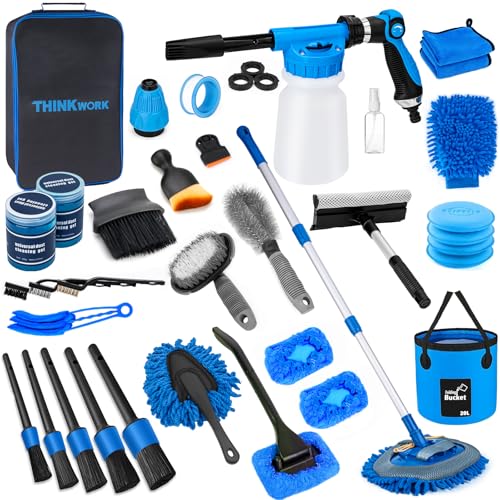
Start a car detailing side business by narrowing your offering to 1–2 core services, pricing them in clear packages, and marketing consistently to a specific local niche—then build a repeatable workflow and track your time so you can scale in 2026 without guesswork. The fastest path is to start lean (essential tools only), clean safely by surface type, and turn each job into proof with photos and simple after-service communication.
If you already have basic cleaning supplies (or can borrow a few items) and you’re comfortable working outdoors or in a driveway, this is for you. It’s also a good fit if you want flexible hours and want to start small—without waiting to “have everything” before your first customer.
Pick Your Car Detailing Side Business Services

Choose services you can deliver consistently and explain clearly; the right starter menu reduces rework, protects your margins, and makes marketing easier. For most beginners, the best first move is selecting 1–2 core offers (the “main dishes”) and a small set of reliable upsells that match how real customers buy in your area.
“A focused service menu helps you quote faster and reduces scope creep when customers’ expectations vary by vehicle condition.”
“For a side business, delivering the same core exterior and interior stages repeatedly usually creates faster skill growth than trying to cover every problem at once.”
“Upsells work best when they are tied to specific, observable conditions like wheel brake dust or pet hair—not vague ‘deep cleaning’ promises.”
Start with 1–2 core offers (and a simple scope definition)
– Start with 1–2 core offers (like interior detail + exterior wash/wax) so you can deliver fast and stay consistent.
– Write short scopes that define what’s included. Example wording you can adapt:
– “Exterior wash and drying”
– “Interior vacuum and wipe-down”
– “Glass cleaning”
– “Tire dressing (where appropriate)”
– Keep the “what’s not included” list visible in your booking message (especially for stains, odors, or heavy oxidation). A clear boundary is what prevents the biggest beginner profit-killers.
Decide: mobile detailing or fixed location
Your workflow and marketing differ, so choose one first—then expand later.
– Mobile detailing (come to the customer) typically wins on convenience and can scale through customer word-of-mouth.
– Fixed location (garage/driveway shop setup) usually simplifies water management, tool layout, and scheduling.
Here’s a quick mobile vs. fixed comparison so you can decide without overbuilding.
| Mode | Key advantage | Common early constraint |
|---|---|---|
| Mobile | Customers don’t need to transport the vehicle. | Access limitations (space, permission, weather timing). |
| Fixed | Easier setup consistency and a more predictable workflow. | You need customer travel—or they must arrive at your location. |
Add only a few upsells you can do reliably
– Add only a few upsells you can perform without scrambling. Examples:
– Wheel cleaning (brake dust and grime)
– Decontamination (iron remover or clay—only if you truly offer it)
– Pet-hair removal (specific tools + a defined method)
– Clearly explain what’s included. “Odor removal” is a classic beginner trap—write whether you’re doing odor agitation, extraction, or deodorizing (and what conditions can limit results).
A practical framing: for a car detailing side business, your “upsell list” should describe observable outcomes, not miracle results.
Create a Simple Pricing and Packaging Plan
Price should reflect the customer’s decision-making—not your hopes. Create basic/standard/premium packages that match typical buyer expectations, and then refine using tracked time (not vibes).
“Packages reduce back-and-forth and make it easier for customers to choose the right service level.”
“Tracking job durations for early orders helps align your pricing with reality and prevents undercharging.”
“Clear exclusions in writing help prevent scope creep for heavy stains and severe paint damage.”
Build packages customers can understand in 10 seconds
– Build packages around expectations: “basic,” “standard,” and “premium” with short descriptions.
– Avoid vague claims like “best wax” or “deep clean.” Instead:
– Specify stages (wash, dry, interior vacuum, wipe-down, glass).
– Specify protection level if you offer it (e.g., “sealant/wax step included”).
– If you offer iron remover/decontamination, make it its own line item or a premium add-on so it doesn’t inflate your standard quotes.
Price by time/effort first, then adjust
– Price by time and effort first (not by “materials cost”), then adjust after you log real job durations.
– Track time in a simple spreadsheet: arrival → setup → exterior → interior → finishing/inspection → cleanup.
– As you collect data in 2026, you’ll learn which steps vary most (usually heavily soiled interiors, stuck-on bugs, wheels, or trim residue).
Set transparent exclusions (this prevents profit leakage)
Be “heavily explicit” about exclusions to prevent scope creep:
– Heavily soiled carpets beyond normal extraction expectations
– Severe pet odors that may require specialized odor remediation
– Severe paint damage (heavy oxidation, deep scratches)
– Water restrictions that prevent correct rinsing/cure time
According to the U.S. EPA, using a hose to wash a car can use 80–140 gallons per wash (often more when people let water run while scrubbing) U.S. EPA WaterSense. That’s one reason clear boundaries matter—your process and your time both change when access or conditions change.
Get the Right Tools (Without Overbuying)
The best starter tool kit is the smallest set that lets you follow a safe workflow end-to-end. You don’t need every chemical or gadget at launch—car detailing side business profitability depends on repeatable stages, not a warehouse of supplies.
“Start with tools that cover most jobs: quality microfiber, surface-safe brushes, glass cleaner, and an upholstery-safe vacuum.”
“Using separate tools for wheels vs. paint helps reduce cross-contamination from brake dust and ferrous fallout.”
“Label instructions for dilution and contact time are the most reliable way to avoid residue or damage.”
Essentials that cover most jobs
– Car shampoo/cleaner
– Microfiber towels (separate towel types for paint vs. interior)
– Wheel/trim brushes
– Glass cleaner
– Interior brushes
– Upholstery-safe vacuum (or vacuum + appropriate attachments)
Choose chemicals based on surfaces—not “one product for everything”
Pick chemicals by the surfaces you’ll touch:
– Paint (use products intended for automotive paint/sealant compatibility)
– Glass (streak-resistant glass formulas)
– Plastics/trim (trim-safe products to avoid haze or discoloration)
– Fabric/leather (use upholstery/leather-specific cleaners)
Follow dilution/use instructions exactly as the manufacturer label specifies. If you’re unsure, test an inconspicuous area first.
Plan for protection and safety
– Gloves (chemical contact prevention)
– Ventilation-friendly setup for interior cleaners
– Separate tools for wheels/paint to avoid cross-contamination
If you work near storm drains, remember that stormwater pollution is a major environmental issue. According to the U.S. EPA, stormwater runoff is responsible for a large share of water pollution impacts U.S. EPA. Even if you’re not a licensed facility, the safest business habit is managing rinse water responsibly and following local rules.
Beginner-Friendly Detail Tools Ranked by Safety & “Mistake Cost” (2026)
| # | Tool / Kit Item | Primary Job | Setup Effort | Risk of “Regret” | Beginner Ease |
|---|---|---|---|---|---|
| 1 | Microfiber drying towels | Dry paint without scratches | 1–3 min | Low | ★★★★★ |
| 2 | pH-neutral car shampoo | Safe exterior lubrication | 2–5 min | Low | ★★★★☆ |
| 3 | Interior detailing brushes | Agitate dust in vents/knobs | 1–4 min | Low–Med | ★★★★☆ |
| 4 | Wheel brushes (dedicated set) | Clean barrel/inner spokes | 2–6 min | Med | ★★★☆☆ |
| 5 | Clay bar + lubricant | Remove bonded contaminants | 8–15 min | Med | ★★★☆☆ |
| 6 | Iron remover (decon chemical) | Dissolve ferrous fallout | 5–12 min | High | ★★☆☆☆ |
| 7 | Dual-action polisher (paint correction) | Machine polish & correction | 20–35 min | Very High | ★☆☆☆☆ |
(Use this table as an ordering guide for what to buy first. The exact safety and difficulty depend on your technique and the manufacturer label for each chemical.)
Learn a Repeatable Cleaning Workflow
A repeatable workflow is how a car detailing side business turns “skill” into profit. Use a consistent order of operations so you don’t miss steps, don’t rework, and can estimate job time accurately.
“The most profitable detailing habits are process habits: consistent step order and final inspections.”
“Spot-checking glass and trims at the end prevents the most common callback problems (streaks and residue).”
“Testing in an inconspicuous area is the safest way to avoid discoloration when you’re unsure about material compatibility.”
Use one order of operations every time
A reliable starter order:
– Wheels/tires → exterior wash → iron/clay/decontamination (only if you offer it) → paint protection → interior vacuum → interior cleaning → final wipe/inspection
– Keep towels grouped by stage so you don’t accidentally wipe brake dust onto paint.
Do end-of-job spot checks (fast but critical)
At the end, check:
– Windows for streaks
– Dashboard/trim for residue/haze
– Carpets for remaining grit and stains
From there, write a short recap for the customer. Car detailing side business communication reduces returns because customers know what was (and wasn’t) targeted.
Keep the process safe and material-compatible
– Avoid harsh products on sensitive materials (especially untreated trim, certain leathers, and delicate upholstery).
– Follow label instructions for contact time and dilution.
– Don’t “stack” unknown chemicals—some combinations can cause residue or haze.
Market Your Side Business Locally and Win First Customers
Local marketing wins because people buy detailing services based on trust, availability, and proof. Your goal is simple in 2026: be easy to find nearby, make booking effortless, and capture review-worthy results from your first jobs.
“Neighborhood groups and local community platforms can generate the first detailing leads faster than broad advertising.”
“A Google Business Profile (even with limited photos at the start) improves discovery when customers search ‘car detailing near me’.”
“Before/after proof plus a short recap of services is one of the most reliable ways to turn one job into a repeat customer.”
Focus on nearby visibility
– Neighborhood Facebook groups
– Local community apps (Nextdoor-style)
– Google Business Profile (set it up even if your portfolio is small)
Use a first-job incentive carefully
– Offer a “first job” incentive that helps you earn reviews, but avoid training customers to expect constant discounts.
– A better incentive than “permanent 20% off” is often:
– A small add-on (extra glass, wheel cleaning upgrade)
– A limited-time bundle for your first set of reviews
Turn each job into measurable proof
For each customer (with permission):
– Take before/after photos
– Provide a short recap of what you did
– Make it easy to book again with a clear “next step” suggestion (e.g., “If you want easier interior upkeep next time, the standard package works well.”)
Safety and environmental responsibility can also become part of trust. According to the U.S. EPA, 1 inch of rainfall over 1 acre can produce about 27,000 gallons of runoff in a typical scenario U.S. EPA. When customers see you’re mindful about process and cleanup, your local reputation tends to strengthen.
What Can Go Wrong (and How to Avoid It)
Most early losses come from time overruns and unrealistic expectations—not from “not knowing enough chemistry.” If you watch for the failure modes below, your car detailing side business stays profitable and predictable.
“Time estimation errors are the #1 beginner issue because each missed step creates rework and callbacks.”
“Overpromising stain or odor removal without a defined method is a common driver of customer dissatisfaction.”
“Weather affects detailing performance: direct sun can accelerate drying and increase streaking and uneven chemical action.”
Underestimating time
– The job expands because you’re not tracking steps yet.
– Fix: time your workflow for the first several jobs, then adjust package durations/pricing.
Overselling results
– Severe stains, oxidation, or deep odors may not fully come out depending on condition.
– Fix: set expectations in your booking message and offer alternative options (partial improvement vs. full remediation).
Product mismatch
– Using the wrong cleaner on trim, leather, or upholstery can cause discoloration or residue.
– Fix: use label instructions and avoid “one chemical for everything.”
Weather and surface limits
– Direct sun can cause products to dry too fast.
– Freezing/very humid conditions can slow curing or increase streaking.
– Fix: adjust your schedule and application technique based on real conditions.
Safety issues
– Poor ventilation for interior chemicals and skipping gloves create avoidable health risks.
– Fix: glove up, ventilate, and store chemicals safely between jobs.
Verdict: Should You Start This Side Business?
Starting a car detailing side business is realistic if you build consistency—tight service offerings, careful product selection, and a repeatable workflow will beat trying to “do everything.” The downside is that beginners often lose money at first due to time overruns, rework, and results limited by the condition of the vehicle.
Before you start, be honest about constraints:
– Can you learn safe application steps and material compatibility?
– Do you have permission and a workable place to clean (especially if you’re mobile)?
– Are you comfortable under promising on heavily neglected vehicles?
“A side business works best when your process is consistent enough to estimate time and explain outcomes clearly.”
“If you can’t control scope (stains/odors/heavy damage), your profit will suffer even with good reviews.”
Mobile vs. Fixed Location Detailing (Beginner Fit)
| # | Criteria | Mobile | Fixed |
|---|---|---|---|
| 1 | Setup time consistency | Varies by access | Highly consistent |
| 2 | Customer acquisition | Convenience-driven | Local foot traffic or referrals |
| 3 | Tool transportation | More wear/load | Less travel stress |
| 4 | Water management complexity | Higher compliance risk | Simpler planning |
| 5 | Weather control | Harder to control | More predictable |
| 6 | Learning curve for first jobs | Steeper due to variables | Gentler and repeatable |
| 7 | Pricing stability | More affected by access | Easier to estimate |
| 8 | Customer scheduling flexibility | Often higher | May require travel coordination |
| 9 | Risk of delayed jobs | Higher (parking/permission) | Lower with consistent space |
| 10 | Best starter scenario | Convenience + review building | Skill consistency + stable pricing |
| Verdict | Beginner fit | Good if variables are manageable | Best for first-time consistency |
Quick Checklist: First 7 Steps to Launch
| Step | What to do | Done? |
|---|---|---|
| 1 | Pick 1–2 core services | ☐ |
| 2 | Create 3 clear packages (basic/standard/premium) | ☐ |
| 3 | Set realistic pricing based on time, then log jobs | ☐ |
| 4 | Buy/collect an essential starter tool kit | ☐ |
| 5 | Follow one repeatable workflow order | ☐ |
| 6 | Set up local marketing (groups + reviews + photos) | ☐ |
| 7 | Add a short “expectations” script for tough vehicles | ☐ |
“If you can’t describe your package in three lines, you probably can’t price it confidently yet.”
“Time logging early is the difference between learning and losing money.”
Sources
– U.S. EPA WaterSense — guidance on water use and car washing U.S. EPA WaterSense
– U.S. EPA — stormwater and runoff background information U.S. EPA
– U.S. EPA — rainfall/runoff estimates used in stormwater impact discussions U.S. EPA
If you want the short version: pick a focused service menu, package and price it with clear scope, buy only what you need to execute a repeatable workflow, then market locally and track time. Done right, a car detailing side business becomes a skill you can standardize—so your results stay consistent, your schedule becomes predictable, and your income grows without constant rework.
Frequently Asked Questions
What do I need to start a car detailing side business on a budget?
Start with a focused “starter kit” that covers the core services: microfiber towels, a pH-balanced car wash soap, wheel cleaner (or dedicated wheel brush), wheel mitts, an exterior spray wax or sealant, glass cleaner, and a basic vacuum. Add a dual-action polisher only if you plan to offer paint correction or ceramic prep, since that’s a bigger investment and learning curve. For a side business, you’ll also want simple supplies to protect surfaces (interior brushes, upholstery cleaner, APC, and stain tools) plus eco-friendly detailing products if you want to stand out locally.
How do I price my car detailing services when I’m just starting?
Begin by pricing based on time and service scope rather than guessing—create 3–5 clear packages like “Interior Refresh,” “Full Interior + Exterior,” and “Wash + Wax/Sealant.” Check local competitors’ rates, then position your pricing slightly lower at first to build reviews, but don’t underprice basic wash and drying labor. Track how long each job takes you, including setup and cleanup, and adjust after 10–20 details to ensure your car detailing side business is profitable even with supplies and vehicle transport.
Why should I specialize in a niche for my mobile car detailing business?
Specializing helps you market faster and convert more leads because customers know exactly what you do best, such as “mobile interior detailing,” “pet hair removal,” “ceramic coating prep,” or “headlight restoration.” Niche offers also make your processes more repeatable, which improves speed and consistency—key for side business schedules. When you focus, you can refine your checklist, stock the right products, and produce before/after photos that build trust and credibility.
Which car detailing services sell best for side hustlers who want repeat customers?
High-demand add-ons that don’t require major equipment—like pet hair removal, odor treatment, leather conditioning, stain/fabric refresh, and monthly maintenance packages—are great for repeat business. Exterior services such as wash + wax/sealant and headlight restoration also tend to sell well because they’re easy to understand and quick to upsell. To increase repeat customers, offer maintenance schedules (e.g., 30/60/90-day plans) and membership-style perks, like priority booking or discounted follow-up details.
What’s the best way to get customers for a new car detailing side business near me?
Start by setting up a strong local presence: Google Business Profile, a simple website or landing page, and consistent social media posts showing your results. Use before-and-after photos, short videos of your process, and clear service pages with pricing ranges so people can quickly decide to book car detailing. Get reviews fast by overdelivering on customer experience, and offer a targeted first-time promotion to neighbors and local groups—then use SMS or email follow-ups to rebook for maintenance detailing.
📅 Last Updated: October 27, 2026 | Topic: How to Start a Car Detailing Side Business | Content verified for accuracy and freshness.
References
- Auto detailing
- Plan your business – Small Business Administration
- https://www.sba.gov/business-guide/launch-your-business/get-federal-state-local-permits-licenses
- Plan your business – Small Business Administration
- Self-employed individuals tax center | Internal Revenue Service
- https://www.osha.gov/hazard-communication
- https://www.epa.gov/watersense/car-washing
- https://scholar.google.com/scholar?q=how+to+start+a+car+detailing+business Google Scholar
- https://scholar.google.com/scholar?q=car+wash+detailing+business+plan+startup Google Scholar
- https://scholar.google.com/scholar?q=automobile+detailing+market+analysis+small+business Google Scholar
