Best Products to Clean Your Allergens
You’ll want a HEPA vacuum cleaner to trap pollen, dust mites, and pet dander effectively. Adding an air purifier with a HEPA filter can clear airborne allergens. Hypoallergenic bedding and mattress covers block allergens while you sleep. Use anti-allergen laundry detergents and dust mite sprays for your clothes and linens. A dehumidifier controls moisture, stifling mold and mildew growth. Keep these key tools in mind to create a cleaner, allergy-friendly home—there’s plenty more to explore for your health.
High-Efficiency Particulate Air (HEPA) Vacuum Cleaners

Although many vacuums claim to reduce allergens, HEPA vacuum cleaners are specially designed to trap tiny particles that other models often miss. When you choose a vacuum with HEPA filter features, you’re investing in cleaner air and a healthier space. These vacuums capture dust mites, pollen, and pet dander effectively, giving you freedom from sneezing fits and irritation. To keep your HEPA vacuum performing at its peak, regular HEPA filter maintenance is key—clean or replace the filter as recommended to guarantee ideal allergen capture. You’ll appreciate how easy it is to maintain these vacuums; many models include user-friendly filter access and indicator lights. With the right vacuum, you gain control over your environment and breathe easier every day.
Air Purifiers With HEPA Filters
When you want to reduce allergens beyond what cleaning alone can achieve, air purifiers with HEPA filters are an excellent choice. They work tirelessly to improve your air quality, trapping tiny particles that trigger allergies. Choosing the right purifier empowers you to breathe easier and live freer, unhindered by airborne irritants. Just remember, consistent filter maintenance is key to keeping your purifier effective.
Using one can make you feel:
Relief from sneezing, control over your environment, and peace of mind with cleaner, allergen-free air at home.
- Relief from sneezing and congestion
- Control over your environment
- Confidence in cleaner air at home
- Freedom from constant allergy discomfort
- Peace of mind knowing allergens are minimized
Investing in a HEPA air purifier means reclaiming your space and enjoying the fresh, pure air you deserve every day.
Hypoallergenic Bedding and Mattress Covers
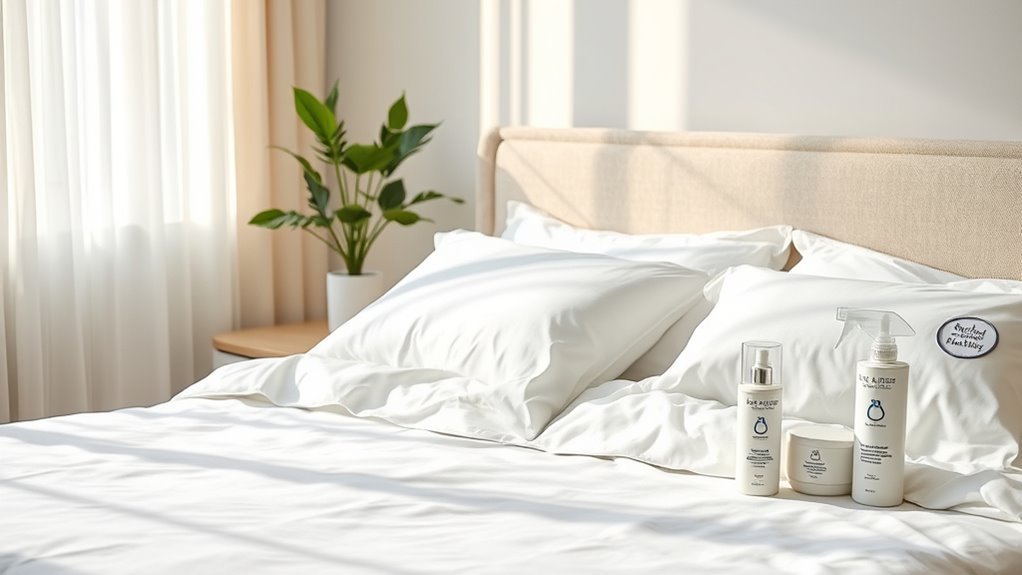
Anyone looking to reduce allergens in their bedroom should consider hypoallergenic bedding and mattress covers. These specially designed bedding materials block dust mites, pet dander, and pollen from settling in your sheets and mattress, giving you a cleaner, freer sleeping environment. Mattress protection is key because your mattress can harbor allergens that trigger sneezing or itching. By choosing covers made from tightly woven fabrics, you create a barrier that’s breathable yet effective against allergens. Plus, hypoallergenic bedding often features materials that resist mold and bacteria, enhancing your comfort and health without restricting your lifestyle. Investing in these products lets you reclaim your bedroom as a sanctuary, where allergies don’t hold you back from a restful night or waking up feeling fresh and energized.
Anti-Allergen Laundry Detergents
When choosing laundry detergents, you’ll want to pick ones labeled hypoallergenic to reduce irritants on your clothes and bedding. Avoid ingredients like fragrances and dyes that can trigger reactions. Plus, using the right washing techniques can help get rid of allergens more effectively.
Hypoallergenic Detergent Benefits
Although you might not realize it, the detergent you use can greatly impact how well you control allergens in your laundry. Choosing a hypoallergenic detergent means embracing freedom from harsh chemicals and irritating fragrances. These detergents rely on hypoallergenic ingredients that are gentle yet effective, making your laundry routines safer and more comfortable. By switching, you reduce skin irritation, breathe easier, and protect your loved ones from sneezing fits or rashes.
- Feel confident in every garment you wear
- Experience fewer allergy flare-ups at home
- Enjoy soft, fresh clothes without harsh scents
- Simplify your laundry routine with peace of mind
- Create a safe environment for sensitive skin
Opting for hypoallergenic detergents lets you reclaim control and comfort in your daily life.
Ingredients to Avoid
Choosing a hypoallergenic detergent is a great start, but it’s also important to know which ingredients to steer clear of to keep allergens at bay. You want to avoid allergen triggers like fragrances and dyes, which can irritate sensitive skin and worsen allergies. Harmful chemicals such as phosphates, sulfates, and parabens are best left out because they not only provoke allergic reactions but also harm the environment. Opt for detergents free from optical brighteners and artificial additives, as these can exacerbate allergies too. By steering clear of these harmful ingredients, you give yourself the freedom to breathe easy and wear your clothes comfortably without worry. Remember, what you put on your skin matters just as much as what you clean it with.
Washing Tips for Allergens
Since allergens can cling to fabrics even after washing, using the right techniques with anti-allergen laundry detergents is key to reducing triggers. You want effective allergen removal without sacrificing your time or freedom. Focus on washing techniques that truly break down allergen particles and keep your clothes fresh.
Here’s how to optimize your laundry routine:
- Use hot water cycles (above 130°F) to kill dust mites and remove allergens
- Choose detergents specifically formulated for allergen removal
- Avoid fabric softeners that can trap allergens in fibers
- Wash bedding and clothes weekly to prevent buildup
- Dry items thoroughly on high heat to eliminate lingering irritants
Mastering these steps frees you from allergy discomfort and helps you breathe easy every day.
Dust Mite Sprays and Treatments
When you’re dealing with dust mites, sprays and treatments can be a quick and effective way to reduce allergens in your home. You want products that support dust mite prevention without harsh chemicals. Natural treatments often use essential oils or tannins to make your space less inviting to these pests. Here’s a handy comparison:
| Product Type | Key Ingredient | Best For |
|---|---|---|
| Chemical Sprays | Benzyl benzoate | Deep cleaning, fast action |
| Natural Sprays | Essential oils (eucalyptus, tea tree) | Safe for kids and pets |
| Hot Water Treatments | High temperature rinse | Bedding and soft fabrics |
| Tannin-based Sprays | Chestnut extract | Long-lasting dust mite control |
Choose what fits your lifestyle to keep freedom from allergens without compromise.
Microfiber Cleaning Cloths and Mops
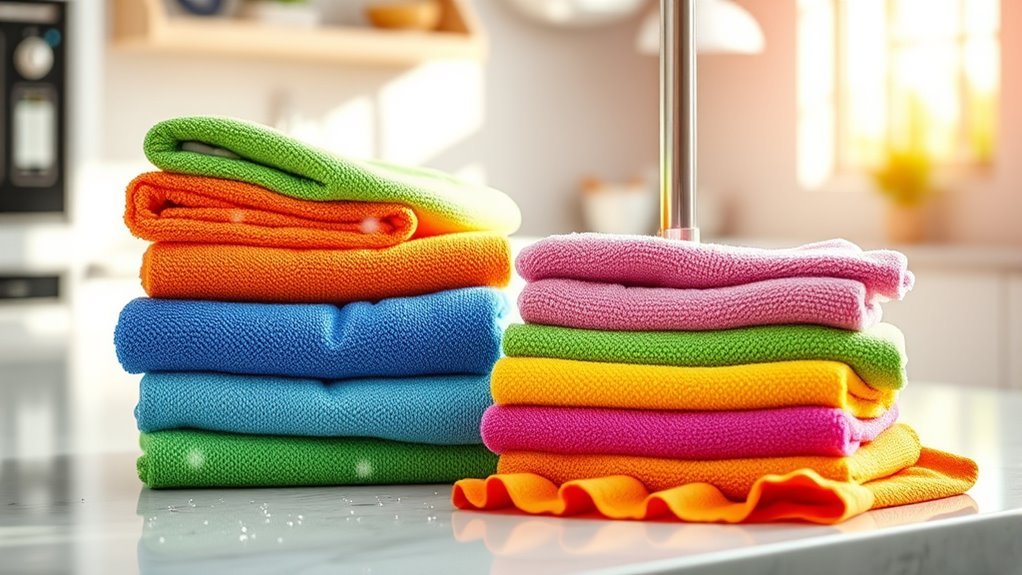
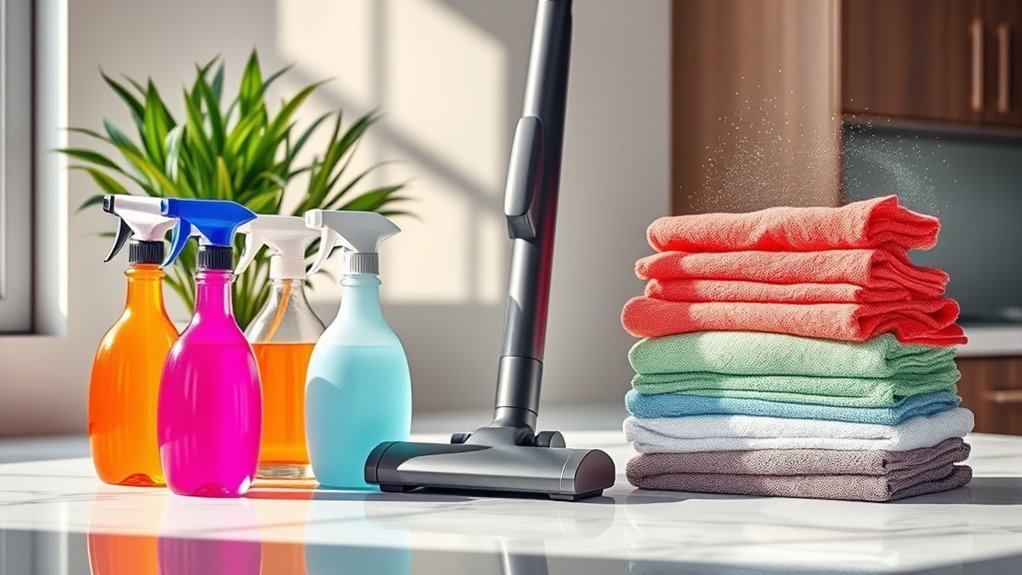
Although dust mite sprays help reduce allergens, microfiber cleaning cloths and mops play an essential role in trapping and removing dust, pet dander, and other allergens from your surfaces. You’ll love the microfiber advantages: these cloths attract particles like a magnet, making your cleaning techniques more effective without harsh chemicals. They’re lightweight, reusable, and perfect for reaching tight spots, giving you freedom from constant sneezing or irritation. When you choose microfiber, you’re not just cleaning—you’re reclaiming your space.
Microfiber cloths trap allergens effortlessly, making cleaning easy, chemical-free, and your home truly allergen-free.
- Feel the satisfaction of a truly dust-free home
- Enjoy the ease of quick, chemical-free cleaning
- Protect your family’s health naturally
- Experience less irritation and more comfort
- Embrace a cleaner, fresher living space every day
Dehumidifiers to Reduce Mold and Mildew
You’ll find that dehumidifiers are great for cutting down mold and mildew by keeping moisture levels low. Picking the right model depends on the size of your space and how much humidity you need to control. Let’s look at what features to evaluate so you can choose the best one for your home.
Benefits of Dehumidifiers
Since mold and mildew thrive in damp environments, using a dehumidifier can make a big difference in reducing allergens in your home. With effective humidity control, you’re not just preventing mold growth—you’re creating a space where you can breathe freely and feel truly at ease. This simple device brings allergy relief by reducing moisture, which stops dust mites and mildew from taking over.
By choosing a dehumidifier, you’ll enjoy:
- Clearer air that lets you live without constant sneezing
- A fresher home free from musty odors
- Less risk of mold damaging your walls and belongings
- Greater comfort in every room, day and night
- Freedom to invite friends over without worrying about allergens
Take control of your environment and reclaim your home’s health today.
Choosing the Right Model
Controlling humidity is a great step toward reducing allergens, but picking the right dehumidifier can make all the difference. You want a model that effectively targets the main allergen sources in your space, like mold and mildew hotspots. Consider the size of the room and the unit’s capacity to guarantee it removes enough moisture without running constantly. Look for features that simplify maintenance, since cleaning frequency impacts both performance and your freedom from hassle. Models with washable filters and easy-to-empty water tanks save you time and effort. Also, energy efficiency matters if you want to keep costs down while breathing easier. Choosing wisely means you control your environment—and your allergens—without being chained to complicated upkeep or excessive energy bills.
Frequently Asked Questions
Can Air Purifiers Remove Pet Dander Completely?
Think of air purifiers as your home’s unsung heroes, working tirelessly to battle invisible foes. While they can’t remove pet dander completely, their air purifiers effectiveness in pet dander reduction is impressive. You’ll notice fewer allergens floating around, giving you more freedom to breathe easy and enjoy your space. Just remember, combining purifiers with regular cleaning boosts your chances of keeping pet dander at bay and your home feeling fresh.
How Often Should Hypoallergenic Bedding Be Washed?
You should wash your hypoallergenic bedding at least once every one to two weeks to prevent allergen buildup. Sticking to this washing frequency helps you keep dust mites, pet dander, and other irritants in check, giving you the freedom to breathe easy and sleep comfortably. If you’re especially sensitive, consider washing more often. Regular cleaning keeps your space fresh and allergen-free, so you can enjoy your home without restrictions.
Are Natural Cleaning Products Effective Against Allergens?
Think of natural cleaning products as gentle warriors, using natural ingredients to fight allergens without harsh chemicals. You might wonder if their cleaning efficacy matches that of traditional cleaners. While they can be effective against many allergens, their power varies depending on the product and allergen type. You’ll enjoy the freedom of a safer, eco-friendly clean, but sometimes a stronger solution might be necessary for stubborn allergens.
Can Using Multiple Allergen Products Cause Skin Irritation?
Yes, using multiple allergen products can increase your risk of skin irritation, especially if you have skin sensitivity. Each product has different ingredients that might react with one another or overwhelm your skin’s natural barrier. To protect your freedom in choosing cleaning solutions, always check product ingredients carefully and test a small area first. That way, you can keep your skin happy while still managing allergens effectively.
Do Dehumidifiers Help With Pollen Allergies Indoors?
Imagine your home as a fortress, where every breath feels like a breeze through an open window. A dehumidifier can be your ally here, reducing moisture that pollen loves to cling to. By controlling humidity, it diminishes indoor pollen’s grip, offering dehumidifier benefits that let you breathe freely. So yes, using one helps keep those pesky allergens at bay, giving you the freedom to enjoy your space without constant sneezing or discomfort.