Best Products to Clean Your Sofa
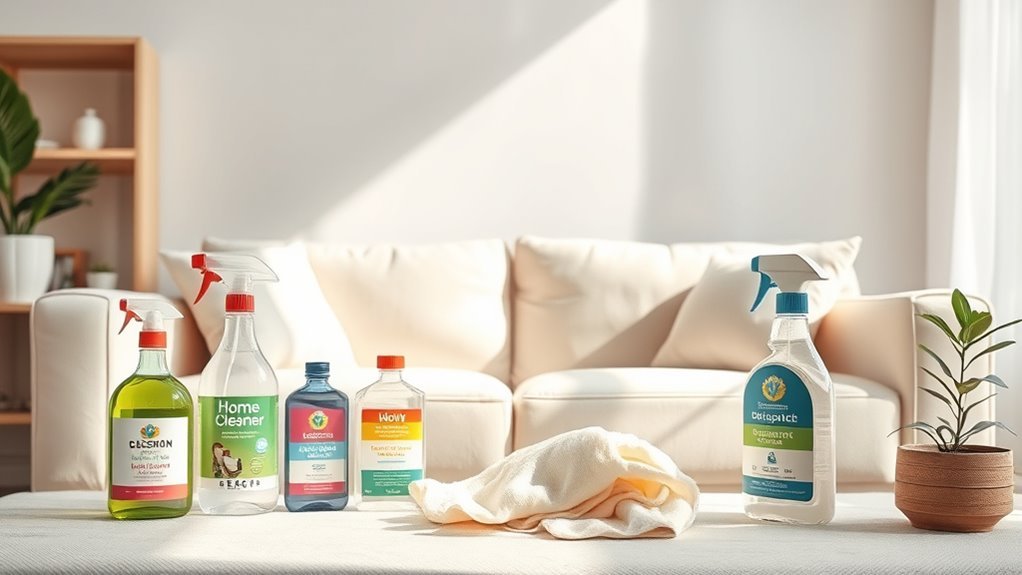
For the best sofa cleaning, choose fabric cleaners made for upholstery and test in a hidden spot to avoid damage. For leather, use pH-balanced cleaners and conditioners to keep it soft and protected. Natural options like vinegar or baking soda work well too. Don’t forget a good upholstery vacuum and enzymatic spot cleaners for pet stains. Finish with odor eliminators and protective sprays to guard against future messes. Keep exploring to discover detailed tips on each product type.
Fabric Sofa Cleaners for Deep Stain Removal
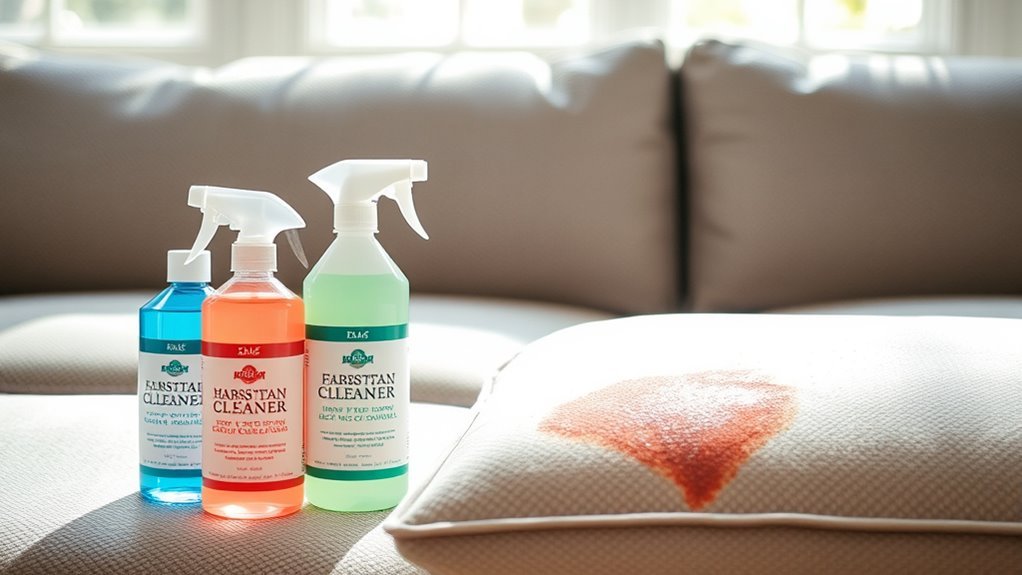
When you’re dealing with tough stains on your fabric sofa, choosing the right cleaner is essential to avoid damage and guarantee effective removal. Start by selecting fabric stain removers specifically designed for upholstery, as they target embedded dirt without harming fibers. Always test a small, hidden area first to verify colorfastness. For best results, apply the cleaner promptly and gently blot the stain—avoid rubbing, which can spread it. Incorporate upholstery maintenance tips like regular vacuuming and immediate spot cleaning to prevent buildup and prolong your sofa’s life. Using the correct products and techniques gives you freedom from stubborn stains and costly replacements, keeping your fabric sofa fresh and inviting with minimal effort. Remember to check the care labels on your sofa to ensure you choose a cleaning method that is safe and suitable for the fabric type.
Leather Sofa Cleaning Products and Conditioners
When it comes to leather sofas, choosing the right cleaner is crucial to preserve their natural texture and color. You’ll also want to use conditioners that keep the leather supple and prevent cracking over time. Apply these products carefully by following specific tips to guarantee your sofa stays looking its best without damage.
Top Leather Cleaners
Choosing the right leather cleaner is crucial to maintain your sofa’s appearance and durability. When selecting top leather cleaners, look for pH-balanced formulas that gently remove dirt without stripping natural oils. Avoid harsh chemicals that can dry or damage the leather. Use leather cleaning tips like testing the product on a hidden area first to verify it won’t discolor or harm your sofa. Clean regularly to prevent buildup and keep your leather soft and supple, setting the stage for using the best leather conditioners afterward. Popular choices include mild soap-based cleaners and specialized leather foams that penetrate crevices easily. By sticking to proven products designed specifically for leather, you’ll protect your investment and enjoy a comfortable, well-maintained sofa that supports your lifestyle without compromise.
Conditioning Benefits Explained
Although cleaning your leather sofa removes dirt and grime, conditioning is essential to restore moisture and maintain its softness. Conditioning prevents cracking and fading, directly boosting your sofa longevity. Depending on your cleaning frequency, conditioning every 3-6 months keeps leather supple and vibrant.
| Benefit | Description |
|---|---|
| Moisture Restoration | Replenishes natural oils lost over time |
| Softness Maintenance | Keeps leather feeling smooth and flexible |
| Protection | Shields against stains and wear |
| Enhanced Durability | Extends the life of your sofa |
Application Tips and Tricks
Since proper application guarantees the effectiveness of leather sofa cleaning products and conditioners, it’s important to follow specific steps for the best results. Start by testing the product on a small, hidden area to confirm it won’t damage the leather. Use a soft cloth or sponge, applying the cleaner gently in circular motions. Avoid soaking the fabric; excess moisture can harm leather. After cleaning, let the sofa dry naturally before applying a conditioner to restore moisture and flexibility. Regular fabric maintenance, like dusting and wiping spills promptly, enhances longevity. Also, avoid harsh chemicals and abrasive tools that can degrade the leather. By mastering these cleaning techniques, you’ll preserve your sofa’s appearance and enjoy the freedom of a fresh, well-maintained living space.
Natural and Homemade Solutions for Sofa Care
You can keep your sofa fresh and clean using simple natural ingredients like vinegar and baking soda, which effectively tackle stains and odors. For leather sofas, olive oil works as a gentle conditioner to maintain softness without harsh chemicals. Additionally, a DIY fabric freshener spray can quickly refresh your upholstery between deep cleans. Understanding your sofa’s fabric types helps you choose the best cleaning method without damaging the material.
Vinegar and Baking Soda
Two common household ingredients—vinegar and baking soda—offer an effective and natural way to clean your sofa without harsh chemicals. Using these staples, you can refresh your sofa while enjoying the vinegar benefits such as odor neutralization and mild antibacterial properties. Baking soda helps absorb stains and eliminate odors, making it an ideal companion.
To clean your sofa with vinegar and baking soda, try this:
- Sprinkle baking soda over the fabric and let it sit for 15 minutes.
- Vacuum the baking soda thoroughly.
- Mix equal parts white vinegar and water in a spray bottle.
- Lightly mist the sofa and blot stains with a clean cloth.
This method is safe, budget-friendly, and gives you control over what touches your furniture.
Olive Oil Leather Conditioner
Olive oil serves as a natural and effective conditioner for leather sofas, helping to restore moisture and maintain suppleness without relying on commercial chemicals. You can easily harness olive oil benefits by mixing it with a small amount of lemon juice, applying it sparingly with a soft cloth. This DIY solution penetrates the leather, preventing cracks and dullness, essential for long-term leather maintenance. Always test on a hidden spot first to avoid discoloration. After application, buff gently to bring out a natural shine without making the surface greasy. Using olive oil regularly keeps your leather sofa flexible and vibrant, giving you a simple, eco-friendly way to care for your furniture without harsh additives. It’s a practical choice for anyone seeking freedom from synthetic conditioners.
DIY Fabric Freshener Spray
While leather sofas benefit from natural conditioners like olive oil, fabric sofas require a different approach to stay fresh and clean. A DIY fabric freshener spray is a simple, effective way to add a lasting fabric scent and deliver a freshness boost without harsh chemicals. Here’s how you can make your own:
- Mix 1 cup distilled water with 1/4 cup white vinegar
- Add 10-15 drops of your favorite essential oil (lavender, eucalyptus, or lemon)
- Pour the blend into a spray bottle and shake well before use
- Lightly mist your sofa, avoiding saturation, and let it air dry
This homemade spray neutralizes odors and refreshes your fabric, giving you freedom from store-bought products loaded with synthetic fragrances.
Upholstery Vacuum Cleaners and Accessories
Because regular vacuuming can extend your sofa’s lifespan, investing in a quality upholstery vacuum cleaner is essential. With the right vacuum cleaner features, you’ll efficiently remove dust, pet hair, and debris, making upholstery maintenance tips easier to follow. Choosing tools with versatile attachments lets you reach crevices and corners effortlessly.
| Vacuum Model | Key Features | Ideal Use |
|---|---|---|
| CleanMax Pro | HEPA filter, crevice tool | Pet hair, deep cleaning |
| SwiftVac Ultra | Lightweight, extendable hose | Quick daily maintenance |
| EcoVac Compact | Cordless, quiet operation | Small apartments, studios |
| PowerBrush 360 | Motorized brush, adjustable suction | Heavy-duty dirt removal |
Selecting the right vacuum and accessories empowers you to maintain your sofa’s freshness and durability with ease. Regular vacuuming is recommended on a weekly or biweekly schedule to keep your sofa clean and fresh.
Odor Eliminators and Deodorizers for Sofas
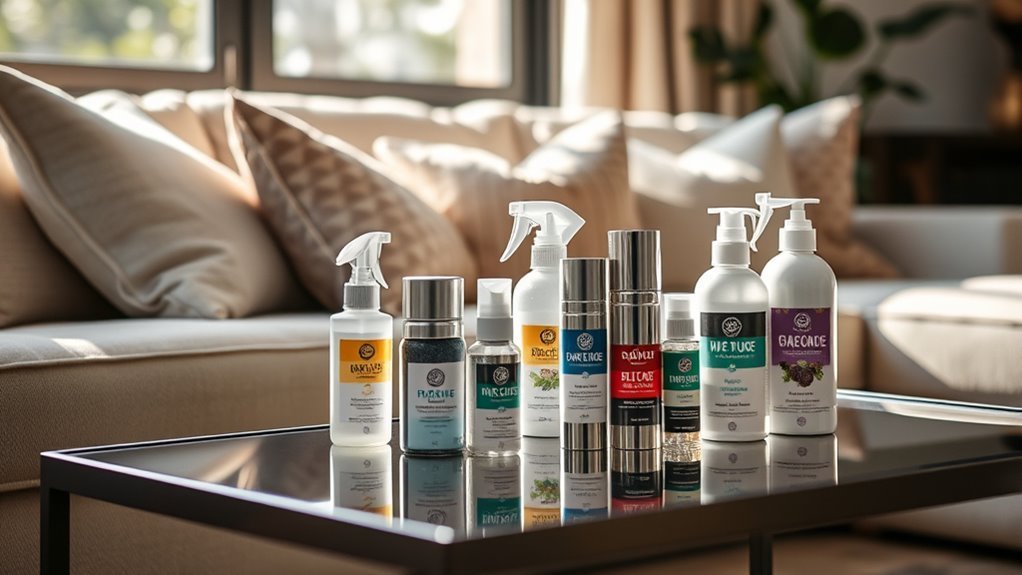
After you’ve thoroughly vacuumed your sofa to remove dust and debris, the next step is tackling lingering odors that can affect comfort and freshness. Odor eliminators and deodorizers help restore your sofa’s inviting feel without harsh chemicals. You can choose from various effective options to suit your lifestyle:
- Scented sprays: Quickly mask odors with pleasant fragrances, perfect for immediate freshness.
- Natural deodorizers: Use baking soda or activated charcoal to absorb smells without synthetic additives.
- Essential oil blends: Combine freshness and aromatherapy benefits for a soothing environment.
- Fabric-safe enzyme cleaners: Break down odor-causing molecules, especially useful for organic smells.
Selecting the right product lets you enjoy a cleaner, fresher sofa that fits your preference for simple, natural care. Regular use of enzymatic cleaners helps maintain a clean, inviting sofa by neutralizing odors at the source.
Spot Cleaners for Pet Stains and Accidents
If your sofa has pets, you know accidents happen and spot cleaning becomes essential. When tackling stains, starting quickly with effective spot cleaning techniques is your best bet. Choose pet stain removers designed to break down urine, feces, or vomit without damaging your sofa’s fabric. Look for enzymatic formulas—they target organic matter at the source, making stains vanish and odors disappear. Apply the cleaner gently, blotting rather than rubbing to avoid spreading the stain. Always test a small, hidden area first to verify colorfastness. For stubborn spots, repeat the process as needed but avoid overwetting. Using the right spot cleaning products and methods lets you keep your sofa fresh and stain-free, giving you the freedom to relax without worrying about pet messes. Immediate action is crucial since you should begin cleaning within minutes to prevent stains from setting, ensuring easier removal and preserving your sofa’s appearance with quick response.
Protective Sprays to Prevent Future Stains
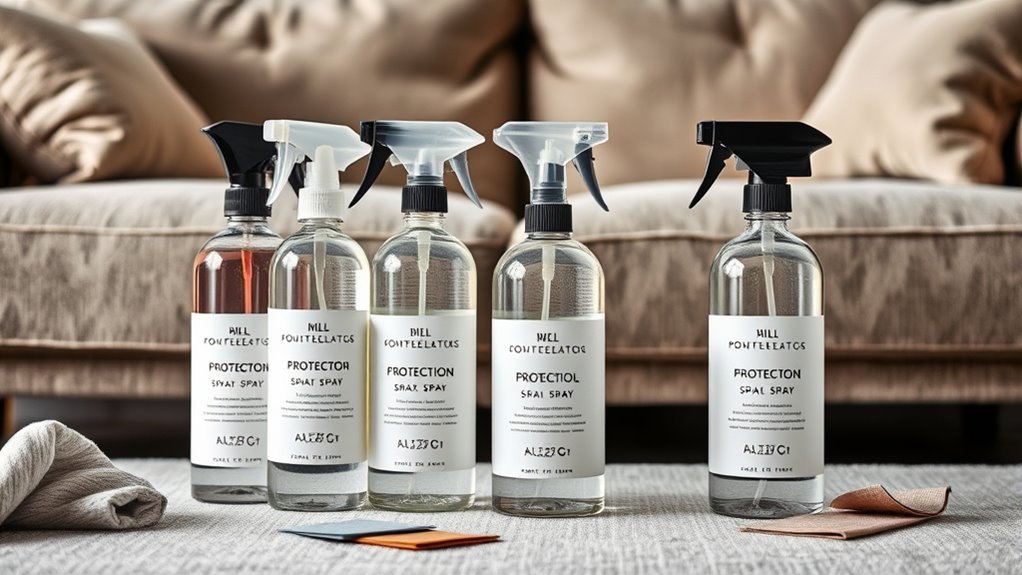
While spot cleaning is essential for dealing with stains as they happen, using protective sprays can help you prevent future messes from settling into your sofa. Protective spray benefits include creating a barrier that repels liquids and resists dirt, saving you time and effort. To maximize these benefits, focus on proper application techniques. Here’s what you should do:
- Clean your sofa thoroughly before applying the spray.
- Test the spray on a hidden area to verify fabric compatibility.
- Apply evenly from a distance of about 6-8 inches, covering all surfaces.
- Allow the sofa to dry completely before use, usually 24 hours.
Using natural cleaning methods when preparing your sofa ensures a chemical-free environment that supports fabric longevity.
Frequently Asked Questions
How Often Should I Professionally Clean My Sofa?
You should consider scheduling cleanings for your sofa every 12 to 18 months to maintain its appearance and hygiene. Cleaning frequency depends on factors like usage, presence of pets, and allergies. If you have kids or pets, more frequent professional cleanings might be necessary. Regularly vacuuming and spot cleaning can extend the time between deep cleans. Staying on top of cleaning frequency helps you enjoy a fresher, longer-lasting sofa without hassle.
Can I Use Regular Household Cleaners on My Sofa?
You might think using any household cleaner types would be a quick fix, but it’s a delicate dance with your sofa fabric compatibility. Some cleaners can be a bit too harsh, causing fading or damage. Instead, check your sofa’s care tag and choose cleaners designed for its material. That way, you maintain your sofa’s freedom to look fresh without risking unwanted wear or discoloration. Always test a small spot first!
What Is the Best Way to Dry a Cleaned Sofa?
When drying a cleaned sofa, you’ll want to focus on air circulation to speed up the process and prevent any lingering moisture. Open windows or use fans to keep air moving around the sofa. Avoid direct heat, like hairdryers, which can damage fabric. Instead, try natural drying techniques: letting the sofa dry in a well-ventilated room guarantees it dries evenly and keeps your space fresh and free from damp smells.
Are Steam Cleaners Safe for All Sofa Materials?
Steam cleaner types vary, and not all are safe for every sofa material. You’ll want to check your sofa material compatibility before using one. For example, delicate fabrics like silk or velvet may get damaged by steam, while synthetic fibers usually handle it well. Always test a hidden spot first, so you can enjoy your freedom to clean without worries or damage. Choose the right steam cleaner type for your sofa’s fabric.
How Do I Remove Mold or Mildew From My Sofa?
Mold and mildew can feel invasive, yet you can reclaim your sofa’s freshness with simple steps. Start by vacuuming to remove spores, then gently wipe the area with a mix of equal parts water and white vinegar. Let it dry completely to prevent mold growth. Regular upholstery maintenance, like airing out cushions and controlling humidity, is key to mold prevention. With these habits, you’ll enjoy a cleaner, healthier living space free from mold worries.