Best Walls for Cleaning Bathroom
For easy-to-clean bathroom walls, choose moisture-resistant paints or finishes with built-in barriers that prevent mold and stains. Ceramic and porcelain tiles offer durable, non-porous surfaces that repel moisture and resist scratches. Waterproof panels made from PVC or acrylic simplify cleaning by eliminating grout. Glass walls add sleek brightness and wipe down easily, while vinyl wallcoverings combine style with mildew resistance. If you want to explore the ideal materials that balance cleanliness and style, keep exploring your options.
Moisture-Resistant Paints and Finishes
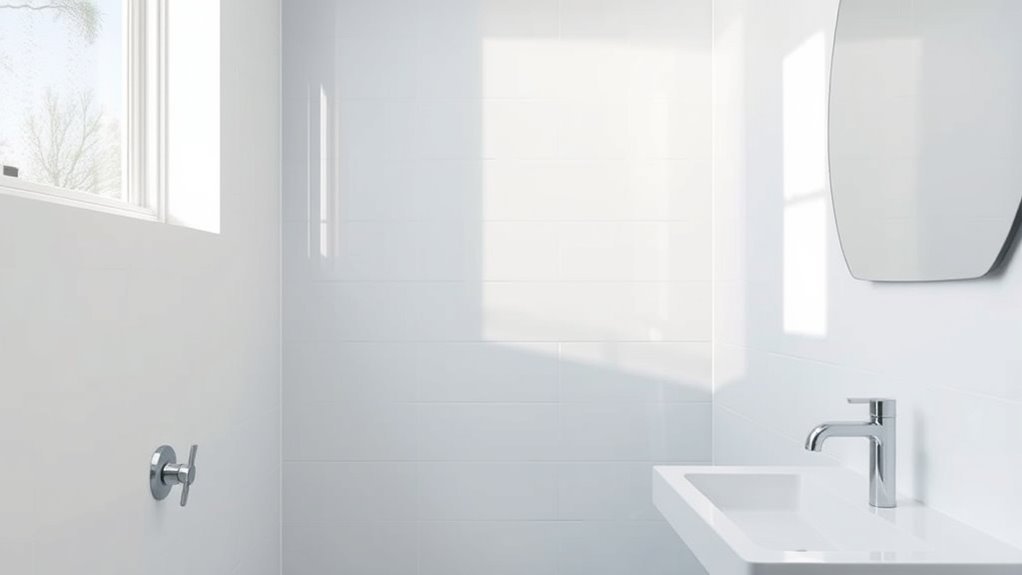
Although bathrooms are often humid, choosing moisture-resistant paints and finishes can make cleaning much easier and protect your walls from damage. You’ll want to select paints designed with built-in moisture barriers that prevent water absorption and mold growth. These coatings enhance paint durability, allowing you to wipe down surfaces without worrying about peeling or stains. Semi-gloss or satin finishes are ideal because they resist moisture and provide a smooth surface that repels dirt. By investing in high-quality moisture-resistant paints, you maintain your bathroom’s appearance longer and reduce maintenance time. This freedom from constant upkeep lets you enjoy a clean, fresh space without the hassle of frequent repainting or repairs. Prioritize moisture barriers to guarantee your bathroom walls stay resilient and easy to maintain. Using microfiber cloths to wipe down these surfaces can further help prevent moisture buildup and keep walls spotless.
Ceramic and Porcelain Tiles
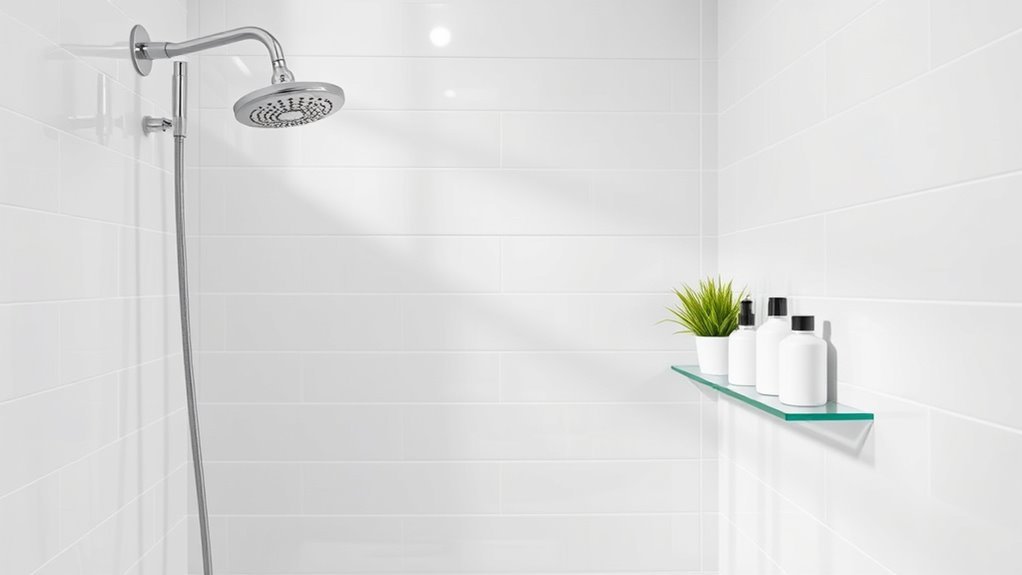
When you want a bathroom wall that’s both stylish and easy to clean, ceramic and porcelain tiles are excellent choices. Ceramic aesthetics offer a wide range of colors, patterns, and textures, allowing you to personalize your space without sacrificing functionality. Porcelain durability means these tiles resist moisture, stains, and scratches better than many alternatives, making maintenance straightforward. You can simply wipe them down with a mild cleaner to keep them looking fresh. Their hard, non-porous surfaces don’t harbor mold or mildew, which is essential in wet environments. Plus, their longevity means fewer replacements and less hassle over time. Choosing ceramic or porcelain tiles gives you freedom—not just in design but also in maintaining a clean, hygienic bathroom with minimal effort. To ensure the best results, avoid using ammonia, bleach, or synthetic fragrances when cleaning to prevent irritation and preserve tile integrity with eco-friendly cleaning products.
Waterproof Wall Panels

Since bathroom walls are constantly exposed to moisture, waterproof wall panels offer a practical solution that’s both durable and easy to maintain. These panels are made from waterproof materials like PVC, acrylic, or fiberglass, ensuring they resist mold, mildew, and water damage. You’ll appreciate how their smooth surfaces make cleaning quick and hassle-free, freeing you from scrubbing grout lines. Installation techniques vary, but most panels can be mounted directly over existing walls using adhesive or screws, minimizing prep time. They also come in large sheets, reducing seams and potential water entry points. By choosing waterproof wall panels, you get a sleek, low-maintenance bathroom wall that stands up to humidity and simplifies your cleaning routine, giving you more freedom to enjoy your space.
Glass Walls and Backsplashes
Waterproof wall panels protect your bathroom from moisture, but glass walls and backsplashes take both protection and style a step further. They offer a sleek, modern look that brightens your space while resisting water damage. To keep them pristine, follow essential glass maintenance tips: regularly wipe down surfaces with a squeegee, use non-abrasive cleaners, and avoid hard water stains by drying after each use. Glass backsplashes also align with current backsplash design trends, adding a reflective quality that makes your bathroom feel larger and more open. If you want a low-maintenance yet elegant wall option, glass is ideal. It’s durable, easy to clean, and complements various décors, giving you the freedom to update your bathroom without hassle. Using non-abrasive cleaners will help preserve the finish and maintain the glass’s clear and streak-free appearance.
Vinyl Wallcoverings and Wallpapers
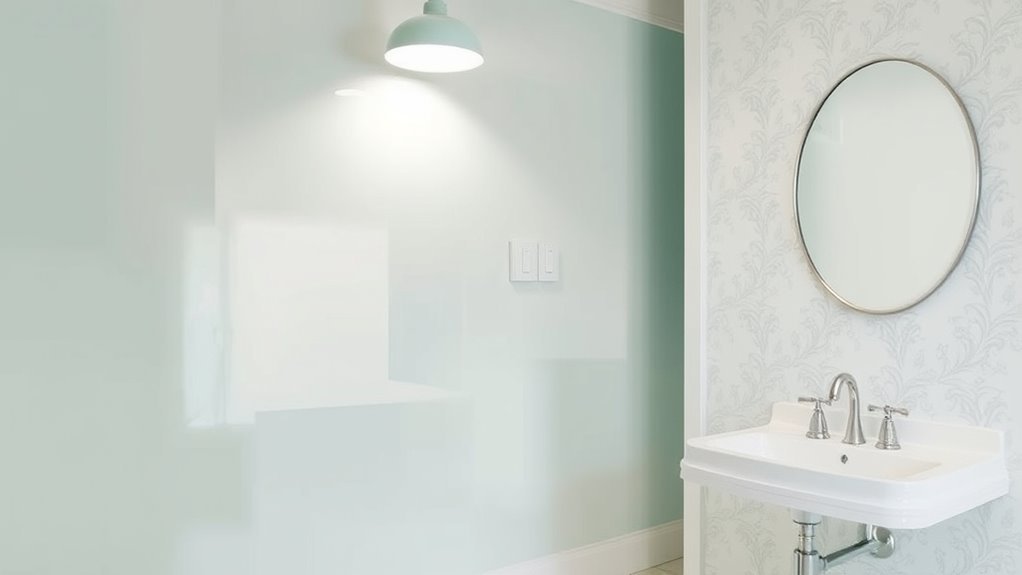
Although bathrooms are exposed to moisture, vinyl wallcoverings and wallpapers offer a practical and stylish solution that’s designed to withstand damp conditions. You’ll appreciate their durability and resistance to mold and mildew, making them ideal for bathroom walls. Many vinyl options come with peelable layers, allowing you to easily update your space without hassle. This feature gives you the freedom to change designs whenever you want, without damaging the underlying wall. Plus, their easy maintenance means you can clean them with a damp cloth or mild detergent, saving you time and effort. If you want a bathroom wall that balances aesthetics with functionality, vinyl wallcoverings and wallpapers are a smart, low-maintenance choice that adapts to your lifestyle. Additionally, choosing products with biodegradable packaging can further enhance your commitment to sustainable living in your bathroom.
Frequently Asked Questions
How Do I Prevent Mold Growth Behind Bathroom Walls?
To prevent mold growth behind bathroom walls, you’ll want to use mold resistant materials like moisture-resistant drywall or cement board. Make sure your ventilation systems are effective—install exhaust fans to reduce humidity and keep air circulating. Regularly check for leaks or water damage, and address them quickly. Keeping walls dry and well-ventilated stops mold before it starts, giving you freedom from constant worries about hidden mold issues.
Can I Use Regular Paint in a Bathroom With High Humidity?
You probably shouldn’t use regular paint in a bathroom with high humidity since it lacks the humidity resistant properties needed. Instead, pick a paint specifically designed for moist environments to guarantee paint durability and prevent peeling or mold growth. These paints help your walls breathe while standing up to steam and moisture, giving you freedom from constant touch-ups or damage. It’s a small switch that saves you hassle and keeps your bathroom fresh longer.
What Is the Best Way to Repair Damaged Bathroom Walls?
Got damaged bathroom walls? Why settle for quick fixes when you can choose the right wall types and repair techniques that last? Start by identifying the wall material—drywall, plaster, or tile backing. For drywall, patch small holes with joint compound; larger damage may need replacement. Use mold-resistant materials and waterproof primers in humid areas. Sand smooth, then repaint with moisture-resistant paint. With the right steps, you’ll enjoy durable, fresh-looking walls that stand up to bathroom challenges.
How Often Should Bathroom Wall Materials Be Replaced?
You should replace bathroom wall materials based on wear and damage rather than a strict timeline. With proper bathroom maintenance, walls can last 10-15 years or more. Keep an eye out for mold, peeling paint, or water damage—signs your wall longevity is compromised. Address issues promptly to extend life, but don’t hesitate to swap materials if damage affects your comfort or freedom in the space.
Are There Eco-Friendly Options for Bathroom Wall Materials?
You’ll find plenty of eco-friendly bathroom wall materials that align with your values. Sustainable materials like bamboo panels or cork offer durability and a natural look. Recycled options, such as reclaimed wood or tiles made from crushed glass, reduce waste while adding unique style. Choosing these helps lower your environmental impact without sacrificing quality. You get to create a space that’s both stylish and kind to the planet.