Best Way to Sanitize Your Front Porch
To sanitize your front porch effectively, start by clearing all furniture and debris so you can clean every surface well. Use pet-safe, eco-friendly disinfectants—natural options like vinegar or hydrogen peroxide work great, especially on wood to avoid damage. Scrub concrete with mild detergent and a brush, and wipe metal surfaces dry to prevent rust. Regularly removing dirt and moisture helps prevent germs and mold buildup. Keep your porch clean and healthy, and there’s more you can do to maintain it seasonally.
Preparing Your Porch for Cleaning
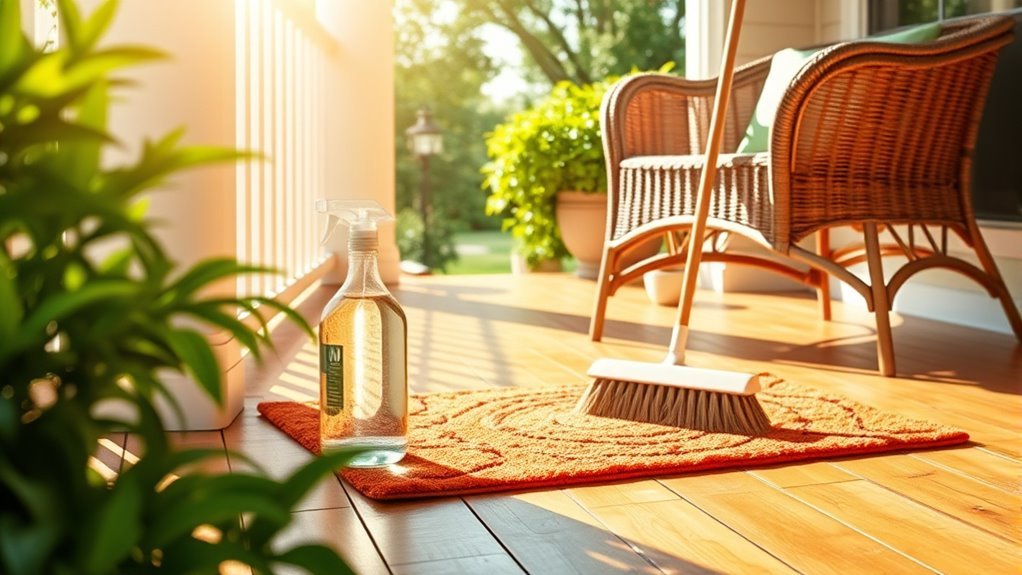
Before you begin sanitizing your front porch, it’s essential to prepare the area properly. Start by removing all porch furniture and seasonal decorations to give yourself clear access to every surface. This step guarantees you won’t miss any spots and prevents damage to your belongings. Place furniture and decorations in a safe, dry spot while you clean. Next, sweep the porch thoroughly to remove dirt, leaves, and debris that can harbor germs. If you have rugs or mats, take them outside and shake them out as well. Preparing your porch this way not only makes the cleaning process more efficient but also helps you maintain the freedom to enjoy a fresh, inviting space without lingering dirt or contaminants.
Choosing the Right Cleaning Solutions
When selecting cleaning solutions for your front porch, it’s important to pick disinfectants that are both effective and safe for your family and pets. You’ll also want to take into account eco-friendly options that minimize environmental impact without compromising cleanliness. Choosing the right products guarantees your porch stays sanitary and your outdoor space remains healthy. Incorporating natural ingredients like vinegar and essential oils can provide effective cleaning while reducing exposure to harsh chemicals.
Safe Disinfectant Options
Although many cleaning products claim to disinfect effectively, choosing the right solution for your front porch is essential to guarantee safety and durability. When selecting a safe disinfectant, consider these options:
- Use a safe spray containing hydrogen peroxide or alcohol, which effectively kills germs without harsh chemicals.
- Opt for natural remedies like diluted vinegar or tea tree oil solutions, known for their antimicrobial properties while being gentle on surfaces.
- Avoid bleach or ammonia-based products, which can damage paint and wood, compromising your porch’s longevity.
Eco-Friendly Cleaning Solutions
Choosing the right cleaning solutions goes hand in hand with selecting safe disinfectants for your front porch. To stay eco-friendly, opt for products made with natural ingredients that minimize environmental impact and protect your health. You can also create effective homemade solutions using simple items like vinegar, baking soda, and lemon juice. These ingredients are powerful against dirt and germs without harsh chemicals. When making your own cleaner, mix equal parts water and vinegar with a few drops of essential oils for a fresh scent. This approach not only keeps your porch sanitized but also reduces waste and chemical exposure. By choosing eco-friendly cleaning solutions, you maintain a safe, inviting space while embracing freedom from toxic substances and supporting sustainability.
Effective Cleaning Techniques for Different Surfaces
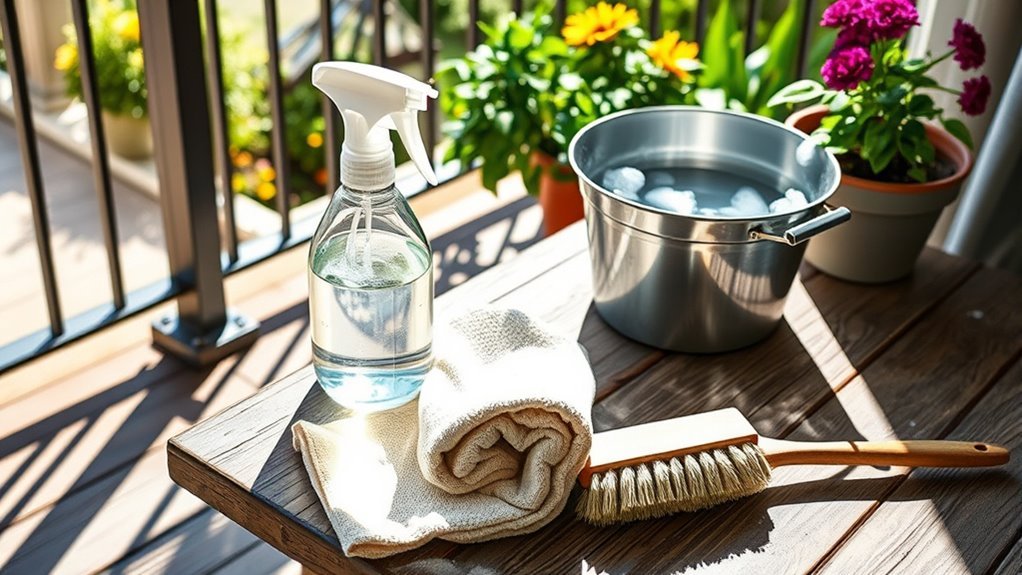
Since front porches often feature a variety of materials like wood, concrete, and metal, you’ll need tailored cleaning methods to sanitize each surface effectively. To maintain your outdoor furniture and complete seasonal maintenance with ease, follow these techniques:
- Concrete: Use a stiff brush with a mix of water and mild detergent. Scrub thoroughly to remove dirt and stains, then rinse with a hose.
- Metal: Wipe down with a soft cloth soaked in soapy water. Avoid harsh abrasives to prevent scratches, then dry completely to prevent rust.
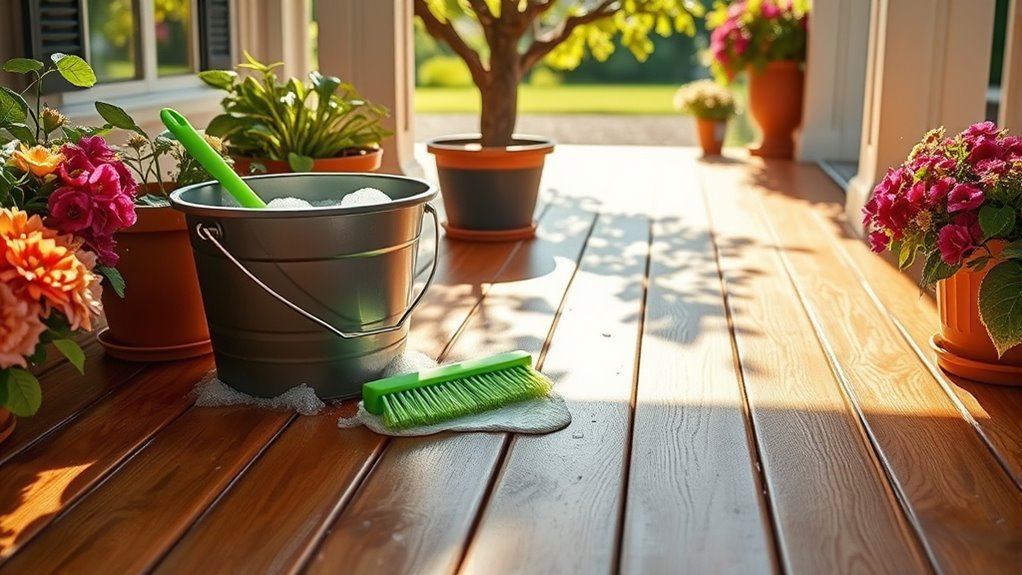
- Wood: Sweep debris first. Use a gentle cleaner suitable for wood, rinsing carefully to avoid damage.
Adopting these targeted approaches guarantees your porch stays clean and inviting, giving you the freedom to enjoy every season confidently. Additionally, understanding your porch’s specific flooring material allows you to customize cleaning for long-term maintenance and durability.
Disinfecting Wooden Porch Elements Safely
When disinfecting wooden porch elements, you’ll want to choose cleaning products that are effective yet gentle enough to avoid damaging the wood. Using proper techniques like gentle scrubbing and avoiding excessive moisture can help maintain the wood’s integrity. Taking these precautions guarantees your porch stays clean without compromising its durability.
Choosing Safe Cleaning Products
Although disinfecting your wooden porch elements is essential for maintaining a clean and healthy space, you need to select cleaning products that won’t damage the wood. Start by carefully reading product labels to identify safe ingredients that won’t strip or discolor the wood. Here’s how to choose wisely:
- Look for natural or plant-based disinfectants that avoid harsh chemicals like bleach or ammonia.
- Check for products labeled as safe for wood surfaces to guarantee they won’t degrade the finish or fibers.
- Avoid anything with abrasive additives; these can scratch and weaken the wood’s protective layer.
Proper Wood Cleaning Techniques
Proper wood cleaning techniques are essential to disinfect your porch without causing damage. Start by sweeping away loose dirt and debris to avoid scratching the wood surface during cleaning. Use a gentle, wood-safe disinfectant mixed with water, applying it with a soft brush or cloth to prevent abrasion. Avoid harsh chemicals that can strip wood preservation treatments. Rinse thoroughly with clean water to remove any residue. Keep in mind that cleaning frequency should balance sanitation needs with wood care—too often can wear down protective finishes. Aim for regular cleanings every few weeks during high-use seasons and less often in milder periods. By following these steps, you maintain both the safety and longevity of your wooden porch elements, giving you freedom to enjoy a clean, preserved outdoor space.
Preventing Wood Damage
To keep your wooden porch elements in good condition, you’ll need to choose disinfecting methods that won’t cause damage. Wood preservation is essential, so avoid harsh chemicals that can strip finishes or encourage moisture absorption. Focus on moisture control to prevent warping or mold growth during cleaning.
Here’s how you can disinfect safely:
- Use a mild, wood-safe disinfectant diluted according to instructions.
- Apply with a soft cloth or sponge to minimize surface abrasion.
- Dry thoroughly with a fan or cloth to prevent moisture retention.
Sanitizing Concrete and Tile Surfaces
Three simple steps can make sanitizing your concrete and tile surfaces both effective and straightforward. First, sweep or hose off dirt to prepare the area. Then, apply a suitable disinfectant, considering your surface materials to avoid damage. Finally, rinse and allow the area to dry completely. Adjust your cleaning frequency based on foot traffic and weather exposure to maintain hygiene without over-cleaning. Regularly sweeping debris and using the correct broom type can improve cleaning efficiency and prevent dirt buildup.
| Step | Action | Tip |
|---|---|---|
| 1 | Remove debris | Use a broom or leaf blower |
| 2 | Apply disinfectant | Choose one safe for concrete/tile |
| 3 | Rinse thoroughly | Use a garden hose or mop |
| 4 | Dry surface | Air dry to prevent slips |
| 5 | Monitor cleaning frequency | Increase after heavy use or rain |
This method keeps your porch safe and inviting.
Maintaining Your Porch to Prevent Germ Build-up
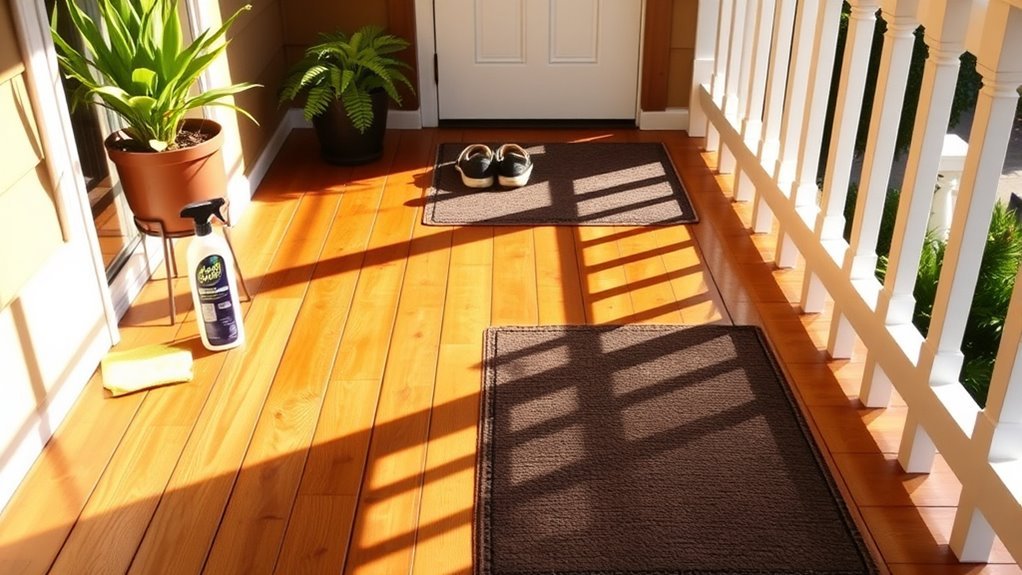
Keeping your concrete and tile surfaces clean is just one part of preventing germs on your porch. To truly maintain a healthy outdoor space, you’ll need to focus on other essential elements. Here’s how to keep your porch germ-free:
Maintaining a germ-free porch goes beyond clean floors—focus on furniture, seasonal care, and fresh air.
- Porch Furniture Care: Regularly wipe down chairs and tables with disinfectant, paying special attention to armrests and cushions that collect dirt and germs.
- Seasonal Maintenance: Perform deep cleaning each season—sweep debris, wash surfaces, and inspect for mold or mildew that encourage bacteria growth.
- Ventilation and Sunlight: Make sure your porch gets plenty of fresh air and sunlight, which naturally reduce moisture and kill germs.
- Use eco-friendly cleaning products to maintain cleanliness while protecting the environment and your porch plants.
Tips for Regular Porch Sanitization and Hygiene
While regular deep cleaning is essential, maintaining porch hygiene on a daily basis requires consistent small efforts. Start by wiping down your porch furniture each day with a disinfectant wipe or a solution of mild soap and water to prevent dirt and germs from settling. Pay special attention to armrests and tabletops where hands frequently touch. Remove or clean seasonal decor regularly, as dust and moisture can accumulate, creating ideal conditions for bacteria. Sweep the porch floor daily to eliminate debris and reduce the risk of slipping on wet surfaces. Open windows and doors nearby to encourage airflow, helping surfaces dry quickly after cleaning. By integrating these straightforward habits into your routine, you’ll keep your front porch inviting and sanitary without much effort, preserving your freedom to enjoy a fresh, safe outdoor space. Using pet-safe products is especially important to protect your pets while maintaining a fresh and clean home environment.
Frequently Asked Questions
How Often Should I Sanitize My Porch During Allergy Season?
Imagine stepping onto your porch, free from the sneezing and itching that allergy triggers bring. During allergy season, you should sanitize your porch at least once a week to manage pollen accumulation effectively. If you notice heavy pollen buildup or if someone in your household is highly sensitive, consider cleaning twice weekly. Keeping your porch sanitized helps you reclaim your space and breathe easier, letting you enjoy your freedom without constant allergy discomfort.
Can Pets Affect the Choice of Cleaning Products for My Porch?
Yes, pets definitely affect your choice of cleaning products since you want to keep them safe. You should opt for pet safe products that don’t contain harsh chemicals or toxins. Using gentle cleaning techniques like mild soap and water or natural solutions can protect your furry friends while keeping your porch clean. Always rinse thoroughly and let surfaces dry before letting pets back outside, so you’re free from worry about their health.
Are UV Lights Effective for Porch Sanitation?
You might wonder if UV technology is effective for porch sanitation. While UV lights can kill many germs and bacteria, their sanitization benefits depend on direct exposure and sufficient duration, which can be tricky outdoors. UV rays don’t penetrate dirt or shadows well, so you’d still need to clean surfaces first. For practical freedom, combining UV treatment with traditional methods guarantees your porch stays hygienic without limiting your routine.
What Is the Best Time of Day to Sanitize My Porch?
The best time to sanitize your porch is early morning, when the fresh morning sunlight helps naturally kill germs and bacteria. Cleaning during this time lets you take advantage of the sun’s disinfecting power. Alternatively, evening coolness is ideal for applying sanitizers that need time to dry without quick evaporation. You’ll enjoy a cleaner porch and more freedom to relax outside with minimal effort by choosing these times wisely.
How Do Weather Conditions Impact Porch Cleaning Frequency?
Did you know humidity can increase bacterial growth on surfaces by up to 90%? When thinking about how weather conditions impact porch cleaning frequency, seasonal considerations are key. In humid months, you’ll want to clean more often to prevent mold and mildew buildup. During dry or colder seasons, less frequent cleaning usually works. Adjusting your routine based on humidity effects helps keep your porch fresh without overdoing it, giving you freedom to enjoy your space.