Best Way to Sanitize Your Oven
To sanitize your oven effectively, start by removing racks and warming it slightly to loosen grime. Use natural cleaners like baking soda and vinegar—they fizz and break down grease without harsh chemicals. Let the mixture sit before wiping clean with a damp cloth. For tougher stains, eco-friendly commercial cleaners work well. Regular wipe-downs and avoiding spills prevent buildup and bacteria growth. If you want to keep your oven spotless and safe, there are plenty of helpful tips and insights ahead.
Understanding the Importance of Oven Sanitization
Oven sanitization is essential because it helps prevent the buildup of grease, food residue, and harmful bacteria that can affect your meals and your health. When you prioritize oven hygiene, you reduce the risk of cross-contamination and unpleasant odors that come from leftover grime. Ignoring these can lead to health risks like foodborne illnesses or allergic reactions. Keeping your oven clean not only safeguards your wellbeing but also guarantees your cooking remains true to flavor, allowing you the freedom to enjoy your food without worry. By maintaining proper oven hygiene, you’re taking control of your kitchen environment and promoting a safe, healthy space where you can create meals confidently and freely.
Preparing Your Oven for Cleaning
Before you start cleaning, make sure to remove the oven racks to give yourself full access to the interior. Next, preheat your oven for a few minutes to help loosen any baked-on grime. This simple prep will make the sanitizing process much easier and more effective.
Remove Oven Racks
Since cleaning is much easier without obstacles, you’ll want to remove the racks from your oven first. Taking out the oven racks frees up space and lets you focus on each part individually, making your cleaning techniques more effective. Here’s how to get started:
- Open the oven door fully to access the racks comfortably.
- Grip the front of the oven rack firmly and pull it straight out.
- Lift the rack slightly to disengage it from the side rails.
- Set the racks aside in a sink or tub for separate cleaning.
Removing the racks gives you freedom to clean every nook without hassle. Plus, it lets you apply specialized cleaning techniques to the racks themselves, ensuring your entire oven gets the attention it deserves.
Preheat for Loosening
One key step to make cleaning easier is to preheat your oven briefly to loosen stubborn grime. By doing this, you’re softening baked-on residue, so scrubbing becomes less of a chore. Set your oven temperature to a moderate level—around 250°F (120°C)—to avoid burning off residue or creating smoke. Use low to medium heat settings and keep the oven on for 10-15 minutes. This warms the dirt just enough to loosen it without risking damage.
| Oven Temperature | Heat Settings |
|---|---|
| 200°F (93°C) | Low |
| 250°F (120°C) | Medium-low |
| 300°F (149°C) | Medium |
Preheating is your first step toward freedom from tough grime—making the whole cleaning process smoother and faster.
Using Natural Ingredients to Sanitize Your Oven
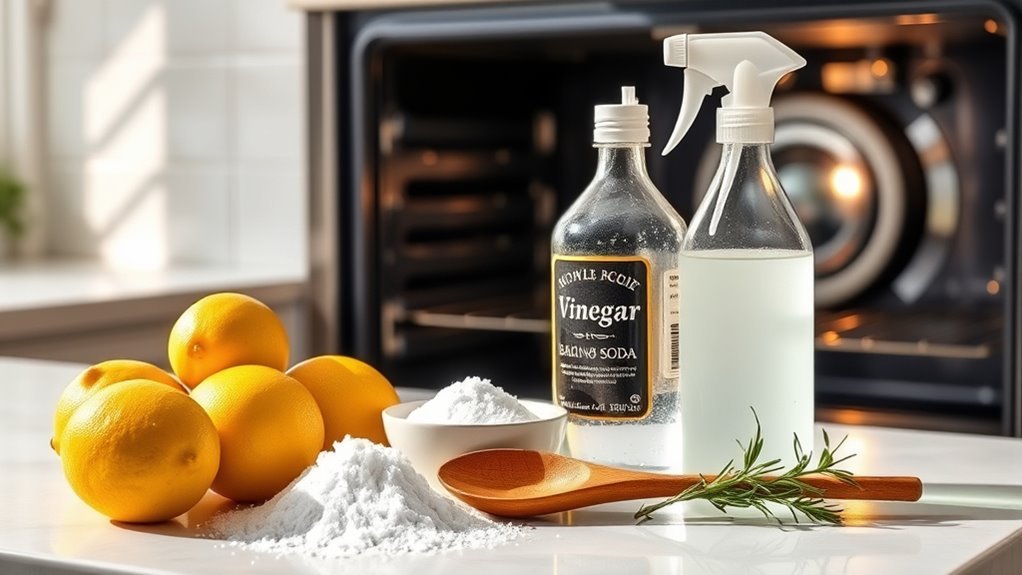
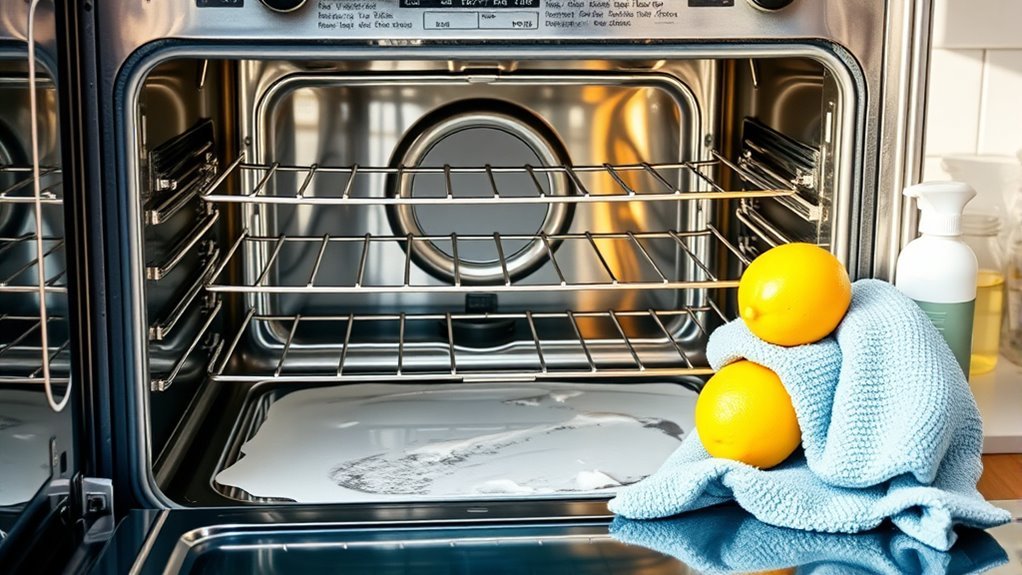
You can sanitize your oven effectively using natural ingredients like baking soda, which gently lifts grime without harsh chemicals. Vinegar adds powerful cleaning action, cutting through grease and residue with ease. For a fresh scent and extra boost, lemon’s natural acidity helps brighten and deodorize your oven.
Baking Soda Benefits
Baking soda is a natural powerhouse when it comes to sanitizing your oven. It frees you from harsh chemicals, offering a safer, eco-friendly clean. Here’s why you should embrace baking soda:
- Natural deodorizer: It eliminates odors, leaving your oven fresh without synthetic scents.
- Stain remover: Baking soda’s gentle abrasiveness tackles baked-on stains effortlessly.
- Grease cutter: It breaks down stubborn grease, making scrubbing easier and faster.
- Moisture absorber: Baking soda helps control moisture, preventing mold and mildew buildup.
Using baking soda lets you maintain a clean oven while enjoying freedom from toxic cleaners. It’s simple, effective, and respectful to both your health and the environment. Give your oven the natural care it deserves!
Vinegar Cleaning Power
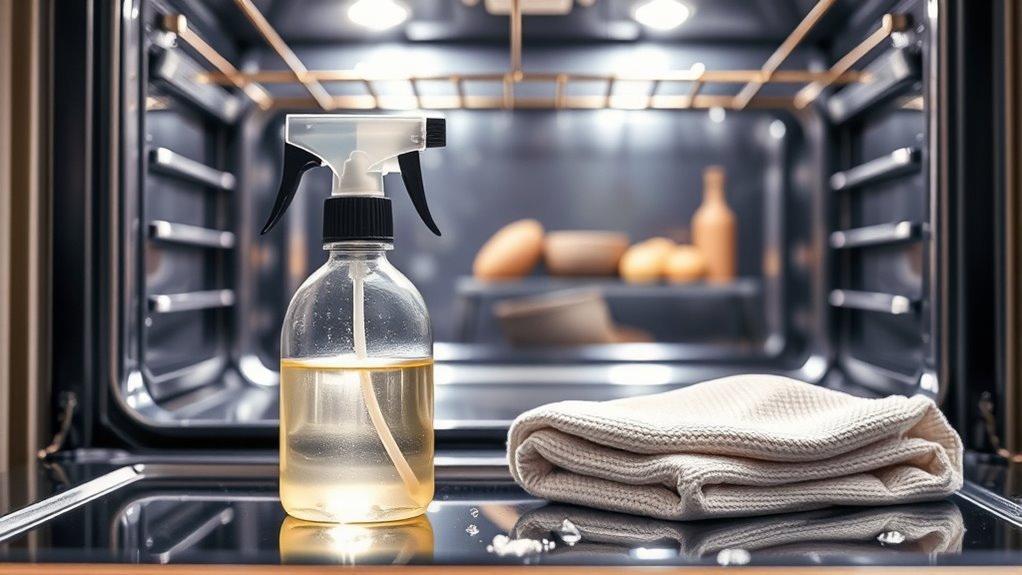
Vinegar’s natural acidity makes it a powerful ally in sanitizing your oven without harsh chemicals. When you use vinegar solutions, you’re choosing a safe, effective way to cut through grime and kill bacteria, all while avoiding toxic fumes. Simply mix equal parts water and white vinegar in a spray bottle, then spritz the oven’s interior surfaces. Let it sit for a few minutes before wiping it clean with a damp cloth. The vinegar benefits go beyond cleaning—it’s biodegradable, affordable, and widely available, giving you freedom from chemical-laden products. Plus, vinegar’s natural properties help dissolve stubborn grease and residue, making your oven shine without extra effort. Embracing vinegar solutions lets you maintain a clean kitchen in a natural, empowering way.
Lemon Freshness Boost
A few simple ingredients, like lemons, can give your oven a natural freshness boost while effectively sanitizing it. Using lemon juice not only cleans but leaves behind a delightful citrus aroma that refreshes your kitchen without harsh chemicals. Here’s how you can do it:
- Slice two lemons and squeeze the juice into an oven-safe dish.
- Add water to fill the dish halfway.
- Place the dish in your oven and heat at 250°F for 30 minutes.
- After cooling, wipe down the interior with a clean cloth.
This method harnesses the power of natural acidity to break down grime and neutralize odors, giving you freedom from synthetic cleaners while keeping your oven sparkling fresh.
How to Clean Your Oven With Baking Soda and Vinegar
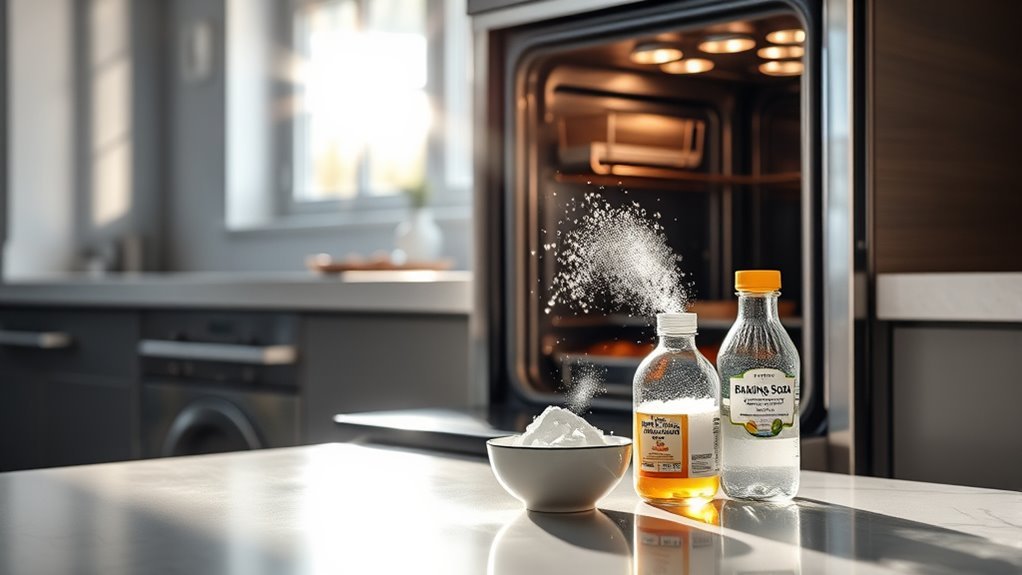
Cleaning your oven with baking soda and vinegar is an effective, natural method that doesn’t rely on harsh chemicals. Start by sprinkling a generous layer of baking soda over the oven’s interior surfaces. Baking soda’s effectiveness comes from its gentle abrasiveness and ability to break down grease and grime. Next, spray or pour vinegar onto the baking soda. This vinegar combination causes a fizzing reaction that loosens stubborn residue without toxic fumes. Let the mixture sit for at least 30 minutes—or overnight for tough stains—to work its magic. Afterward, simply wipe away the softened grime with a damp cloth or sponge. This approach frees you from harsh cleaners, giving you control over what touches your living space while leaving your oven fresh and sanitized naturally.
The Role of Heat in Oven Sanitization
While natural cleaners like baking soda and vinegar do a great job loosening grime, heat plays a powerful role in sanitizing your oven beyond just cleaning. Heat sanitation uses high temperatures to kill bacteria and pathogens that detergents can’t always reach. Understanding thermal effectiveness helps you harness your oven’s full sanitizing power. Here’s how heat steps up your oven care:
- High temperatures break down stubborn residues, making them easier to wipe away.
- Heat kills germs and bacteria, ensuring your oven is truly clean.
- Thermal effectiveness means maintaining the right temperature long enough for deep sanitization.
- Using your oven’s self-cleaning cycle maximizes heat sanitation without harsh chemicals.
Safe Commercial Oven Cleaners: What to Look For
Even if you prefer natural methods, sometimes you’ll need a commercial oven cleaner to tackle tough grime. When choosing one, prioritize eco friendly options that minimize harm to your health and the environment. Look for products with transparent ingredient safety information—avoid harsh chemicals like sodium hydroxide or chlorine bleach, which can be risky in confined spaces. Instead, opt for cleaners with biodegradable ingredients and non-toxic formulas that still pack a punch against grease. Always check labels for certifications like Green Seal or EPA Safer Choice to guarantee you’re picking a responsible product. By selecting safer commercial oven cleaners, you maintain your freedom to cook without worrying about lingering toxins or environmental damage. It’s a practical way to keep your oven spotless while honoring your values.
Preventing Future Buildup and Contamination
Choosing the right commercial cleaner helps keep your oven safe and spotless, but preventing buildup in the first place can save you time and effort later. To enjoy the freedom of a clean oven without constant scrubbing, consider these steps to manage your baking habits and cleaning frequency:
- Wipe spills immediately after the oven cools to stop residue from hardening.
- Adjust your baking habits by using oven-safe liners or trays to catch drips.
- Set a regular cleaning frequency—weekly or biweekly—to avoid tough grime.
- Avoid overcrowding your oven; better airflow reduces mess and contamination risk.
Tips for Maintaining a Germ-Free Oven
To keep your oven truly germ-free, you’ll need more than just routine cleaning; focusing on proper sanitization techniques is key. Maintaining oven hygiene is about staying consistent with regular maintenance and using the right methods to prevent bacteria buildup. Here’s a quick guide to help you keep freedom from germs in your cooking space:
| Tip | Why It Matters |
|---|---|
| Clean spills immediately | Prevents bacterial growth |
| Use natural disinfectants | Avoids harsh chemicals |
| Schedule deep cleans monthly | Keeps oven fresh and safe |
| Check door seals regularly | Maintains heat, kills germs |
| Air out your oven after use | Removes moisture, reduces mold |
Stick to these tips to enjoy a clean oven without hassle, ensuring your meals are safe and your kitchen stays fresh.
Signs Your Oven Needs a Deep Sanitization
There are several clear signs that your oven needs a deep sanitization to keep it safe and efficient. If you want to enjoy cooking without worry, watch for these indicators:
- Persistent odor detection — if your oven emits a strange or burnt smell even after use, it’s time for a thorough clean.
- Visible grease buildup — layers of grease not only look bad but can harbor harmful bacteria.
- Uneven heating — leftover grime can affect your oven’s performance, causing food to cook unevenly.
- Smoke during operation — smoke often signals accumulated residue burning off, a clear call for deep sanitization.
Frequently Asked Questions
Can I Sanitize My Oven Without Unplugging It?
You can sanitize your oven without unplugging it, but you need to prioritize oven safety. Many cleaning methods, like using commercial oven cleaners or natural solutions, don’t require unplugging, but make sure the oven is off and cool first. Avoid spraying electrical components directly, and ventilate the area well. If you’re unsure, unplugging adds extra safety, but with caution, you can clean effectively while keeping your freedom to choose how and when you do it.
How Often Should I Sanitize a Commercial Oven?
You should set your sanitization frequency based on your commercial kitchen’s workload and health regulations. Generally, ovens in busy kitchens need cleaning daily or after heavy use to keep things hygienic and safe. If your kitchen isn’t as hectic, a weekly deep clean might work. Staying consistent with sanitizing helps prevent buildup and keeps your equipment running smoothly, giving you more freedom to focus on creating great food without worries.
Are There Any Health Risks From Oven Sanitizers?
You might think sanitizer ingredients could turn your kitchen into a chemical warzone, but don’t worry! Some oven sanitizers contain harsh chemicals that, if misused, could lead to mild health effects like skin irritation or respiratory issues. To keep your freedom intact, always ventilate well, wear gloves, and follow the label instructions closely. Choosing natural or less toxic options helps you stay safe without feeling trapped by health risks.
Can Oven Liners Affect Sanitization Effectiveness?
Oven liners can actually help you keep things cleaner by catching spills, so you don’t have to scrub as often—this means you might reduce your cleaning frequency. However, if you’re aiming for full sanitization, liners could block heat or cleaning agents from reaching all surfaces, which might affect effectiveness. The benefits of oven liners are undeniable, but just remember to remove and clean them regularly to maintain that freedom from buildup and germs.
Is It Safe to Use Steam Cleaners on Ovens?
Think of your oven like an old friend—treating it harshly can backfire. Using steam cleaners can be effective for loosening grime thanks to their high heat and moisture, but you’ve got to mind oven safety precautions. Excess moisture might damage electrical parts or insulation. If you choose steam cleaner effectiveness, avoid prolonged exposure and unplug the oven first. This way, you keep your freedom to clean without risking costly damage.