Cleaning Checklist for Carpet Businesses
You’ll want to start with a thorough pre-inspection to spot stains and clarify customer expectations. Check your equipment and maintain it regularly to avoid breakdowns. Use proper vacuuming techniques, treat stains promptly, and apply pre-treatments before cleaning. After extraction, groom and dry the carpet properly. Always do a post-cleaning inspection for stains, odors, and texture, plus gather customer feedback. Follow safety protocols throughout. Keep going to uncover detailed steps that’ll boost your carpet cleaning success.
Pre-Inspection Procedures

Before you begin any cleaning job, conducting a thorough pre-inspection is essential. You’ll want to use a pre inspection checklist to systematically assess the carpet’s condition, spotting stains, wear, and any damage that needs special attention. This step isn’t just about identifying problems—it’s about understanding and managing customer expectations from the start. When you engage with your client, clarify what results they expect and what your cleaning can realistically achieve. This transparency helps avoid misunderstandings and builds trust. Taking this time upfront gives you the freedom to tailor your approach, ensuring efficiency and satisfaction. Remember, a detailed pre-inspection sets the foundation for a smooth, successful job that meets both your standards and your customer’s needs.
Equipment Preparation and Maintenance
Although you’ve completed the pre-inspection, you can’t start cleaning without ensuring your equipment is in top shape. Start by reviewing your equipment inventory to confirm all necessary tools are available and functioning. Keeping an accurate inventory helps you avoid unexpected delays and maintains your freedom to work efficiently. Next, stick to a strict maintenance schedule—clean filters, check hoses for leaks, and lubricate moving parts regularly. This routine prevents breakdowns and extends your equipment’s lifespan. By prioritizing preparation and upkeep, you’re not just maintaining machines; you’re preserving your independence and ability to deliver reliable service. Staying proactive with your equipment lets you focus on the job, not on unexpected repairs, keeping your business running smoothly and your freedom intact.
Carpet Vacuuming Techniques
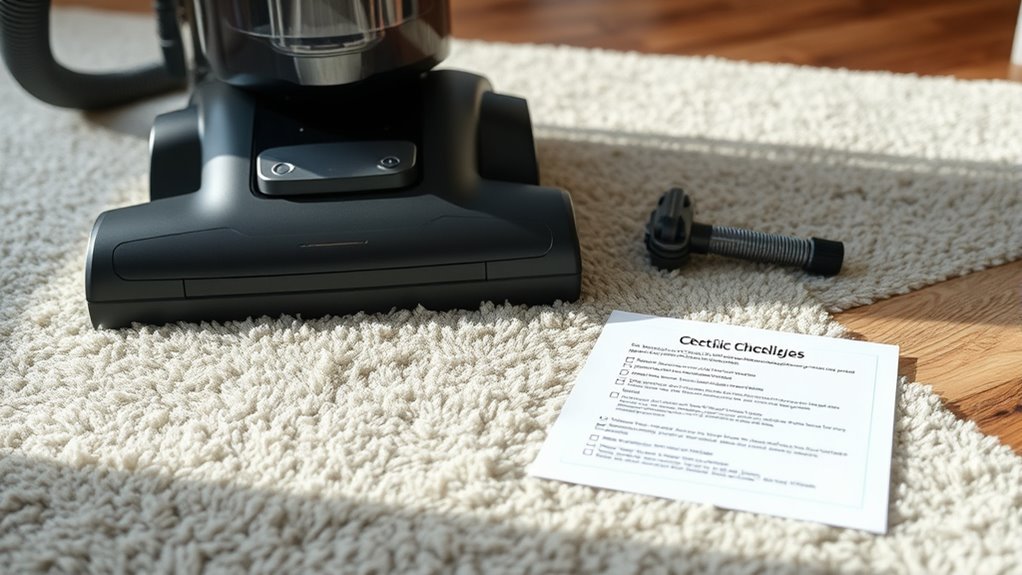
When vacuuming carpets, you’ll want to use proper patterns to cover every inch efficiently. Adjust your vacuum settings based on carpet type to avoid damage and improve cleaning. Don’t forget to pay extra attention to high-traffic areas where dirt builds up the most.
Proper Vacuuming Patterns
Since thorough cleaning depends on technique, mastering proper vacuuming patterns is essential for carpet businesses. You want to maximize your vacuuming techniques to guarantee effective carpet maintenance, saving time and effort while delivering freedom from dirt.
Follow these simple steps to boost your cleaning routine:
- Vacuum in straight, overlapping lines to cover every inch without missing spots.
- Change directions with each pass—first lengthwise, then widthwise—to lift trapped dirt.
- Keep a steady pace; don’t rush, but avoid lingering too long in one area.
- Use slow, deliberate strokes on high-traffic zones for deeper dirt removal.
Vacuum Settings Adjustment
Adjusting your vacuum settings is key to getting the best results on different carpet types and conditions. You don’t want to damage delicate carpet fibers or miss dirt trapped deep within. Start by checking the vacuum’s height adjustment—too low can harm plush fibers, while too high reduces vacuum performance. Set it just right for the carpet’s thickness to maximize dirt pickup without snagging. Also, consider the suction power; some vacuums let you dial it down for lightweight rugs or ramp it up for dense, high-pile carpets. By customizing these settings, you keep your equipment efficient and your carpets pristine. Mastering vacuum settings gives you the freedom to tackle any carpet confidently, delivering consistent, professional results every time.
High-Traffic Area Focus
Although high-traffic areas wear down faster than other spots, you can keep them looking fresh with targeted vacuuming techniques. Focusing on high traffic maintenance helps you preserve the carpet’s appearance and extends its life despite constant use. Understanding wear patterns lets you pinpoint where dirt and debris accumulate most.
Follow these steps to master high-traffic area vacuuming:
- Identify wear patterns to prioritize cleaning paths.
- Use a vacuum with strong suction and adjustable brush height.
- Vacuum slowly in multiple directions for thorough dirt removal.
- Increase vacuum frequency in these zones to prevent soil buildup.
Spot and Stain Treatment Methods
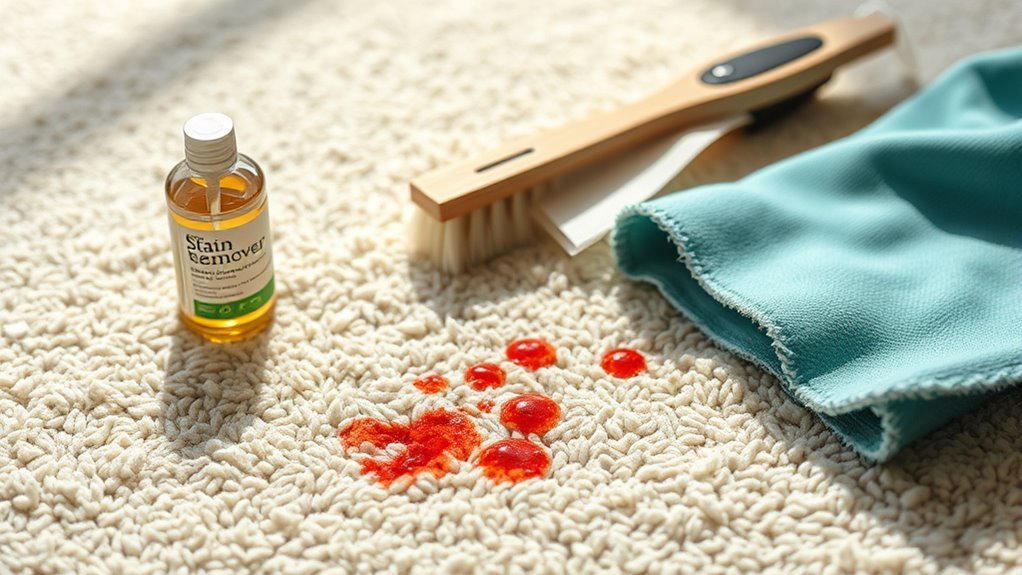
When tackling spot and stain treatment, you’ll want to act quickly and choose the right method for each type of stain. Different stains need different approaches, so it’s key to identify whether you’re dealing with oil-based, protein-based, or dye stains. For effective stain removal, water-based treatment solutions work well on fresh spills, while solvent-based cleaners are better for greasy spots. Always test your chosen solution on a small, hidden area first to avoid damage. Blot gently instead of rubbing to prevent the stain from spreading or embedding deeper. By mastering these spot and stain treatment methods, you’ll keep carpets looking fresh and extend their life, giving your clients the freedom to enjoy spotless spaces without hassle.
Pre-Treatment Application
Before you start deep cleaning, applying a pre-treatment solution is essential to break down dirt and loosen stains embedded in the carpet fibers. Using the right pre treatment solutions and application techniques sets you free from stubborn grime and makes the cleaning process smoother. Here’s how to get it right:
- Choose a pre treatment solution suited for the carpet type and soil level.
- Test a small area first to avoid damage or discoloration.
- Apply evenly using a sprayer or brush, ensuring full coverage without soaking.
- Let the solution dwell for 10-15 minutes to penetrate dirt but don’t let it dry out.
Mastering these steps gives you control and confidence before your main cleaning begins.
Hot Water Extraction Process
Once the pre-treatment has had time to work, you’re ready to tackle the hot water extraction process. This step is essential because hot water loosens dirt and grime trapped deep within carpet fibers, making it easier to remove. Using a powerful extraction machine, you’ll inject hot water mixed with cleaning solutions into the carpet, then immediately vacuum it out, pulling contaminants to the surface. The extraction benefits are clear: it not only cleans thoroughly but also helps restore the carpet’s natural look and feel. By mastering this process, you free yourself from worrying about leftover residues or odors. Remember, precise temperature control and proper technique guarantee you get the most out of hot water extraction, leaving carpets fresh and revitalized every time.
Carpet Grooming and Drying
Two key steps follow hot water extraction: carpet grooming and drying. These steps help restore your carpet’s texture and speed up drying, so you can get back to enjoying your space freely. Carpet grooming lifts fibers, preventing matting and promoting uniform drying. Using the right drying techniques guarantees your carpet dries quickly, avoiding mold or odors.
Here’s how to nail these steps:
- Use a carpet rake or groomer to gently lift fibers.
- Work systematically from one side to the other for even grooming.
- Employ air movers or fans to boost airflow.
- Monitor humidity and adjust drying time accordingly.
Mastering carpet grooming and drying techniques lets you deliver flawless results while freeing your time for what matters most.
Post-Cleaning Inspection
After cleaning, you’ll want to carefully check for any stubborn stains that might need another treatment. Don’t forget to sniff around and look for lingering odors or spots that could have been missed. Finally, assess the carpet’s texture to guarantee it feels clean and restored.
Stain Removal Verification
Although the main cleaning is done, you’ll want to carefully inspect the carpet to verify all stains have been effectively removed. Using reliable stain identification methods helps you pinpoint any lingering marks you might’ve missed. Then, apply targeted stain removal techniques to guarantee the carpet looks flawless. To help you verify stain removal, follow these steps:
- Examine the carpet under natural light to reveal hidden stains.
- Use a magnifying glass or a UV light to detect stubborn spots.
- Gently touch the carpet fibers to check for residue or stiffness.
- Compare cleaned areas with untreated sections to spot inconsistencies.
Taking time for stain removal verification lets you deliver freedom from worry to your clients, knowing their carpets are spotless and truly fresh.
Odor and Spot Check
One essential step in your post-cleaning inspection is checking for any lingering odors or spots that might have been overlooked. You want your carpets to feel fresh and inviting, so don’t skip this vital part. Use effective odor neutralization techniques to eliminate any unwanted smells that could detract from your work. These methods guarantee the space feels clean and welcoming without masking odors temporarily. At the same time, carefully scan the carpet for any stubborn spots. Apply targeted spot removal solutions to treat these areas, freeing your clients from worries about stains returning. By mastering these checks, you maintain your business’s reputation for thoroughness and give clients the freedom to enjoy truly clean carpets without hidden flaws.
Carpet Texture Assessment
While inspecting your carpet post-cleaning, you’ll want to assess its texture closely to guarantee it looks and feels restored. Different carpet fiber types react uniquely to cleaning, so understanding the texture impact is key to maintaining quality and comfort. Here’s how to evaluate it effectively:
- Run your hand over the carpet to feel for softness and uniformity.
- Check for any matting or crushing, especially in high-traffic areas.
- Observe the pile direction; it should stand upright and consistent.
- Look for any fiber distortion or color changes that might indicate damage.
Customer Communication and Feedback
Since your carpet cleaning business relies heavily on customer satisfaction, maintaining open communication and actively seeking feedback should be a top priority. You want to clearly understand customer expectations from the start, so you can tailor your services without unnecessary back-and-forth. Implement simple feedback mechanisms like follow-up calls, emails, or online surveys that encourage honest responses. This helps you quickly spot any issues and improve your process. When customers feel heard, they’re more likely to trust you and stay loyal. Plus, feedback gives you the freedom to refine your approach, making every job smoother and more efficient. Keep your communication transparent and timely, so clients know you’re dedicated to meeting their needs and delivering high-quality results every time.
Safety Protocols and Best Practices
Although you’re focused on delivering spotless carpets, prioritizing safety protocols is essential to protect both your team and clients. By following best practices, you can work confidently and freely without risking injury or damage. Always start with a thorough hazard assessment of the work area to identify potential risks. Equip your crew with the right safety gear—gloves, goggles, and non-slip shoes—to prevent accidents. Keep cleaning chemicals stored safely and clearly labeled. Finally, train your team regularly on emergency procedures and safe equipment handling. Here’s a quick checklist to keep you on track:
- Conduct a detailed hazard assessment before every job
- Provide appropriate safety gear for all workers
- Store and label chemicals securely
- Offer ongoing safety training and emergency drills
Stay safe, so freedom in your work remains limitless.
Frequently Asked Questions
How Often Should Carpets Be Professionally Cleaned in Commercial Settings?
You should consider frequency recommendations suggesting professional carpet cleaning every 6 to 12 months in commercial settings. This timing helps maintain a fresh, inviting environment and supports commercial benefits like improved air quality and prolonged carpet life. Staying on top of this schedule lets you enjoy a cleaner space without hassle, freeing you up to focus on what matters most—running your business smoothly and confidently.
What Certifications Should Carpet Cleaning Technicians Have?
When choosing carpet cleaning technicians, you’ll want to check the certification requirements to guarantee quality service. Look for certifications like IICRC (Institute of Inspection, Cleaning and Restoration Certification), which show proper technician training and expertise. These credentials assure that the technicians know safe and effective cleaning methods, giving you peace of mind and freedom from worrying about damage or poor results. Certified pros are your best bet for reliable, professional carpet care.
Are Eco-Friendly Cleaning Solutions Effective for Deep Carpet Cleaning?
When it comes to deep carpet cleaning, eco-friendly solutions aren’t just a drop in the bucket—they can really pack a punch. You’ll find their eco-friendly effectiveness stems from natural ingredients that safely break down dirt and grime without harsh chemicals. If you want the freedom to clean thoroughly while protecting your health and the environment, these green options let you do just that, proving you don’t have to sacrifice power for planet-friendly care.
How Do Carpet Cleaning Methods Differ for Various Carpet Materials?
When dealing with different fiber types, you’ll notice cleaning methods vary quite a bit. Natural fibers like wool need gentler cleaning agents to avoid damage, while synthetic fibers can handle stronger solutions and deeper cleaning. You’ve got the freedom to choose cleaning agents that suit each carpet’s material, ensuring effective results without harming the fibers. Understanding these differences helps you maintain your carpets’ look and feel longer, giving you peace of mind.
What Are Common Causes of Carpet Damage During Cleaning?
When you’re cleaning carpets, common causes of damage often stem from improper stain removal techniques or neglecting equipment maintenance. If you use harsh chemicals or scrub too aggressively, you risk ruining fibers. Plus, poorly maintained machines can leave residues or cause wear. To keep your carpets looking great and maintain your freedom to choose cleaning methods, always handle stains gently and guarantee your equipment is in top shape before starting any job.