Cleaning Checklist for Garage Businesses
To keep your garage business safe and efficient, you’ll want to sweep and mop floors daily, inspect and clean your tools weekly, and do a deep clean with equipment checks monthly. Don’t forget to organize storage with labeled shelves and manage hazardous materials carefully, using proper safety gear and disposal methods. Regularly maintaining workbenches and sorting waste supports a smooth workflow. Stick to this routine, and you’ll find your workspace stays cleaner and more productive—there’s plenty more to explore on these tasks.
Daily Cleaning Tasks for Garage Floors
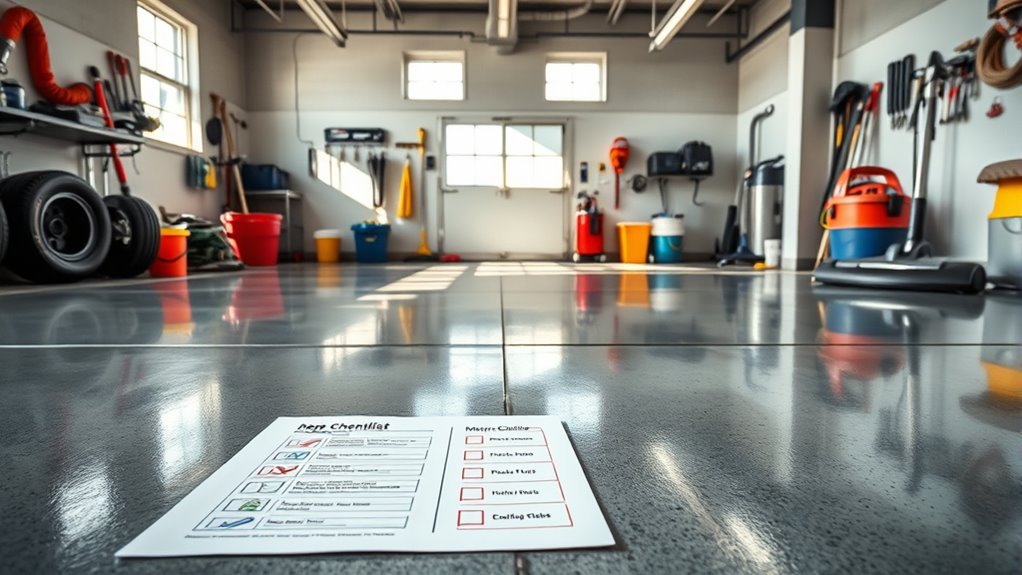
Keeping garage floors clean every day is essential for safety and efficiency. When you adopt effective floor cleaning techniques, you create a workspace that’s not only safer but also more inviting and productive. Start by sweeping debris and dirt regularly to prevent slips or damage. Use a mop or a low-pressure washer to tackle oil stains and spills promptly, avoiding buildup that can become hazardous. Implementing simple garage floor maintenance routines, like checking for cracks or loose debris, helps you catch issues early before they worsen. By staying consistent with these daily tasks, you maintain freedom in your operations—no interruptions caused by accidents or costly repairs. Your garage floor reflects your commitment to a clean, safe, and efficient environment, empowering you every day.
Weekly Maintenance of Tools and Equipment
You should set aside time each week to inspect your tools for any damage or wear. Cleaning your equipment properly helps extend its lifespan and maintain performance. Organizing your storage system will keep everything easy to find and reduce clutter in your workspace.
Tool Inspection Routine
A thorough tool inspection routine is essential for maintaining the efficiency and safety of your garage business. Sticking to a regular tool maintenance schedule guarantees you catch wear and tear early, preventing costly breakdowns and keeping your workflow smooth. Adjust your inspection frequency based on tool usage and type, but a weekly check is a solid rule of thumb.
When you inspect, focus on:
- Checking for damage like cracks or rust that could compromise safety.
- Making certain moving parts are lubricated and function smoothly.
- Verifying calibration and alignment for precision tools.
Equipment Cleaning Methods
Regularly cleaning your tools and equipment not only extends their lifespan but also guarantees they perform at their best. To maintain freedom in your workflow, set aside time weekly for a thorough cleaning session. Use pressure washing to remove stubborn dirt and grime from larger equipment, ensuring you follow safety guidelines to avoid damage. For smaller tools, apply appropriate chemical solutions that break down grease and contaminants without harming metal or rubber parts. Always rinse and dry tools after cleaning to prevent rust and corrosion. By sticking to these cleaning methods, you keep your equipment reliable and ready for action, freeing you from unexpected breakdowns and costly repairs. Consistent maintenance lets you focus on your business, not on fixing avoidable problems.
Storage Organization Tips
Keeping your tools clean is only part of the maintenance puzzle; organizing their storage is just as important to guarantee they’re easy to find and stay in good condition. You want storage solutions that simplify your workflow and give you freedom to move swiftly. Effective inventory management means knowing exactly what you have and where it’s stored, so you never waste time searching.
Here are some tips to get you started:
- Use clear, labeled bins and shelves to categorize tools by function.
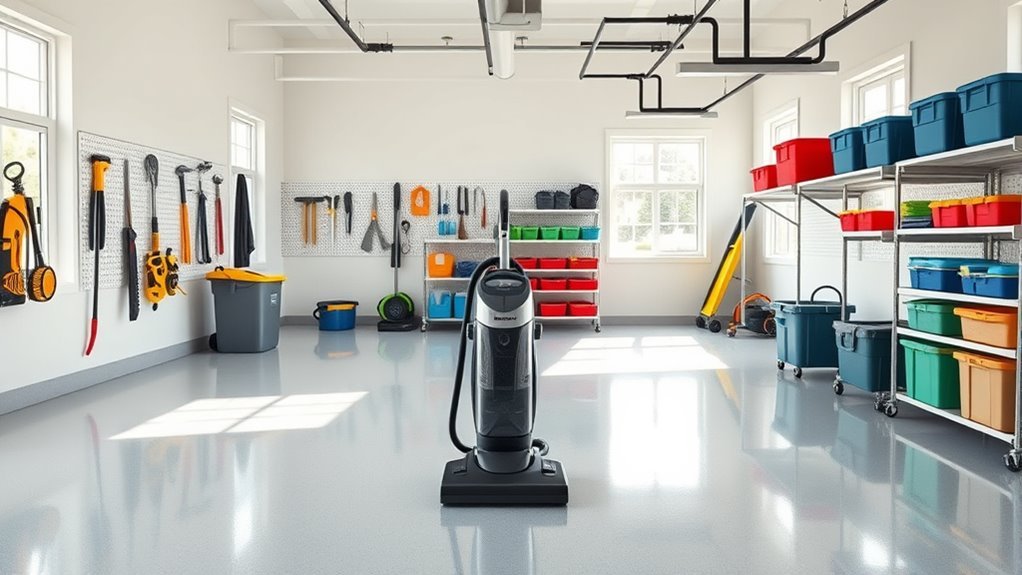
- Implement pegboards or wall mounts to keep frequently used items visible and accessible.
- Regularly update your inventory list to track tool usage and spot missing items early.
With these strategies, you’ll maintain order and efficiency, making your garage business run smoother every day.
Monthly Deep Cleaning Procedures
Each month, you’ll want to tackle equipment maintenance tasks to keep everything running smoothly. Don’t forget to give floors and surfaces a thorough cleaning to prevent buildup and hazards. Proper waste disposal methods are also key to maintaining a safe and organized garage.
Equipment Maintenance Tasks
Tackle your garage equipment monthly to guarantee it runs smoothly and lasts longer. Sticking to a maintenance schedule not only boosts equipment safety but also frees you from unexpected breakdowns that can stall your business. When you commit to these tasks, you’re investing in freedom from costly repairs and downtime.
Here’s what to focus on:
- Inspect and tighten all bolts and fasteners to prevent loose parts.
- Clean and lubricate moving parts to reduce wear and tear.
- Test safety features and replace any worn or damaged components immediately.
Floor and Surface Care
Alongside maintaining your equipment, giving your garage floors and surfaces a thorough monthly cleaning is key to creating a safe and efficient workspace. You’ll want to evaluate the type of floor materials you have—whether it’s concrete, epoxy, or tile—and choose cleaning methods that protect their integrity. For tougher grime, a degreaser suited to your specific floor materials helps break down oil and dirt without causing damage. Don’t forget the surface finishes on workbenches and shelves; using the right cleaner preserves their durability and appearance. Taking these steps not only extends the life of your floors and surfaces but also keeps your garage inviting and hazard-free. Staying consistent with this routine gives you the freedom to focus on your business without worrying about hidden messes.
Waste Disposal Methods
While regular cleaning keeps your garage looking sharp, monthly deep cleaning must include proper waste disposal methods to maintain safety and efficiency. You want to create a workspace that’s both free and safe—handling waste correctly is key. Focus on sorting your waste to maximize waste recycling and prevent hazards. Don’t let hazardous waste mix with regular trash; it requires special treatment to protect you and the environment.
Here’s how you can handle waste disposal during deep cleaning:
- Separate hazardous waste like oils and chemicals into labeled containers
- Recycle metals, plastics, and cardboard to reduce landfill impact
- Arrange for professional pickup or drop-off for hazardous materials
Managing Hazardous Materials Safely
Because hazardous materials are common in garage businesses, you need to handle them with extra care to protect yourself, your employees, and the environment. Start by familiarizing yourself with safety protocols designed for each hazardous material you encounter. This means using proper personal protective equipment, labeling containers clearly, and ensuring all staff understand emergency procedures. Don’t cut corners—keeping safety protocols front and center prevents accidents and keeps your workspace free. Proper training empowers you and your team to manage risks confidently, maintaining your freedom to work efficiently without worry. Remember, respecting hazardous materials isn’t just about compliance; it’s about creating a safe environment where everyone can thrive without limits. Managing these materials safely is essential for your garage’s success and well-being.
Organizing Storage Areas Effectively
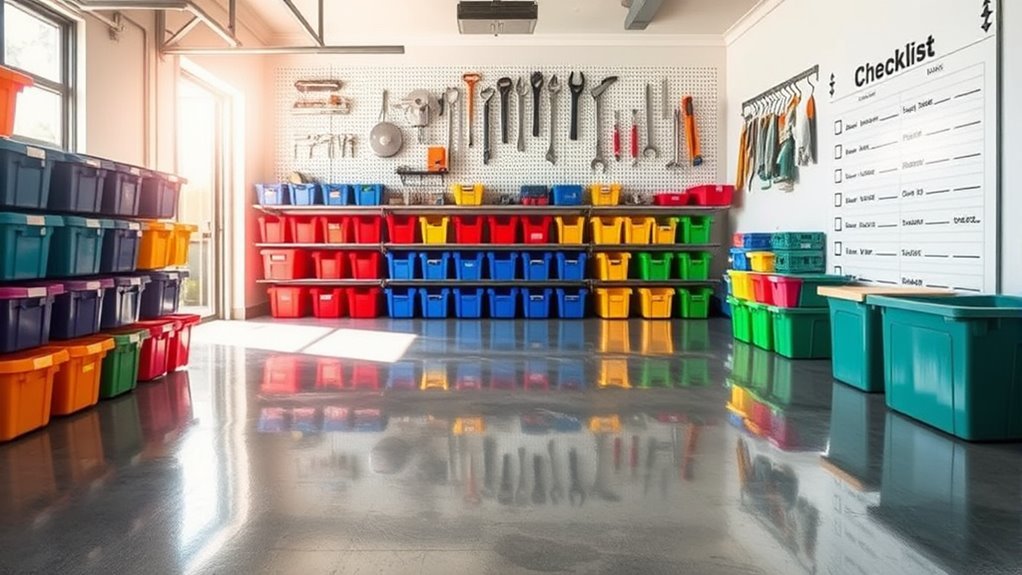
If you want your garage to run smoothly, organizing storage areas effectively is key. When everything has its place, you’ll find the freedom to focus on what really matters—getting the job done without clutter slowing you down. Start by optimizing space to maximize every inch, ensuring tools and materials are easy to access.
Here’s how to get started:
- Use shelf labeling to clearly mark where each item belongs, reducing search time.
- Group similar items together to keep your workflow fluid and efficient.
- Invest in vertical storage solutions to free up floor space and keep the area tidy.
Cleaning and Maintaining Workbenches
Once your storage areas are organized, keeping your workbenches clean and well-maintained will help you stay efficient throughout the day. Different workbench materials need specific cleaning solutions to avoid damage and extend their lifespan. Choosing the right approach means less hassle and more freedom to focus on your projects.
| Workbench Material | Recommended Cleaning Solution |
|---|---|
| Wood | Mild soap & water |
| Metal | Vinegar solution or degreaser |
| Laminate | Gentle all-purpose cleaner |
Regularly wipe down surfaces, remove debris, and inspect for wear or damage. This simple routine keeps your workspace safe and ready for action. With the right care, your workbenches won’t just last longer—they’ll keep your workflow smooth and unrestricted.
Ensuring Proper Waste Disposal and Recycling
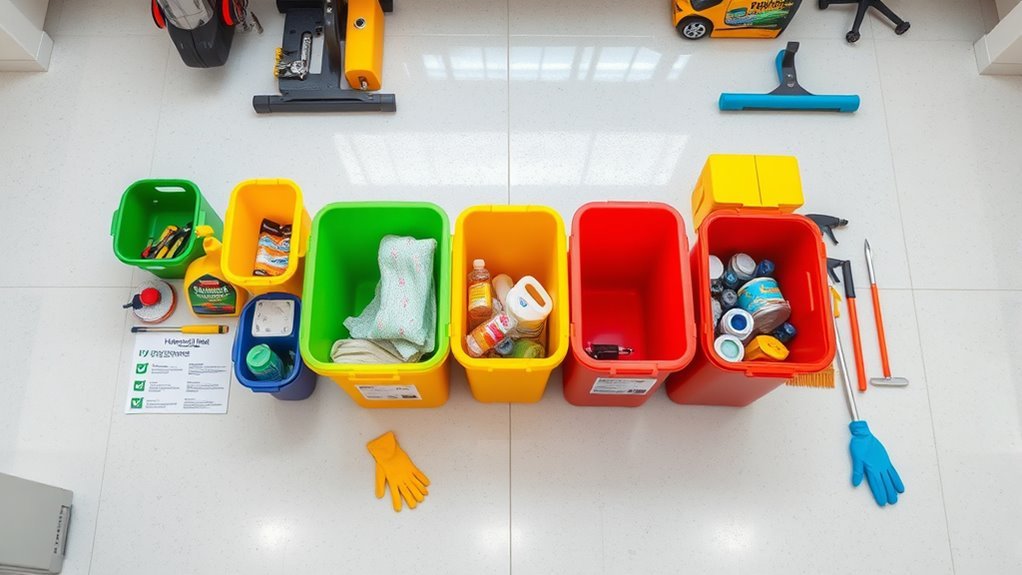
While keeping your garage clean, you’ll also need to manage waste disposal and recycling properly to maintain a safe and efficient workspace. Proper waste segregation helps you separate hazardous materials from regular trash, reducing risks and making recycling easier. Joining local recycling programs can free you from the hassle of disposing of items like batteries, oils, and metal scraps responsibly.
To keep things simple and effective, consider these steps:
- Set up clearly labeled bins for different waste types
- Partner with recycling services that handle garage-specific materials
- Train your team on waste segregation best practices
Frequently Asked Questions
What Cleaning Products Are Safest for Garage Floors?
Oh sure, just dump harsh chemicals on your garage floor and watch it scream—if floors could scream. Instead, you’re better off choosing eco friendly solutions that respect both your freedom and the planet. Go for biodegradable cleaners or simple mixes like vinegar and baking soda for effective floor maintenance without the toxic drama. You’ll keep your garage spotless and your conscience clear—because freedom includes freedom from chemical nightmares, right?
How Can I Reduce Dust Accumulation in the Garage?
To reduce dust accumulation in your garage, focus on dust control by sealing cracks and keeping surfaces clean. You can also install an air filtration system to trap airborne particles, improving air quality and cutting down dust buildup. Regularly sweeping and using mats at entrances helps, too. By taking these steps, you’ll create a freer, cleaner space where dust won’t limit your enjoyment or work efficiency.
What Are the Best Practices for Cleaning Garage Windows?
Did you know that streak-free windows can boost natural light by up to 30%? When you’re doing window cleaning, use a squeegee with a microfiber cloth to avoid streaks and scratches. Start with a mild detergent mixed with water, then rinse thoroughly. You’ll love how those spotless, streak-free garage windows brighten your space, giving you the freedom to work or relax without harsh glare or grime blocking your view.
How Often Should Garage Ventilation Systems Be Cleaned?
You should clean your garage ventilation systems at least every three to six months to keep air quality high and guarantee proper ventilation maintenance. If your garage sees heavy use or deals with fumes and dust regularly, more frequent checks are a smart move. Staying on top of this lets you enjoy a fresher space and the freedom to work without worrying about stale or contaminated air hanging around.
Can Professional Cleaning Services Improve Garage Safety?
Imagine the peace of mind flowing through your garage like a fresh breeze—professional cleaning services can make that a reality. By ensuring regular cleaning frequency and thorough safety inspections, they help eliminate hazards you might miss. When your space is spotless and well-maintained, you’re free to focus on your work without worry. So, don’t underestimate how much safer and more liberated you’ll feel with expert help keeping your garage in top shape.