Cleaning Checklist for Rug Businesses
You’ll want to start by identifying your rug materials—wool, silk, or synthetic—as each needs different care. Check daily for dirt and stains, addressing spots promptly with tested cleaners. Vacuum weekly using varied patterns to reach deep fibers. For deep cleaning, use professional equipment like rotary machines and hot water extractors. After washing, dry rugs thoroughly with good airflow to prevent mold. Regular inspections catch wear early, plus proper storage protects your work. Following these steps sets a strong foundation for expert rug care.
Understanding Different Rug Materials
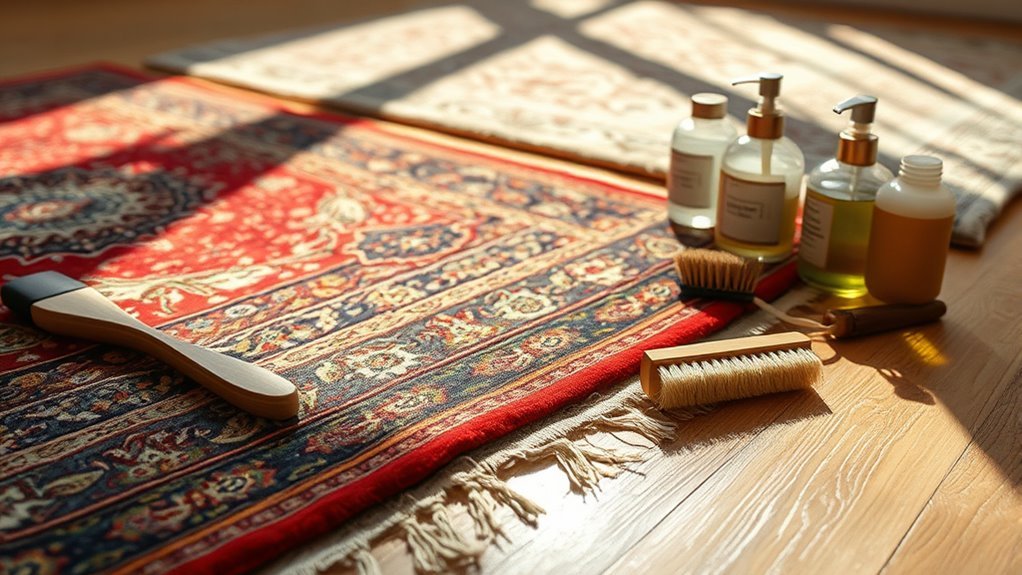
Before you begin cleaning any rug, it’s essential to understand the material it’s made from, as different fibers require distinct care methods. When comparing wool vs silk, note that wool is more resilient and naturally stain-resistant, allowing for more aggressive cleaning techniques. Silk, however, is delicate and demands gentle, specialized handling to prevent damage. Synthetic fibers like nylon offer impressive durability, making them easier to clean and maintain without compromising the rug’s integrity. Knowing these differences guides you in choosing appropriate cleaning agents and methods, ultimately preserving the rug’s appearance and lifespan. By mastering the properties of each material, you gain the freedom to clean efficiently and confidently, ensuring the best results for every rug in your care. It is also important to test cleaning solutions in inconspicuous areas to prevent damage when cleaning different rug materials.
Daily Maintenance Procedures
Knowing the specific care requirements for each rug material sets the stage for effective daily maintenance. You should begin with daily inspections to identify any damage or dirt accumulation early. This proactive approach prevents minor issues from escalating, preserving the rug’s integrity and appearance. Incorporate routine spot checks throughout your workspace, focusing on high-traffic areas prone to stains or wear. Addressing these spots immediately with appropriate cleaning solutions tailored to the rug type guarantees longevity. Avoid harsh chemicals that might harm delicate fibers. By adhering to these daily maintenance procedures, you gain freedom from costly repairs and extensive cleaning sessions later. Staying methodical and consistent assures your rug business maintains high standards, impressing clients and reducing operational disruptions. Additionally, using spot treatment techniques effectively can prevent stains from setting and maintain the rug’s visual appeal.
Weekly Vacuuming Techniques

A consistent weekly vacuuming routine plays an essential role in maintaining the cleanliness and durability of your rugs. You should adopt varied vacuuming patterns to guarantee all dirt and debris are removed effectively. Start by vacuuming along the rug’s edges, then switch to overlapping straight lines, and finish with a diagonal pattern. This methodical approach maximizes dirt removal and preserves the rug’s fibers. Using microfiber cloths alongside vacuuming can enhance dirt trapping and improve overall cleanliness.
| Step | Vacuuming Pattern | Purpose |
|---|---|---|
| 1 | Edges first | Remove trapped debris |
| 2 | Straight overlapping | Thorough surface cleaning |
| 3 | Diagonal | Access deeper fibers |
Spot Cleaning Best Practices
You’ll first need to identify the type of stain to select the appropriate cleaning solution. Applying the right product guarantees effective removal without damaging the rug fibers. Next, use targeted techniques like blotting and gentle agitation to lift stains efficiently. It is also important to test cleaner on a small hidden area before full application to ensure compatibility with the rug material.
Identifying Stain Types
How can you effectively treat stains without first identifying their types? Accurate stain identification methods are essential to preserve your rugs’ integrity and appearance. Begin by evaluating the stain’s color, texture, and odor, noting whether it’s oily, protein-based, or tannin-rich. Common stain types include food and beverage spills, pet accidents, ink, and dirt. Each requires a tailored approach, so recognizing characteristics like stickiness or residue can guide your cleaning strategy. Use tools like magnifying lenses or spot test areas to confirm stain composition before proceeding. By mastering these identification techniques, you’ll avoid ineffective treatments that waste time and risk damage. This methodical approach empowers you to act swiftly, preserving your rugs’ quality while providing freedom from guesswork.
Choosing Cleaning Solutions
Since each stain type demands a specific treatment, choosing the right cleaning solution is crucial for effective spot cleaning. You’ll want to select products that maintain the rug’s integrity while targeting the stain. Eco friendly solutions are ideal—they minimize environmental impact and reduce chemical residues that can weaken fibers. Pay close attention to the pH balance of your cleaner; rugs often require neutral or slightly acidic solutions to prevent damage. Avoid alkaline cleaners on delicate materials. Test your chosen solution on a small, inconspicuous area first to verify it doesn’t alter colors or textures. By methodically selecting appropriate, eco friendly, pH-balanced solutions, you’ll protect your rugs and preserve their lifespan, giving you the freedom to provide high-quality service with confidence.
Effective Spot Removal Techniques
An effective spot removal technique starts with acting quickly to prevent stains from setting. When you notice a spill, blot the area gently with a clean cloth to absorb excess liquid without rubbing it deeper into the fibers. Next, choose appropriate cleaning products designed for the rug’s material, ensuring they’re safe and effective for stain removal. Apply the product sparingly, following manufacturer instructions, and test on an inconspicuous spot first. Use a soft brush or cloth to work the product into the stain, then rinse with clean water to remove residue. Blot the area dry, avoiding excessive moisture that can damage the rug. By following these methodical steps, you maintain your rug’s integrity while efficiently eliminating stains, giving you the freedom to manage spot cleaning confidently and professionally.
Deep Cleaning Methods for Rugs
Deep cleaning rugs requires specialized techniques that go beyond regular vacuuming and spot cleaning. You’ll need to employ advanced rug cleaning techniques such as hot water extraction, dry foam cleaning, or encapsulation to remove deep-seated dirt and allergens effectively. Choosing eco friendly solutions guarantees you maintain a safe environment while preserving the rug’s integrity. Start by testing your chosen cleaning method on a small, inconspicuous area to avoid damage. Use equipment calibrated for consistent water temperature and pressure to prevent fiber distortion. After cleaning, thoroughly rinse and extract moisture to speed drying and prevent mold growth. By mastering these precise, methodical steps, you’ll extend the rug’s lifespan and keep it looking fresh, granting you the freedom to focus on your business without concerns about rug maintenance. Additionally, applying a protective sealant can help prevent future stains and moisture damage, enhancing the durability of your cleaning efforts.
Handling Stains and Spills Effectively
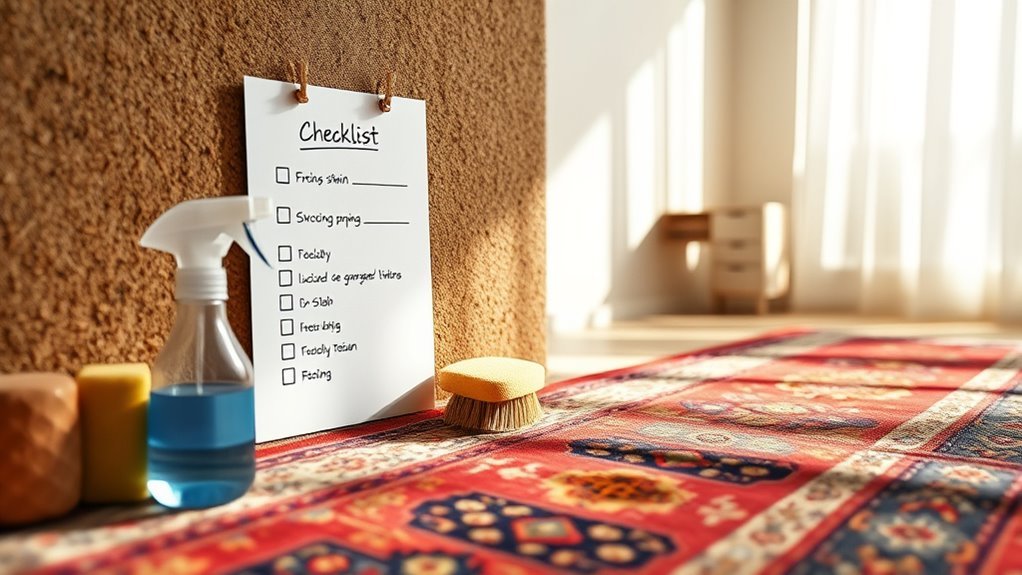
How should you tackle stains and spills to prevent lasting damage on rugs? Mastering stain removal starts with swift, strategic action. First, act quickly to blot the spill gently—never rub—to avoid embedding the stain deeper. Second, identify the stain type to select an appropriate cleaning solution that won’t harm the rug fibers. Third, test the cleaner on a hidden area to verify colorfastness, then apply carefully. For spill prevention, train staff to respond immediately and maintain accessible cleaning supplies. By following these steps, you preserve the rug’s integrity and appearance, giving your business the freedom to deliver consistent quality without costly damage. Effective stain removal paired with proactive spill prevention safeguards your investment and keeps your rugs looking their best. Understanding the different types of grease stains helps tailor your cleaning approach for optimal results.
Using Professional Cleaning Equipment
Three key types of professional cleaning equipment can greatly enhance your rug cleaning process: rotary machines, hot water extractors, and dry cleaning systems. Rotary machines efficiently agitate fibers, loosening deep-seated dirt. Hot water extraction machines, often paired with steam cleaners, flush out contaminants while restoring rug vibrancy. For delicate or upholstered rugs, specialized upholstery tools allow precise cleaning without damage. To maintain peak performance, follow strict maintenance schedules for all equipment—this guarantees consistent results and prolongs machine lifespan. Using these tools correctly not only frees you from manual labor but also assures a thorough, professional clean. By integrating professional equipment into your routine, you gain the freedom to deliver superior results swiftly and reliably, setting your rug business apart in quality and efficiency. Keep in mind that steam cleaners should be used carefully, as they are effective but may not be suitable for all surfaces, such as natural stone tiles.
Drying and Airing Rugs Properly
Once you’ve thoroughly cleaned a rug using professional equipment, the next step is ensuring it dries correctly to prevent damage and maintain its quality. Proper drying preserves the rug’s texture and colors while avoiding mold growth. To achieve ideal drying, focus on:
- Positioning the rug in an area with excellent air circulation, such as an open room or outdoors under a shaded spot.
- Elevating the rug slightly off the ground using racks or slats to allow air to flow beneath and around it.
- Monitoring moisture control by checking the rug frequently, ensuring it dries evenly and promptly without lingering dampness.
Mastering moisture control during drying helps prevent mold and mildew growth, protecting the rug’s integrity.
Inspecting Rugs for Damage and Wear
You’ll need to carefully identify common rug issues like fraying edges, loose fibers, and moth damage. Pay close attention to areas showing wear and tear, especially high-traffic spots. Also, check thoroughly for stains that might require specialized treatment before cleaning.
Identifying Common Rug Issues
Inspecting rugs for damage and wear requires a systematic approach to identify issues that could compromise their appearance and longevity. You’ll want to focus on three common problems:
- Rug Discoloration Causes – Look for fading or stains caused by sunlight, spills, or improper cleaning. Identifying these early lets you apply targeted treatments.
- Odor Removal Techniques – Detect any persistent smells that might indicate mold or pet issues. Effective odor removal restores freshness without damaging fibers.
- Structural Integrity – Check for loose threads, unraveling edges, or weakened backing, which can worsen if ignored.
Spotting Wear and Tear
After identifying discoloration, odors, and structural issues, the next step is to carefully spot signs of wear and tear that affect a rug’s durability and appearance. Focus on areas with high foot traffic, edges, and corners where fibers tend to fray or thin. Look for loose threads, unraveling, or matting that could compromise rug longevity. Pay attention to any weakening of the backing or uneven pile height, as these indicate underlying damage. Regularly inspecting these details allows you to apply targeted maintenance tips, such as timely repairs or conditioning treatments, which preserve the rug’s integrity. By methodically spotting wear and tear, you guarantee the rug remains both visually appealing and structurally sound, granting your business the freedom to offer quality and long-lasting products.
Checking for Stains
When checking for stains, focus on identifying discolorations that indicate spills, dirt buildup, or chemical damage. Effective stain identification is essential for maintaining rug quality and ensuring stain prevention strategies are applied promptly. Here’s how to assess stains methodically:
- Examine the rug under natural light to detect subtle color changes or faded spots.
- Feel the texture—stained areas often feel different, either rougher or smoother than surrounding fibers.
- Note the location; high-traffic zones are more prone to certain stains, helping you target stain prevention efforts.
Packaging and Storage Tips for Clean Rugs
Proper packaging and storage are essential to maintaining the cleanliness and condition of your rugs after cleaning. When selecting rug packaging, opt for breathable materials like cotton or muslin bags to prevent moisture buildup and mold growth. Avoid plastic wraps that trap humidity, which can damage fibers. Roll rugs carefully with the pile facing inward to minimize creases and protect delicate textures. For storage solutions, choose a cool, dry, and well-ventilated space, away from direct sunlight and pests. Elevate rugs off the floor using pallets or shelves to enhance air circulation. Regularly inspect stored rugs for signs of damage or infestation. By implementing these precise packaging and storage methods, you’ll preserve your rugs’ quality and extend their lifespan, giving you the freedom to focus on growing your business confidently. Additionally, maintaining a consistent care routine with gentle, non-abrasive cleaners will help avoid damage during cleaning and storage.
Frequently Asked Questions
How Often Should Rugs Be Professionally Cleaned?
You should aim for a rug cleaning frequency of every 12 to 18 months to keep your rugs in top shape. However, if your rugs see heavy foot traffic or pets, consider professional cleaning every 6 to 12 months. Regular maintenance tips like vacuuming and spot cleaning can extend time between deep cleans. By staying consistent, you’ll preserve your rug’s appearance and enjoy more freedom from worry about dirt and allergens.
What Certifications Should Rug Cleaning Technicians Have?
Think of hiring a rug cleaning technician like choosing a skilled pilot—you want someone with the right credentials. For certification requirements, look for credentials like the IICRC’s Rug Cleaning Technician certification, which guarantees thorough technician training. This confirms they know proper techniques and stain removal methods. When you pick certified pros, you’re freeing yourself from worries about damage, assuring your rugs get expert care with precision and reliability.
Are Eco-Friendly Cleaning Products Safe for All Rug Types?
You’ll find that eco-friendly cleaning products offer great effectiveness while reducing environmental impact. However, their rug material compatibility varies; some natural fibers like wool or silk may react differently to certain ingredients. It’s essential you test products on a small area first and choose formulations suited for specific rug types. By doing so, you maintain both safety and cleaning quality, giving you freedom to protect your rugs and the planet simultaneously.
How Do Weather Conditions Affect Rug Cleaning Schedules?
Weather patterns are like the rhythm of a dance, guiding your rug cleaning schedule. You’ll want to monitor humidity levels closely since high humidity can encourage mold and mildew growth on rugs. Dry, arid conditions might mean less frequent cleanings, but sudden rain or storms could require quicker attention. Adjusting your routine based on these factors helps keep your rugs fresh, extending their lifespan while giving you the freedom to focus on other priorities.
What Are the Common Causes of Rug Fiber Deterioration?
You’ll find that common causes of rug fiber deterioration include UV exposure and chemical exposure. UV rays break down fibers over time, causing fading and brittleness. Chemical exposure from harsh cleaning agents or spills can weaken fiber integrity, leading to premature wear. To keep your rugs lasting longer, you’ll want to minimize direct sunlight and avoid strong chemicals, opting instead for gentle, fiber-friendly cleaning methods that preserve their strength and appearance.