Cleaning Mistakes That Damage Your Range Hood
You’re damaging your range hood if you use harsh chemicals, abrasive scrubbing pads, or soak components in water—these can corrode parts and harm electrical systems. Neglecting regular filter and fan blade cleaning reduces efficiency and increases fire risks. Ignoring the manufacturer’s instructions or skipping routine maintenance can void warranties and shorten your hood’s lifespan. Proper drying after cleaning also prevents rust and mold. Keep these mistakes in mind to avoid costly repairs and improve your kitchen’s air quality—and there’s more to learn about keeping it in top shape.
Using Harsh Chemical Cleaners
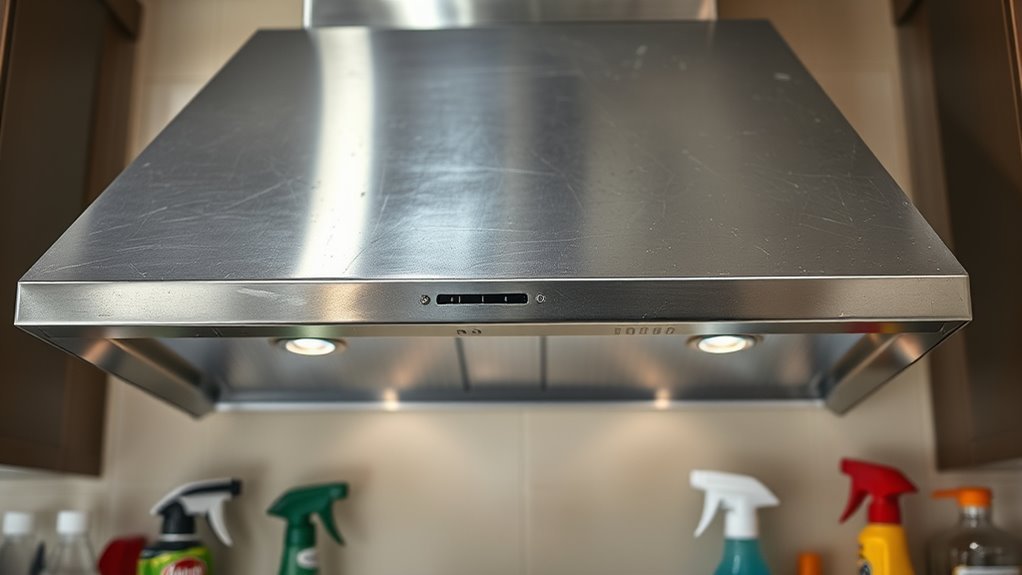
Although it might seem like a quick fix, using harsh chemical cleaners on your range hood can actually cause more harm than good. You might not realize that chemical residue effects can build up, leading to corrosion or discoloration, which limits your freedom to enjoy a clean, lasting appliance. Instead of risking damage, you should explore alternative cleaner options that are gentle yet effective. Natural solutions like vinegar and baking soda work wonders without leaving harmful residues behind. Choosing these safer alternatives means you maintain your range hood’s performance and aesthetic without compromising your health or the environment. You deserve cleaning methods that free you from worry, not ones that trap you in a cycle of damage and repair. Keep it simple, safe, and sustainable.
Scrubbing With Abrasive Materials
You might think scrubbing with abrasive materials gets your range hood cleaner, but it can actually cause scratches and surface damage. These scratches not only ruin the finish but can also reduce the filter’s efficiency over time. Being gentle with your cleaning tools helps keep your range hood working properly and looking great.
Scratches and Surface Damage
When you scrub your range hood with abrasive materials, you risk leaving unsightly scratches that dull its finish. These scratches not only ruin the look but also compromise surface protection, making your range hood more vulnerable to dirt and grime buildup. To maintain that sleek shine, prioritize scratch prevention by opting for soft cloths or sponges and gentle, non-abrasive cleaners. Avoid steel wool or harsh scrubbing pads, which can quickly damage the surface. Remember, preserving your range hood’s finish isn’t just about aesthetics—it gives you the freedom to enjoy a clean, stylish kitchen without constant worry. Protect your investment by treating its surfaces with care, so your range hood stays as fresh and functional as the day you installed it.
Reduced Filter Efficiency
Since abrasive scrubbing can wear down your range hood’s filter, it quickly reduces its ability to trap grease and airborne particles. When you use harsh materials, you unintentionally damage the filter’s fine mesh, cutting short its lifespan and forcing more frequent replacements. Proper filter maintenance means using gentle cleaning methods and sticking to a regular cleaning frequency to keep your range hood working efficiently.
| Cleaning Method | Effect on Filter |
|---|---|
| Soft sponge | Preserves filter mesh |
| Abrasive scrubber | Wears down filter mesh |
| Gentle detergent | Effective, safe cleaning |
Stick to gentle tools and a steady cleaning routine to enjoy freedom from clogged, inefficient filters.
Neglecting Regular Filter Cleaning
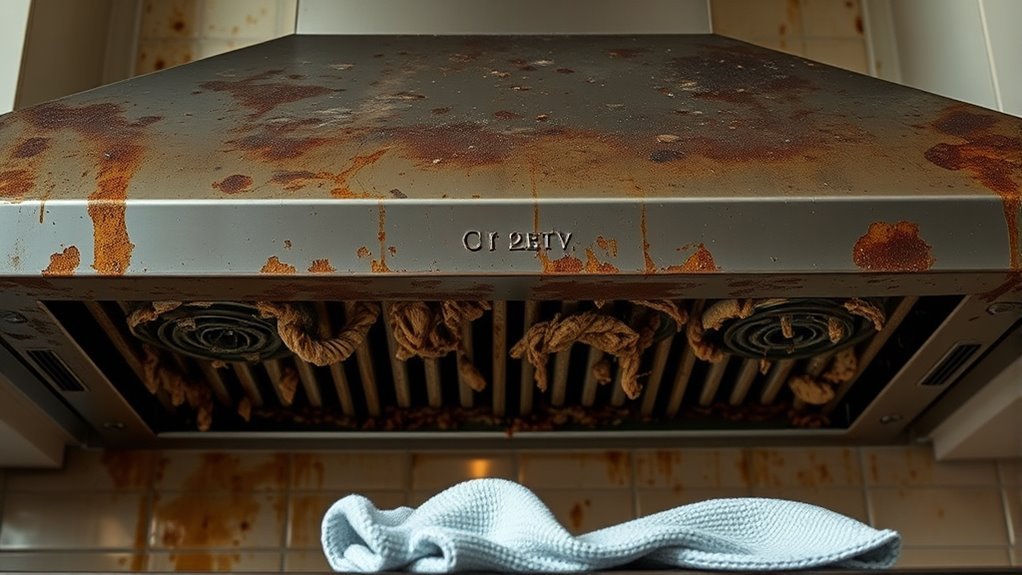
Although it may seem like a minor task, neglecting regular filter cleaning can seriously reduce your range hood’s efficiency. When grease and grime build up, airflow gets restricted, forcing your hood to work harder and shortening its lifespan. To keep your kitchen fresh and your range hood running free, follow simple filter maintenance tips: clean or soak metal filters monthly with hot, soapy water, and replace charcoal filters according to the manufacturer’s recommended filter replacement frequency. Skipping these steps not only compromises performance but can also lead to unpleasant odors and increased fire risk. Taking charge of your filter care lets you enjoy a cleaner kitchen and the freedom from constant repairs down the line. Don’t let neglect hold you back—stay on top of filter cleaning for smooth, efficient operation.
Ignoring Manufacturer’s Cleaning Instructions
Keeping up with filter cleaning is just one part of proper range hood maintenance. If you want your range hood to last and perform well, don’t ignore the manufacturer guidelines. These instructions are designed to keep your hood in top shape, specifying the right cleaning frequency and methods tailored to your model. Skipping or improvising on these steps may seem like freedom, but it risks damaging delicate components or voiding warranties. By sticking to the recommended cleaning frequency and using approved products, you avoid wear and tear caused by harsh chemicals or over-cleaning. Respecting these guidelines lets you maintain your range hood’s efficiency without hassle, giving you more time and freedom to enjoy your kitchen.
Overlooking the Vent and Ductwork
Many homeowners forget that the vent and ductwork play an essential role in your range hood’s performance. If you overlook vent maintenance, grease and debris can build up, restricting airflow and causing your range hood to work harder than necessary. This not only reduces efficiency but also increases fire risk. Regular duct inspections are vital—they help you spot blockages, leaks, or damage early on. By staying on top of these checks, you guarantee your system runs smoothly and safely, giving you the freedom to cook without worry. Don’t just focus on the visible parts; neglecting the vent and ductwork can undermine all your cleaning efforts and shorten your range hood’s lifespan. Keep them clean and inspected for lasting performance.
Using Excessive Water During Cleaning
When you use too much water cleaning your range hood, you risk damaging its electrical parts and causing water damage. It’s important to avoid soaking the unit and focus on gentle, controlled cleaning methods. Let’s look at how to clean effectively without causing harm.
Water Damage Risks
Although it might seem like a quick fix, using too much water to clean your range hood can lead to serious damage. Excessive water exposure seeps into areas not designed to get wet, causing metal parts to rust and weaken over time. Beyond corrosion, trapped moisture creates the perfect environment for mold growth, which can spread inside your hood and affect your kitchen’s air quality. You want your range hood to work efficiently and keep your kitchen fresh, so avoid soaking it or spraying water directly. Instead, use a damp cloth with a gentle cleaner and make sure to dry it thoroughly. By controlling water exposure, you’ll protect your range hood and enjoy its freedom to keep your cooking space clean without worry.
Electrical Component Hazards
If you let water seep into your range hood’s electrical components, you risk serious damage and potential safety hazards. Using excessive water compromises wiring safety and increases electrical risk, which can lead to shorts or even fires. Protect your freedom from costly repairs and dangerous situations by staying mindful of how much water you use.
| Hazard | Cause | Impact |
|---|---|---|
| Electrical short circuit | Water contact with wiring | Device failure or fire |
| Corrosion | Moisture buildup | Reduced lifespan |
| Shock risk | Wet electrical parts | Personal injury |
| Wiring damage | Excessive water exposure | Expensive repairs |
| Safety code violation | Improper cleaning methods | Legal and insurance issues |
Keep wiring safety top of mind—don’t let water become a hidden enemy.
Proper Cleaning Techniques
One key mistake people make when cleaning their range hoods is using too much water, which can cause serious damage. You want to keep your range hood functioning freely, so it’s important to focus on safe cleaning methods. Excess water can seep into electrical components, leading to shorts or corrosion. Instead, opt for effective techniques like using a damp cloth rather than drenching surfaces. Mild detergents diluted in water work well without risking damage. Always wring out your cloth thoroughly before wiping, and avoid spraying cleaners directly onto the hood. By controlling moisture and using the right tools, you maintain your range hood’s performance without limiting your freedom to enjoy a clean kitchen safely and efficiently.
Failing to Clean the Fan Blades
Neglecting to clean the fan blades in your range hood can seriously reduce its efficiency and lifespan. When grease and grime build up, the blades struggle to spin freely, forcing the motor to work harder and wasting energy. To keep your range hood running smoothly, stick to a regular cleaning frequency—ideally every one to three months depending on your cooking habits. Fan blade maintenance isn’t just about looks; it’s essential for airflow and preventing unpleasant odors. Skipping this step limits your range hood’s ability to clear smoke and steam, trapping heat and contaminants in your kitchen. Taking a few minutes to wipe down or gently scrub the blades lets you enjoy a fresher kitchen and extends the freedom your range hood provides to cook without worry.
Not Drying Components Properly After Cleaning
Although you may be diligent about cleaning your range hood components, not drying them properly afterward can cause serious problems. Moisture buildup invites component corrosion, shortening your hood’s lifespan and performance.
To avoid this, follow these steps:
- Wipe each part thoroughly with a dry cloth immediately after washing.
- Allow components to air dry completely before reassembling, ensuring no hidden moisture remains.
- Store removable parts in a warm, dry place if you need extra drying time.
Skipping Routine Maintenance Checks
Properly drying your range hood components helps prevent corrosion, but maintaining your hood’s performance requires more than just cleaning. Skipping routine maintenance checks can lead to unnoticed wear and tear, reducing efficiency and shortening your hood’s lifespan. You don’t want to be caught off guard by a malfunction, especially when your freedom to cook freely depends on a well-functioning appliance. Stick to maintenance schedules, and carry out routine inspections to catch issues early. These simple steps keep your range hood running smoothly without unexpected breakdowns. By committing to regular upkeep, you guarantee your kitchen stays fresh and your cooking experience remains hassle-free. Don’t let neglect tie you down—embrace routine maintenance and enjoy the full freedom your range hood can offer.
Frequently Asked Questions
How Often Should I Replace My Range Hood Filter?
You should check your filter replacement frequency based on how often you cook and the type of filter you have. Generally, it’s good to replace or clean your range hood filter every 3 to 6 months. For best results, follow filter maintenance tips like soaking metal filters in hot, soapy water or using a gentle degreaser. Staying on top of this keeps your kitchen fresh and lets you enjoy cooking without worrying about buildup slowing you down.
Can I Use a Dishwasher to Clean Range Hood Filters?
You can use a dishwasher to clean some range hood filters, but it depends on the filter type. Metal mesh filters usually handle dishwasher cleaning well, supporting good filter maintenance. However, always check your manufacturer’s instructions to guarantee dishwasher safety. Using the dishwasher can save time and effort, giving you freedom from scrubbing. Just avoid harsh detergents or high heat cycles that might damage the filter or reduce its lifespan.
What Type of Range Hood Is Best for Heavy Cooking?
Imagine your kitchen as a stormy sea, where heavy cooking whirls like a tempest. To tame this chaos, you’ll want commercial range hoods—they’re powerful, built to handle intense heat and smoke. Residential range hoods, while stylish and quieter, might struggle in the storm. If you crave freedom in your kitchen without limits, go for a commercial model; it’ll keep the air clear and your cooking spirit released.
Does Range Hood Noise Indicate a Cleaning Issue?
If your range hood noise is louder than usual, it could signal a range hood maintenance issue. Don’t ignore it—noise troubleshooting often reveals clogged filters or grease buildup restricting airflow. Keeping your hood clean and well-maintained frees you from constant annoyance and guarantees smooth operation. Regularly checking and cleaning parts helps you enjoy a quieter, more efficient kitchen without being tied down by preventable problems.
Can a Dirty Range Hood Affect Indoor Air Quality?
Sure, if you love hosting an indoor smog party, let your range hood get filthy! But seriously, a dirty range hood turns into a sneaky trap for indoor pollutants, blocking proper air circulation. Instead of fresh air freedom, you get a stale, stuffy kitchen where harmful particles linger. So, if you want to breathe easy and keep your air clean, don’t let grime turn your range hood into a pollutant parade!