Cleaning Mistakes That Damage Your Refrigerator
You’re likely damaging your refrigerator if you use harsh chemicals that leave harmful residues or excess water that harms electrical parts. Ignoring door seals causes cracks and inefficiency, while overlooking condenser coils forces your fridge to work harder, raising energy bills. Scrubbing with abrasive tools scratches surfaces, and skipping regular defrosting leads to frost buildup and reduced storage. Avoid these errors to keep your fridge running smoothly and energy-efficient. There’s plenty more to discover about proper fridge care ahead.
Using Harsh Chemicals on Interior Surfaces
Although it might seem like using strong cleaners will get your fridge spotless faster, harsh chemicals can actually damage interior surfaces and leave harmful residues. You want your fridge clean but also safe, so opting for chemical alternatives is a smarter choice. Instead of risking scratches or discoloration, choose gentle, natural solutions like vinegar and baking soda that effectively cut grime without compromising your fridge’s integrity. Safe cleaning doesn’t mean sacrificing cleanliness—it means freeing yourself from toxic fumes and protecting your health while maintaining your appliance. When you embrace chemical alternatives, you keep your refrigerator fresh without the worry of harsh substances lingering on the shelves where your food rests. This way, you enjoy both cleanliness and freedom from harmful chemicals.
Ignoring the Door Seals During Cleaning
One essential area you shouldn’t overlook when cleaning your refrigerator is the door seals. These rubber gaskets guarantee proper sealing, keeping cold air inside and saving energy. Ignoring door seal maintenance can lead to cracks, dirt buildup, and loss of flexibility, causing your fridge to work harder and waste power. When cleaning, gently wipe the seals with a mild soap solution and a soft cloth, making certain to remove any food debris or sticky residue. Avoid harsh chemicals that can damage the rubber. Regularly checking and maintaining your door seals not only extends their life but also assures your refrigerator runs efficiently. Don’t let neglecting this small part limit your freedom from costly repairs or high energy bills. Proper sealing keeps your fridge—and your freedom—intact.
Overlooking the Condenser Coils
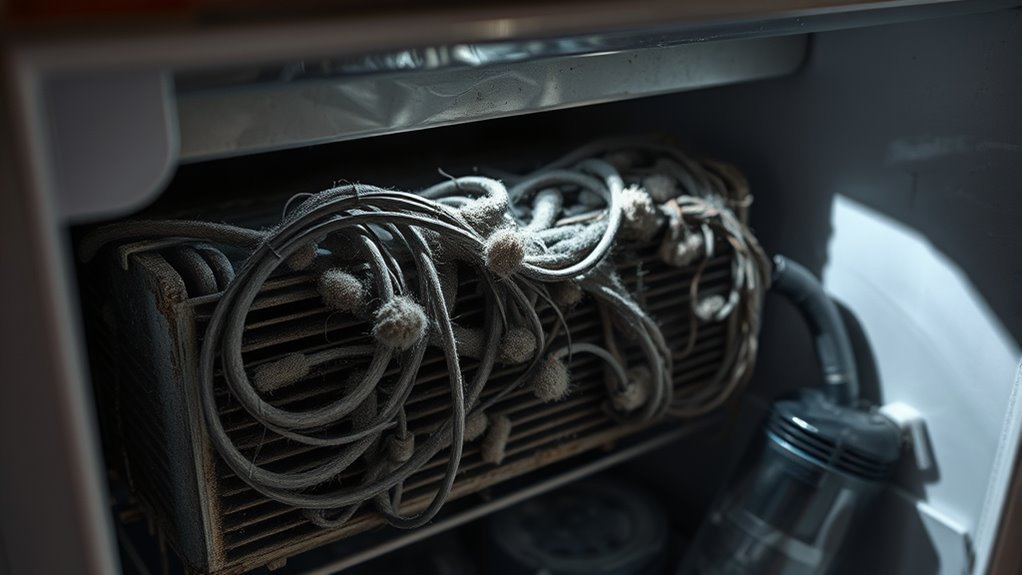
If you don’t clean the condenser coils regularly, your refrigerator will have to work harder to stay cool. Neglecting condenser maintenance leads to dust accumulation, which reduces efficiency and increases energy use. This means higher bills and a shorter lifespan for your appliance. To keep your fridge running freely, don’t overlook these signs of dirty coils:
Neglected condenser coils force your fridge to work harder, raising energy costs and risking appliance longevity.
- Dust clinging to coils behind or beneath the fridge
- Increased noise from the compressor
- Longer cooling cycles
- Warm spots inside the fridge
- Frequent cycling on and off
Taking a few minutes to remove dust buildup lets your refrigerator breathe easier, saving energy and giving you the freedom from costly repairs. Regular coil cleaning keeps your fridge efficient and reliable.
Cleaning With Excess Water or Moisture
While keeping your refrigerator clean is important, using too much water or moisture can cause problems. When you douse surfaces or drip water inside, you risk water damage to electrical components and insulation. Excess moisture can also promote mold and bacteria growth, compromising your food’s safety and your freedom to eat worry-free. To avoid these issues, focus on moisture control by using a damp cloth rather than a soaking sponge or spray bottle. Wring it out well before wiping down surfaces, and always dry areas immediately after cleaning. This small effort protects your fridge’s inner workings and keeps it running smoothly without costly repairs. Remember, a little moisture goes a long way—don’t let excess water undo your cleaning efforts.
Neglecting Regular Defrosting

Controlling moisture inside your refrigerator doesn’t stop at cleaning—it also means keeping frost buildup in check. If you neglect regular defrosting, frost can accumulate, reducing energy efficiency and forcing your fridge to work harder. This not only hikes your electricity bills but also limits the storage space you rely on for your freedom to store food your way.
Watch out for signs like:
- Thick ice layers on walls or shelves
- Frost blocking vents and air circulation
- Increased noise from the compressor
- Food freezing unexpectedly
- Longer cooling cycles
Using Abrasive Tools That Scratch Surfaces
You might think scrubbing your refrigerator with a tough brush or abrasive sponge gets it cleaner, but it can actually damage the surfaces. Scratching surfaces not only ruins the refrigerator’s look but also opens the door for rust and bacteria buildup. Your freedom to clean effectively depends on smart tool selection. Instead of harsh scrubbing tools, opt for soft cloths or non-abrasive sponges that protect the finish. Gentle cleaning solutions paired with the right tools keep your fridge spotless without harm. Remember, preserving your refrigerator’s surface means less wear and longer life, giving you the freedom to enjoy a clean kitchen without worrying about costly repairs or replacements. Choose your cleaning tools wisely to avoid scratching surfaces and keep your appliance in top shape.
Frequently Asked Questions
How Often Should I Clean My Refrigerator’s Drip Pan?
You should check your refrigerator’s drip pan regularly to avoid odors and mold buildup. A good drip pan frequency is about once every three months, but if you notice spills or excess moisture, clean it sooner. Sticking to a cleaning schedule helps keep your fridge fresh and running smoothly without hassle. Keeping this routine gives you the freedom to enjoy your cool space without worrying about hidden messes or damage.
Can I Use Vinegar to Deodorize My Fridge?
You can definitely use vinegar to deodorize your fridge—it’s a natural, effective way to tackle odors without harsh chemicals. Vinegar benefits include neutralizing smells and killing bacteria, making it a great choice for freshening up your space. Just mix equal parts vinegar and water, wipe down surfaces, and leave an open bowl inside to absorb lingering scents. This simple deodorizing technique lets you keep your fridge fresh while enjoying freedom from synthetic cleaners.
What Temperature Is Best for Storing Food in a Fridge?
Think of your fridge as a fortress protecting your food’s freshness. To keep this fortress strong, set the ideal refrigerator temperature between 37°F and 40°F (3°C to 4°C). This range follows food safety guidelines, helping prevent spoilage and harmful bacteria growth. By doing this, you’re not just preserving food—you’re preserving your freedom to enjoy safe, delicious meals without worry. Keep your food safe, and savor your independence in the kitchen.
Is It Safe to Unplug the Fridge During Cleaning?
You might wonder about unplugging safety when cleaning your fridge. It’s generally safe to unplug it as long as you do it briefly and avoid leaving the door open too long, which can raise the temperature inside. Just remember to clean regularly—your cleaning frequency matters to keep things fresh and efficient. Unplugging gives you freedom to clean thoroughly, but don’t forget to plug it back in quickly so your food stays safe and cool.
How Do I Prevent Mold Growth Inside the Refrigerator?
You might think mold’s inevitable inside your fridge, but it’s totally preventable with the right mold prevention mindset. To keep your fridge fresh, you’ve got to master effective cleaning techniques—wiping spills immediately, using a baking soda solution, and leaving the door open briefly after cleaning to air it out. By taking control of these habits, you’ll enjoy a mold-free fridge, giving you the freedom to store your food without worry.