
Cleaning Mistakes That Damage Your Toilet
You might not realize simple cleaning mistakes can damage your toilet. Using harsh chemicals can erode the finish, while neglecting to ventilate the area may create unpleasant odors. Scrubbing with abrasive tools can scratch surfaces, and mixing cleaners can cause hazardous reactions. Always wear gloves for protection, and stick to eco-friendly products. Establish a proper cleaning routine to maintain your toilet’s condition. If you want a more in-depth look at cleaning mistakes, there’s more to explore.
Preparation For Cleaning
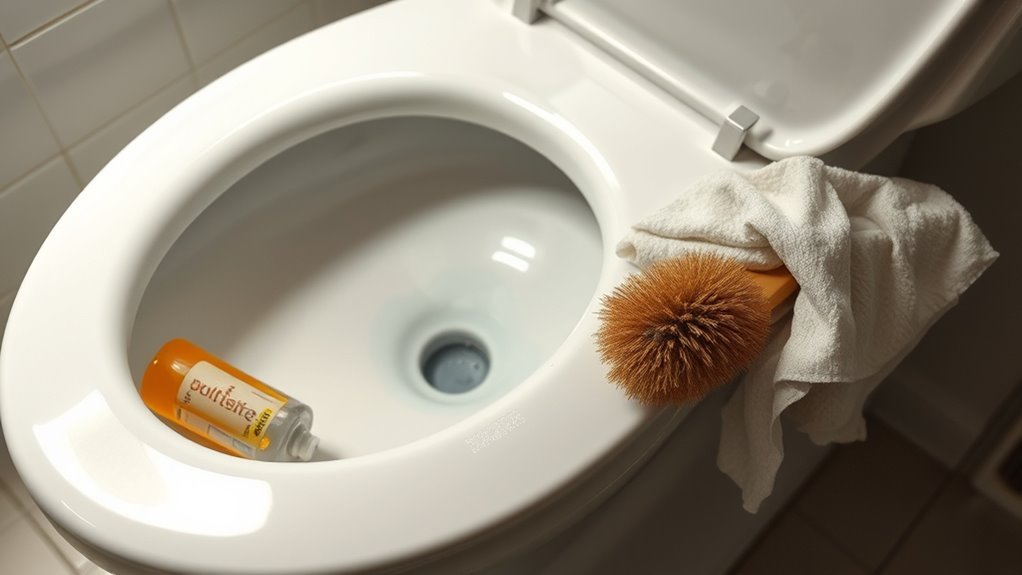
Before you plunge into cleaning your toilet, it’s essential to gather all the necessary supplies and prepare the area properly. Start by collecting your cleaning supplies, such as a toilet brush, disinfectant cleaner, gloves, and a sponge. Make sure you have everything within reach to avoid interruptions during the process. Next, clear the surrounding area of any items that could get in your way or become damaged. This includes rugs, toiletries, and other bathroom accessories. Proper toilet maintenance begins with this preparation, ensuring you can clean efficiently and effectively. Taking these steps not only makes the task more manageable but also helps you avoid potential mishaps that could lead to further messes or damage. Additionally, it’s important to ventilate the space by opening a window or turning on the exhaust fan to reduce odors and airborne germs.
Tools and Chemical Required
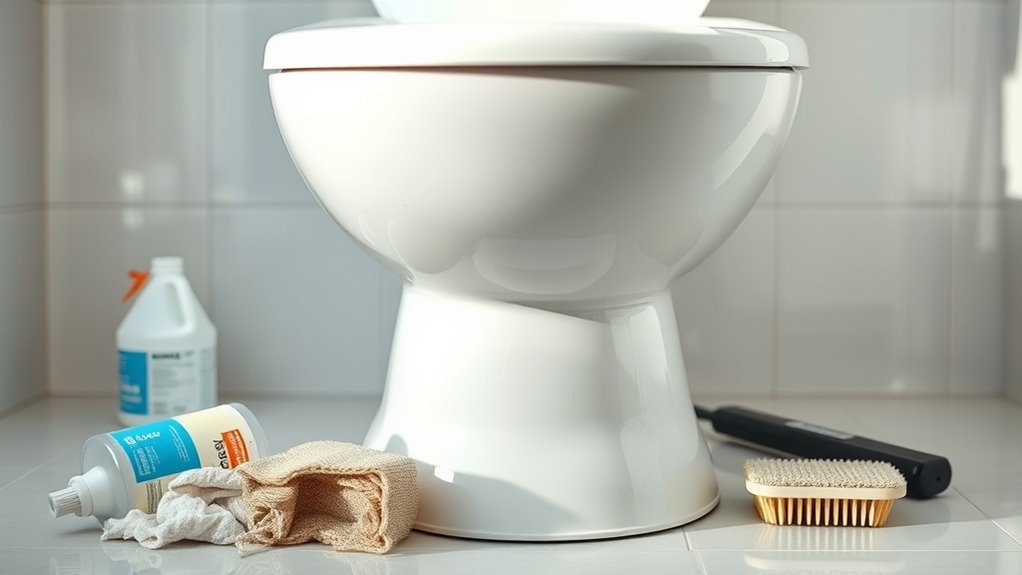
With your cleaning area prepped, it’s time to focus on the tools and chemicals you’ll need for toilet maintenance. Having the right cleaning supplies can make a significant difference. A good toilet brush is essential for scrubbing away stains and buildup. You’ll also need a disinfectant cleaner that’s safe for your toilet, as well as rubber gloves to protect your hands.
For best results, opt for eco-friendly cleaning products to maintain your toilet’s finish and protect the environment.
Here’s a quick reference table for your cleaning toolkit:
| Tool/Chemical | Purpose |
|---|---|
| Toilet Brush | Scrubbing stains |
| Disinfectant Cleaner | Killing germs and bacteria |
| Rubber Gloves | Hand protection |
| Microfiber Cloth | Wiping surfaces |
| Pumice Stone | Removing hard water stains |
Gather these items, and you’ll be well-equipped for the task ahead.
How to Clean:

How to Clean Your Toilet: A Step-by-Step Guide
Step 1: Gather Your Supplies
- Disinfectant Cleaner: Choose a toilet-specific cleaner that is effective against germs and stains.
- Toilet Brush: Make sure it has a sturdy handle and bristles for effective scrubbing.
- Rubber Gloves: Protect your hands from harsh chemicals.
- Cleaning Cloths or Paper Towels: For wiping down the exterior.
- Optional: Toilet bowl tablets or drop-in cleaners for regular maintenance.
Step 2: Apply the Disinfectant Cleaner
- Lift the toilet seat and apply the disinfectant cleaner around the inside of the bowl.
- Ensure the cleaner covers all surfaces, including under the rim where grime often builds up.
- Allow the cleaner to sit for at least 5-10 minutes. This waiting period helps to kill germs and loosen stains.
Step 3: Scrub the Toilet Bowl
- After the cleaner has sat, take your toilet brush and begin scrubbing the bowl.
- Use circular motions to effectively reach all areas, including stubborn stains and the waterline.
- Pay special attention to any areas with buildup or discoloration.
- Make sure to scrub under the rim thoroughly, as this is a common area for bacteria and stains.
Step 4: Flush the Toilet
- Once you have scrubbed the entire bowl, flush the toilet to rinse away the cleaner and any dislodged debris.
- If needed, you can repeat the scrubbing process for any remaining stains.
Step 5: Clean the Exterior
- While the toilet bowl is being rinsed, use a cleaning cloth or paper towel with an effective disinfectant solution to wipe down the exterior.
- Focus on high-touch areas such as the handle, seat, and the sides of the toilet.
- Make sure to clean any visible stains or spots on the exterior surfaces.
Step 6: Regular Maintenance
- To keep your toilet looking pristine, consider implementing a regular cleaning schedule.
- You can use toilet bowl tablets or drop-in cleaners to help maintain cleanliness and reduce stains between deep cleaning sessions.
- Aim to clean your toilet at least once a week or more frequently if needed.
- Remember that regular disinfection of your toilet brush is essential to prevent the spread of germs and maintain a fresher bathroom environment.
Step 7: Dispose of Used Materials
- After completing the cleaning, dispose of any used cloths or paper towels properly.
- Rinse the toilet brush thoroughly and allow it to dry in a well-ventilated area.
Safety Consideration
While cleaning your toilet may seem straightforward, it’s important to take into account safety precautions to protect yourself from harmful chemicals and bacteria. Start by wearing rubber gloves to safeguard your skin from irritation and allergens. Make sure your bathroom is well-ventilated; open windows or turn on fans to help disperse chemical fumes. When using disinfectants, read labels carefully to avoid mixing products, as this can create dangerous chemical hazards. Always store cleaning supplies out of reach of children and pets to maintain toilet safety. If you’re sensitive to strong odors, consider using eco-friendly alternatives, which can be just as effective without the harsh effects. Prioritizing these safety measures will keep your toilet-cleaning routine both effective and secure. Additionally, wearing safety goggles can prevent irritation from cleaning splashes and fumes.
Frequently Asked Questions
How Often Should I Clean My Toilet to Prevent Damage?
You should clean your toilet at least once a week to maintain hygiene and prevent buildup. Curiously, studies show that toilets can harbor over 3 million bacteria per square inch if neglected. To avoid damage and guarantee longevity, follow these maintenance tips: scrub the bowl and disinfect the seat regularly. Adjust your cleaning frequency based on usage; higher traffic means more frequent cleanings. Keeping it clean will save you from costly repairs down the line.
Can I Use Vinegar in My Toilet Cleaning Routine?
Yes, you can use vinegar in your toilet cleaning routine. Vinegar’s benefits include its ability to break down mineral deposits and eliminate odors. To incorporate it, pour about two cups of vinegar into the bowl and let it sit for at least 30 minutes before scrubbing with a toilet brush. This method is eco-friendly and effective, helping keep your toilet clean without harsh chemicals. Regular use can enhance your toilet’s performance and longevity.
What Should I Do if My Toilet Stains Remain After Cleaning?
If stubborn stains cling to your toilet like unwelcome guests, don’t fret! Start by using a pumice stone gently on the affected areas. Then, pour a toilet stain removal product, letting it sit for at least 15 minutes. Scrub with a toilet brush, focusing on the stained spots. Rinse thoroughly. For persistent stains, repeat the process, and you’ll soon reclaim the sparkling throne you deserve, free from those pesky reminders of neglect!
Are There Toilet Cleaning Products I Should Avoid Completely?
Yes, there are certain toilet cleaning products you should avoid completely. Stay away from toilet bowl cleaners that contain harsh chemicals like bleach or ammonia, as they can damage your toilet’s finish. Also, don’t use abrasive scrubbers; they can scratch the surface and lead to grime buildup. Opt for gentle, non-abrasive cleaners that effectively remove stains without harming your toilet. This way, you can maintain a clean toilet without compromising its longevity.
How Can I Tell if My Toilet Is Damaged From Cleaning?
To tell if your toilet’s damaged from cleaning, check for visible toilet cracks or chips. Inspect the bowl and tank regularly, especially after using harsh chemicals. If you notice discoloration, leaks, or a wobbly base, these could be signs of damage. Monitor your cleaning frequency; over-cleaning can exacerbate wear and tear. If anything seems off, consider consulting a professional to assess the situation and avoid further damage.


