Cleaning Techniques for Laminate Owners
To care for your laminate floors, pick gentle, residue-free cleaners—avoid waxes or harsh chemicals that can damage the surface. Sweep daily to stop dirt buildup and use a damp microfiber mop for gentle cleaning. Tackle stains with mild soap or baking soda paste, and blot greasy spills quickly. Vinegar diluted with water makes a natural cleaner that’s safe when used sparingly. Protect floors with felt pads under furniture and rugs in busy areas. Want to make your laminate floors last longer and shine brighter?
Choosing the Right Cleaning Products for Laminate Floors
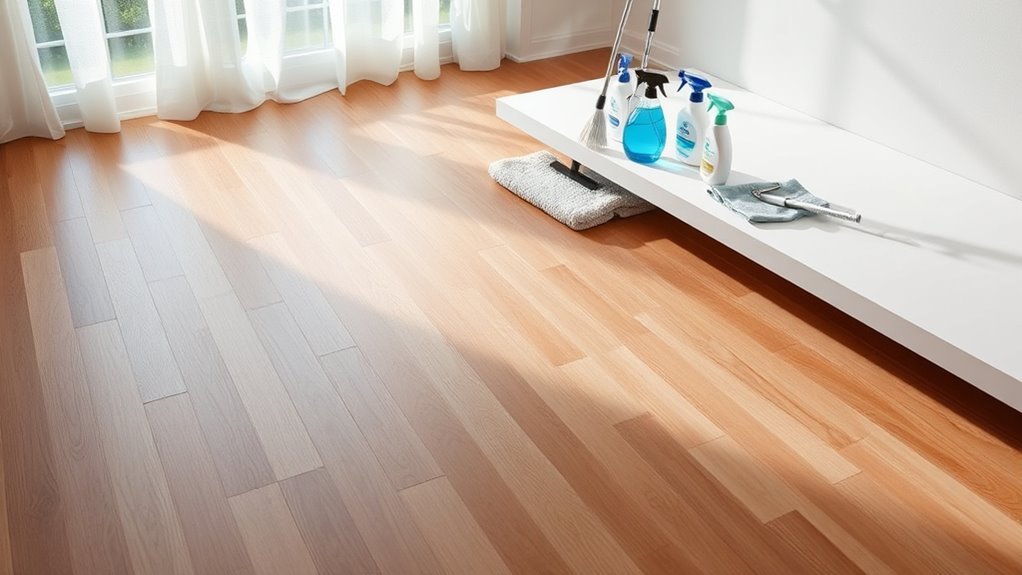
When selecting cleaning products for your laminate floors, it’s crucial to pick ones that won’t damage the surface or leave residue behind. You want freedom from harsh chemicals that could dull your floors or harm your indoor air quality. Eco friendly options are a smart choice—they clean effectively while respecting your space and the environment. Before you commit, always check product compatibility with laminate surfaces to avoid peeling or warping. Avoid waxes, oils, and abrasive cleaners; they can create buildup or scratches. Instead, choose gentle, water-based solutions designed specifically for laminate. By selecting the right products, you maintain your floors’ beauty and durability without sacrificing your values or freedom to enjoy a clean, safe home.
Daily Cleaning Routine to Prevent Dirt Build-Up
To keep your laminate floors looking their best, you’ll want to sweep daily to remove dirt and grit before it builds up. A quick damp mop can help lift away any lingering dust without damaging the surface. For spills or spots, addressing them immediately with gentle cleaning methods prevents stains from setting in.
Daily Sweeping Tips
Keeping your laminate floors spotless starts with daily sweeping, which prevents dirt and grit from scratching the surface. You’ll want to choose the right broom type—soft-bristled or microfiber brooms work best because they gently lift debris without damaging your flooring. Avoid stiff-bristled brooms that can leave marks. When sweeping, use smooth, controlled sweeping techniques, moving in one direction to gather dirt efficiently without scattering it. Focus on high-traffic areas where dirt tends to accumulate faster. Make it a habit to sweep every day, so dirt never settles in and wears your floors down. This simple routine frees you from constant deep cleaning and keeps your laminate looking fresh and polished effortlessly. Stay consistent, and your floors will thank you.
Damp Mopping Guidelines
Anyone who wants to maintain laminate floors knows that damp mopping is key to preventing dirt build-up without causing damage. To keep your floors looking fresh, use the right damp mopping techniques—avoid soaking the mop; instead, wring it out well so it’s just slightly damp. This prevents excess water from seeping into seams and causing warping. Choosing ideal mop materials matters too: microfiber mops are your best bet because they trap dirt effectively and avoid scratching the surface. Stick to gentle, water-based cleaners or a simple mix of water and vinegar to keep things safe and chemical-free. By following these simple damp mopping guidelines daily, you free yourself from stubborn dirt while preserving your laminate’s pristine finish effortlessly.
Spot Cleaning Methods
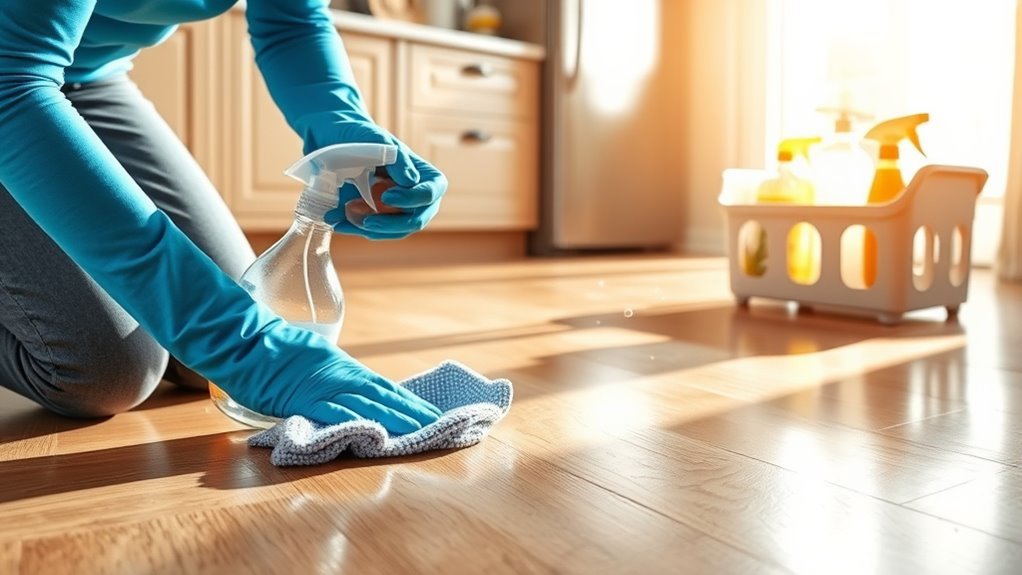
Although regular damp mopping is essential, spot cleaning is what helps you tackle spills and stains before they settle in. When you identify a stain early, it’s easier to keep your laminate looking fresh without harsh scrubbing. Start with quick stain identification—know what caused the spot so you can choose the right spot treatment. For example, sticky sugary spills need a gentle cleanser, while ink requires a different approach. Keep a small kit handy with mild detergents, microfiber cloths, and a soft brush. Dab the affected area gently to lift the stain without spreading it. By making spot cleaning a part of your daily routine, you maintain your laminate’s beauty and enjoy the freedom of a clean, worry-free space.
How to Safely Remove Stains From Laminate Surfaces
When stains appear on your laminate surfaces, it’s important to use gentle cleaning solutions to avoid damage. You’ll find that simple methods can effectively lift most stains without harsh scrubbing. Let’s explore the safest ways to get your laminate looking clean again.
Gentle Cleaning Solutions
A few simple ingredients you probably already have at home can safely tackle most stains on your laminate surfaces. Start with a mix of gentle soap and water to loosen grime without damaging the finish. Adding a few drops of essential oils not only freshens the space but also offers mild antibacterial properties. Avoid harsh chemicals to keep your laminate looking free and fresh.
| Ingredient | Purpose |
|---|---|
| Gentle soap | Cleans without damaging surface |
| Essential oils | Adds scent and antibacterial effect |
| Warm water | Helps dissolve dirt and residues |
Using this gentle solution, you can maintain your laminate’s beauty while enjoying the freedom of a safe, natural cleaning routine.
Effective Stain Removal Methods
Keeping your laminate surfaces spotless means knowing how to tackle stains safely without harming the finish. Different stain types require specific removal techniques to preserve your freedom from worry and damage. Here’s how you can confidently handle common stains:
- Water rings or light stains: Gently rub with a soft cloth and a bit of baking soda paste. It lifts stains without scratching.
- Grease or oil spots: Use a small amount of dish soap diluted in warm water. This breaks down grease effectively.
- Ink or marker stains: Dab rubbing alcohol on a cloth and gently blot the area. Avoid rubbing hard to prevent damage.
With these methods, you’ll enjoy the freedom of a clean, beautiful laminate surface without stress or risk.
Using Microfiber Mops and Cloths Effectively
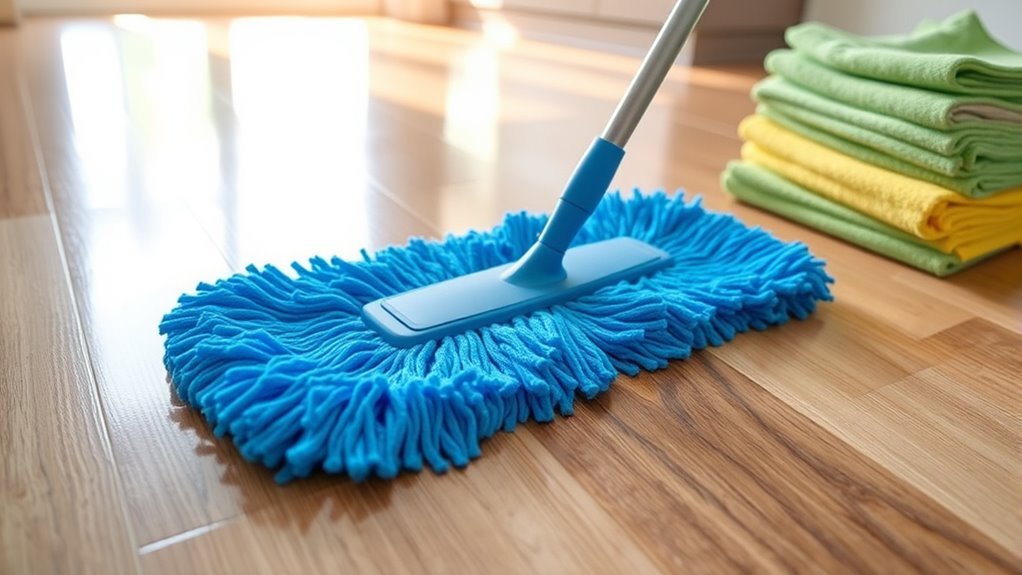
Two essential tools you’ll want for maintaining your laminate floors are microfiber mops and cloths. The microfiber benefits go beyond just cleaning—they trap dust and dirt without scratching your floor, giving you freedom from harsh chemicals. When using your mop, try mop techniques that involve gentle, sweeping motions rather than aggressive scrubbing to protect the laminate’s surface. Dampening your microfiber mop slightly guarantees it picks up debris without leaving excess water behind, which can damage your flooring. For spills and quick touch-ups, a microfiber cloth is perfect; it absorbs liquids efficiently and lifts grime easily. Embracing these tools lets you maintain your laminate floors with ease and confidence, keeping them looking fresh while enjoying the freedom to clean on your own terms.
The Role of Vinegar and Natural Cleaners in Laminate Care
You’ll find vinegar is a powerful, natural cleaner that’s gentle on laminate floors while cutting through grime. Mixing simple ingredients like vinegar, water, and a few drops of essential oil can create an effective homemade cleaner. Just be sure to apply it sparingly and avoid soaking the floor to keep your laminate in great shape.
Benefits of Vinegar Cleaning
One of the easiest ways to maintain your laminate flooring is by using vinegar, a natural cleaner that’s both effective and affordable. Embracing vinegar advantages gives you freedom from harsh chemicals and pricey cleaning products. It’s a simple, eco-friendly choice that respects your space and the planet. Here’s why vinegar stands out among cleaning alternatives:
- Powerful yet gentle – Vinegar removes grime and kills bacteria without damaging your laminate’s surface.
- Cost-effective – It saves you money while delivering excellent results, freeing up your budget.
- Non-toxic and safe – You can clean confidently around kids and pets without worrying about harmful residues.
Choosing vinegar means you’re opting for a natural, reliable way to keep your floors spotless and your home healthy.
Natural Cleaner Recipes
Finding the right natural cleaner for your laminate floors can be simple with a few effective recipes that include vinegar as a key ingredient. You can easily mix one cup of white vinegar with a gallon of warm water to create a gentle yet powerful cleaning solution. To elevate the freshness and add a touch of your personality, drop in a few drops of essential oils like lavender or lemon. These homemade sprays not only clean but also leave your floors smelling naturally inviting. Just fill a spray bottle with your mixture, and you’re ready to tackle grime without harsh chemicals. Embracing these natural cleaners gives you freedom from synthetic products while keeping your laminate floors spotless and vibrant.
Safe Application Tips
Using vinegar and natural cleaners can be a great way to keep your laminate floors clean, but applying them correctly is key to avoiding damage. You want to embrace eco friendly options without compromising your laminate’s surface protection. Here’s how to do it right:
- Dilute vinegar properly—mix one part vinegar with three parts water to prevent stripping the floor’s finish.
- Use a damp, not soaked, microfiber mop to avoid excess moisture that can warp your flooring.
- Test any natural cleaner on a small, hidden area first to verify it won’t dull or damage the surface.
Avoiding Excess Water and Preventing Warping
Although laminate flooring is designed to be durable, exposing it to excess water can cause significant damage like warping and swelling. To keep your floors looking great and avoid costly water damage, use a damp mop rather than soaking your floor during cleaning. Wring out your mop thoroughly so it’s just slightly moist—this prevents moisture from seeping into seams and causing swelling. Quick floor maintenance also means wiping up spills right away; don’t let water sit and soak in. If you want to enjoy the freedom of worry-free laminate floors, controlling water exposure is key. By staying vigilant and using minimal moisture, you’ll protect your flooring investment and keep your space looking fresh and free from warping problems.
Tips for Handling Sticky or Greasy Spills
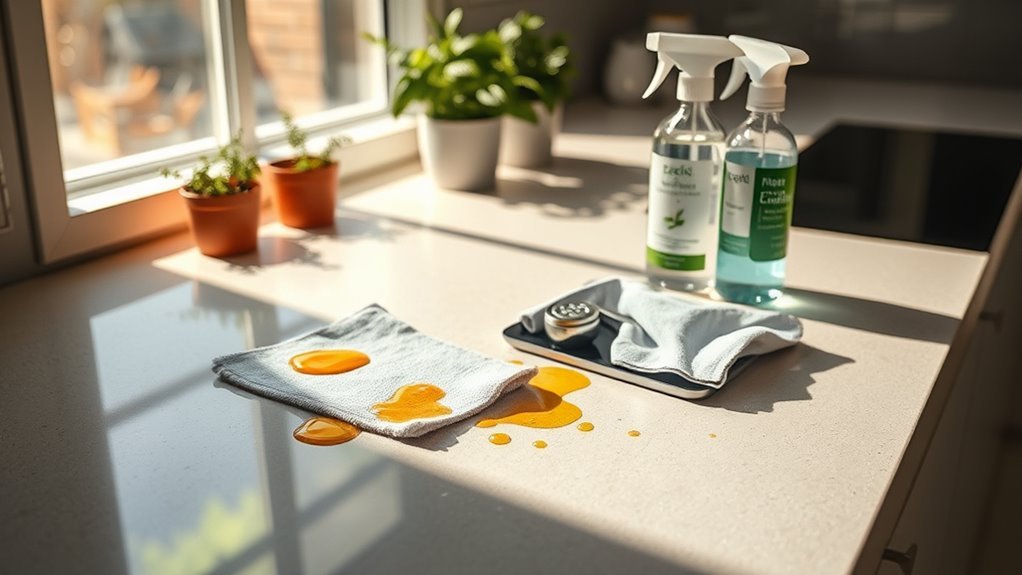
When dealing with sticky or greasy spills on laminate floors, quick action is essential to prevent residue buildup and slipping hazards. You deserve a clean space without hassle, so here’s how to tackle these spills efficiently:
- Act Fast: Blot up excess grease using paper towels or a microfiber cloth to avoid spreading. This initial step is vital for effective grease absorption techniques.
- Gentle Cleaning: Use a damp cloth with mild soap to wipe away sticky residue. Avoid harsh scrubbing that can damage your laminate’s finish.
- Dry Thoroughly: After cleaning, dry the area completely to prevent streaks and water damage.
Preventing Scratches and Surface Damage
Since laminate floors can show scratches and dents easily, it’s important to take steps to protect their surface from everyday wear and tear. For effective scratch prevention, start by placing felt pads under furniture legs. This simple change lets you move things around without dragging and scratching the floor. Avoid walking on laminate with high heels or shoes with sharp edges, as they can cause damage. Surface protection also means cleaning up dirt and grit promptly—these particles act like sandpaper underfoot. Use soft brooms or microfiber mops for regular dusting, keeping abrasive materials away. Finally, consider area rugs in high-traffic zones to shield your floors while keeping your space open and inviting. With these strategies, you maintain your laminate’s look without sacrificing your freedom to live fully.
Deep Cleaning Strategies for Laminate Floors
To keep your laminate floors looking fresh beyond everyday dusting, you’ll need to immerse yourself in deep cleaning every now and then. This step is key to laminate floor maintenance and keeps your space feeling open and free from grime buildup. Here’s how you can embrace deep cleaning without hassle:
- Use steam cleaning techniques cautiously—too much moisture can damage laminate, but a gentle steam can lift dirt effectively.
- Opt for a damp microfiber mop to reach stubborn dirt and revitalize your floors without flooding them.
- Regularly inspect and clean grout lines or edges where dust hides, maintaining a crisp, clean look that lets your freedom shine through.
Deep cleaning isn’t a chore; it’s your ticket to a fresh, vibrant home.
Maintaining Shine Without Harsh Chemicals
Although it’s tempting to reach for strong cleaners, you don’t have to use harsh chemicals to keep your laminate floors shining. You can maintain that fresh look with simple, eco friendly alternatives that protect both your floors and the environment. A mix of water and white vinegar works wonders for shine maintenance without leaving residue. Just dampen a microfiber mop and glide over the floor—no scrubbing needed. Avoid wax or polish, as laminate doesn’t need them and they can cause buildup. Regularly sweeping or vacuuming removes abrasive dirt that dulls shine. By choosing gentle methods, you preserve your freedom to enjoy a clean, glossy floor without worrying about harmful chemicals or damage. It’s a smart, responsible way to keep your space bright and welcoming.
Frequently Asked Questions
Can Laminate Floors Be Refinished or Sanded Like Hardwood?
You can’t refinish or sand laminate floors like hardwood because they have a thin wear layer that would get damaged. Instead, focus on laminate maintenance tips to keep them looking great. For scratches, try laminate scratch repair kits or use furniture pads to prevent damage. This way, you maintain your freedom to enjoy your floors without worrying about costly refinishing or sanding jobs. Keep them protected and enjoy hassle-free care!
How Does Humidity Affect Laminate Flooring Durability?
You’ll want to keep an eye on humidity because it directly impacts laminate flooring durability. Too much moisture can cause the laminate to swell or warp, while too little can make it brittle and prone to cracking. By maintaining proper humidity control and balanced moisture levels in your space, you’ll protect your floors and enjoy their freedom to look great without worrying about damage over time.
Are Area Rugs Beneficial for Laminate Floor Protection?
You’d think your laminate floor could survive a stampede, but it’s way more delicate than that! Using area rugs is like giving your floor a superhero cape—they’re fantastic for floor protection, shielding against scratches, dirt, and spills. Plus, you get to mix and match styles, keeping your space free and expressive. So, if you want your laminate to last and keep looking fresh, area rugs are your best, stylish defense.
What Are Common Causes of Laminate Floor Discoloration?
You’ll often find laminate floor discoloration happens because of sunlight exposure, which can fade or yellow the surface over time. Also, using harsh cleaning products can damage the protective finish, leading to discoloration or dull spots. To keep your floors looking free and fresh, avoid direct sunlight or use window coverings, and stick to gentle, laminate-safe cleaners. That way, you’re protecting your space without feeling restricted.
Can Pets Damage Laminate Flooring, and How to Protect It?
Did you know over 60% of pet owners report flooring scratches caused by pet claws? Your laminate flooring can definitely take a hit from those sharp nails, leading to visible damage. To protect your floors, keep your pet’s claws trimmed regularly and consider placing rugs in high-traffic areas. This way, you’ll enjoy the freedom of having pets around without worrying about unsightly scratches ruining your flooring’s look.