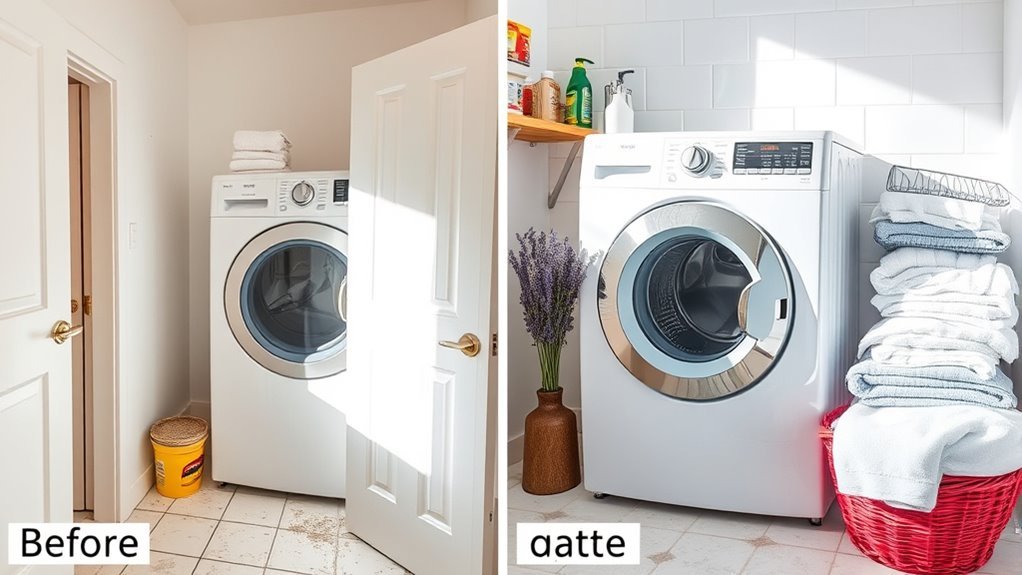
Cleaning Tips Before and After Washer
Before each wash, check your washer for leftover debris and use the right detergent—preferably a high-efficiency type—to avoid residue and odors. After washing, wipe down seals and drum, leave the door open for air circulation, and run a vinegar rinse to keep things fresh. Regularly deep clean with hot water, maintain seals, and control humidity to prevent mold. Keep up with these habits, and you’ll find there’s even more you can do to keep your washer spotless and efficient.
Preparing Your Washer Before Each Load

Before every load, it’s important to quickly check your washer for any leftover debris or items that might have been missed. This simple step in load preparation guarantees your washer stays clean and your clothes don’t pick up unwanted grime. You want the freedom to trust your laundry process without surprises. Next, focus on detergent selection; using the right detergent keeps your washer running smoothly and prevents buildup. Opt for high-efficiency detergents if you have an HE washer, as they produce fewer suds and clean better. Avoid overusing detergent, which can leave residues and cause odors. By preparing your washer properly before each load, you maintain its performance and extend its life, giving you more freedom to enjoy fresh, clean clothes without hassle.
Removing Residue and Odors After Washing
Although you’ve taken care to prepare your washer properly, residue and odors can still build up over time. To keep your washer fresh and efficient, focus on quick residue buildup removal and odor elimination after every wash. Here’s a simple routine you can follow:
| Step | Action | Tip |
|---|---|---|
| 1. Wipe | Clean door seals and drum | Use a microfiber cloth |
| 2. Leave open | Keep door/lid open to air out | Prevents moisture buildup |
| 3. Drain filter | Clear lint and debris | Avoid clog-related odors |
| 4. Use vinegar | Run a short rinse cycle with vinegar | Natural odor eliminator |
These quick steps free you from musty smells and residue buildup, letting you enjoy a cleaner, fresher washer without hassle.
Deep Cleaning Techniques for Washers
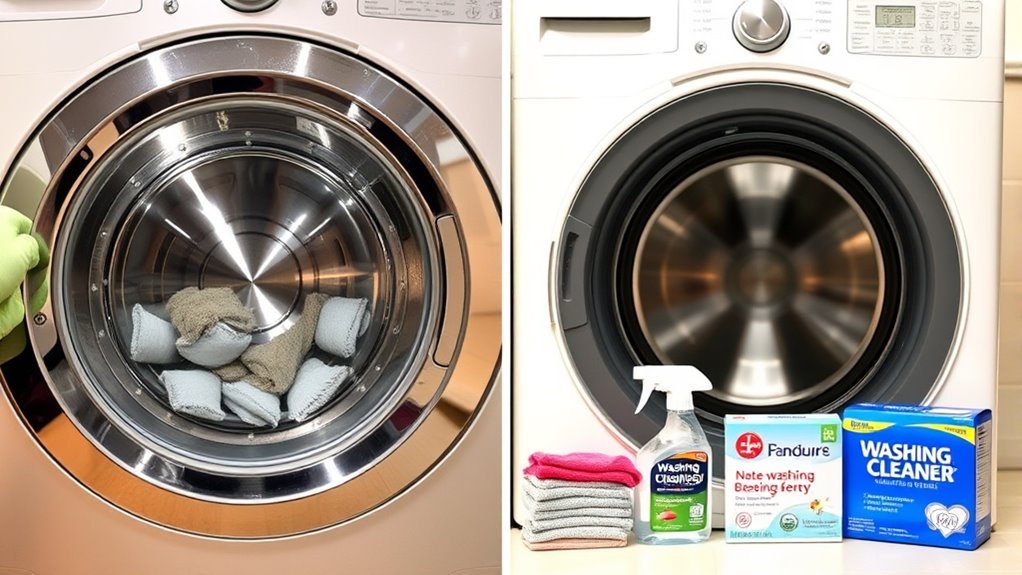
When you want to tackle stubborn residue and buildup that quick cleanings can’t remove, deep cleaning your washer is essential. Start by selecting the right detergent—opt for high-efficiency, low-sudsing options to prevent excess buildup. Next, run a hot water cycle with a specialized washing machine cleaner or a mixture of white vinegar and baking soda to break down grime and odors. Don’t forget to perform drain cleaning by removing and flushing out any debris from the drain filter or hose, ensuring smooth water flow. Deep cleaning frees your washer from hidden buildup, boosting performance and extending its life. By committing to these steps, you reclaim control over your laundry routine, embracing freedom from frequent malfunctions or unpleasant smells.
Maintaining Washer Seals and Gaskets
Since washer seals and gaskets are key to preventing leaks and keeping your machine running smoothly, you’ll want to inspect and clean them regularly. Proper seal maintenance and gasket care help avoid costly repairs and keep your washer carefree. Here’s how to keep them in top shape:
Regularly inspecting and cleaning washer seals and gaskets prevents leaks and costly repairs.
- Check seals and gaskets for cracks or wear monthly.
- Wipe down the rubber with a damp cloth and mild soap to remove residue.
- Guarantee the gasket folds back properly after each wash to prevent trapping dirt.
Tips for Preventing Mold and Mildew Buildup
Taking care of your washer’s seals and gaskets helps keep dirt and moisture from building up, but preventing mold and mildew requires a few more steps. You’ll want to focus on humidity control by keeping the laundry area well-ventilated—open windows or use a fan to reduce dampness. After each wash, leave the washer door slightly ajar to let air circulate and dry the interior. Be mindful of detergent selection; using too much or a low-quality detergent can leave residue that feeds mold growth. Opt for high-efficiency, mold-resistant detergents and run regular cleaning cycles with hot water and vinegar or bleach. These simple habits give you the freedom from pesky mold and mildew, keeping your washer fresh and your laundry routine hassle-free.
Frequently Asked Questions
How Often Should I Replace My Washing Machine Detergent Dispenser?
You don’t want your detergent dispenser to last forever like a stubborn relic! Typically, the detergent dispenser lifespan varies, but you should consider replacement every few years or when you notice signs dispenser replacement is needed—like leaks, buildup, or poor detergent flow. If it’s causing trouble, swapping it out will free you from laundry frustrations and keep your washer running smoothly, letting you enjoy hassle-free washes without being tied down by old, faulty parts.
Can I Use Vinegar in Every Wash Cycle Safely?
You can use vinegar in your wash cycles, but not every single time. Vinegar benefits your laundry by softening fabrics and cutting odors, plus it’s a natural, safe alternative to harsh chemicals. However, using it every wash might wear down rubber seals over time. For laundry safety, try adding vinegar once a week or during deep cleans, so you enjoy its perks without risking your machine’s longevity.
What Is the Best Water Temperature for Washing Different Fabrics?
When you’re picking water temperature, cold water’s great for delicate fabrics and colors since it keeps them from fading or shrinking. Hot water, on the other hand, works best for whites, heavily soiled clothes, or bedding because it kills germs and removes tough stains. You’ve got the freedom to choose based on your fabric type and what you want—just remember, cold saves energy, hot gets things extra clean.
How Do I Clean the Washing Machine Drum Without Chemicals?
You know what they say: “A stitch in time saves nine.” For natural cleaning, you can freshen your washing machine drum by running an empty hot water cycle with white vinegar and baking soda. This combo tackles odors and residue without harsh chemicals. Afterward, leave the door open to air dry, helping drum maintenance and preventing mold. Taking these simple steps lets you enjoy a cleaner machine and more freedom from worries.
Are There Specific Detergents to Avoid for Front-Loading Washers?
You’ll want to avoid detergents with harsh detergent ingredients like bleach, fabric softeners, or excessive fragrances, as they can damage your front-loading washer’s seals and reduce washer efficiency. Opt for high-efficiency (HE) detergents made specifically for front loaders—they create fewer suds and keep your machine running smoothly. Sticking to these detergents helps you maintain your washer’s performance and gives you more freedom to enjoy fresh, clean laundry without worries.