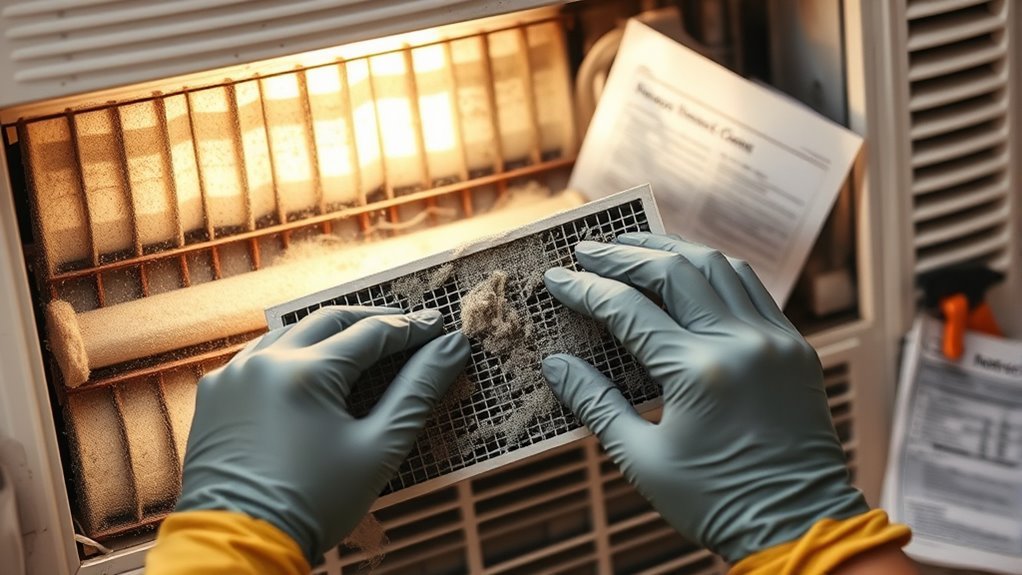
Common Mistakes When Cleaning AC
When cleaning your AC, avoid using harsh chemicals that can damage delicate parts, and always turn off the power first to stay safe and protect components. Don’t skip regular air filter changes or overlook cleaning the condenser and evaporator coils, as buildup reduces efficiency. Also, don’t forget to clean drain pans and lines to prevent clogs. Skipping professional inspections can lead to hidden issues. Keep these in mind, and you’ll be better equipped to maintain your AC effectively.
Using Harsh Chemicals That Damage Components

One common mistake people make when cleaning their AC is using harsh chemicals that can damage its delicate components. You want to keep your AC running smoothly without risking harm to its inner parts. Instead of reaching for strong, abrasive cleaners, consider chemical alternatives that offer effective cleaning while ensuring component protection. These gentler options help maintain your AC’s integrity and prevent corrosion or wear on sensitive materials. By choosing safer products, you’re not only protecting your unit but also gaining the freedom to clean confidently without worry. Remember, the goal is to extend your AC’s lifespan, so opt for solutions made specifically for HVAC systems. This way, you keep your cooling system efficient and reliable without compromising its core components.
Neglecting to Turn Off the Power Before Cleaning
Before you start cleaning your AC, make certain you turn off the power completely. Skipping this vital step puts you at risk and disrupts your power safety. Your freedom to maintain your own AC relies on a cautious cleaning routine that protects both you and the unit. Here’s why it matters:
Always turn off your AC power before cleaning to ensure safety and protect the unit from damage.
- Prevents electric shock accidents.
- Avoids damaging sensitive electrical components.
- Guarantees you can clean confidently without worrying about sudden startups.
Ignoring the Air Filter Maintenance Schedule

If you don’t stick to the air filter maintenance schedule, your AC’s efficiency will quickly drop. Skipping regular filter replacement clogs the air filter, restricting airflow and forcing your system to work harder. This not only spikes your energy bills but also shortens the air filter longevity and overall lifespan of your AC. By following the recommended schedule, you guarantee your unit breathes freely, keeping your space cool without unnecessary strain. Ignoring this simple routine can lead to costly repairs and limit your freedom from unexpected breakdowns. Stay ahead by marking filter replacement dates on your calendar or setting reminders. Maintaining your air filter on schedule is a small effort that grants you the freedom to enjoy consistent comfort without hassle.
Overlooking the Condenser and Evaporator Coils
Two key components that often get overlooked during AC cleaning are the condenser and evaporator coils. Neglecting these crucial parts can restrict airflow, reduce efficiency, and increase energy costs. To enjoy the freedom of a smoothly running AC, regular coil maintenance during seasonal cleaning is essential. Here’s why you shouldn’t skip them:
Don’t overlook condenser and evaporator coils—regular cleaning boosts airflow, efficiency, and lowers energy costs.
- Dirt and debris buildup on coils block heat exchange, forcing your system to work harder.
- Proper cleaning prevents corrosion and extends your unit’s lifespan.
- Clean coils improve cooling performance, giving you comfort without unnecessary strain.
Make coil maintenance part of your seasonal cleaning routine to avoid costly repairs and keep your AC running at peak freedom. Don’t let overlooked coils hold you back from enjoying a cool, carefree environment.
Failing to Clean Drain Pans and Drain Lines
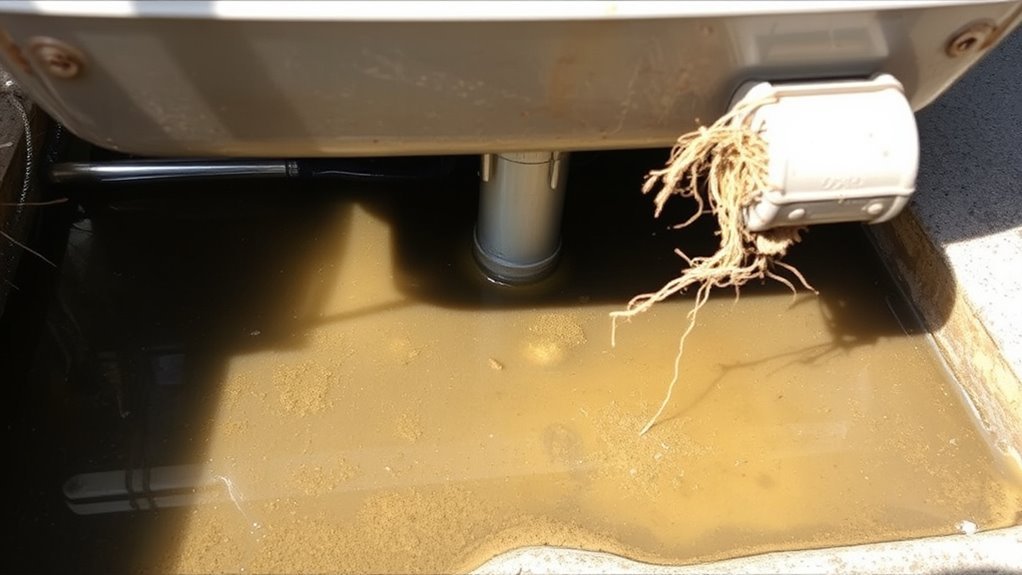
You might not realize how essential it is to keep your drain pans clean, as they catch condensation and prevent water damage. Ignoring them can lead to mold growth and unpleasant odors. Plus, clogged drain lines can cause your AC to back up and stop working properly.
Importance of Drain Pans
While many focus on cleaning AC filters and coils, neglecting the drain pans and drain lines can lead to serious problems. The drain pan plays a vital role in catching condensation and preventing water damage. Without regular drain pan maintenance, you risk leaks, mold growth, and system inefficiency.
To keep your AC running smoothly, remember these key points:
- Make certain the drain pan is clean and free from debris
- Check for cracks or rust that could cause leaks
- Use proper drainage techniques to allow water to flow freely
Preventing Drain Line Clogs
If drain pans and lines aren’t cleaned regularly, clogs can quickly form, causing water to back up and damage your AC system. You want to avoid that hassle, right? Keeping your drain line clear is essential for clog prevention and smooth operation. Dirt, algae, and debris can easily accumulate in these areas, restricting water flow and leading to leaks or even system failure. By routinely checking and cleaning the drain pans and drain line, you take control of your AC’s health and avoid unexpected breakdowns. Use a wet-dry vacuum or a specialized brush to clear blockages, and consider flushing the line with a vinegar solution for extra protection. Taking these simple steps frees you from costly repairs and keeps your AC running efficiently.
Skipping Professional Inspections and Deep Cleanings
You might think a quick clean is enough, but skipping professional inspections can lead to hidden issues. Routine checks catch problems early before they turn costly or damage your system. Neglecting deep cleanings risks reduced efficiency and poor air quality in your home.
Importance of Routine Checks
Even though regular maintenance might seem like a hassle, skipping professional inspections and deep cleanings can lead to costly repairs down the line. You want your AC to run smoothly without unexpected breakdowns, right? That’s where routine checks come in, helping preserve system efficiency and extend its life. Here’s why you shouldn’t skip them:
- Catch small issues early before they become expensive problems
- Keep your system running at peak efficiency, saving energy and money
- Guarantee cleaner air and a healthier environment for you and your loved ones
Risks of Neglecting Deep Cleaning
While routine checks catch many issues, neglecting deep cleaning can lead to serious problems that routine maintenance alone won’t fix. You might think quick cleanups are enough, but without deep cleaning, dirt and mold build up in hidden parts of your AC. This not only reduces efficiency but also harms your air quality, making your space less healthy and comfortable. Skipping professional inspections means missing warning signs that only experts can spot. Over time, this neglect can cause costly breakdowns and shorten your system’s lifespan. To truly enjoy freedom from unexpected hassles and breathe easy, you need regular deep cleanings alongside routine upkeep. Don’t let your AC become a hidden source of poor air quality or expensive repairs—give it the thorough care it deserves.
Frequently Asked Questions
How Often Should I Clean My AC Unit During the Year?
You might think cleaning your AC once a year is enough, but that’s not quite right. To truly enjoy cool, fresh air and keep your freedom from unexpected breakdowns, you should do seasonal maintenance—ideally every spring and fall. Don’t forget filter replacement about every 1-3 months, depending on use. Staying on top of this lets you breathe easy and enjoy your space without hassle or hidden costs.
Can Using Water to Clean the AC Cause Electrical Issues?
Yes, using water to clean your AC can cause water damage if you’re not careful. You’ve got to prioritize electrical safety because water and electricity don’t mix well. Make sure the unit is completely powered off before cleaning and avoid spraying water directly onto electrical components. Instead, use a damp cloth or a gentle spray on non-electrical parts. By doing this, you’re protecting your AC and keeping yourself safe without limiting your freedom to maintain it.
What Tools Are Best for Cleaning Hard-To-Reach AC Parts?
When tackling hard-to-reach AC parts, you’ll want to grab a vacuum attachment to suck out dust and debris from tight spaces. A soft-bristle brush attachment works great without damaging delicate components. For the coils, a coil cleaner is your best friend; it dissolves grime and buildup efficiently. Using these tools gives you the freedom to keep your AC running smoothly without hassle or damage, even in those tricky spots.
Is It Safe to Clean the AC Myself or Should I Hire a Pro?
You might feel tempted to try DIY cleaning for your AC to save money and enjoy the freedom of doing it yourself. While basic tasks like changing filters are safe, more complex cleaning can be risky and might damage your system. Hiring professional services guarantees thorough, safe cleaning and can extend your AC’s life. So, if you want peace of mind and peak performance, leaning on pros is often the smarter choice.
How Does Climate Affect the Frequency of AC Cleaning?
Did you know that high humidity can increase dust and mold buildup in your AC by up to 50%? Since humidity levels and seasonal changes affect how often your AC gets dirty, you’ll need to clean it more frequently in humid or rainy climates. When you understand how climate impacts your unit, you gain the freedom to keep your air fresh and your system running smoothly without unexpected breakdowns.